
电梯更新改造

Search documents
广州老楼装上新电梯 一键直达“幸福年”
2 1 Shi Ji Jing Ji Bao Dao· 2026-02-24 23:09
Group 1: Tourism and Economic Impact - Guangdong has become a representative of "reverse New Year," with a 44% year-on-year increase in tourist orders during the 2026 Spring Festival, and a 76% increase in hotel orders [1] - The revitalization of old neighborhoods in Guangzhou, such as Yongqingfang, has attracted tourists and improved local living conditions, blending traditional culture with modern amenities [1] Group 2: Elevator Installation and Upgrades - The installation of elevators in old residential buildings has significantly improved the quality of life for residents, particularly the elderly, by resolving the "upstairs difficulty" issue [2][3] - Guangzhou has implemented policies to support the installation and upgrading of elevators, including a multi-faceted funding model combining national and local subsidies [4] Group 3: Market Demand and Industry Trends - The demand for elevator upgrades and maintenance is increasing as many elevators reach the end of their service life, with an estimated 274 million elevator upgrades needed by 2030 in China [7] - Companies in the elevator industry are shifting focus from manufacturing to service-oriented business models, with an emphasis on the after-market services such as upgrades and maintenance [9]
广州老楼装上新电梯,一键直达“幸福年”
2 1 Shi Ji Jing Ji Bao Dao· 2026-02-24 10:00
Group 1: Industry Trends - The elevator market in China has seen significant growth over the past 20 years, with over 7.8 million elevators in operation by the end of 2020, and an expected 2.74 million elevators requiring updates and renovations by 2030 [7] - The demand for maintenance and renovation of aging elevators is becoming a necessity, as elevators typically require significant repairs after 15 years of use, with maintenance costs potentially reaching up to two-thirds of the original purchase price [8] - Companies are increasingly focusing on the after-market services for elevators, including renovation and maintenance, as the new installation market slows down, indicating a shift from manufacturing to service-oriented business models [9] Group 2: Policy and Financial Support - The government of Guangdong and Guangzhou has introduced subsidy policies for the renovation and installation of elevators in old residential buildings, creating a diversified funding model that includes national and local subsidies [4] - Guangzhou has implemented a national debt subsidy program for the replacement of elevators older than 15 years, providing a fixed subsidy of 150,000 yuan per elevator, which has facilitated the financial burden on residents [6] - The city has established a clear process for residents to apply for subsidies, ensuring that they can take advantage of financial support for elevator renovations [4][6] Group 3: Community Impact - The installation of new elevators in old residential buildings has significantly improved the quality of life for residents, particularly the elderly, by making it easier to access their homes and enhancing their overall living experience [2][3] - The integration of elevator installation with urban renewal projects in Guangzhou has revitalized old neighborhoods, improving not only accessibility but also the aesthetic and functional aspects of the community [9] - The positive changes brought by elevator renovations have contributed to a more vibrant and comfortable living environment, especially during festive seasons, reflecting the city's commitment to enhancing residents' well-being [6][9]
日立电梯:深耕中国30年“双料冠军”更智能更绿色
Jing Ji Wang· 2026-01-26 08:07
Core Viewpoint - The elevator industry is poised for better development opportunities, particularly in the areas of upgrading and retrofitting old elevators, as highlighted by Hitachi Elevator (China) President Jia Yuhui [1]. Group 1: Industry Growth and Strategy - The main growth points for the elevator business are in retrofitting and maintenance services, with Hitachi Elevator planning to introduce more digital tools to enhance service quality [1]. - Hitachi Elevator has signed contracts for a total of 1.6 million elevators since its establishment in China, with the pace of signing accelerating significantly in recent years [1]. - The Chinese government supports the renovation of old elevators and the installation of new elevators in aging residential communities, aligning with Hitachi's strategy to leverage the "old for new" opportunity [2]. Group 2: Market Position and Achievements - Hitachi Elevator ranks first in market share among elevator suppliers in China and has received awards for being the preferred brand for elevator upgrades and retrofitting [3]. - The company has completed projects in 324 cities, adding elevators to over 47,000 old residential buildings and providing renovation services for more than 18,000 projects across 322 cities [3]. - Hitachi Elevator's reputation is bolstered by its commitment to quality and customer satisfaction, as evidenced by its strong market presence and positive public perception [4]. Group 3: Technological Advancements - Hitachi Elevator's largest R&D team and factory are located in China, enhancing its research capabilities and production capacity [5]. - The company has been recognized for its ultra-high-speed elevator technology, with a record speed of 21 meters per second, certified by Guinness World Records [5]. - Over one-third of the super-tall buildings in China utilize Hitachi elevators, showcasing its significant presence in high-profile projects [6]. Group 4: Service and Maintenance - Hitachi Elevator employs a comprehensive service network with 2,200 maintenance stations and over 12,000 maintenance engineers nationwide, ensuring extensive support for customers [8]. - The company has introduced intelligent inspection robots that perform 24/7 inspections, enhancing operational efficiency and preventive maintenance [8].
康力电梯(002367) - 2025年9月4日投资者关系活动记录表
2025-09-05 08:22
Group 1: Market Trends and Company Strategy - The elevator industry is transitioning from a growth market to a stock market, with increasing demand for upgrades and renovations, prompting the company to focus on expanding its share in this segment [2][3] - The company is actively building its after-sales service market and enhancing its marketing channels to support partners with comprehensive technical and platform assistance [3][4] Group 2: Government Support and Market Opportunities - As of June 2025, government funding has supported the renovation of 41,000 old residential elevators, with a budget of 18 billion yuan planned for 120,000 elevators in 2025 [3][6] - The company has made significant progress in its renovation projects, leveraging government policies to tap into the growing demand for elevator upgrades [3][6] Group 3: Financial Performance - In the first half of 2025, the company achieved a revenue of 1,858.08 million yuan, a slight increase of 0.02% year-on-year, and a net profit of 179.85 million yuan, up 2.29% [6][8] - The overseas business revenue reached 221 million yuan, showing a substantial growth of 54.94% compared to the previous year [6] Group 4: Innovation and Long-term Strategy - The company is focusing on value management and maintaining a high cash dividend rate to enhance long-term investor returns [5][7] - It is exploring innovative business models, including "new elevators + services," to ensure sustainable development and strengthen its value creation capabilities [5][7] Group 5: Operational Adjustments and Asset Management - The company is optimizing its operations by renting out idle properties to improve asset utilization, with projected revenue of 14.10 million yuan from these activities in 2024 [8] - There are no current plans for significant acquisitions, but the company is investing in various sectors to enhance product competitiveness and explore technological innovations [8]

通力电梯在华投资加码 未来国产电梯行业突破口在哪?
Mei Ri Jing Ji Xin Wen· 2025-09-02 14:20
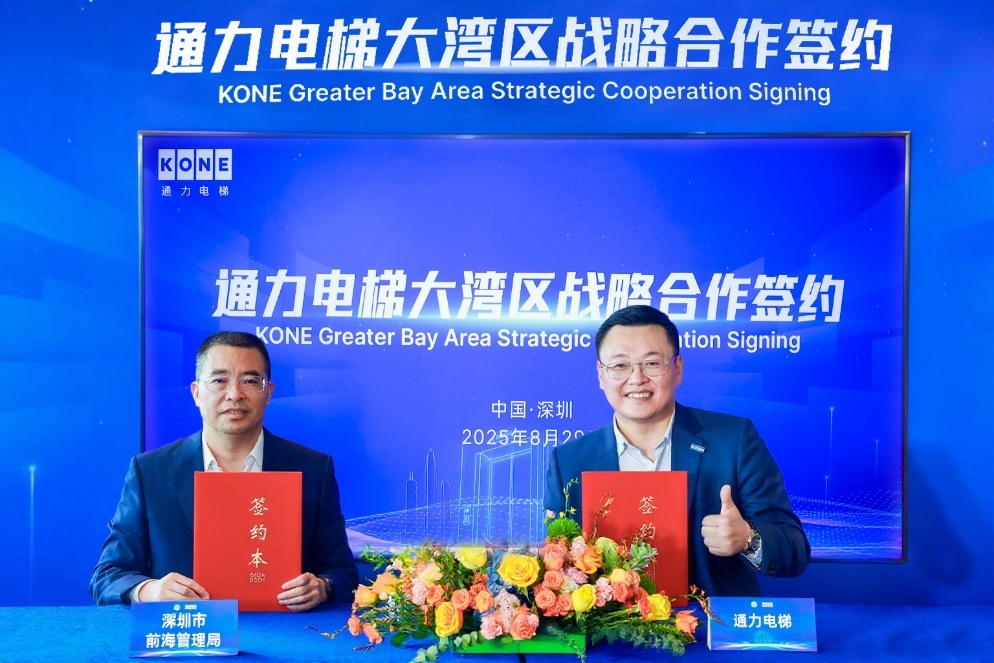
Group 1 - Kone Elevator announced a significant investment plan in the Guangdong-Hong Kong-Macao Greater Bay Area, including establishing a southern headquarters, R&D center, and smart logistics and assembly center in Shenzhen, focusing on modernization and digital maintenance services [1][6] - The elevator industry in China is facing challenges due to a slowdown in real estate demand, leading to revenue declines for many companies, with major players like Shanghai Mechanical and Guangri experiencing revenue drops of 6.41% and 3.05% respectively in the first half of 2025 [2][3] - The overall revenue of 12 listed elevator companies in A-shares reached 181.25 billion yuan in the first half of 2025, marking a five-year low, compared to over 220 billion yuan in the same period in 2021 [2][3] Group 2 - The competition in the elevator industry is intensifying, with many companies reporting sales declines, and the market is characterized by a shift from foreign brands dominating 70% of the market to a more competitive landscape where domestic brands are catching up [3][4] - Companies are increasingly focusing on digitalization and smart technology to enhance competitiveness, with examples including Kone's IoT-based smart elevator cloud service platform and Guangri's digital business expansion [4][5] - The demand for elevator modernization and maintenance services is expected to grow, driven by a significant number of aging elevators in China, with over 1.2 million units exceeding 15 years of service [5][6] Group 3 - The Chinese government is supporting the modernization of old elevators through special long-term bonds, with 62 billion yuan allocated for updating over 41,000 residential elevators, benefiting companies like Otis and Schindler [6][7] - Kone plans to leverage Shenzhen's technological resources to advance its digital maintenance and modernization services, indicating a strategic shift towards these areas [7][8] - Companies that can successfully adapt their strategies and business models are likely to emerge as leaders in the evolving competitive landscape of the elevator industry [8]
通力电梯加码在华投资,将在深圳设立南方总部 面对行业新机遇,国产电梯能否扳回一局?
Mei Ri Jing Ji Xin Wen· 2025-09-01 13:40
Core Viewpoint - KONE Elevator announced a significant investment plan in the Guangdong-Hong Kong-Macao Greater Bay Area, focusing on establishing a southern headquarters, R&D center, and smart logistics and assembly center, targeting modernization and digital maintenance services [1] Industry Overview - The elevator industry in China faces challenges due to a slowdown in real estate demand, which has historically been the largest revenue source, leading to overall performance declines and price wars among companies [1][2] - In the first half of 2025, 10 out of 12 listed elevator companies in A-shares reported revenue declines, with Shanghai Mechanical and Guangri shares experiencing decreases of 6.41% and 3.05% respectively [2][3] - The total revenue of 12 A-share elevator companies in the first half of 2025 was 181.25 billion, marking a five-year low [3] Market Dynamics - The competition in the elevator market is intensifying, with foreign brands holding approximately 70% market share, while domestic brands have increased their new elevator order share to over 50% as of 2023 [3][4] - The demand for elevator maintenance and modernization is expected to grow, driven by a significant number of aging elevators, with over 1 million units exceeding 15 years of service [7][9] Technological Advancements - Domestic elevator brands are focusing on digitalization and smart technologies to enhance competitiveness, with companies like Kangli Elevator and Fast Elevator investing in IoT and AI solutions [5][6] - KONE and other foreign brands are also emphasizing technological innovations, including predictive maintenance and AI algorithms [6] Policy Support - The Chinese government is supporting the modernization of old elevators through special long-term bonds, with 62 billion allocated for updating over 41,000 residential elevators [8] - Major companies like Otis and Schindler have reported significant growth in their maintenance and modernization segments, benefiting from government policies [8] Strategic Focus - Companies are shifting their strategies from merely selling products to offering services, with a focus on maintenance and modernization as key growth areas [7][11] - KONE's investment in Shenzhen aims to leverage local technological resources to enhance digital maintenance and modernization services [9][10]
通力电梯加码在华投资,将在深圳设立南方总部 面对行业新机遇,国产电梯能否扳回一局?
Mei Ri Jing Ji Xin Wen· 2025-09-01 13:32
Group 1 - Kone Elevator announced a significant investment plan in the Guangdong-Hong Kong-Macao Greater Bay Area, including the establishment of a southern headquarters, R&D center, and smart logistics and assembly center in Shenzhen, focusing on modernization and digital maintenance services [1][11] - The Chinese elevator market has the largest elevator ownership globally, with international brands like Kone and Otis holding about 70% market share, while domestic brands account for only around 30% [2][5] - The elevator industry has faced revenue declines due to a slowdown in real estate demand, leading to increased competition and price wars among companies [2][4] Group 2 - In the first half of 2025, 10 out of 12 listed elevator companies in China reported revenue declines, with Shanghai Mechanical and Guangri shares experiencing decreases of 6.41% and 3.05%, respectively [3][4] - The total revenue of 12 A-share elevator companies in the first half of 2025 was 18.125 billion yuan, marking a five-year low compared to over 22 billion yuan in the same period in 2021 [3][4] - The demand for elevator maintenance and modernization is expected to grow, with over 1.2 million elevators in use and more than 1 million old elevators exceeding 15 years of service [9][10] Group 3 - Domestic brands are increasingly focusing on digitalization and smart technology to enhance competitiveness, with significant investments in R&D for IoT and AI applications [5][6] - Companies like Kone and Guangri are implementing smart elevator cloud service platforms and optimizing business structures to improve profitability [6][9] - The Chinese government is supporting the modernization of old elevators through special long-term bonds, with 6.2 billion yuan allocated for updating over 41,000 residential elevators [10][11]


康力电梯分析师会议-20250605
Dong Jian Yan Bao· 2025-06-05 11:12
Group 1: Report Basic Information - Report research company: Kangli Elevator [16] - Research industry: Special equipment [16] - Reception time: June 4, 2025 [16] - Company reception staff: Investor relations representatives Luo Chengbin and Yu Hao [16] Group 2: Research Institutions - High - end China (Securities company, representative: Du Qian) [17] - Goldman Sachs (Other, representative: Daniela Costa) [17] - Hel Ved Capital (Other, representative: Yang Yang) [17] - China Merchants Fund (Fund management company, representative: Wang Qichao) [17] - JP Morgan (Foreign bank, representative: Chen Binghong) [17] - 3W Fund (Other, representative: Liu Haocong) [17] - Panze Asset (Other, representative: Xiong Weiming) [17] Group 3: Core Views - The downstream demand structure of the elevator industry has changed significantly. The real - estate market demand is declining, but factors such as the increase in elevator allocation ratios, emerging demand in sub - sectors, and overseas markets will offset some of the decline. The industry is at the start of large - scale renovation, showing a new situation where the incremental market declines and the stock market rises, and the overall market scale will gradually stabilize [25][26] Group 4: Industry and Company Situation Updated Renovation Market - There are over 1 million old elevators with a service life of over 15 years, and the number is rising. In 2024, about 41,000 elevator renovation projects were supported by ultra - long - term treasury bond funds, with a target of 60,000 in 2025. Policy support will lead to a rapid release of renovation demand [23] Real - Estate Industry - In 2024, the real - estate market demand declined, with the sales amount of newly built commercial housing falling below 10 trillion yuan. From January to April 2025, the sales area and amount of newly built commercial housing decreased by 2.8% and 3.2% year - on - year respectively, with the decline rate narrowing significantly. The current recovery is still phased and partial [24] New Elevator Market - From January to April this year, the new building start - up area decreased by 23.8% year - on - year, leading to intense price competition for new elevator orders [27] Customer Payment and Accounts Receivable - Government public construction project payments are generally normal, while real - estate customers' liquidity remains tight. The company manages cash flow effectively, with a sales collection rate of 125.91% in 2024 and a 1.96% decrease in accounts receivable balance at the end of the period compared to the beginning [28][29] Elevator After - Market - The elevator after - market includes maintenance, repair, parts, and renovation. The market concentration of maintenance and repair is low, with small enterprises accounting for over 60% of the market share. Renovation is mainly dominated by整机 manufacturers. The self - maintenance ratio of整机 manufacturers is low due to strategic choices and low user stickiness. All major整机 enterprises are increasing investment in the after - market [30][31] Company's After - Market Business - In 2024, the company's installation and maintenance business revenue accounted for 15.39%. The company plans to promote after - market business development by upgrading department positioning, improving renovation solutions, and strengthening cooperation through joint ventures [32] Regulatory Policy Impact - The General Administration of Market Supervision released a draft revision of the Regulations on the Supervision of Special Equipment in January 2025. It's uncertain whether all provisions will be passed and what impact it will have on the elevator maintenance industry [33]
康力电梯(002367) - 2025年6月4日投资者关系活动记录表
2025-06-05 07:14
Group 1: Market Development and Trends - The number of old elevators over 15 years in use exceeds 1 million, with a rising trend in the number of outdated elevators leading to increased failure rates and safety issues [1] - In 2024, approximately 41,000 elevators will be supported by long-term government bonds for upgrades, with a target of 60,000 elevators in 2025, indicating a strong push for modernization [2] Group 2: Real Estate Market Impact - The total sales amount of new residential properties in 2024 is expected to drop below 1 trillion yuan, reflecting a tightening real estate market [2] - From January to April 2025, the sales area and sales amount of new residential properties decreased by 2.8% and 3.2% year-on-year, respectively, showing a narrowing decline [2] - The implementation of new residential project standards is expected to increase elevator ratios, while demand in niche markets like industrial real estate and home elevators is rising [2] Group 3: Pricing and Competition - The new elevator market is experiencing intense price competition due to a 23.8% year-on-year decline in new construction area from January to April 2025 [3] - The overall payment situation for government projects remains stable, while real estate clients face liquidity issues, impacting accounts receivable risks [3] Group 4: Aftermarket Business Dynamics - The market for elevator maintenance and repair is fragmented, with over 60% of the market share held by small third-party maintenance companies [4] - The company's revenue from installation and maintenance services accounted for 15.39% in 2024, indicating a focus on expanding aftermarket business [4] Group 5: Strategic Initiatives - The company aims to enhance its aftermarket business by transforming the service department into a profit center and improving operational capabilities [5] - Plans include developing comprehensive upgrade solutions and fostering long-term partnerships with strategic clients [5] Group 6: Regulatory Changes - The draft revision of the Special Equipment Safety Supervision Regulations may alter maintenance requirements, with potential impacts on management models and costs in the elevator maintenance sector [6]
远大智能博林特电梯荣获政府采购电梯更新改造优选品牌
Zhong Guo Chan Ye Jing Ji Xin Xi Wang· 2025-04-17 01:35
Group 1 - The core viewpoint of the articles highlights the recognition of Yuanda Intelligent Industrial Group's Bolinte Elevator as a preferred brand for government procurement in elevator renovation, emphasizing its commitment to providing quality services for accessible transportation [1] - The company has established a strong presence in the elevator renovation market, having completed nearly 300 renovation projects across 21 provinces, 3 autonomous regions, and 4 municipalities since the establishment of its renovation division in 2016 [7] - The government is investing 6.2 billion yuan to support the renovation of 41,000 elevators, benefiting 1.7 million residents, with over 1.59 million old elevators awaiting updates nationwide [4] Group 2 - Bolinte Elevator has successfully delivered its first elevator renovation project supported by national long-term bonds in Shenyang, completing the project in just 10 days, showcasing its efficiency and quality in addressing the challenges of old elevators [11] - The company is expanding its renovation network in Shenyang, with multiple projects already completed and over 200 elevators currently under renovation, demonstrating its commitment to revitalizing old communities [11] - Looking ahead, Bolinte Elevator aims to deepen technological innovation and optimize service systems to advance more elevator renovation projects, focusing on safety, comfort, and smart transportation solutions [14]

