电网瓶颈

Search documents
“钱花不出去!” AI故事被忽视的风险,正急剧升温
Hua Er Jie Jian Wen· 2026-02-08 13:09
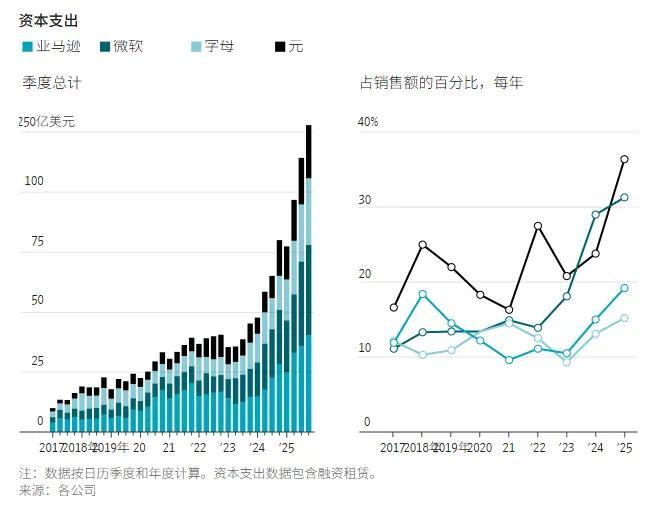
Group 1 - The core narrative is that the story of AI is shifting from "software eating the world" to "hardware being constrained by the world," highlighting a growing risk in the investment landscape due to political and physical limitations on data center expansion [1][4][15] - A rare bipartisan consensus has emerged between Senator Bernie Sanders and Governor Ron DeSantis regarding the need to halt the rapid increase of data centers, driven by public concerns over the negative impacts of AI [2][4] - The political landscape is changing, with states like New York, Arizona, Georgia, and Texas considering legislation to pause new data center projects or eliminate tax incentives, reflecting a growing backlash against the expansion of AI infrastructure [2][4] Group 2 - The anticipated capital expenditure of approximately $600 billion in 2026 faces skepticism regarding its feasibility, as major tech companies plan to spend $670 billion on AI infrastructure this year alone [4][6] - The energy demand from data centers is projected to double by 2035, raising concerns about the current U.S. electrical grid's ability to meet this demand, which could hinder the construction of new data centers [8][9] - The Texas power grid operator ERCOT is implementing a review process for power consumption projects, causing delays and uncertainty for tech companies, which could jeopardize their expansion plans and the associated capital expenditures [9][10] Group 3 - The financial markets are reacting to the risk of unspent capital, leading to significant sell-offs in tech stocks, as investors reassess the viability of AI-related investments in light of potential physical constraints [10][12] - The shift in market sentiment has resulted in a "de-leveraging" trend, with funds moving from high-beta tech stocks to more defensive sectors like chemicals and regional banks, indicating a growing fear of an AI valuation bubble bursting [12][13] - The market faces a dilemma: either trust that the electrical grid can expand to accommodate the projected $600 billion in capital expenditures or acknowledge that physical limitations have been reached, which would have severe implications for AI demand and investment [13][15]

AI的故事,正在从「软件吞噬世界」,演变为「硬件被世界卡住」
硬AI· 2026-02-08 06:18
Core Viewpoint - The article discusses the overlooked risk in AI investments, particularly the potential inability to utilize massive capital expenditures due to political and physical constraints on data center construction and operation [4][8][12]. Group 1: Political Environment - A rare bipartisan consensus has emerged between Senator Bernie Sanders and Governor Ron DeSantis regarding the need to halt the rapid increase of data centers, driven by public concerns over the negative impacts of AI [9][11]. - Public protests against data centers have intensified, citing issues such as noise pollution, water resource depletion, and rising electricity costs for local communities [11][12]. - Legislative actions are being proposed in various states, including Arizona, Georgia, and Virginia, to either eliminate tax incentives or impose moratoriums on new data center projects [11][12]. Group 2: Capital Expenditure and Market Dynamics - Major tech companies, including Microsoft, Meta, Amazon, and Google, plan to spend approximately $670 billion on AI infrastructure, raising questions about whether this capital can be effectively deployed [15][17]. - The scale of this capital expenditure is comparable to historical projects like the Apollo program and the interstate highway system, indicating its significance in the U.S. economy [17][20]. - Amazon alone plans to increase its capital expenditure by nearly 60% to $200 billion this year, primarily for data center construction [17]. Group 3: Physical Constraints - The current U.S. electrical grid is unable to meet the anticipated energy demands of new data centers, which are projected to double their energy consumption by 2035 [20][21]. - In Texas, the ERCOT has proposed a review of approximately 8.2 gigawatts of power consumption projects, causing delays in previously approved data center projects [21]. - The uncertainty surrounding the electrical grid's capacity is jeopardizing the expansion plans of tech giants, leading to a potential failure to utilize the allocated $670 billion budget for AI development [21][22]. Group 4: Market Reactions - The financial markets have reacted sharply to the realization that the risk of "money not being spent" is becoming a reality, leading to significant sell-offs in tech stocks [22][26]. - Companies in the independent power producer sector, previously seen as beneficiaries of AI growth, have also suffered declines due to fears that new energy demands cannot be met [24][26]. - The market is facing a dilemma: either believe in the miraculous expansion of the electrical grid to accommodate the $600 billion in capital expenditures or acknowledge the physical limitations that could lead to a collapse of the AI investment bubble [22][26].