电致发光

Search documents
许辉:“点亮”绝缘材料
Ke Ji Ri Bao· 2025-12-21 22:59
Core Viewpoint - A groundbreaking research led by Professor Xu Hui from Heilongjiang University has successfully achieved efficient electroluminescence in insulating rare earth nanocrystals, transforming the concept of "insulating luminescence" from impossible to reality [1]. Group 1: Research Background - Professor Xu Hui began his academic journey in 2003, focusing on organic electroluminescent (OLED) materials, particularly rare earth complexes, which are seen as core materials for next-generation display technology due to their narrow emission bands and high color purity [2]. - Despite the potential, rare earth complexes faced two major challenges: poor stability and low electroluminescence efficiency. Xu addressed stability issues by utilizing phosphine oxide ligands, significantly enhancing the material's stability for industrial production [2]. Group 2: Research Development - After resolving stability issues, the electroluminescence efficiency remained below industrial standards. Xu shifted his focus to understanding the physical mechanisms of the luminescence process, leading to the development of red-emitting rare earth complexes that met international standards [3]. - In 2006, Xu joined Heilongjiang University, where he built a research lab from scratch, demonstrating resilience and innovation despite limited resources. His team achieved significant breakthroughs, including publications in prestigious journals [5]. Group 3: Innovative Approach - Xu's team explored rare earth nanocrystals, which possess superior luminescent properties but are inherently insulating, preventing charge entry. They proposed a novel concept of using ligands to create a "photoelectric bridge" to facilitate energy transfer [6]. - Over 14 years, the team tested over 200 materials to find suitable ligands, ultimately designing the optimal molecule CzPPOA, which efficiently transfers electrical energy to the insulating rare earth nanocrystals with a remarkable efficiency of 96.7% [6]. Group 4: Collaborative Efforts - The research involved deep collaboration with teams from the National Academy of Singapore and Tsinghua University, highlighting the importance of teamwork and strategic guidance in achieving scientific breakthroughs [7]. Group 5: Education and Mentorship - Xu emphasizes the importance of cultivating students' problem-solving abilities rather than merely imparting knowledge. His mentorship has led to the rapid development of students, some of whom have become key figures in the research team [8]. - Xu's approach fosters collaboration among students, encouraging them to engage with the broader scientific community, which is essential for achieving significant research outcomes [9].

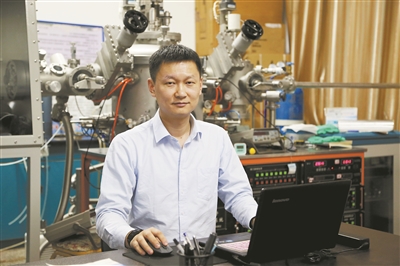
突发特讯!中国通告全球:中国稀土研究有新突破,引发美西方高度关注
Sou Hu Cai Jing· 2025-11-21 07:55
Core Insights - A significant breakthrough in the field of rare earth nanocrystals has been achieved by a research team from Tsinghua University, allowing these materials to be effectively energized by electric current, which opens the door for their industrial application in optoelectronic technologies [1][3]. Group 1: Breakthrough in Rare Earth Materials - The research addresses a long-standing issue where rare earth nanocrystals, known for their potential in light-emitting applications, were unable to conduct electricity, limiting their use in various high-tech fields [3]. - The team developed an organic-inorganic hybrid interface layer that enables efficient energy transfer from electric current to rare earth ions, achieving high-purity and tunable electroluminescence [3]. Group 2: Strategic Value and Global Attention - The breakthrough has garnered significant attention from the international academic and industrial communities, particularly in the West, as it directly impacts the core of the global high-tech industry [5]. - This advancement enhances the strategic value of China's rare earth resources, transitioning from exporting raw materials to leveraging advanced technology, thus increasing economic and security advantages [5]. Group 3: Implications for Innovation and Technology Leadership - The research exemplifies the importance of mastering key core technologies domestically, showcasing a new path for innovation that diverges from traditional Western methodologies [7]. - It signals a shift in China's technological landscape, with potential applications in flexible displays, biosensing, and agricultural lighting, indicating a move from following to leading in certain technological domains [7].

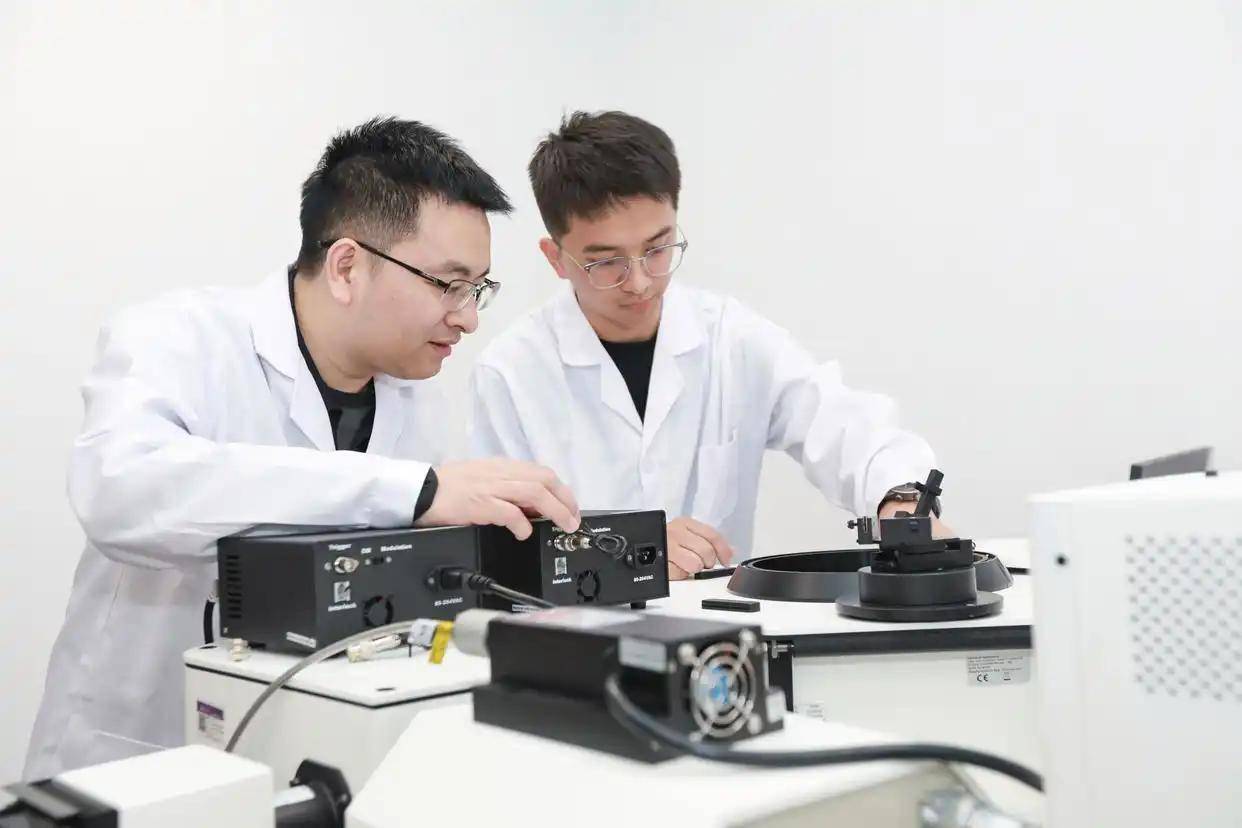
为稀土穿上“能量转换外衣” 中国科学家取得研究新突破
Zhong Guo Xin Wen Wang· 2025-11-21 01:32
Core Insights - The research team led by Han Sanyang from Tsinghua University has made a breakthrough in the design of rare earth nanocrystals by developing an "energy conversion coating" that enhances energy transfer to the organic molecular interface, addressing challenges in electroluminescent devices [1][2] - The findings were published in the international journal "Nature," highlighting the potential of rare earth nanocrystals as promising electroluminescent materials due to their tunable emission colors and high stability [1] Group 1 - Rare earth nanocrystals are recognized for their advantages such as tunable emission colors, narrow emission spectra, and high stability, making them potential candidates for electroluminescent materials [1] - The insulating properties of rare earth materials have historically hindered current injection and transmission, leading to their characterization as "insulating gems" in luminescent materials [1][2] Group 2 - The innovative approach of surface modification allows rare earth nanocrystals to effectively manage exciton energy transfer, solving core issues related to exciton generation, transport, and injection in electroluminescence [2] - The research indicates that this advancement opens new applications for rare earth materials in modern optoelectronic technologies, particularly in high-resolution displays and near-infrared technologies, without significant device structure changes [2] Group 3 - The results of this research are expected to promote the application of rare earth luminescence in flexible displays and near-infrared devices, with future potential in health monitoring, non-invasive testing, and agricultural lighting technologies [2]
“分子天线”让绝缘纳米颗粒电致发光
Ke Ji Ri Bao· 2025-11-21 00:47
Core Insights - Cambridge University's Cavendish Laboratory has developed a new technology utilizing "molecular antennas" to power insulating nanoparticles, achieving electroluminescence for the first time and creating ultra-pure near-infrared light-emitting diodes (LEDs) [1][2] - The research focuses on lanthanide-doped nanoparticles, which emit highly pure and stable light, particularly in the second near-infrared wavelength range, offering significant application potential [1] - The breakthrough involves grafting 9-anthracene carboxylic acid organic molecules onto the nanoparticle surface, allowing for energy transfer to the lanthanide ions with over 98% efficiency, enabling the creation of "LnLEDs" that can be powered at approximately 5 volts [1] Application Potential - The LnLEDs can provide highly pure and precise light, advantageous for biomedical imaging and optical communication, with potential applications in deep tissue imaging, cancer detection, and real-time organ function monitoring [2] - The ultra-narrow spectral linewidth of the emitted light is expected to facilitate faster and clearer data transmission in optical communication, reducing signal interference [2] - These nanoparticles may also be utilized in developing highly sensitive chemical or biological marker detection devices [2]
清华团队新突破!为稀土穿上“能量转换外衣”
Bei Jing Ri Bao Ke Hu Duan· 2025-11-21 00:31
Core Viewpoint - Rare earth nanocrystals are considered "insulating gems" in luminescent materials, possessing significant luminescent potential but facing limitations in direct electrical activation, which hinders their application in optoelectronic technology [1][3][5]. Group 1: Research Breakthrough - A research team led by Associate Professor Han Sanyang from Tsinghua University Shenzhen International Graduate School has developed a unique "energy conversion cloak" for rare earth nanocrystals, enabling efficient energy transfer to organic molecular interfaces [1][5]. - The research, titled "Electro-generated excitons for tunable lanthanide electroluminescence," was published in Nature, addressing the challenges of electroluminescent devices [2][3]. Group 2: Technical Challenges - Rare earth nanocrystals, despite their advantages such as tunable emission color and high stability, have been hindered by their insulating properties, making it difficult for electric current to be injected and transmitted [3][5]. - The insulating nature of rare earth materials has created a fundamental bottleneck in their research and application in modern optoelectronic technologies [3][5]. Group 3: Innovative Solutions - The research team utilized a hybrid strategy of surface modification to create an energy conversion cloak for lanthanide-doped nanocrystals, successfully addressing the core issues of exciton generation, transport, and injection in electroluminescence [5][7]. - This innovation allows for high color purity and tunable spectra in electroluminescent applications, opening new avenues for the use of rare earth luminescence in flexible displays and near-infrared devices [7][9]. Group 4: Future Applications - The findings not only enhance the application of rare earth materials in flexible displays and near-infrared devices but also hold potential for future applications in health monitoring and agricultural lighting technologies [7][9]. - The research emphasizes the importance of interdisciplinary collaboration, as the team includes members from various backgrounds such as chemistry, biomedicine, and artificial intelligence [12][14].
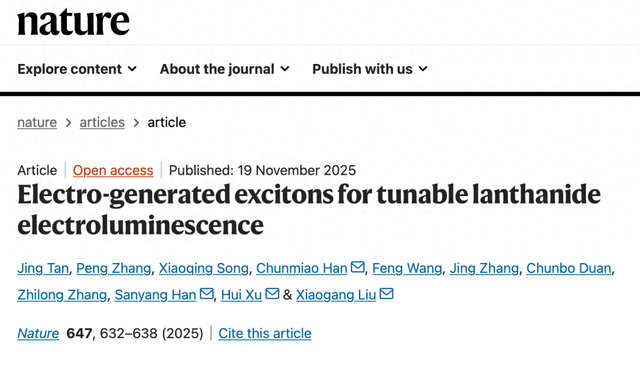
稀土电发光领域,科学家有新进展!
Ren Min Ri Bao· 2025-11-20 12:36
Core Insights - The research addresses the challenge of utilizing rare earth nanocrystals in electroluminescent devices due to their insulating properties, which hinder efficient current injection and transmission [1][2] - A novel "energy conversion cloak" has been designed to enhance energy transfer to the organic molecular interface of rare earth nanocrystals, providing a breakthrough for electroluminescent applications [1][2] Group 1 - Rare earth nanocrystals possess advantages such as tunable emission colors, narrow emission spectra, and high stability, making them promising candidates for electroluminescent materials [1] - The insulating nature of rare earth materials prevents efficient current injection, unlike semiconductor materials [1] Group 2 - Researchers have innovatively designed a series of functional ligands on the surface of rare earth nanocrystals, allowing for precise energy level structure control and efficient energy distribution to the luminescent ions [2] - This functionalized nanocrystal platform demonstrates potential for high color purity and tunable electroluminescence across various wavelengths [2] Group 3 - The research findings could advance the application of rare earth luminescence in flexible displays, near-infrared devices, and potentially in human health monitoring, non-invasive testing, and crop lighting [2]
从“异想天开”到全球突破 黑大团队十四年攻坚让稀土纳米晶“通电发光”登《Nature》
Zhong Guo Xin Wen Wang· 2025-11-20 07:23
Core Viewpoint - The research team led by Professor Xu Hui from Heilongjiang University has achieved a significant breakthrough in electroluminescent rare earth nanocrystals, marking the first publication from the university in the prestigious journal Nature, which is a historic milestone for the province's chemistry discipline [1]. Group 1: Research Background and Innovation - The idea originated in 2011 during a conversation at the National University of Singapore, where Professor Xu and collaborator Professor Wang Feng aimed to enable electroluminescence in inherently insulating rare earth nanocrystals, which have been a global challenge due to their inability to inject charge [2][3]. - The team proposed an innovative solution by creating "photoelectric bridges" on the surface of the nanocrystals using specially designed functional ligands, inspired by natural photosynthesis, allowing for efficient energy transfer [3][4]. Group 2: Research Achievements - After 14 years of collaborative research, the team developed green electroluminescent devices with an external quantum efficiency of 5.9%, a 76-fold increase compared to non-functionalized nanocrystal devices [4]. - The devices can achieve continuous and precise tuning of light from green to warm white and near-infrared by simply adjusting the doped rare earth ions without altering the device structure, challenging the traditional notion that insulators cannot exhibit electroluminescence [4]. Group 3: Future Directions - The research team aims to further enhance the brightness, efficiency, and stability of their technology, with plans for applications in display technology, biomedical imaging, and wearable devices, transforming their 14-year effort into a driving force for economic and social development [6].
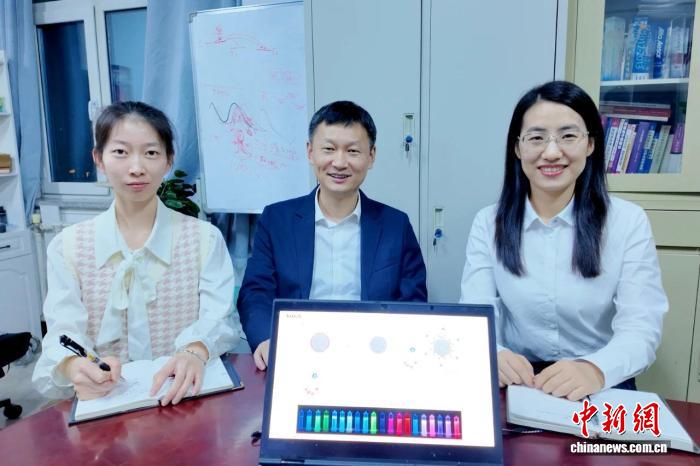
黑龙江大学首次发表Nature论文
生物世界· 2025-11-20 00:00
Core Viewpoint - The research published in Nature demonstrates a breakthrough in the application of lanthanide nanocrystals in electroluminescent devices, overcoming insulation challenges through functional ligand design for efficient multicolor light emission control [2][3][5]. Group 1: Research Achievements - The study showcases an efficient electroluminescent strategy based on insulating lanthanide fluoride nanocrystals (4 nm; NaGdF₄:X; X = Tb³⁺, Eu³⁺, or Nd³⁺) with a surface coated by functionalized 2-(diphenylphosphoryl)benzoic acid (ArPPOA) [5][7]. - The strong coupling between ArPPOA and lanthanide nanocrystals facilitates intersystem crossing (ISC) and high-efficiency energy transfer to the nanocrystals, achieving a transfer efficiency of up to 96.7% [7]. - The research achieved full-color multicolor electroluminescence without altering device structure, with the external quantum efficiency of the Tb³⁺ system exceeding 5.9% [7]. Group 2: Implications and Future Directions - The functionalized nanocrystal platform provides a modular strategy for exciton regulation in insulating nanocrystal systems, paving the way for the development of spectrally precise electroluminescent materials [8].