畜牧业转型升级

Search documents
一只羊能有超170种产品!看草原美味如何撬动消费大市场
Yang Shi Xin Wen Ke Hu Duan· 2025-12-14 06:57
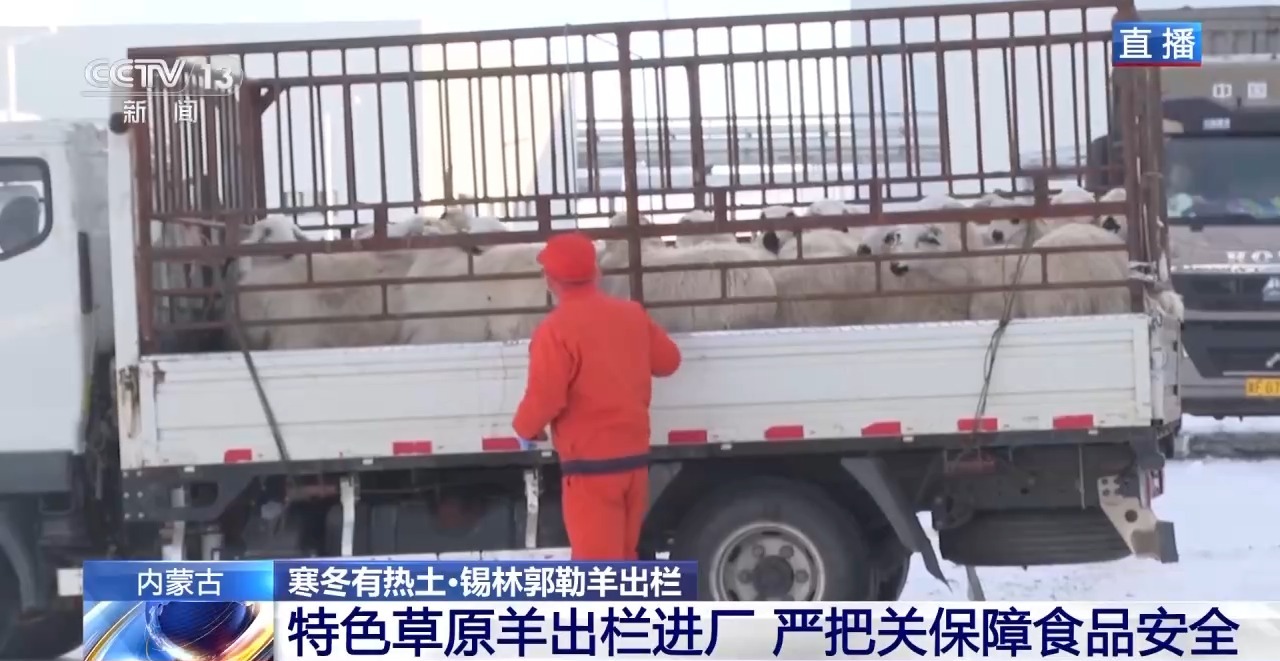
Core Viewpoint - The article highlights the successful transformation and modernization of the meat processing industry in Inner Mongolia, particularly focusing on the production and processing of sheep meat, which has led to increased product variety and value addition. Group 1: Meat Production and Processing - Inner Mongolia ranks first globally in the production of vegetables, fruits, meat, and aquatic products, effectively meeting the demands of over 1.4 billion people [1] - The processing of Xilin Gol sheep involves strict quality checks, including an "entry inspection" and a 12-hour resting period before sampling for safety tests, ensuring food safety from the source [3] - The modern production line can produce over 170 types of sheep meat products, enhancing the added value by approximately 20% through refined processing techniques [7] Group 2: Cold Chain and Distribution - Processed sheep meat is stored in a cold environment of 0-4°C for aging, followed by high-standard cutting in a temperature-controlled facility [5] - The entire cold chain process ensures that products are preserved at 0-4°C and distributed to regions such as Beijing-Tianjin-Hebei, Yangtze River Delta, and Guangdong-Hong Kong-Macau [9] Group 3: Technological Advancements in Livestock Management - The traditional herding methods have evolved into a technology-driven approach, with farmers using mobile applications for monitoring livestock, significantly reducing labor burdens [13] - Smart collars have been introduced for cattle, allowing real-time tracking of key health indicators, which supports precision farming [15] - National standards for livestock breeding are being enforced, with performance assessments conducted on breeding rams to optimize herd quality [17][19] Group 4: Economic Impact and Cultural Integration - The transformation in livestock farming has not only improved meat and dairy product supply but has also boosted the cultural tourism industry in Xilin Gol, with local tea houses and dairy product shops attracting numerous visitors [23] - In 2023, Xilin Gol produced over 2,500 tons of cheese products, generating sales exceeding 150 million yuan, benefiting over 4,000 households with an average income increase of 3,813 yuan [25]

巴彦淖尔市“三种模式”力促畜牧业转型升级
Nei Meng Gu Ri Bao· 2025-12-03 01:16
Group 1 - The core concept of the news is the implementation of a modern cold-season nomadic feeding model in Bayannur City, which enhances livestock management and reduces pressure on grasslands [1][2] - The cold-season modern nomadic feeding model includes facilities such as prefabricated shelters and feed supply centers, allowing for efficient winter livestock management without relying on natural pastures [1] - The livestock breeding park has a capacity of 12,000 sheep units and manages over 500,000 acres of grassland, utilizing a cooperative model to improve breeding efficiency and ensure sustainable pasture recovery [1][3] Group 2 - Bayannur City adheres to the principles of "no grazing ban but allowing livestock" and "reducing livestock without reducing income," developing three models: cold-season modern nomadic feeding, joint operations, and seasonal grassland livestock farming [2] - The city has established a governance system that combines both "blocking" and "diverting" strategies, including the designation of grassland management grids and the implementation of a 45-day grazing ban on 69.221 million acres of grassland by spring 2025 [2] - The ecological restoration and industrial upgrading efforts have led to a significant reduction in livestock units, with 686,300 sheep units grazed on natural grasslands this year, a decrease of 393,000 units compared to early 2024, resulting in a grassland balance index drop to 1% [3]
呼伦贝尔用系统思维破解草原过牧难题
Nei Meng Gu Ri Bao· 2025-10-08 01:20
Core Insights - Hohhot City is implementing innovative practices guided by Xi Jinping's ecological civilization thought to address the issue of overgrazing on its vast grasslands, which cover an area of 10.063 million acres [1] - The city has established a comprehensive "1+15+33" work system to tackle ecological pressures such as grassland degradation and biodiversity loss, focusing on infrastructure, law enforcement, production methods, and social services [1][2] Management and Policy - The city has systematically organized the management of various types of grasslands, establishing clear responsibilities and development directions to support the grass and feed industry [2] - A dual-track enforcement mechanism combining criminal justice and administrative measures has been implemented to enhance ecological law enforcement [2] Industry Development - Hohhot City is enhancing its industrial layout by improving harvesting, storage, processing, and sales capabilities, aiming for a dual increase in both the quantity and quality of feed production [2][5] - The city is exploring modern ranching models and social service systems to alleviate grazing pressure and promote high-quality development in the livestock sector [3][4] Economic Impact - The comprehensive management of grasslands has led to significant economic benefits for local herders, with collective economic income in four pastoral flags projected to increase by 86.92 million yuan in 2024 [5] - Pilot projects in modern ranching have resulted in reduced costs and increased profitability for herders, with some achieving a 30% reduction in breeding costs through centralized feeding practices [3][4]
新华财经早报:10月3日
Xin Hua Cai Jing· 2025-10-03 00:51
Group 1 - On October 1, during the National Day and Mid-Autumn Festival holiday, China's railway system sent 23.132 million passengers, setting a new single-day record for passenger volume [1] - The National Development and Reform Commission issued policies to accelerate the high-quality development of the engineering consulting industry, focusing on industry positioning, innovation, support capacity, and regulatory order [1] - The China Council for the Promotion of International Trade is enhancing high-level economic and trade interactions with the EU, supporting enterprises to participate in exhibitions, and creating high-level cooperation platforms [1] Group 2 - As of October 2, the total box office for films in 2025 surpassed 42.502 billion yuan, exceeding the total for the entire year of 2024 [1] - The Ministry of Agriculture and Rural Affairs reported that during the 14th Five-Year Plan period, China's livestock industry is undergoing transformation and upgrading, with a projected total output of meat, eggs, and milk reaching 175 million tons by the end of 2024, an 18.8% increase from 2020 [1] - The Chinese Academy of Sciences announced a breakthrough in solid-state lithium battery technology, addressing key challenges related to interface impedance and ion transport efficiency [1] Group 3 - On October 1, the charging volume on China's highways reached 17.4858 million kilowatt-hours, a year-on-year increase of 41.95%, marking a historical high [1] - Berkshire Hathaway reached a final agreement to acquire Occidental Petroleum's chemical business OxyChem for $9.7 billion, marking its largest acquisition since 2022 [3] - Tesla reported third-quarter deliveries of 497,099 vehicles, a year-on-year increase of 7.4%, surpassing estimates [3]

“十四五”期间我国畜禽产品供给能力明显提升
Xin Hua She· 2025-10-02 08:27
Core Insights - During the "14th Five-Year Plan" period, China is actively promoting the transformation and upgrading of the livestock industry, with a continuous increase in the scale of livestock and poultry farming [1] - By the end of 2024, the total output of meat, eggs, and milk in China is expected to reach 175 million tons, representing an 18.8% increase compared to 2020 [1] - Per capita annual consumption of meat and poultry eggs in China is projected to reach 72 kg and 25 kg, respectively, both exceeding the global average [1] - Per capita annual consumption of dairy products is expected to reach 40.5 kg, an increase of 2.3 kg compared to 2020 [1]
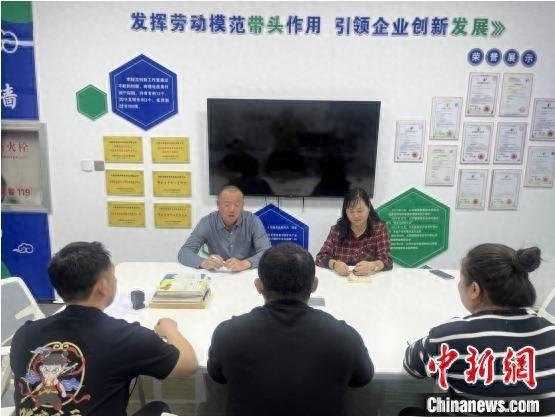
“神舟家园”牧民的跨界传奇:从羊倌夫妻到技术大拿
Huan Qiu Wang Zi Xun· 2025-05-09 08:15
Core Insights - The article highlights the transformation of a couple from ordinary shepherds to experts in embryo transplantation technology, showcasing their journey and impact on local agriculture [1][3][8] Group 1: Background and Initial Challenges - The couple, Qian Mila and Wang Qiaohong, initially lived a subsistence lifestyle, relying on sheep herding with minimal income [3] - Their fortunes changed in the late 1990s when a leading meat sheep breeding company introduced a new business model that included embryo transplantation technology [3][4] Group 2: Skill Acquisition and Development - The couple learned embryo transplantation techniques by closely observing experts and practicing diligently, transitioning from novices to capable practitioners in under six months [3][4] - They achieved a successful pregnancy rate of over 60% with the transplanted ewes, which later improved to a stable success rate of over 70% [4] Group 3: Educational Contributions - After mastering the technology, the couple was hired as technical directors to train new recruits, including university students, in practical skills [6][8] - They developed innovative teaching methods, such as creating mnemonics for complex procedures and setting up practice scenarios in sheep pens [6][8] Group 4: Economic Impact and Community Development - The introduction of embryo transplantation technology has significantly increased the income of local shepherds, with average annual earnings per ewe rising by over 30% [8] - The couple continues to provide free technical guidance to local farmers, fostering a community of knowledge sharing and skill development [8]