
饲草

Search documents
打造农畜产品新标杆
Xin Lang Cai Jing· 2026-02-06 19:58
Core Insights - Inner Mongolia's agricultural sector achieved significant milestones in 2025, with grain production reaching 840.7 billion jin, ranking fifth nationally, and leading in beef, mutton, milk, and other livestock products [1][3] Group 1: Agricultural Production Achievements - Grain planting area remained stable at over 10 million acres, marking the 22nd consecutive year of increased production [1] - Inner Mongolia is recognized as a crucial production base for grain and livestock, contributing significantly to national food security [1][3] - The region's beef production reached 1.017 million tons in 2025, maintaining its position as the top producer in the country [6] Group 2: Policy Recommendations and Industry Development - Local representatives proposed increasing support for foundational beef cattle breeding to enhance quality and quantity, suggesting broader coverage of subsidy policies [2] - A focus on developing a diversified forage supply system was emphasized to improve production efficiency and reduce costs [2] - Recommendations included establishing a tiered branding system for agricultural products to enhance market value and support farmers [6] Group 3: Technological Advancements and Innovations - Emphasis on leveraging technology for agricultural transformation, particularly in the dairy sector, where Inner Mongolia accounts for about 20% of national milk production [4][5] - Initiatives to enhance soybean production through technological innovation and support for breeding projects were highlighted [5] - The establishment of a "pyramid" breeding system for livestock was suggested to strengthen high-end breeds and optimize local breed structures [7]

草业国家技术创新中心落地内蒙古
Zheng Quan Ri Bao Wang· 2026-01-26 06:20
Core Viewpoint - The establishment of the National Technology Innovation Center for Grass Industry aims to address major strategic needs related to ecological and food security, focusing on high-quality development in the grass industry and promoting technological breakthroughs and industrialization of key technologies [1][3]. Group 1: Center Establishment and Structure - The center is organized by the Inner Mongolia Autonomous Region government, with Mongolian Grass Ecological Environment (Group) Co., Ltd. as the leading construction unit, collaborating with nine enterprises and six research institutions [2]. - The center will operate under a "4+5" model, establishing a headquarters in Hohhot and four research institutes focused on various aspects of grass production and utilization, along with five regional centers across different climatic zones in China [2]. Group 2: Research Focus and Goals - The center will tackle significant technical challenges in grass seed safety, food security, ecological restoration, and autonomous equipment, aiming to develop new varieties of grass and improve production efficiency [3]. - By 2030, the center plans to have a research team of 500 people, achieving international leadership in grass breeding technology and enhancing the intelligence of grass industry equipment [3]. - By 2035, the goal is to establish a comprehensive technical system covering the entire grass industry chain, promoting large-scale growth and supporting the emergence of influential technology-leading enterprises in the grass industry [3]. Group 3: Regional Innovation Platform Development - The Inner Mongolia Science and Technology Department has been enhancing the innovation platform layout, creating a system that integrates national strategic forces, innovation platforms, and regional support [4]. - As of now, the number of national-level innovation platforms in Inner Mongolia has expanded to 10, focusing on key industry sectors [4].
蒙草生态牵头建设的草业国家技术创新中心获批
Quan Jing Wang· 2026-01-25 23:13
Core Insights - The establishment of the National Technology Innovation Center for Grass Industry aims to enhance the quality and safety of grass production in China, focusing on ecological security and food safety [1][3] Group 1: Center Establishment and Structure - The center is supported by the Ministry of Science and Technology, the Ministry of Agriculture and Rural Affairs, and the National Forestry and Grassland Administration, with the Inner Mongolia Autonomous Region government as the organizing unit [1] - Mongolian Grass Ecology (300355) is the leading construction unit, collaborating with nine enterprises and six research institutions, including the Chinese Academy of Sciences and China Agricultural University [1] - The center will operate under a "4+5" model, establishing a headquarters in Hohhot and four research institutes focused on key areas of grass production and ecological restoration, along with five regional centers across China [1] Group 2: Research Focus and Goals - The center will address major technical challenges in grass seed safety, forage and food security, and ecological restoration, aiming to develop key technologies in seed breeding, efficient forage production, and intelligent equipment [2] - By 2030, the center plans to have a research team of 500 people, achieving international leadership in grass breeding technology and promoting the domestic replacement of high-quality forage [2] - By 2035, the goal is to establish a comprehensive technology system covering the entire grass industry chain, facilitating the growth of grass enterprises into internationally influential technology leaders [2] Group 3: Strategic Importance - The center's establishment aligns with the directives of Xi Jinping and the strategic goals outlined in the 20th National Congress of the Communist Party, emphasizing the importance of high-quality development in China's grass industry [3] - The Inner Mongolia Autonomous Region has already laid a solid foundation for this initiative by establishing a local grass technology innovation center and supporting the development of superior grass varieties and demonstration bases [3]

国家级创新平台+1!草业国家技术创新中心落地内蒙古
Zheng Quan Shi Bao Wang· 2026-01-25 09:32
Core Insights - The establishment of the National Technology Innovation Center for Grass Industry aims to address major strategic needs related to national ecological security and food security, focusing on high-quality development in the grass industry [1][2] - The center will operate under a collaborative model involving various enterprises and research institutions, with a goal to innovate and transform key technologies in the grass industry [1][2] Group 1: Center Establishment and Structure - The center is supported by the Ministry of Science and Technology, the Ministry of Agriculture and Rural Affairs, and the National Forestry and Grassland Administration, with the Inner Mongolia Autonomous Region government as the organizing unit [1] - The leading construction unit is Mongolian Grass Ecological Environment (Group) Co., Ltd., collaborating with nine enterprises and six research institutions [1] - The center will establish a physical operation entity named Grass Industry National Technology Innovation Center (Inner Mongolia) Co., Ltd., with a headquarters in Hohhot and four research institutes focusing on various aspects of grass production and utilization [1] Group 2: Research Focus and Goals - The center will tackle significant technical challenges in grass seed safety, fodder and food security, ecological restoration, and autonomous equipment in the grass industry [2] - Key areas of research include breeding new varieties of forage, efficient planting techniques, ecological restoration, and digitalization of grass industry equipment [2] - By 2030, the center aims to develop a research team of 500 people, achieve international leadership in grass breeding technology, and enhance the domestic production of quality forage [2] - By 2035, the goal is to establish a comprehensive technical system covering the entire grass industry chain, promoting large-scale growth and supporting the emergence of internationally influential grass industry enterprises [2] Group 3: Innovation Platform Development - The Inner Mongolia Autonomous Region's Science and Technology Department has been enhancing the innovation platform layout, creating a system that integrates national strategic forces and innovation platforms [3] - The region has expanded its national-level innovation platforms to ten, focusing on a full-chain innovation process from basic research to technology transfer [3]
海西:产业升级助推牧兴草盛
Xin Lang Cai Jing· 2026-01-11 19:16
Core Viewpoint - The development of the forage industry in Haixi Mongolian and Tibetan Autonomous Prefecture has significantly improved the livelihoods of local herders, allowing them to overcome winter feed shortages and transforming traditional livestock production patterns [1][2]. Group 1: Industry Development - Since the "14th Five-Year Plan," Haixi has adopted a development path of "combining planting and breeding, complementing agriculture and animal husbandry, and promoting grass-livestock cycles," accelerating the scale and standardization of the forage industry [1]. - The prefecture has implemented the "Three-Year Action Plan for High-Quality Development of Grass-Livestock Cycle Industry (2024-2026)," aiming to enhance the planting area and efficiency of forage crops while improving the quality and quantity of livestock production [1]. - Currently, Haixi has established two ten-thousand-mu forage bases and four thousand-mu bases, with an annual production of over 120,000 tons of high-quality forage [1]. Group 2: Ecological Focus - The local government has collaborated with research institutions and enterprises to address the challenges posed by saline-alkali land, successfully improving over 4,700 hectares of such land for forage cultivation [2]. - The transformation of marginal lands into forage production areas has reduced the grazing pressure on natural grasslands and enhanced the region's disaster prevention and livestock protection capabilities [2]. - Haixi is progressing towards a modernized grass-livestock industry system, emphasizing ecological priority and green development, laying a solid foundation for becoming a source of green organic agricultural and livestock products [2].
正风反腐在身边·记者百县行丨守护"牧草王国"
Zhong Yang Ji Wei Guo Jia Jian Wei Wang Zhan· 2025-12-30 07:03
Core Insights - Xi Jinping emphasized the importance of strengthening the ecological security barrier in northern China, particularly in Inner Mongolia, and highlighted the need for measures such as returning farmland to forests and balancing livestock and grassland [2] - The Inner Mongolia Autonomous Region is actively implementing these directives, focusing on grassland and forest protection as a primary task [2] Group 1: Governance and Policy Implementation - The Inner Mongolia Autonomous Region has initiated a campaign to combat illegal deforestation and overgrazing, with a target to reduce illegal grazing rates significantly by 2025 [3] - The governance structure involves a three-tiered approach, with the regional, municipal, and local governments collaborating to address overgrazing and promote the transformation of traditional animal husbandry [3][4] - The illegal grazing rate in the region has decreased from 25% to 4.35% within a year, indicating the effectiveness of the implemented measures [3] Group 2: Supervision and Enforcement - The local disciplinary inspection and supervision agencies are enhancing their oversight to ensure compliance with grazing regulations, conducting over 2,000 inspections during the designated rest periods for grazing [5] - Specific cases of non-compliance have led to disciplinary actions against local enforcement officials, highlighting the commitment to uphold regulations [6] - The establishment of checkpoints along major roads has been effective in controlling the influx of livestock from outside the region, ensuring that the balance of grass and livestock is maintained [7][8] Group 3: Economic Impact and Livestock Management - The shift towards more sustainable livestock management practices, such as feedlot and short-term fattening, has resulted in increased profitability for local herders, with the price of calves rising significantly [9] - The focus on ecological restoration and sustainable practices is not only benefiting the environment but also enhancing the economic conditions for local farmers [9]
呼和浩特市全年林草产值稳定超百亿元
Nei Meng Gu Ri Bao· 2025-12-04 01:37
Group 1: Core Objectives and Projects - In 2025, Hohhot aims to implement 30 key projects focused on ecological construction, resource protection, and industrial development, with a total investment of 306 million yuan [1] - The city has completed all annual construction tasks for engineering projects, achieving expected goals [1] Group 2: Ecological Value Transformation - Hohhot has established a modern forestry and grassland industry system, maintaining an annual output value of over 10 billion yuan [2] - The city has cultivated three national-level and 13 regional-level leading enterprises in the forestry industry, and is supporting the construction of cold storage and processing facilities [2] - The area has developed 20,000 acres of astragalus planting and promoted 100,000 acres of traditional Chinese medicine cultivation, yielding an annual output of 365 tons valued at 10 million yuan [2] Group 3: Resource Management and Protection - Hohhot has initiated comprehensive management projects in high-risk forest and grassland fire areas, resulting in no major forest or grassland fires throughout the year [3] - The wetland protection rate has increased from 26.72% in 2021 to 35.2% [3] - The city has completed pest control over 236,250 acres of forest and 389,000 acres of grassland, with no major disasters reported [3]
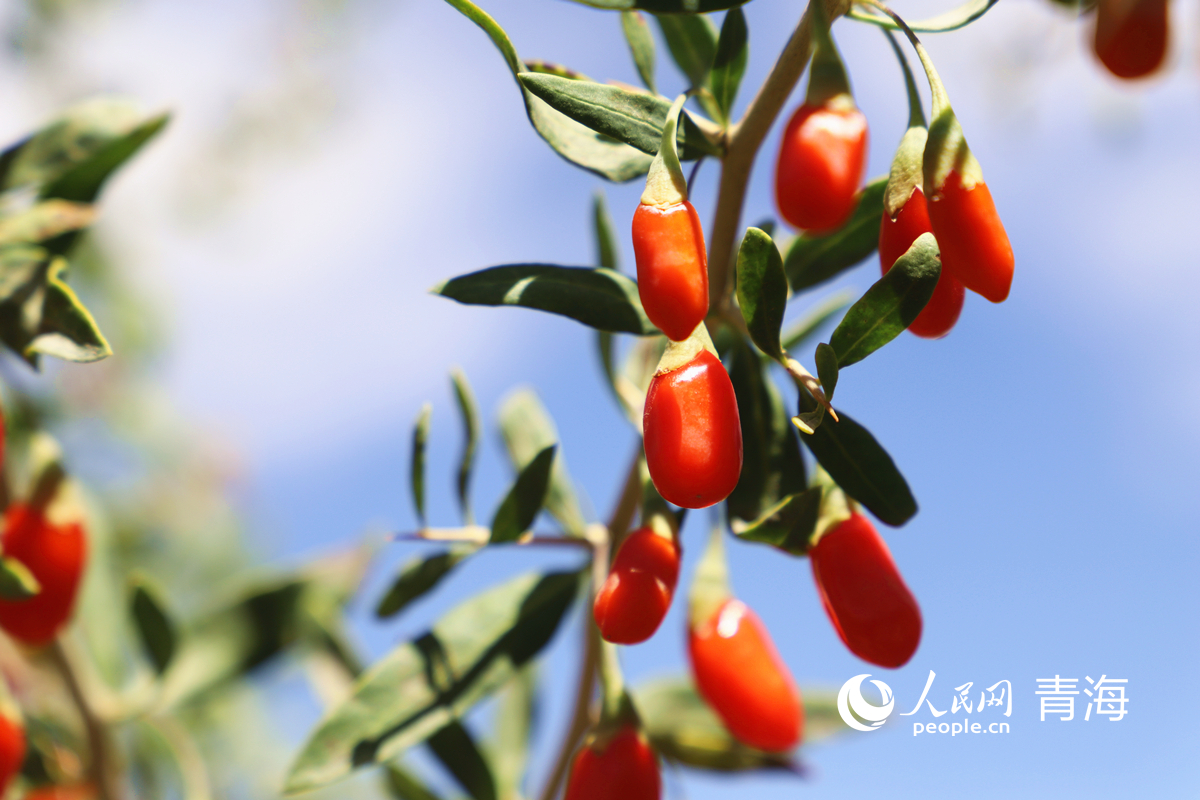
枸杞红、藜麦彩、牧歌悠,青海海西特色产业“链”出好“丰”景
Ren Min Wang· 2025-11-16 08:09
Core Viewpoint - The news highlights the agricultural and ecological richness of the Qaidam Basin in Qinghai Province, emphasizing the development of various advantageous industries and the promotion of green organic agricultural products as a key strategy for economic growth and ecological sustainability [1][8]. Industry Overview - The Qaidam Basin is recognized as a significant agricultural area, with a focus on five major advantageous industries: Tibetan sheep, yaks, goji berries, barley, and forage, alongside emerging sectors like quinoa and facility-grown vegetables [4][5]. - The region is the largest goji berry cultivation area in China, producing nearly 100,000 tons of dried fruit annually, primarily exported to Europe, America, Southeast Asia, and Hong Kong [5]. Production and Capacity - The Tibetan sheep industry is supported by the establishment of standardized breeding bases, with a target of 1.8 million sheep to be slaughtered by 2025, achieving a slaughter rate of over 60% and a total meat production of approximately 30,000 tons [5]. - The forage industry has a natural grassland area of 180 million acres, with 110 million acres available for use, and the artificial forage planting area reaching 127,700 acres, yielding 105,000 tons with a value of 162.4 million yuan [5]. Quinoa and Other Emerging Industries - The quinoa industry has expanded to over 100,000 acres, with seven processing workshops capable of processing 30,000 tons annually, producing various quinoa products [6]. - The region is also developing a diverse range of new industries, including medicinal herbs and edible fungi, contributing to the "5+5+N" advantageous industry system [4][8]. Green Development Initiatives - The local government has implemented several policies to promote the development of green organic agricultural products, including plans for a comprehensive agricultural industry chain and financial support for quality improvement [10][12]. - Environmental sustainability efforts include the utilization of crop residues and livestock waste, achieving a straw utilization rate of 90.23% and a comprehensive utilization rate of livestock waste exceeding 84% [10][11]. Brand Development and Market Expansion - The region is actively building the "Magical Qaidam" public brand, with 94 enterprises and 395 products included in the quality product library, and has established flagship stores to enhance market presence [12]. - In 2024, the region aims to export 285,800 tons of various agricultural products, generating a revenue of 5.537 billion yuan [12].

唐中东大使会见新任毛里塔尼亚畜牧业部长
Shang Wu Bu Wang Zhan· 2025-10-22 17:36
Core Points - The meeting between Chinese Ambassador Tang Zhongdong and the new Mauritanian Minister of Livestock, Sidi, focused on enhancing practical cooperation in the livestock sector between China and Mauritania [1] - The Chinese aid livestock demonstration center in Mauritania is highlighted as a landmark project for bilateral cooperation, with plans to explore base farming, forage planting, and dairy cattle breeding [2] - Mauritania expresses interest in learning from China's advanced breeding experiences and seeks technical cooperation in areas such as animal vaccination and forage planting [2]

呼伦贝尔用系统思维破解草原过牧难题
Nei Meng Gu Ri Bao· 2025-10-08 01:20
Core Insights - Hohhot City is implementing innovative practices guided by Xi Jinping's ecological civilization thought to address the issue of overgrazing on its vast grasslands, which cover an area of 10.063 million acres [1] - The city has established a comprehensive "1+15+33" work system to tackle ecological pressures such as grassland degradation and biodiversity loss, focusing on infrastructure, law enforcement, production methods, and social services [1][2] Management and Policy - The city has systematically organized the management of various types of grasslands, establishing clear responsibilities and development directions to support the grass and feed industry [2] - A dual-track enforcement mechanism combining criminal justice and administrative measures has been implemented to enhance ecological law enforcement [2] Industry Development - Hohhot City is enhancing its industrial layout by improving harvesting, storage, processing, and sales capabilities, aiming for a dual increase in both the quantity and quality of feed production [2][5] - The city is exploring modern ranching models and social service systems to alleviate grazing pressure and promote high-quality development in the livestock sector [3][4] Economic Impact - The comprehensive management of grasslands has led to significant economic benefits for local herders, with collective economic income in four pastoral flags projected to increase by 86.92 million yuan in 2024 [5] - Pilot projects in modern ranching have resulted in reduced costs and increased profitability for herders, with some achieving a 30% reduction in breeding costs through centralized feeding practices [3][4]