
疆电外送

Search documents
立新能源:预计2025年度净利润为9500万元~1.1亿元,同比增长89.31%~119.2%
Mei Ri Jing Ji Xin Wen· 2026-01-29 10:31
Group 1 - The company expects a net profit attributable to shareholders of 95 million to 110 million yuan for 2025, representing a year-on-year growth of 89.31% to 119.2% [1] - The increase in performance is primarily due to the new wind power and independent energy storage projects that have commenced operation, leading to increased electricity generation and revenue [1] - The company also benefited from investment income from its joint venture, Xinjiang Huadian Tianshan Power Co., Ltd., which has been operational in the "Three Channels of Xinjiang Power Transmission" project [1]
新疆2025年新能源外送电量达443.82亿千瓦时,同比增13.03%
Zhong Guo Xin Wen Wang· 2026-01-16 03:33
Core Insights - Xinjiang's electricity export volume is projected to reach 141.299 billion kWh by 2025, marking an 11.5% year-on-year increase, continuing a trend of over 100 billion kWh for six consecutive years [1] - The renewable energy export volume is expected to be 44.382 billion kWh, reflecting a 13.03% increase, and accounting for 31.41% of the total export volume, indicating a significant expansion in green energy delivery [1] Industry Overview - Xinjiang is rich in coal, wind, and solar resources, serving as a strategic energy resource base for the country and a key province for electricity transmission from the west to the east [1] - The region's unique resource endowment positions Xinjiang as a crucial area for the development of clean energy in China [1] Infrastructure and Capacity - By the end of December 2025, the cumulative installed capacity of renewable energy in Xinjiang is expected to exceed 161 million kW, constituting over 60% of the total installed capacity of the grid [1] - The abundant green electricity resources are solidifying the energy foundation for Xinjiang's green transformation in electricity exports [1] Historical Context - Since the official commencement of electricity exports in 2010, Xinjiang has cumulatively exported over 1 trillion kWh, covering 22 provinces and municipalities across the country, thus playing a vital role in ensuring national power supply and optimizing energy structure [1]
中国石油塔里木油田全年光伏发电量突破20亿千瓦时
Ke Ji Ri Bao· 2025-12-28 05:32
Core Insights - The Tarim Oilfield of China Petroleum has achieved a significant milestone by surpassing 2 billion kilowatt-hours in annual photovoltaic power generation, with a single-day peak output exceeding 10 million kilowatt-hours, marking the highest records for both annual and daily generation [1] Group 1: Photovoltaic Power Generation Achievements - The Tarim Oilfield has successfully established a new model for the coordinated development of oil, gas, and renewable energy [1] - The cumulative installed capacity of centralized photovoltaic projects has reached 2.6 million kilowatts, with 239 distributed photovoltaic projects totaling 63,000 kilowatts [1] - The photovoltaic power generation volume has shown a significant increase, achieving 260 million kilowatt-hours in 2023 and projected to exceed 1.34 billion kilowatt-hours in 2024 [1] Group 2: Energy Supply and Distribution - Approximately 8% of the generated electricity is used for the oilfield's own oil and gas production, replacing traditional energy sources like grid electricity and natural gas, while 92% is supplied externally [2] - The Tarim Oilfield has established long-term bilateral agreements for green electricity supply with regions such as Shanghai and Jiangsu, contributing to the "Xinjiang Electricity Export" initiative [2] Group 3: Technological Innovations and Future Plans - The oilfield has implemented an innovative "drone inspection + robot cleaning" smart operation and maintenance model to address challenges posed by frequent dust storms and temperature fluctuations [2] - Future projects will include the construction of additional photovoltaic power generation facilities in areas like Luntai County and Shaya County, as well as advancements in pumped storage, new energy storage, and hydrogen applications [2]

新疆累计外送电量超1万亿千瓦时
Ren Min Ri Bao Hai Wai Ban· 2025-12-19 01:25
Core Insights - Xinjiang has achieved a cumulative electricity export of 10,005 billion kilowatt-hours since the implementation of the electricity export initiative in 2010, surpassing the 1 trillion kilowatt-hour mark [1] - The electricity export covers 22 provinces and regions across the country, with renewable energy accounting for 2,960 billion kilowatt-hours, representing 29.6% of the total export [1] Group 1 - The construction of five electricity export channels has established a robust network structure, enhancing Xinjiang's electricity export capacity to 33 million kilowatts [1] - The fourth direct current channel project is under accelerated construction, with a planned total installed capacity of nearly 19 million kilowatts, expected to deliver over 60% green electricity to the Sichuan-Chongqing region [1] - The scale of electricity exports has seen exponential growth, increasing from 300 million kilowatt-hours in 2010 to a projected 1,267 billion kilowatt-hours in 2024, a growth of over 422 times in 14 years [1] Group 2 - By October 2025, Xinjiang's cumulative installed capacity of renewable energy is expected to exceed 142 million kilowatts, accounting for approximately 60% of the total energy installed capacity [2] - From January to November 2025, Xinjiang's cumulative electricity export reached 1,262.8 billion kilowatt-hours, a year-on-year increase of 10.36%, with renewable energy exports exceeding 420 billion kilowatt-hours, making up over 30% of total exports [2] - The continuous enhancement of the "green content" in electricity exports indicates a sustained improvement in the quality of energy being supplied [2]
“疆电外送”电量累计 突破1万亿千瓦时
Jing Ji Ri Bao· 2025-12-15 22:39
Core Insights - Xinjiang's "Jiang Electric Delivery" has cumulatively exceeded 1 trillion kilowatt-hours as of December 15, providing strong support for national power supply, optimizing energy structure, and promoting regional coordinated development [1] Group 1 - The achievement of over 1 trillion kilowatt-hours in electricity delivery highlights the significant role of Xinjiang in the national energy landscape [1] - This milestone is crucial for ensuring the stability of power supply across the country [1] - The initiative contributes to the optimization of the energy structure in China [1]
突破1万亿千瓦时!
中国能源报· 2025-12-15 09:43
Group 1 - The total electricity export from Xinjiang has surpassed 1 trillion kilowatt-hours, reaching 1,000.5 billion kilowatt-hours as of December 15 [1] - Among the total export, renewable energy accounts for 296 billion kilowatt-hours, which is nearly one-third of the total [1] - Since the launch of electricity export in 2010, Xinjiang's export volume has increased from 300 million kilowatt-hours to 1,267 billion kilowatt-hours, representing a growth of over 400 times [5] Group 2 - Xinjiang currently has five electricity export channels with a total export capacity of 33 million kilowatts, covering 22 provinces and municipalities across the country [3]

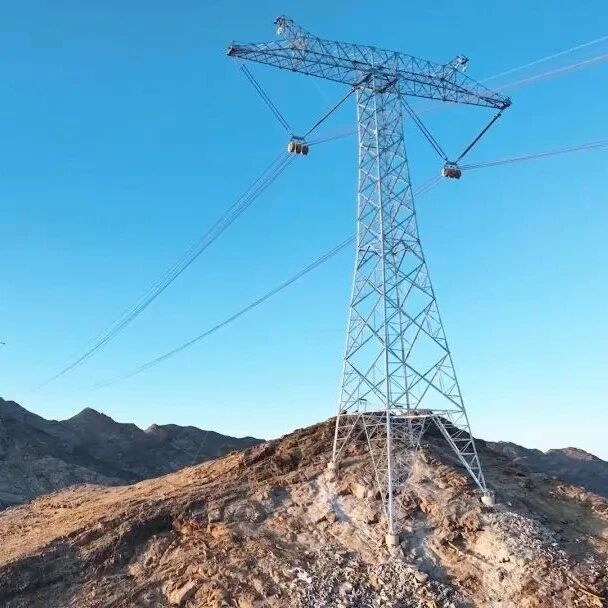
“疆电外送”第四通道电源项目迎来重要建设节点
Zhong Guo Jing Ji Wang· 2025-11-05 05:48
Core Points - The "Fourth Channel for Xinjiang Power Transmission" project has reached a significant milestone with the successful installation of the first boiler steel frame, marking the transition from civil construction to a parallel construction phase of civil works and installation [1][2] - The project is part of China Three Gorges Corporation's first million-kilowatt-level "Shagehuang" wind-solar-fire-storage base in southern Xinjiang, with a total investment of approximately 100 billion yuan, including about 71.8 billion yuan for the power source project [2] Group 1 - The successful lifting of the first boiler steel frame is a critical step in ensuring the stability and safety of the boiler's operation, which is essential for the subsequent installation of heavy equipment [1] - The project has entered the main construction phase for the fire power units, with the first unit's main plant foundation completed and the construction of the chimney and cooling tower progressing simultaneously [2] - The project is expected to be completed and operational by 2028, with the first unit projected to be operational by 2027, contributing significantly to the energy supply and transition in the region [2] Group 2 - The project aims to deliver over 60% green electricity to the Sichuan-Chongqing region, providing reliable power support of 5 million kilowatts during peak hours [2] - The construction environment is challenging, and the project team is committed to ensuring quality while maintaining progress without interruption during winter [2]
专题报道︱《天山放歌》实干奋进:新疆维吾尔自治区能源等领域取得跨越式进步
国家能源局· 2025-09-25 08:51
Core Viewpoint - The article highlights the significant progress made by the Xinjiang Uygur Autonomous Region in various sectors such as transportation, energy, water conservancy, and digital economy, showcasing high-quality development and improvements in people's livelihoods as part of the celebration of the 70th anniversary of the region's establishment [2][3]. Energy Sector - Xinjiang has established three major "Xinjiang Power Transmission" channels, with external power transmission exceeding 1 trillion kilowatt-hours for five consecutive years, supplying electricity to 22 provinces and regions across China [6]. - The construction of the fourth power transmission channel from Ruoqiang to Mianyang is underway, with a projected completion time of approximately three years, leveraging the region's abundant wind and solar resources [7]. - The completion of the 750 kV ultra-high voltage ring network in the Tarim Basin is expected to drive over 28.3 billion yuan in industrial investment and create more than 8,000 jobs [7][8]. - The total installed power capacity in Xinjiang is projected to reach 192.7 million kilowatts by 2024, with renewable energy capacity exceeding 100 million kilowatts, marking a significant transition from an "energy region" to a "clean energy region" [13]. Renewable Energy Development - The first molten salt solar thermal power plant in Xinjiang, with a capacity of 50 megawatts, is operational, and a larger 150-megawatt solar thermal project is under construction, showcasing the region's commitment to renewable energy [10]. - The local wind energy industry has created over 600 jobs, allowing residents to earn stable incomes without migrating for work [10]. Coal and Chemical Industry - The coal chemical industry in the Qundong area is evolving, with efforts to upgrade and expand production capabilities, transforming coal into natural gas and stable electricity, as well as developing high-value chemical products [12]. - The introduction of autonomous driving technology in coal mining operations enhances efficiency and safety, allowing for continuous operation regardless of extreme weather conditions [14].

河南用上新疆电只需0.007秒
He Nan Ri Bao· 2025-09-24 23:19
Core Insights - The article highlights the operational efficiency and significance of the Tianshan-Zhongzhou ±800 kV UHVDC transmission project, which plays a crucial role in energy supply and regional development in China [1][2]. Group 1: Project Overview - The Tianshan-Zhongzhou UHVDC project spans 2,192 kilometers across six provinces, enabling rapid electricity transmission from Xinjiang to Henan in just 0.007 seconds [1]. - The Zhongzhou converter station, as a receiving end, is pivotal in ensuring the stable operation of this energy artery, which is the first UHVDC project for the national "Xinjiang Electricity Export" initiative [1]. Group 2: Operational Performance - During the summer, the project maintained a maximum operational capacity of 6 million kilowatts, serving as a critical support for electricity supply in Henan [1]. - The cumulative electricity transmission has exceeded 4,300 billion kilowatt-hours, which could power approximately 172 million households for over a year, significantly reducing coal consumption and carbon emissions in the region [2]. Group 3: Talent Development - The Zhongzhou converter station has become a key training base for electrical power professionals, having trained over 100 technical experts who have taken leadership roles in various new converter stations across the country [2].
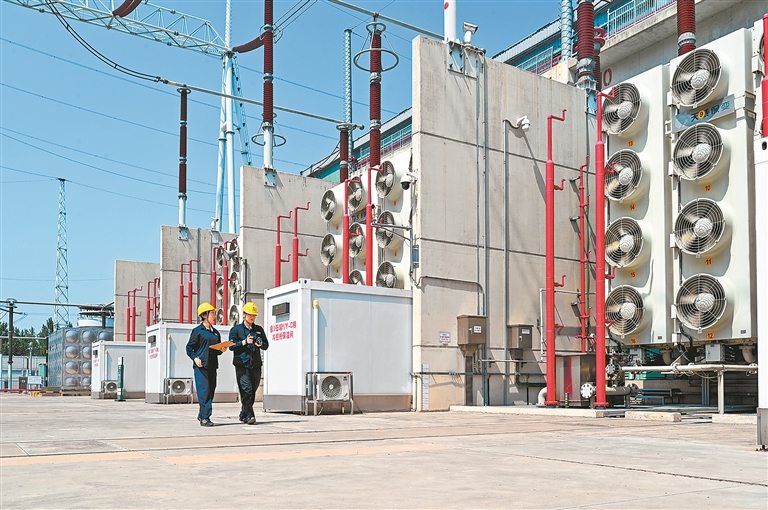
跨越千里的绿电输送 新疆如何做到?
Yang Shi Xin Wen· 2025-09-22 05:27
Core Insights - Xinjiang's coal, solar, and wind energy reserves rank among the highest in the country, enabling the "Xinjiang Power Transmission" initiative, which complements electricity usage patterns between Xinjiang and the eastern-central regions [1][2] - The scale of "Xinjiang Power Transmission" has expanded significantly since the 18th National Congress, establishing a robust power grid structure that supports both internal supply and external transmission [1][3] Group 1: Power Transmission Infrastructure - The ±1100 kV ultra-high voltage transmission line from Xinjiang to Anhui spans over 3000 kilometers, ensuring stable and safe operation through advanced drone inspections [2][3] - Xinjiang has developed five major power transmission corridors, including routes to Gansu, Henan, Anhui, and Chongqing, facilitating efficient energy distribution [3][4] - By the end of 2024, Xinjiang plans to have 32 750 kV substations and 98 transmission lines, totaling 12,300 kilometers, making it the province with the most extensive 750 kV network in China [3][5] Group 2: Renewable Energy Integration - The integration of wind and solar energy into the grid is challenging due to their variability, but Xinjiang has developed a new generation of power forecasting systems that utilize AI for accurate predictions [4][5] - A comprehensive automatic control system has been established to optimize the collaboration of various energy sources, ensuring maximum utilization of renewable energy [5][6] - Currently, one-third of the electricity transmitted from Xinjiang is green energy, with over 270 billion kilowatt-hours of green electricity delivered, equivalent to planting 11.18 billion trees [5][6] Group 3: Future Developments - Xinjiang plans to initiate 41 new and ongoing ultra-high voltage projects by 2025, marking a 50% increase from 2024, indicating a significant expansion in infrastructure development [6]