
新能源电力

Search documents
华润电力:2025年年报点评:火电业绩优异弥补风光下滑,业绩仍增长-20260320
GUOTAI HAITONG SECURITIES· 2026-03-20 02:45
Investment Rating - The report maintains a rating of "Buy" for the company [6] Core Insights - In 2025, the company achieved a net profit attributable to shareholders of HKD 14.52 billion, representing a year-over-year increase of 0.9%. The proposed total dividend for 2025 is HKD 1.1 per share, with a payout ratio of 40.2% [2][10] - The company’s total revenue for 2025 was HKD 102.01 billion, reflecting a year-over-year decrease of 3.1% [10] - The report forecasts earnings per share (EPS) for 2026-2028 to be HKD 2.09, HKD 2.20, and HKD 2.41 respectively, with a target price of HKD 25.08 based on a 12x PE ratio [10] Financial Summary - **Revenue and Profit**: - Total revenue for 2025: HKD 102,010 million, down 3.1% from 2024 - Net profit for 2025: HKD 14,519 million, up 0.9% from 2024 - Core profit from thermal power: HKD 7,640 million, up from HKD 4,640 million in 2024 - Core profit from renewable energy: HKD 7,600 million, down from HKD 9,200 million in 2024 [5][10] - **Profitability Metrics**: - PE ratio for 2025: 6.94 - PB ratio for 2025: 0.90 [5][10] - **Future Projections**: - Expected revenue for 2026: HKD 93,685 million - Expected net profit for 2026: HKD 10,839 million, a decrease of 25.3% year-over-year [5][10] Market Data - Current share price: HKD 19.44 - Market capitalization: HKD 100,642 million - 52-week price range: HKD 17.09 - 21.30 [7][10]

内蒙古“十五五”规划纲要
Zhong Shang Chan Ye Yan Jiu Yuan· 2026-03-13 00:05
Investment Rating - The report does not explicitly state an investment rating for the industry or company Core Insights - The economic foundation of Inner Mongolia is becoming more solid, with a regional GDP reaching 2.67 trillion yuan and a per capita GDP ranking in the top 8 nationally [5] - Fixed asset investment has an average annual growth rate of 12.8%, with significant project investments totaling 3.8 trillion yuan [5] - The region has made progress in building a modern industrial system, with over 80 products having the highest production capacity in the country, and advancements in green hydrogen and ammonia industries [5] - Inner Mongolia's innovation capacity is accelerating, with notable achievements in high-level talent development [5] - The region's urbanization rate has reached 71.5%, and significant infrastructure improvements have been made, including a comprehensive transportation network [5] Summary by Sections Economic Development - The region's GDP is projected to grow by 4.7% by 2025, with an average annual growth rate of around 4.5% [19] - The urbanization rate is expected to increase from 71.5% to 73% by 2030 [19] - Research and development expenditure is anticipated to grow by 9.4% [19] Innovation and Industry - The report emphasizes the importance of technological innovation, with a target of increasing the number of high-value invention patents per 10,000 people from 2.88 to 4.3 by 2030 [19] - The digital economy's core industries are expected to contribute 5% to the regional GDP by 2030 [19] Social Development - The average disposable income per resident is projected to grow by 4.6%, aligning with GDP growth [19] - The report highlights improvements in public health services, with a target of increasing the number of healthcare professionals per 1,000 people from 3.7 to 4.5 [19] Environmental Goals - The report outlines goals for ecological civilization, including a reduction in major pollutants and an increase in forest coverage from 21.98% to 22.24% by 2030 [19] - The region aims to achieve carbon peak targets by 2030, with a focus on green development and low-carbon transformation [40][42] Infrastructure and Investment - Significant investments in infrastructure are noted, with a focus on enhancing transportation networks and energy production capabilities [5][6] - The region's coal supply exceeds 3.5 billion tons, maintaining its position as a national leader in coal supply [6] Cultural and Social Integration - The report emphasizes the promotion of national unity and cultural integration, with initiatives to enhance the awareness of the Chinese national community [20][21]
内蒙古开放团组会议:内蒙古能源发展面向“未来”
Zhong Guo Neng Yuan Wang· 2026-03-08 03:51
Group 1: Economic Confidence and Energy Development - Inner Mongolia has strong confidence in its economic development, particularly in the energy sector, with a focus on renewable energy and high-value-added industries like computing power [1] - The coal production in Inner Mongolia is projected to reach nearly 1.3 billion tons by 2025, maintaining its position as a leading coal producer in China [1] - During the 14th Five-Year Plan, Inner Mongolia supplied 3.5 billion tons of coal to 29 provinces, ranking first in the country [1] Group 2: Resource Utilization and Technological Advancements - The abundant coal resources in Inner Mongolia are driving the development of electricity and coal chemical industries, as well as upgrading equipment manufacturing [2] - Inner Mongolia holds over 83% of China's rare earth reserves, with low extraction costs due to the association with iron ore [2] - The region's wind energy accounts for 57% of the national total, and solar energy accounts for 21%, with renewable energy installations exceeding fossil fuel capacity at over 170 million kilowatts [3] Group 3: Computing Power and Data Centers - Inner Mongolia is a key hub for the national "East Data West Computing" project, with significant advancements in the computing power industry [3] - The region's electricity supply, particularly from renewable sources, is abundant, stable, and cost-effective, with green electricity accounting for over 82% of data center energy consumption [3] - Recent developments in large models in China highlight the importance of Inner Mongolia's computing power support, transitioning from coal and electricity sales to computing power [4]
山西新能源发电量2025年首破千亿千瓦时
Xin Lang Cai Jing· 2026-02-24 23:26
Group 1 - The core viewpoint of the article highlights that by 2025, Shanxi's renewable energy generation is expected to reach 118 billion kilowatt-hours, marking a 26% year-on-year increase, equivalent to the annual electricity consumption of approximately 35 million households, while saving about 36 million tons of standard coal and reducing carbon dioxide emissions by around 88 million tons [1][2] - By the end of 2025, Shanxi's installed capacity of renewable energy is projected to reach 78.8 million kilowatts, accounting for nearly 50% of the province's total installed capacity, indicating a significant acceleration in the green and low-carbon transformation of the energy structure [1] - The State Grid Shanxi Electric Power Company has built and put into operation 26 renewable energy gathering stations since the 14th Five-Year Plan, effectively supporting the grid integration of over 40 million kilowatts of renewable energy [1] Group 2 - The company is leveraging its leading position in the Shanxi electricity market to promote the participation of renewable energy in market transactions, with 2025 expected to see 22.2 billion kilowatt-hours of renewable energy traded, representing 18.8% of the total renewable energy generation [2] - The company has innovated trading varieties, including the first multi-year hourly green electricity trading, with a transaction volume of 195 million kilowatt-hours, and established the first medium- and long-term standby auxiliary service market, cumulatively facilitating the consumption of 216 million kilowatt-hours of renewable energy [2]
开年传捷报!国家电投山东公司首个省外百万千瓦新能源基地建成投运
Zhong Guo Fa Zhan Wang· 2026-02-09 11:49
Group 1 - The successful grid connection of the 100 MW wind power project at the Pingshan Lake in Gansu marks a milestone for the State Power Investment Corporation (SPIC) in building green energy bases outside Shandong Province, with a total installed capacity of 1.05 million kW [1][2] - The Gansu project is the first self-developed project by SPIC in the external renewable energy market, facing severe natural challenges such as extreme low temperatures of -30°C and strong sandstorms, as well as complex grid connection issues [2] - The project is expected to generate an annual power output of 209 million kWh, saving approximately 63,500 tons of standard coal and reducing carbon dioxide emissions by about 174,000 tons and sulfur dioxide emissions by around 522 tons, contributing to the company's "dual carbon" goals [2] Group 2 - SPIC plans to leverage the full operation of its first external million-kilowatt renewable energy base to optimize its green energy industry layout and promote the implementation of high-quality self-developed projects, aligning with the group's "balanced growth strategy" for sustainable development [3]
研报掘金丨华源证券:维持皖能电力“买入”评级,发布员工跟投完善激励
Ge Long Hui A P P· 2026-02-05 07:33
Core Viewpoint - Huayan Securities report indicates that WanNeng Power's acquisition of group new energy assets will enhance the company's new energy installed capacity and address competition issues within the group's new energy business [1] Group 1: Acquisition Details - The target asset, an energy trading company, serves as the core platform for WanNeng Power's new energy asset operations, with a total installed capacity of approximately 1.44 million kilowatts and electrochemical energy storage of 103,000 kilowatts already in operation [1] - The projects under construction have an installed capacity of about 1.55 million kilowatts [1] - The net profit for the first three quarters of 2025 is projected to be 85 million yuan, with a book value of the consolidated net assets of 1.419 billion yuan as of September 30, 2025, and a transaction price of 1.1 times PB, totaling 1.583 billion yuan [1] Group 2: Employee Incentives and Financial Projections - The company has launched a core employee co-investment plan to align employee interests with those of the company in a market-oriented manner [1] - The incremental thermal power installed capacity is expected to mitigate the pressure from declining provincial electricity prices, while the development of new energy will contribute to revenue [1] - The company forecasts a consolidated net profit of 2.2 billion yuan, 1.8 billion yuan, and 2.0 billion yuan for 2025, 2026, and 2027 respectively, with corresponding PE ratios of 8, 10, and 9 times [1]

“煤炭+新能源”将碰撞出怎样的火花?
Zhong Guo Huan Jing Bao· 2026-02-04 00:29
Core Viewpoint - Shanxi Province is making significant progress in energy transition, with renewable and clean energy installations surpassing coal power for the first time, indicating a shift towards a more sustainable energy system [1] Group 1: Energy Transition in Shanxi - The installed capacity of renewable and clean energy in Shanxi increased by 18.29 million kilowatts year-on-year, reaching 90.48 million kilowatts, accounting for 55.1% of the total energy mix [1] - The construction of a new energy base in the coal mining subsidence area of Jinbei is accelerating, with total investments exceeding 50 billion yuan [1] - Thirteen green electricity industrial parks have been initiated, with green electricity trading volumes ranking among the top in the country [1] Group 2: Coal and Renewable Energy Synergy - The relationship between coal and renewable energy is evolving from competition to collaborative coexistence, enhancing the overall efficiency and resilience of the energy system [2] - Coal's stable supply is crucial for energy security, especially in the context of increasing extreme weather events affecting renewable energy output [2] - Existing coal infrastructure, such as land and power transmission systems, provides a foundation for the large-scale development of renewable energy [2] Group 3: Technological Innovation and Value Upgrade - The integration of coal power with renewable sources like wind and solar can create a flexible energy system that enhances grid stability [3] - Utilizing idle land in mining areas for distributed solar power not only supports mining operations but also promotes ecological restoration [3] - Technological advancements, such as the use of green hydrogen and carbon capture, are essential for reducing emissions and driving the coal industry towards a more sustainable model [3] Group 4: Deep Integration of Energy Sectors - Successful examples from regions like Yulin in Shaanxi demonstrate the potential of integrating renewable energy with coal mining operations through smart microgrids [4] - The application of clean technologies in mining operations can significantly reduce carbon emissions and enhance resource efficiency [4] - The coal industry is transitioning from a single fuel focus to a dual role as both fuel and raw material, creating new high-value green materials [4] Group 5: Future Outlook and Systemic Change - The energy sector in China is at a critical juncture, where the development of renewable energy is driving the upgrade of traditional energy systems [5] - Mechanisms such as green electricity trading and distributed solar access are being implemented to optimize energy use in mining areas [5] - The integration of coal and renewable energy is expected to evolve into a comprehensive energy hub, contributing to China's dual carbon goals and sustainable development [5]
十点新变化——2026年地方两会点评
一瑜中的· 2026-02-03 14:39
Group 1: GDP Targets - This year, Guangdong Province has set a range target for GDP growth for the first time in seven years, with a target of 4.5%-5.5% [3][21] - A total of 15 provinces have lowered their GDP targets by 0.5 percentage points, while 12 provinces have kept their targets stable compared to last year [15][21] - The weighted average GDP growth target for 29 provinces is estimated to be 5.0%, slightly down from 5.24% last year [3][15] Group 2: Investment Trends - Major project investment growth in six economic provinces has decreased by 0.7% this year, compared to a growth of 3% last year [5][25] - Non-economic provinces like Fujian, Shanghai, Jiangxi, and Shaanxi have seen a significant decline in major project investment growth, with a combined decrease of 8.1% this year [5][25] - Investment in real estate, particularly in urban village and old community renovations, has shown significant declines in several provinces, such as Zhejiang and Chongqing [6][30] Group 3: Funding Sources - There are two potential improvements in investment funding: increased issuance of policy financial tools and optimization of special bond usage [7][33] - Provinces like Guangdong have committed to regular issuance of policy financial tools, indicating a potential increase in central government support [7][33] - Some provinces, including Henan and Jilin, are focusing on optimizing the use of special bonds to enhance project funding [7][33] Group 4: Investment Directions - Investment focus this year is shifting towards areas such as public welfare, new infrastructure represented by computing power, and urban renewal projects [8][36] - Provinces like Guangdong and Shandong are increasing investments in public welfare projects, with Shandong aiming to maintain 80% of fiscal spending on public welfare [8][36] - New infrastructure projects related to computing power are being prioritized in several provinces, including Guangdong and Hubei [8][36] Group 5: Industry Focus - There is an increased emphasis on AI and related technologies, with at least 27 provinces making deployments in this area [9] - Other industries receiving attention include low-altitude economy, hydrogen energy, nuclear energy, and biomedicine [9] Group 6: Consumption Trends - There is a stronger focus on service consumption, particularly in cultural tourism, events, inbound tourism, and new consumption trends [10] - Provinces are emphasizing the importance of consumer spending in areas such as entertainment, AI consumption, and the metaverse [10] Group 7: Ecological Construction - The focus of ecological targets has shifted from energy consumption constraints to carbon emission restrictions [11] - Local governments are concentrating on enhancing the application of new energy in the power sector [11] Group 8: Reforms - Multiple provinces have expressed intentions to integrate into the construction of a unified national market [12][10]


历年之最 2025年宁夏新增新能源并网近1600万千瓦
Zhong Guo Neng Yuan Wang· 2026-02-03 09:51
Core Viewpoint - Ningxia's renewable energy sector is experiencing rapid growth, with significant increases in installed capacity and energy consumption efficiency, positioning it as a leader in the northwest region of China [1][3][5]. Group 1: Renewable Energy Development - By 2025, Ningxia's newly added renewable energy grid capacity reached 15.99 million kilowatts, the highest in history, surpassing the total of the first four years of the 14th Five-Year Plan [1]. - As of December 31, 2025, Ningxia's total installed renewable energy capacity reached 57.32 million kilowatts, with a grid-connected capacity share of 65.5% [3]. - The renewable energy utilization rate in Ningxia reached 94.55%, maintaining the top position in the northwest region for seven consecutive years [1]. Group 2: Energy Storage Development - In 2025, Ningxia added 2.91 million kilowatts of energy storage capacity, with a total energy storage capacity of 7.63 million kilowatts, ranking among the top in the State Grid Corporation [3]. - The energy storage capacity also reached 1.59 million kilowatt-hours, indicating a significant increase in energy storage technology within the region [3]. Group 3: Challenges and Innovations - Despite the rapid growth, Ningxia faces challenges in renewable energy consumption due to the expanding installed capacity [5]. - The State Grid Ningxia Electric Power Company has implemented innovative measures to ensure stable growth in renewable energy consumption, achieving a record of three consecutive days where daily renewable energy generation exceeded regional power consumption [5]. - The company has focused on technological innovations in power forecasting and grid scheduling, enhancing collaboration with market participants to support renewable energy integration [5]. Group 4: Future Outlook - In 2026, as the start of the 15th Five-Year Plan, Ningxia's renewable energy installed capacity is expected to reach 72 million kilowatts, with a projected share of 70% [5]. - The State Grid Ningxia Electric Power Company aims to enhance its service capabilities and build a safer, more efficient, and smarter green grid system to improve renewable energy consumption capacity and operational quality [5].
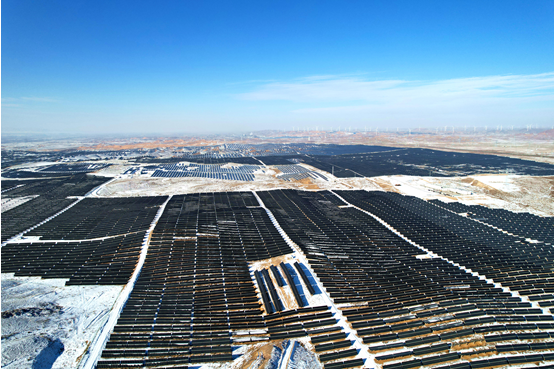
新能源供给圈持续扩大
Jing Ji Ri Bao· 2026-02-02 22:13
Group 1 - The core viewpoint emphasizes the acceleration of the construction of a new energy system in China, aiming for high-quality development of renewable energy to ensure reliable energy supply for modernization efforts [1] - During the 14th Five-Year Plan, a demonstration area for a 100% renewable energy power system was established in Guangshui, Suizhou, showcasing a grid model that balances supply and demand with over 70% of the time powered by renewable energy [1] - The new energy power system in northern Hubei has a capacity exceeding 10 million kilowatts, covering an area of nearly 30,000 square kilometers and serving a population of 10 million, creating a new collaborative path for energy resource utilization [1] Group 2 - The company is actively exploring the construction of a clean and low-carbon energy system in rural areas, utilizing organic waste to generate clean energy and promoting a replicable rural energy model [2] - An example from Tudianzi Village in Enshi shows that the village has achieved 24-hour clean energy supply, leading to increased agricultural productivity and tourism revenue of 1.37 million yuan annually [2] Group 3 - The 15th Five-Year Plan is expected to be a period of rapid development for renewable energy and the comprehensive construction of a new power system in China [3] - Hubei Electric Power Company is initiating projects to develop and consume renewable energy in densely populated areas and to facilitate the transmission of electricity from remote renewable energy bases to Hubei and beyond [3]