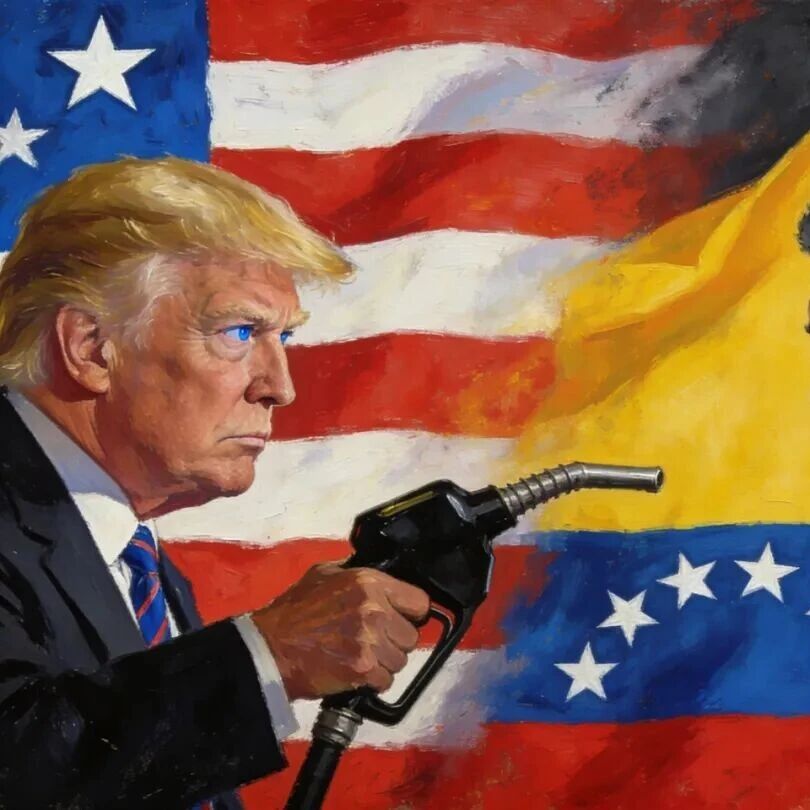
石油产量恢复

Search documents
美国EIA:委内瑞拉石油产量或于2026年中期恢复至海上封锁前水平
Xin Lang Cai Jing· 2026-02-10 23:46
Core Insights - The U.S. Energy Information Administration (EIA) announced that the U.S. has expanded its licenses for transactions related to Venezuela, which is expected to restore Venezuela's oil production to pre-blockade levels by mid-2026 [1][2] Group 1: Oil Production Recovery - Venezuela's oil production was approximately 1.1 to 1.2 million barrels per day before the U.S. blockade [1][2] - The blockade led to a significant backlog of millions of barrels of crude oil in storage tanks and vessels [1][2] - Following the U.S. government's authorization for Vitol and Trafigura to export Venezuelan oil, the state-owned oil company PDVSA has reversed most of its previous production cuts, increasing output to nearly 1 million barrels per day [1][2] Group 2: Trade and Export Developments - The majority of the oil exported by the newly authorized traders is stored at terminals in the Caribbean, likely to be shipped to refineries along the U.S. Gulf Coast [1][2] - An expanded general license was issued by the U.S. at the end of last month, allowing more companies to transport and sell Venezuelan oil [1][2] - EIA indicated that these measures should help alleviate the production shutdowns caused by the blockade and restore production levels by the end of the second quarter of this year [1][2]
EIA称委内瑞拉石油产量可能在2026年中期恢复到封锁前水平
Sou Hu Cai Jing· 2026-02-10 18:20
Core Viewpoint - The U.S. is expanding its permits for transactions related to Venezuela, which is expected to restore the country's oil production to levels seen before the maritime blockade imposed in December 2022 by mid-2026 [1] Group 1: Oil Production Recovery - Venezuela's oil production is projected to recover to approximately 1.1 to 1.2 million barrels per day by mid-2026 [1] - The blockade previously forced Venezuela's state oil company to significantly reduce production due to the inability to export oil [1] Group 2: Impact of Maritime Blockade - The maritime blockade led to the accumulation of millions of barrels of crude oil in onshore storage tanks and vessels [1] - Prior to the blockade, Venezuela's daily oil production was around 1.1 to 1.2 million barrels [1]
告别千亿重建成本 美国欲以“低成本方案”盘活委内瑞拉石油
Ge Long Hui A P P· 2026-01-24 14:39
Core Viewpoint - The U.S. is discussing a plan with Chevron and other oil producers to quickly restore Venezuela's oil production at a cost significantly lower than the $100 billion required for a complete overhaul [1] Group 1: Short-term Production Recovery - Major oilfield service companies like Schlumberger, Baker Hughes, and Halliburton are focusing on repairing or replacing damaged and outdated equipment, as well as refurbishing old drilling platforms [1] - With limited investment, Venezuela is expected to increase its daily oil production by several hundred thousand barrels in the short term [1] Group 2: Long-term Production Goals - The long-term goal is to fully revive Venezuela's oil industry, aiming to restore production from currently less than 1 million barrels per day to approximately 3.75 million barrels per day, the peak level of the 1970s [1] - Analysts believe that achieving this long-term target will take at least a decade, but there are many immediate opportunities for production increases [1] Group 3: Company-specific Initiatives - Halliburton aims to achieve immediate production recovery through rapid actions [1] - Chevron's Vice Chairman, Nelson, indicated plans to increase the output of joint venture projects by 50% within 18 to 24 months during a White House meeting on January 9 [1]

委内瑞拉石油:产量回升慢,需500亿投资达200万桶/日
Sou Hu Cai Jing· 2026-01-08 14:00
Core Insights - Venezuela's oil production and breakeven price are under scrutiny, with expectations that increasing production could lower the breakeven price due to improved cost allocation and operational efficiency [1] - However, experts predict that production growth will be slow due to the need for significant investment [1] Group 1: Production Data - In 2016, Venezuela's oil production was 2.3 million barrels per day, which fell to just below 1 million barrels per day last year [1] - Wood Mackenzie estimates that it will take at least three to five years for production to recover to 2 million barrels per day [1] Group 2: Investment Requirements - The decline in oil production is attributed not to a decrease in reservoir reserves, but rather to mismanagement and lack of reinvestment [1] - An estimated investment of at least $50 billion is required to achieve a production level of 2 million barrels per day [1]
《经济学人》:特朗普豪赌委内瑞拉石油
美股IPO· 2026-01-06 16:04
Core Viewpoint - The article discusses the potential for the recovery of Venezuela's oil industry following the U.S. government's actions against President Nicolás Maduro, highlighting both the opportunities and challenges involved in revitalizing this sector [2][3]. Group 1: U.S. Interests and Venezuela's Oil Industry - President Trump expressed intentions to restore Venezuela's oil industry, which has been in decline due to mismanagement and lack of investment, aiming to attract U.S. oil companies to invest billions in infrastructure repair [2][3]. - Venezuela's oil production has decreased by two-thirds since the late 2000s, currently maintaining around 1 million barrels per day (b/d), with significant potential for future increases given its estimated 300 billion barrels of oil reserves, accounting for one-fifth of the global total [3][5]. Group 2: Challenges to Recovery - Short-term projections indicate that Venezuela's oil production may continue to decline rather than rebound, exacerbated by U.S. sanctions and a blockade on oil shipments, leading to a rise in idle oil inventories [3][6]. - The country faces three major obstacles to increasing production: severe funding shortages, labor shortages, and a global oversupply of oil [6][7]. - A significant capital expenditure of $110 billion is estimated to be necessary to restore production to levels seen 15 years ago, which is double the total investment of major U.S. oil companies in 2024 [6][7]. Group 3: Market Dynamics and Future Projections - Even if production increases, it will enter a saturated global market, with the International Energy Agency (IEA) predicting a continued oversupply of oil due to strong production from Brazil, Guyana, and the U.S., coupled with weak global demand [7][8]. - In an optimistic scenario, Venezuela's production could rise to 1.2 million b/d by the end of 2026, but this remains significantly below its potential and would still be less than Libya's current output [5][8]. - Long-term projections suggest that production could reach between 1.7 million to 1.8 million b/d by 2028, which may alter global trade flows but will not yield immediate or substantial economic returns for the U.S. [8].