
重质高硫原油

Search documents
机构:美国炼油厂将从委内瑞拉原油出口增加中获益巨大
Ge Long Hui A P P· 2026-01-16 10:12
Core Viewpoint - The global focus is shifting towards Venezuela's oil types as Trump resumes oil business with the country, highlighting Venezuela's significant oil reserves and the potential benefits for U.S. refineries designed for heavy crude oil [1] Group 1: Venezuela's Oil Reserves - Venezuela possesses the largest proven oil reserves globally, primarily consisting of heavy sour crude from the Orinoco oil belt [1] - The U.S. has become the highest oil-producing country due to a surge in light shale oil drilling, yet most refineries were built to process heavy crude oil [1] Group 2: U.S. Refinery Benefits - Approximately 70% of U.S. refining capacity is geared towards heavy crude oil, a legacy issue from investments made before the shale boom [1] - U.S. coastal refineries, particularly in Texas and Louisiana, are well-suited to process Venezuelan crude oil, benefiting from historical ties to Venezuelan oil exploration and production [1] Group 3: Market Dynamics - Due to years of sanctions, Canadian heavy crude has replaced Venezuelan oil in imports, but an increase in Venezuelan heavy oil exports could lead to a shift back to lower-priced Venezuelan crude [1]
伊朗骚乱持续升级,市场焦点转向中东
Hua Tai Qi Huo· 2026-01-09 03:00
Group 1: Market News and Important Data - The price of light crude oil futures for February delivery on the New York Mercantile Exchange rose $1.77 to $57.76 per barrel, a gain of 3.16%. The price of Brent crude oil futures for March delivery rose $2.03 to $61.99 per barrel, a gain of 3.39%. The SC crude oil main contract closed up 1.58% at 425 yuan per barrel [1] - On January 8, US Treasury Secretary Besent said that the US would lift some sanctions on Venezuelan entities. He also mentioned that independent oil companies were interested in investing in Venezuela, while large oil companies might be more cautious [1] - On January 8, Saudi Arabia took action to end the UAE's role in Yemen and weaken its influence in other areas. Riyadh aimed to bring all UAE - supported factions in Yemen under its control [1] - On January 8, US Energy Secretary Wright said that US oil companies were studying how to play a role in revitalizing Venezuela's energy industry. Chevron was expected to expand its business in Venezuela [1] - After Maduro's arrest, the Trump administration planned to sell Venezuelan heavy - high - sulfur and corrosive crude oil in the US. US Gulf Coast refineries had the capacity to process such crude oil [1] Group 2: Investment Logic - The sharp rebound in oil prices was mainly due to the escalating riots in Iran, where the domestic internet was cut off, indicating irreconcilable domestic contradictions. The situation in Iran and the Maduro event had similar logics, and Iran's large oil export volume would have a significant impact on the oil market [2][3] Group 3: Strategy - Oil prices will fluctuate in the short - term and a short - position allocation is recommended in the medium - term [4]
《经济学人》:特朗普豪赌委内瑞拉石油
美股IPO· 2026-01-06 16:04
Core Viewpoint - The article discusses the potential for the recovery of Venezuela's oil industry following the U.S. government's actions against President Nicolás Maduro, highlighting both the opportunities and challenges involved in revitalizing this sector [2][3]. Group 1: U.S. Interests and Venezuela's Oil Industry - President Trump expressed intentions to restore Venezuela's oil industry, which has been in decline due to mismanagement and lack of investment, aiming to attract U.S. oil companies to invest billions in infrastructure repair [2][3]. - Venezuela's oil production has decreased by two-thirds since the late 2000s, currently maintaining around 1 million barrels per day (b/d), with significant potential for future increases given its estimated 300 billion barrels of oil reserves, accounting for one-fifth of the global total [3][5]. Group 2: Challenges to Recovery - Short-term projections indicate that Venezuela's oil production may continue to decline rather than rebound, exacerbated by U.S. sanctions and a blockade on oil shipments, leading to a rise in idle oil inventories [3][6]. - The country faces three major obstacles to increasing production: severe funding shortages, labor shortages, and a global oversupply of oil [6][7]. - A significant capital expenditure of $110 billion is estimated to be necessary to restore production to levels seen 15 years ago, which is double the total investment of major U.S. oil companies in 2024 [6][7]. Group 3: Market Dynamics and Future Projections - Even if production increases, it will enter a saturated global market, with the International Energy Agency (IEA) predicting a continued oversupply of oil due to strong production from Brazil, Guyana, and the U.S., coupled with weak global demand [7][8]. - In an optimistic scenario, Venezuela's production could rise to 1.2 million b/d by the end of 2026, but this remains significantly below its potential and would still be less than Libya's current output [5][8]. - Long-term projections suggest that production could reach between 1.7 million to 1.8 million b/d by 2028, which may alter global trade flows but will not yield immediate or substantial economic returns for the U.S. [8].

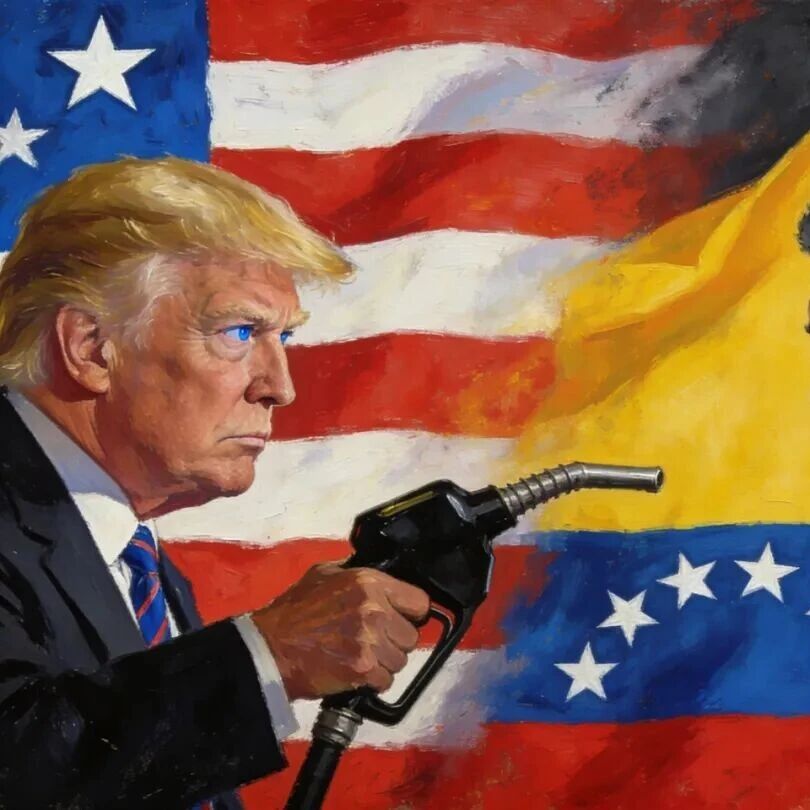
委内瑞拉局势突变扰动油市预期!美国石油股闻风大涨 雪佛龙(CVX.US)盘前飙升10%
智通财经网· 2026-01-05 11:56
Group 1 - U.S. oil companies' stock prices rose significantly following President Trump's announcement of plans to "take over" Venezuela after the arrest of Nicolás Maduro, with Chevron (CVX.US) seeing an increase of up to 10% [1] - The rise in stock prices is attributed to market expectations that U.S. sanctions on Venezuela's leadership may ease, allowing more oil to flow to U.S. buyers, which is crucial for refiners [1] - Venezuela's heavy sour crude oil is well-suited for U.S. Gulf Coast refineries, which were built decades ago to process this type of crude [1] Group 2 - Chevron is positioned favorably among global oil giants to benefit from increased U.S. control over Venezuela, which has the largest oil reserves in the world [2] - International arbitration has ruled that Venezuela owes ConocoPhillips over $8 billion due to asset nationalization in the early 2000s, while ExxonMobil is owed approximately $1 billion [2] - Despite geopolitical risks, international oil prices have recently declined due to ample supply and OPEC+ maintaining stable production levels [2] Group 3 - Chevron continues operations in Venezuela under U.S. government-issued oil extraction and export licenses, with oil transportation not significantly affected [3] - Venezuela, despite having the largest oil reserves globally, contributes less than 1% to global supply, and full restoration of its key oil infrastructure may take years [3]
