
锂电池负极材料

Search documents
贵州锂电黑马订单爆满!IPO稳步推进中
起点锂电· 2026-03-18 11:31
Core Viewpoint - The article highlights the rapid growth and promising future of Huiyang New Energy in the lithium-ion battery anode materials market, emphasizing its strong order backlog, production capacity expansion, and strategic plans for IPO to enhance its competitive position in the industry [3][9][10]. Group 1: Company Overview - Huiyang New Energy, established in November 2021, focuses on the research, production, and sales of lithium-ion battery anode materials, including artificial graphite, natural graphite, composite graphite, soft carbon, hard carbon, and silicon-carbon [6]. - The company has a planned annual production capacity of 100,000 tons of lithium battery anode materials, with the first phase of 20,000 tons officially launched in August 2022 [6][8]. Group 2: Production and Capacity - As of 2026, Huiyang New Energy has a monthly production capacity of approximately 3,000 tons, with all three production lines operating efficiently to meet high demand [4]. - The company is accelerating the construction of a new 20,000-ton high-end artificial graphite production line, expected to be operational by the end of this year [4][5]. Group 3: Financial Performance - The total investment for the new production line is 467 million yuan, projected to generate an additional annual sales revenue of 800 million yuan and a net profit of 120 million yuan once operational [5]. - In 2025, the company aims for a total output of 40,000 tons, with expected sales revenue reaching 800 million yuan, having already achieved approximately 50% of this target in the first half of the year [7]. Group 4: Market Position and Strategy - Huiyang New Energy has secured significant contracts, including a three-year order of 150,000 tons from CATL, establishing itself within the supply chains of major battery manufacturers [6][7]. - The company is actively pursuing an IPO to fund capacity expansion, technological advancements, and industry chain integration, aiming to enhance its competitive edge in the high-end anode materials market [10]. Group 5: Industry Trends - The global lithium battery anode materials market is expected to grow significantly, with a projected shipment volume of 2.723 million tons in 2025, marking a 48% year-on-year increase [11]. - Key trends include the dominance of high-nickel ternary batteries combined with silicon-carbon anodes, the continued relevance of artificial graphite, and the rise of new processing technologies aimed at reducing energy consumption [12][13].

深圳证券港股晨报-20260318
国投证券(香港)· 2026-03-18 06:44
Core Insights - The report highlights the focus on the upcoming monetary policy decisions from the Federal Reserve and the Bank of Japan, indicating potential market volatility due to inflation and growth concerns [4] - The company under review, Guomin Technology, operates in the integrated circuit design and lithium battery anode materials sectors, showcasing a dual business model [6] - Financial performance shows stable revenue around 1 billion CNY, with a gradual reduction in losses and improving gross margins, indicating a potential recovery phase [7] Company Overview - Guomin Technology specializes in microcontroller units (MCUs), battery management system (BMS) chips, and RF chips, utilizing a fabless model for efficiency [6] - The company has a strong presence in various sectors including consumer electronics, industrial control, and emerging fields like AI and renewable energy [6] Financial Performance - Revenue figures for Guomin Technology are projected at 1.195 billion CNY for 2022, 1.037 billion CNY for 2023, and 1.168 billion CNY for 2024, indicating stability [7] - The company has experienced losses of 0.19 billion CNY in 2022, 5.94 billion CNY in 2023, and 2.56 billion CNY in 2024, with a trend of narrowing losses [7] Industry Status and Outlook - The global MCU market is expected to grow from 29.9 billion USD in 2024 to 48 billion USD by 2029, with a compound annual growth rate (CAGR) of 9.9% [8] - The lithium battery anode materials sector is anticipated to see price stabilization and potential recovery as downstream demand improves [8] Strengths and Opportunities - Guomin Technology has established significant technological barriers and a comprehensive product matrix, enhancing its competitive edge in the market [9] - The dual business model allows for resource sharing and risk mitigation against industry cyclicality [9] Weaknesses and Risks - The company continues to face challenges with ongoing losses and uncertainty regarding the timeline for profitability [10] - High customer and supplier concentration poses risks to supply chain stability [11] IPO Information - The IPO is set to take place from March 13 to March 18, 2026, with a maximum share price of 10.8 HKD [12] - The company aims to raise approximately 943.9 million HKD, with funds allocated primarily for R&D and strategic investments [14] Investment Recommendation - Guomin Technology is positioned in high-growth sectors with a clear path for recovery, despite current losses, and is recommended for subscription at the IPO price [15]

国民技术(02701):IPO点评:TMT硬件制造
国投证券国际· 2026-03-17 08:24
Investment Rating - The investment rating for the company is 6.1 out of 10, based on operational performance, industry outlook, valuation, and market sentiment [5]. Core Insights - The company operates in two high-growth sectors: semiconductor MCU and lithium battery anode materials, with a focus on domestic market leadership and clear growth benefits from domestic substitution and industry expansion [11]. - Despite ongoing losses, the company has shown a trend of narrowing losses and improving gross margins, with expectations of industry recovery starting in 2025 [11]. - The IPO price is set at a maximum of 10.8 HKD per share, representing a significant discount compared to the expected market price [11]. Company Overview - The company is a platform-based integrated circuit (IC) design and lithium battery anode materials enterprise, focusing on microcontroller units (MCU), BMS chips, and RF chip development and sales [1]. - The business model is Fabless, outsourcing wafer manufacturing and testing, and it serves various sectors including consumer electronics, industrial control, digital energy, smart home, automotive electronics, and medical electronics [1]. Financial Performance - The company's revenue has remained stable around 1 billion CNY, with figures of 1.195 billion, 1.037 billion, 1.168 billion, and 958 million CNY from 2022 to the first three quarters of 2025 [2]. - The net losses for the same periods were 0.19 billion, 5.94 billion, 2.56 billion, and 0.76 billion CNY, indicating a trend of initially widening losses followed by a gradual narrowing [2]. Industry Status and Outlook - The global MCU market is projected to grow from approximately 29.9 billion USD in 2024 to 48 billion USD by 2029, with a compound annual growth rate (CAGR) of 9.9% [3]. - Emerging applications in AI, edge computing, and new energy are expected to drive demand for high-end MCUs [3]. - The lithium battery anode materials sector has faced price declines due to oversupply but is anticipated to stabilize and potentially recover as downstream demand improves [3]. Strengths and Opportunities - The company has established significant technical barriers and leads in process and architecture, being the first in China to achieve mass production of 40nm eFlash MCU [4]. - The product matrix is comprehensive, covering various applications and demonstrating strong adaptability to customer needs [4]. - The dual business model allows for synergy between the chip and lithium battery materials sectors, enhancing resilience against industry cyclicality [4].
IPO点评:国民技术
国投证券(香港)· 2026-03-17 08:24
Investment Rating - The report assigns an IPO-specific rating of 6.1 out of 10 for the company, based on operational performance, industry outlook, valuation, and market sentiment [5]. Core Insights - The company operates in two high-growth sectors: semiconductor MCU and lithium battery anode materials, with a strong domestic market position and clear growth potential from domestic substitution and industry expansion [11]. - Despite ongoing losses, the company has shown a trend of narrowing losses and improving gross margins, with expectations of industry recovery starting in 2025 [11]. - The IPO price is set at a maximum of 10.8 HKD per share, representing a significant discount of 58.8% compared to the closing price of 23.05 RMB per share on March 16, 2026 [11]. Company Overview - The company is a platform-based integrated circuit (IC) design and lithium battery anode materials enterprise, focusing on microcontroller units (MCU), BMS chips, and RF chips, utilizing a Fabless model [1]. - The business covers traditional sectors such as consumer electronics, industrial control, digital energy, smart home, automotive electronics, and medical electronics, while also extending into emerging fields like AI and edge computing [1]. Financial Performance - The company's revenue has remained stable around 1 billion CNY, with figures of 1.195 billion, 1.037 billion, 1.168 billion, and 0.958 billion CNY for the years 2022 to 2024 and the first three quarters of 2025, respectively [2]. - Net losses have been recorded at 0.19 billion, 5.94 billion, 2.56 billion, and 0.76 billion CNY for the same periods, indicating a pattern of initial significant losses followed by a gradual reduction [2]. Industry Status and Outlook - The global MCU market is projected to grow from approximately 29.9 billion USD in 2024 to 48 billion USD by 2029, with a compound annual growth rate (CAGR) of 9.9% [3]. - Emerging applications in AI, robotics, and new energy are expected to drive demand for high-end MCUs, while the lithium battery anode materials sector is anticipated to see price stabilization and potential recovery as downstream demand improves [3]. Strengths and Opportunities - The company has established a strong technological barrier with advanced processes and architectures, being the first in China to achieve mass production of 40nm eFlash MCU [4]. - The product matrix is comprehensive, covering various applications and demonstrating strong adaptability to customer needs across multiple sectors [4]. - The dual business model allows for synergy between the chip and lithium battery materials sectors, enhancing resilience against industry cyclicality [4].
IPO申购指南:国民技术
Guoyuan International· 2026-03-13 14:24
Investment Rating - The report suggests a cautious subscription for the company [2]. Core Insights - The company is a platform-based integrated circuit design firm focused on providing control chips and system solutions for various smart terminals. It also operates in the lithium battery anode materials business, which diversifies its business model and drives revenue growth [2]. - According to data from Zhaoshang Consulting, the company ranks among the top three Chinese enterprises in the global 32-bit platform MCU market based on 2024 revenue. It holds the first position in the Chinese MCU market for embedded commercial cryptographic algorithm modules [2]. - The global MCU market is projected to grow from USD 19.8 billion in 2019 to USD 29.9 billion in 2024, with a compound annual growth rate (CAGR) of 8.6%. It is expected to continue growing at a CAGR of 9.9%, reaching USD 48.0 billion by 2029. Additionally, the shipment volume of lithium battery anode materials in China is expected to increase significantly from 0.3 million tons in 2019 to 2.1 million tons in 2024, with a CAGR of 47.6% [2]. Financial Performance - The company's revenue remained relatively stable at RMB 1,195.4 million in 2022, RMB 1,036.8 million in 2023, and RMB 1,167.6 million in 2024. Gross profit decreased from RMB 426.0 million in 2022 to RMB 18.0 million in 2023, rebounding to RMB 182.4 million in 2024. The annual loss increased from RMB 18.9 million in 2022 to RMB 594.0 million in 2023, but was successfully narrowed by 56.9% to RMB 255.7 million in 2024 [3]. - The IPO price is set at HKD 10.8 per share, which represents 43% of the A-share closing price of RMB 22 per share on March 12, 2026, indicating a certain margin of safety in valuation. Considering market volatility and the company's ongoing unprofitability, a cautious subscription is recommended [3].
锂电大厂净利近9亿!
起点锂电· 2026-03-06 10:06
Core Viewpoint - The article highlights the significant growth and technological advancements in the lithium battery anode materials industry, particularly focusing on the performance of BETTERRY, a leading company in this sector, amidst the dual market drivers of electric vehicles and energy storage [1][2]. Group 1: Company Performance - BETTERRY achieved a revenue of 16.983 billion yuan in 2025, marking a year-on-year increase of 19.29%, with a profit of 1.358 billion yuan, up 18.78% [1]. - The third quarter of 2025 was a pivotal growth point, with a revenue of 4.547 billion yuan, reflecting a 40.70% year-on-year increase, and a net profit of 289 million yuan, up 61.98% [2]. - In the first half of 2025, BETTERRY's anode materials generated 6.279 billion yuan, accounting for 80.11% of total revenue, solidifying its position as the primary revenue source [2]. Group 2: Market Trends - The global lithium battery anode materials shipment reached 2.723 million tons in 2025, representing a 48% year-on-year growth [3]. - The average price of anode materials maintained around 35,000 yuan per ton, with high-end products exceeding 40,000 yuan per ton, indicating a recovery in profit margins [2]. Group 3: Technological Advancements - BETTERRY is one of the few companies with a comprehensive portfolio including natural graphite, artificial graphite, silicon-based anodes, ternary cathodes, and solid-state battery materials, providing a solid foundation for stable performance [5]. - The company reported a 46.23% year-on-year increase in artificial graphite sales in the first half of 2025, significantly outpacing the overall growth rate of 32.83% for anode materials [6]. - BETTERRY's silicon-based anode shipments grew over 65% in 2025, with the company leading the establishment of the first international standard for silicon-based anode materials [6][7]. Group 4: Future Outlook - The demand for silicon-based anodes is expected to surge, positioning it as a core growth driver for the next 3-5 years [7]. - BETTERRY has made significant breakthroughs in solid-state battery materials, developing lithium-carbon composite anodes that meet customer requirements for low volume expansion and long cycle life [8][9]. - The company is expanding its global manufacturing footprint, establishing production bases in Southeast Asia and North Africa to support major battery manufacturers [9].
GGII:快充、硅基材料将成锂电负极新引擎
高工锂电· 2026-02-19 12:24
Core Viewpoint - The article discusses the growth and trends in the Chinese anode materials market, highlighting significant increases in production and shifts in material types, particularly the dominance of artificial graphite and the emergence of silicon-based materials as new growth drivers [4][5][8]. Group 1: Market Growth and Projections - The anode materials shipment volume in 2026 is expected to exceed 3.7 million tons, representing a year-on-year growth of over 28% [4]. - In 2025, the shipment volume for China's anode materials industry is projected to reach 2.9 million tons, with a year-on-year increase of 39% [5]. - The market is characterized by a significant divide between leading companies, which are experiencing robust sales, and smaller firms that are increasingly engaging in contract manufacturing, with some leading companies outsourcing over 30% of their production [5]. Group 2: Shipment Structure and Material Trends - Artificial graphite is expected to maintain its dominant position, with a shipment volume of 2.67 million tons in 2025, marking a 49% increase and accounting for 92.7% of total anode material shipments [8]. - Natural graphite is projected to continue its decline, with a shipment volume of 210,000 tons in 2025, down 18.8% year-on-year, primarily due to a shift by overseas battery clients towards artificial graphite [8]. - Silicon-based composite materials are anticipated to be a highlight of industry growth, with shipments expected to increase by over 65% in 2025, including over 20,000 tons of new silicon-carbon pure powder [11]. Group 3: Technological Developments and Market Dynamics - The development of anode materials in 2025 will closely align with downstream battery product demands, with differentiated upgrades in energy storage and power sectors [12]. - In the energy storage sector, artificial graphite's performance metrics are expected to improve, with specific capacity increasing from 350 mAh/g to between 353-355 mAh/g [12]. - The power sector is witnessing a surge in fast-charging products, with over 80% of artificial graphite used in power lithium batteries being ≥2C fast-charging products, and over 40% being ≥4C fast-charging products [12]. Group 4: Future Trends and Market Strategies - In 2026, the anode materials market is expected to see tighter supply of low-sulfur petroleum coke, leading to a price increase of 10-20% for anode materials [13]. - High-rate products are projected to become mainstream, with the penetration rate of ≥4C artificial graphite in power lithium batteries exceeding 50% [13]. - New silicon-carbon shipments are expected to double year-on-year, with potential for mass application in the power sector [13].
国资救场,杉杉内斗终局?
Xin Lang Cai Jing· 2026-02-11 03:50
Core Viewpoint - The ongoing control struggle and debt crisis of Singshan Group may be approaching a resolution with the signing of a restructuring investment agreement involving Anhui Guozhi and Ningbo Financial Asset Management [3][4][17]. Group 1: Control Struggle and Debt Crisis - The control struggle began in February 2023 after the sudden death of the founder Zheng Yonggang, leading to a power vacuum and a public inheritance battle between his widow Zhou Ting and his son Zheng Ju [5][19]. - The internal conflict resulted in significant decision-making stagnation and governance chaos, which weakened the company's ability to respond to market risks and exacerbated financial pressures, culminating in a debt crisis in 2024 [6][20]. - By mid-2024, Singshan's total liabilities reached 27.33 billion, with current liabilities at 16.19 billion, indicating substantial repayment pressure [8][23]. Group 2: Restructuring Process - The restructuring process faced challenges, including the rejection of the first round of strategic investor recruitment in October 2025, which forced the process back to square one [9][25]. - A second round of recruitment began in November 2025, with a significant turning point occurring at the end of 2025 when an Anhui state-owned consortium emerged as a strategic investor [10][26]. - On February 8, 2026, Singshan announced the signing of a restructuring investment agreement with Anhui Guozhi, marking a critical step in the change of actual control [13][29]. Group 3: Business Resilience and Future Prospects - Despite the turmoil, Singshan's core business demonstrated resilience, with an expected net profit of 400 million to 600 million for 2025, marking a turnaround from previous losses [11][27]. - The demand for lithium batteries remains high due to the global growth of the electric vehicle market, and Singshan, as a leading producer of negative materials, has effectively increased its production capacity and sales [12][28]. - The strategic intent of the Anhui state-owned investment is to integrate Singshan into the regional industrial chain of new energy vehicles and display industries, potentially providing more stable financial and credit support [29][30].

豪掷约72亿元!皖维集团拟入主杉杉股份
Mei Ri Jing Ji Xin Wen· 2026-02-09 15:10
Core Viewpoint - The restructuring process of Sanyan Group has made significant progress with the signing of a restructuring investment agreement involving Anhui Wanwei Group and Ningbo Financial Asset Management Co., Ltd, marking a crucial step towards the potential change of control of Sanyan Co., Ltd [2][3] Group 1: Restructuring Agreement - Sanyan Co., Ltd announced that its controlling shareholder, Sanyan Group, has signed a restructuring investment agreement with Anhui Wanwei Group and Ningbo Financial Asset Management [2] - The total investment amount from Wanwei Group for the acquisition of shares and bankruptcy service trust rights is capped at approximately 7.156 billion yuan [2] - Wanwei Group will control 21.88% of the voting rights of Sanyan Co., Ltd through various arrangements, leading to a change in the controlling shareholder to Wanwei Group and the actual controller to the Anhui Provincial State-owned Assets Supervision and Administration Commission [3] Group 2: Investment Details - Wanwei Group will acquire 13.50% of Sanyan Co., Ltd shares at a price of approximately 16.42 yuan per share, totaling around 4.987 billion yuan [3] - The remaining 8.38% of shares held by Sanyan Group will remain in alignment with Wanwei Group for a period of 36 months following the completion of the share transfer [3] Group 3: Background of Wanwei Group - Wanwei Group, established in 1969, is a large enterprise under the jurisdiction of the Anhui Provincial State-owned Assets Supervision and Administration Commission, with total assets exceeding 10 billion yuan [4] - The company specializes in the research, production, and sales of polyvinyl alcohol (PVA) and its derivatives, with production bases in multiple locations including Anhui and Guangxi [4] Group 4: Market Context and Future Prospects - Sanyan Co., Ltd is a leading global producer of artificial graphite anode materials, expecting a net profit of 400 million to 600 million yuan for the year 2025, benefiting from strong demand in the new energy vehicle and energy storage markets [6] - The entry of Wanwei Group represents a significant development in Sanyan Group's restructuring process, which has faced challenges and complexities in previous attempts to secure a restructuring plan [7][8]
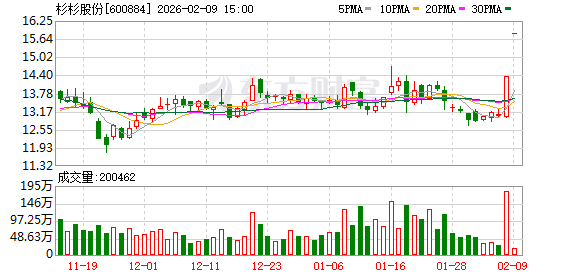
做强而非“分掉”杉杉股份,是杉杉集团重整破局的关键
Mei Ri Jing Ji Xin Wen· 2026-02-09 11:07
Core Viewpoint - Shanshan Group has reached a significant milestone in its restructuring process by signing an investment agreement with Anhui Wanwei Group and Ningbo Jinzi, marking a potential turnaround for the company after nearly a year of challenges [2] Group 1: Restructuring Agreement - The restructuring plan involves a combination of "equity acquisition + bankruptcy service trust + forward stock acquisition" [2] - Anhui Wanwei Group will invest 4.987 billion yuan to directly acquire 13.5% of Shanshan Co., Ltd.'s shares [2] - The acquisition price is set at 11.50 yuan per share, which will serve as a repayment resource for creditors, along with a bankruptcy service trust for up to 8.38% of shares, amounting to approximately 2.168 billion yuan [2] Group 2: Comparison with Previous Plans - The current restructuring plan offers a significantly higher acquisition price of 16.42 yuan per share, representing a premium of over 43% compared to the previous plan's price of 11.44 yuan per share [3] - This higher pricing is expected to enhance the repayment capacity for Shanshan Group's debts and improve creditor recovery rates [3] Group 3: Benefits for Creditors - The bankruptcy service trust provides creditors with two options: immediate cash compensation at 11.50 yuan per share or the opportunity to repurchase shares at the same price plus an annual interest of 3.5% if the stock price rises [4] - The design of the trust ensures that any excess gains from share appreciation will belong to the creditors, protecting their interests [4] Group 4: Strategic Industry Collaboration - The agreement allows Anhui Wanwei Group to recommend up to four staff members to Shanshan Co., Ltd. and initiate board elections after certain investment milestones are met [5] - Anhui's strong position in the new energy sector, particularly in lithium battery materials, is expected to enhance Shanshan's growth potential, thereby securing creditor interests [5] Group 5: Challenges Ahead - Despite the promising restructuring plan, Shanshan Group's debt issues remain complex, and the success of the restructuring will depend on navigating the interests of various stakeholders [5] - The focus should remain on maximizing the value of Shanshan Co., Ltd. as the core asset to achieve successful restructuring [5]