
碳清除

Search documents
新版可持续发展报告指南落地,ESG信息披露透明度提升
Xinda Securities· 2026-02-08 06:32
Domestic Developments - The new guidelines for sustainable development reporting have been implemented, enhancing ESG information disclosure transparency. 2026 marks the first year of mandatory disclosure under the "Guidelines for Information Disclosure of Sustainable Development Reports by Listed Companies" [3] - The Shanghai, Shenzhen, and Beijing stock exchanges have revised and released the "Guidelines for Preparing Sustainable Development Reports," adding three new topics: pollutant emissions, energy utilization, and water resource utilization [3] International Developments - The European Union has established the world's first permanent carbon removal certification standard, marking a significant step from passive emission reduction to active carbon removal. This framework aims to provide clarity and transparency for investors and project developers in the emerging carbon removal industry [3] - The certification framework is seen as a "blueprint for the global carbon market," reinforcing Europe's role as a key architect of the future carbon economy [3] ESG Financial Products Tracking - As of February 7, 2026, China has issued 3,959 ESG bonds, with a total outstanding amount of 5.79 trillion RMB. Green bonds account for the largest share at 62.35% [4] - In the past month, 44 ESG bonds were issued, raising 27.2 billion RMB, while 1,307 ESG bonds were issued over the past year, totaling 1.4211 trillion RMB [4] Public Fund Developments - There are currently 1,089 ESG products in the market, with a total net asset value of 1.754424 trillion RMB. Social responsibility products represent the largest share at 41.79% [4] - In the past month, 2 new ESG products were issued, totaling 1.491 billion units, with a focus on ESG strategies and environmental protection [4] Risk Factors - Potential risks include slower-than-expected ESG development, delays in the dual carbon strategy implementation, and insufficient policy advancement [7]
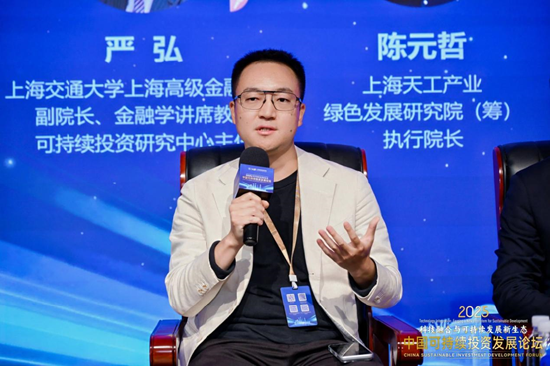
陈元哲:自愿碳市场价值重塑——转向“碳清除”与“多重效益”的未来
Xin Lang Cai Jing· 2025-12-13 00:44
Core Insights - The 2025 China Sustainable Investment Development Forum was held with the theme "Technology Integration and New Ecology of Sustainable Development" [1] Group 1: Standard Systems - The core challenge in standard formulation is breaking down communication barriers across fields, with standards serving as a "cross-border translator" [3][6] - The Shanghai Tiangong Institute focuses on two standard systems: the Green Certified Carbon Removal Standard System for calculating emission reductions and issuing carbon credit assets, and the Natural Credit Standard System for converting biodiversity protection or restoration gains into verifiable and tradable biodiversity credits [3][6] Group 2: Role of Technology and Data Governance - Technology innovation and data governance are crucial in reconstructing the voluntary carbon market, summarized as "making trust measurable" [3][6] - This process involves two steps: using technology to address the "invisible" challenge by applying hard technologies like eDNA and satellite remote sensing to convert ecological benefits into precise data assets, and establishing strict data governance mechanisms to eliminate trust crises regarding data quality [3][6] Group 3: Biodiversity Credit Implementation - A simplified implementation path for biodiversity credit is proposed, focusing on measuring representative "key proxy indicators" instead of the entire complex ecosystem for efficient and accurate quantification [4][7] - The voluntary carbon market is experiencing two major trends: a shift from single emission reduction to multi-benefit carbon credits aligned with the 17 core issues of the UN Sustainable Development Goals, and a global transition from carbon reduction and avoidance to carbon removal, reshaping the overall carbon market landscape [4][7]

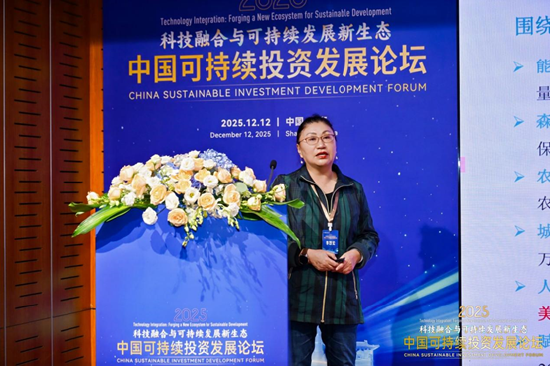
李怒云:构建中国自主碳清除与自然信用机制 助力全球气候治理
Xin Lang Cai Jing· 2025-12-13 00:44
Core Viewpoint - The 2025 China Sustainable Investment Development Forum emphasizes the integration of technology and sustainable development, focusing on establishing independent carbon removal credit mechanisms and natural credit systems that are globally oriented [1][12]. Group 1: Key Developments at the Forum - The forum featured a speech by Li Nuyun, highlighting the outcomes of the recent Brazil Belém Climate Conference, which marked the 10th anniversary of the Paris Agreement, with participation from 194 parties and over 2,000 observer organizations [3][8]. - A significant breakthrough at the conference was the launch of the "Forever Tropical Forest Protection Fund," which defines forests as "quantifiable global public assets," paving the way for integrating natural capital into the global financial system [3][8]. Group 2: Global Carbon Market Insights - The global carbon market is categorized into international compliance markets, domestic mandatory compliance markets, and voluntary carbon markets, with various mechanisms for supplying carbon credits [4][9]. - Current challenges in the voluntary carbon market include quality inconsistencies leading to a trust crisis, supply-demand imbalances causing low prices, fragmented standards across nearly 30 independent carbon offset mechanisms, and a pressing need to shift from scale expansion to quality enhancement [4][10]. Group 3: Challenges in the Chinese Market - China faces four core challenges: reliance on foreign standards for carbon credits despite having rich resources, insufficient domestic supply to meet the growing demand from outbound enterprises, ineffective conversion of emission reduction achievements along the Belt and Road into carbon credit benefits, and the urgent need for innovative financing mechanisms for biodiversity protection, with a global funding gap of over $700 billion annually [5][10]. Group 4: Proposed Solutions - To address these challenges, Li Nuyun's team is developing two standard systems: "Green Certified Carbon Removal," focusing on permanently removing CO2 from the atmosphere, and "Natural Credit," which converts biodiversity protection gains into verifiable and tradable credits [6][11]. - The establishment of these standards is strategically significant for enhancing China's influence in global carbon pricing and climate governance, while also providing standardized solutions for corporate ESG compliance and biodiversity protection [6][11].
欧洲议会批准欧盟2040年减排目标
Xin Hua Wang· 2025-11-14 14:17
Core Points - The European Parliament has passed a position document supporting the addition of legally binding 2040 climate targets to the EU's existing climate law [1] - The document mandates a 90% reduction in greenhouse gas net emissions by 2040 compared to 1990 levels, while also endorsing flexibility measures proposed by the European Commission [1] - The European Parliament supports member states purchasing international carbon credits to offset up to 5% of their reduction obligations starting in 2036 [1] - The inclusion of permanent carbon removal in the EU's carbon trading system is advocated to help offset hard-to-reduce emissions [1] - The European Commission is required to assess member states' progress towards the mid-term targets every two years, with the possibility of proposing amendments to the climate law if necessary [1] - The EU's climate law, established in 2021, set a legally binding obligation for member states to achieve climate neutrality by 2050 and a target of at least a 55% reduction in emissions by 2030 compared to 1990 levels [1] Summary of Related Developments - In July, the European Commission proposed amendments to the European Climate Law, aiming for a 90% reduction in greenhouse gas emissions by 2040 compared to 1990 levels [2] - The EU Council reached an agreement among member states on the amendment to the European Climate Law, maintaining the 2040 target [2] - The European Parliament will negotiate with the EU Council on the final legislative version of the climate law [2]
全国首个!南京企业在国际碳信用平台交易成功
Nan Jing Ri Bao· 2025-08-28 02:04
Group 1 - Nian Da Environment successfully sold 7 tons of carbon credits on the international carbon credit certification platform Puro, becoming the first domestic project to achieve this [1] - The company has developed a multi-production gasification furnace in collaboration with experts from Nanjing University of Science and Technology and Nanjing Forestry University, which can convert various crop straws into biomass charcoal [1][2] - The application of biomass charcoal has shown to increase soil organic matter content by over 20% and reduce chemical fertilizer usage by 15%-20%, effectively improving crop yield and quality [1] Group 2 - The project utilizes agricultural waste, converting it into biomass charcoal through high-temperature pyrolysis, which stabilizes carbon for over a century [2] - Each ton of biomass charcoal applied is equivalent to removing 1.5 tons of carbon dioxide, contributing to the carbon removal market that is rapidly growing globally [2] - The company can process approximately 8,000 tons of straw annually from over 10,000 acres of farmland, producing around 2,000 tons of biomass charcoal [2] Group 3 - Biomass charcoal reduces chemical fertilizer usage and lowers agricultural non-point source pollution, while also improving environmental quality, indicating a promising "blue ocean" industry [3] - Nanjing has been enhancing services for enterprises and promoting the healthy development of the biomass charcoal industry, achieving a straw comprehensive utilization rate of over 96% [3]