社会创新

Search documents
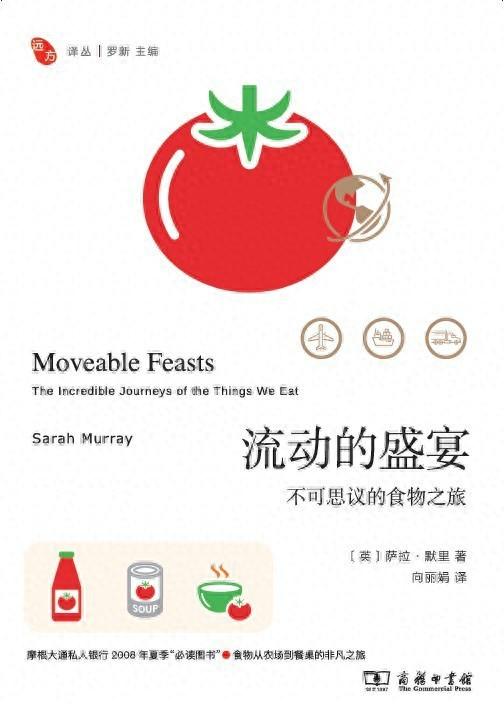
李公明|一周书记:流动的“食物之旅”中的……壮观与奇迹
Xin Lang Cai Jing· 2026-02-19 04:33
Core Insights - The book "Moveable Feasts: The Incredible Journeys of the Things We Eat" by Sarah Murray explores the complex journeys of food from production to consumption, highlighting the economic, social, and political implications of food transportation [3][5][12] Summary by Sections Food Journey and Globalization - The concept of "food miles" and "carbon footprint" is central to the discussion, reflecting the environmental impact of food transportation and the debate over local versus global food sourcing [7][20] - The book emphasizes that food transportation is not merely about the food itself but the intricate systems and technologies that enable these journeys, which have significant historical and cultural implications [11][12] Author's Background and Expertise - Sarah Murray is an experienced journalist and writer with a focus on global issues such as sustainability and social innovation, which lends credibility to her exploration of food transportation in the context of globalization [8][9] - Her firsthand experiences in various countries provide a rich narrative that enhances the understanding of food's journey across borders [9][10] Historical Context and Significance - The book addresses the historical neglect of food transportation in historical narratives, aiming to fill this gap by examining how food logistics have shaped human societies [11][12] - It discusses significant historical events, such as the Berlin Airlift, to illustrate the critical role of food transportation in political contexts [17][19] Environmental and Economic Considerations - The book presents a balanced view on the environmental criticisms of food globalization, arguing that while food miles raise awareness, they do not accurately reflect the complexities of carbon emissions associated with food transport [20][21] - It highlights the economic benefits of global food trade, particularly for farmers in developing countries, and the need for a nuanced understanding of the trade-offs involved [12][20] Technological and Cultural Impacts - The narrative explores the technological advancements in food transportation, from ancient methods to modern logistics, and their impact on food availability and cultural practices [13][16] - It emphasizes the interconnectedness of food, transportation, and societal changes, showcasing how these elements influence each other in the context of globalization [12][21]

我多希望陈行甲能拿不止73万的年薪,而李亚鹏收到的是2600万的投资
虎嗅APP· 2026-01-22 13:42
Core Viewpoint - The article contrasts two figures in the Chinese charity sector, highlighting the disparity in public perception and support for different approaches to philanthropy. It emphasizes the need for a shift in how society views and compensates professionals in the nonprofit sector, advocating for a model that allows for both dignity and effectiveness in addressing social issues [2][8][18]. Group 1: Case Studies - Li Yapeng's Beijing Yanhui Angel Children's Hospital faces a significant survival crisis, with a debt of 26 million yuan, yet managed to raise 26.84 million yuan from over 340,000 donors in a week, showcasing the emotional appeal of personal tragedy in fundraising [2][9]. - Chen Xingjia, a former county official, faced backlash for his 730,000 yuan annual salary despite achieving a remarkably low management fee of 5.03% for his foundation, which is significantly below the 10% threshold set by charity laws [4][6][8]. Group 2: Financial Efficiency - Chen Xingjia's management of the foundation resulted in a total income of approximately 240 million yuan, with donations accounting for over 21 million yuan, demonstrating the potential for effective financial management in the nonprofit sector [7]. - The article highlights the importance of a mixed revenue model for social enterprises, suggesting that hospitals like Yanhui could benefit from a structure that combines charitable donations with revenue-generating services, thus ensuring sustainability [10][12]. Group 3: Public Perception and Professionalism - The public often accepts significant profits in the corporate sector but struggles to accept reasonable salaries for nonprofit professionals, reflecting a societal bias that equates altruism with poverty [8][14]. - The article argues for a reevaluation of how society perceives the role of professionals in philanthropy, advocating for a model where effective charity work is recognized as a valuable and dignified profession [18]. Group 4: Future of Philanthropy - The author calls for a transformation in the charity sector, where social innovation is driven by efficiency and systemic change rather than mere emotional appeals, suggesting that the future of philanthropy should focus on measurable impact and return on investment (ROI) [14][18]. - The integration of technology in social entrepreneurship is highlighted as a means to enhance operational efficiency, allowing for more effective solutions to complex social issues [16].

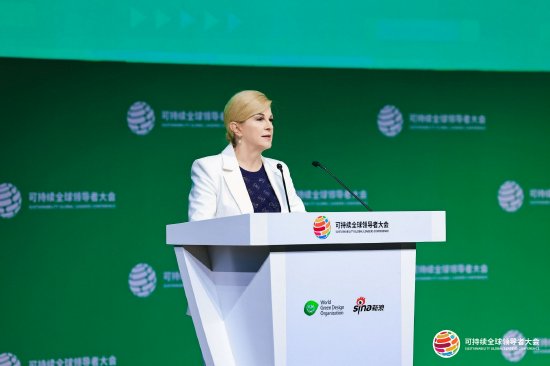
克罗地亚前总统科琳达·格拉巴尔—基塔罗维奇:全球治理核心在于方法而非技术
Xin Lang Zheng Quan· 2025-10-17 03:27
Core Insights - The 2025 Sustainable Global Leaders Conference will be held from October 16 to 18 in Shanghai, featuring keynote speaker Kolinda Grabar-Kitarović, the fourth President of Croatia and an IOC member [1][4]. Group 1: Global Governance and Innovation - Kolinda emphasizes learning from Europe to explore new paths for global governance amidst climate turmoil, geopolitical conflicts, and technological disruptions [3]. - She highlights Europe's history of transforming crises into cooperation, exemplified by the establishment of the EU and the unified market, which led to peace and prosperity [3]. - The core logic of Europe's initiatives, such as the "Green Deal" and "Digital Decade," is to connect unity with responsibility, showcasing the EU's cohesion and adaptability as essential for global systemic innovation [3]. Group 2: Three Innovations in Governance - Regulatory innovation is identified as a leading force in global standards for energy climate, data protection, and sustainable finance [3]. - Financial innovation is highlighted through Europe's leadership in the green bond market and its integration into central bank monetary policy [3]. - Social innovation focuses on equitable growth, education, health, and gender equality as foundational elements of competitiveness, ensuring fairness in green and digital transitions [3]. Group 3: Security and Resilience - Kolinda incorporates security and resilience into the sustainability framework, asserting that energy diversification, natural restoration, and transparent supply chains are crucial for risk mitigation and corruption reduction [3]. - She cites examples of cooperative innovations, such as the Central and Eastern European environmental climate dialogue and green shipping corridors, as practical applications of collaborative governance [3]. Group 4: Conference Overview - The conference is co-hosted by the World Green Design Organization and Sina Group, with support from the Shanghai Huangpu District Government, focusing on "Facing Challenges Together: Global Action, Innovation, and Sustainable Growth" [4][5]. - Approximately 500 prominent guests, including 100 international attendees, will participate, featuring political figures, Nobel laureates, Turing Award winners, and leaders from Fortune 500 companies [5]. - The conference will cover nearly 50 topics, including energy and "dual carbon," green finance, sustainable consumption, and technology and public welfare [5].
新善力量如何助力经济强基?圆桌会议给出创新答案
Yang Zi Wan Bao Wang· 2025-09-16 13:25
Core Insights - The "New Good China" initiative aims to explore new paths for economic development through social innovation, emphasizing the importance of social contributions to economic strength [1] Group 1: Medical Innovation - The Jixin Project, initiated in 2014, provides free heart disease medical assistance to impoverished patients, raising 173 million yuan and reducing hospital costs by 82.05 million yuan within three years, benefiting over 30,000 patients with a cure rate exceeding 99% [2] - The project introduces a new model of precise medical assistance that combines government support, social organizations, and medical institutions, creating a charity rescue mechanism where "insurance pays a little, charity covers a little, and hospitals waive a little" [2] Group 2: Business for Good - The concept that economic value stems from the creation and growth of social value is emphasized, with examples of companies like Yili and Starbucks demonstrating how social initiatives can enhance business outcomes [3] - The integration of social value into business practices is seen as a way to reconstruct value chains and achieve a win-win situation for both social and commercial benefits [3] Group 3: Role of New Social Class - New social class individuals are recognized as key drivers of technological, model, and management innovation, playing a crucial role in achieving economic strength [4] - Initiatives like the Su Xin Lecture Hall aim to enhance the professional capabilities of new social class individuals, positioning them as innovators and connectors in the economy [4] - The forum highlights the importance of new social class individuals in promoting high-quality development and solidifying the economic foundation through their expertise and innovative spirit [4]
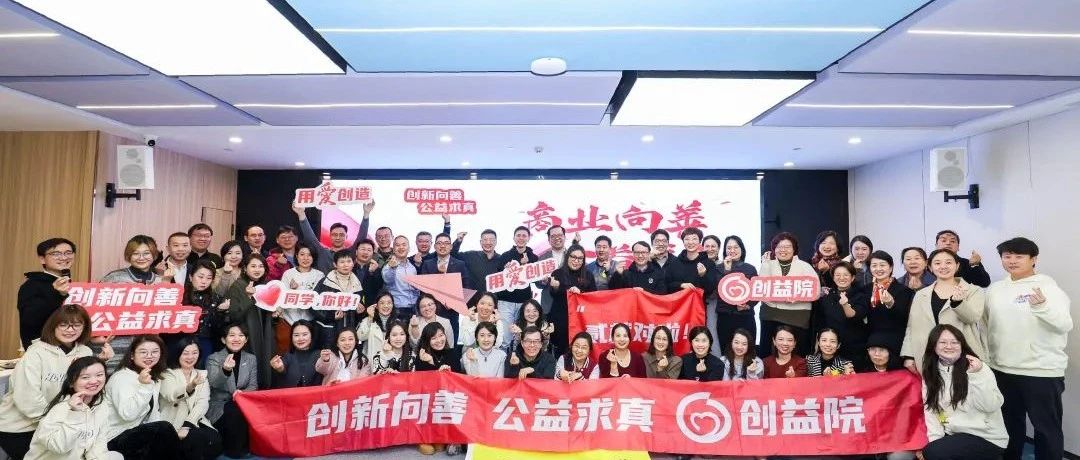
创新向善|当系统化商业思维撞上公益第二曲线,创新涌现新物种
混沌学园· 2025-03-08 05:42
Core Viewpoint - The integration of public welfare and business is no longer optional but a necessity in the current era, emphasizing the importance of social value in corporate balance sheets and the need for sustainable business thinking in non-profit organizations [2][3]. Group 1: Challenges in Current Landscape - Many public welfare projects still rely on outdated fundraising methods despite the willingness of younger consumers to pay a "goodwill premium" [3]. - There is a significant increase in ESG budgets among Fortune 500 companies, yet social needs and business resources remain disconnected [3]. - A large percentage (72%) of charitable actions are trapped in a closed loop of "emotional endpoints," failing to leverage technology for efficiency [3]. Group 2: Role of Chuangyi Institute - Chuangyi Institute serves as a catalyst for change, providing a platform for the innovative integration of business and public welfare [4]. - The institute aims to create new social innovation models that allow public welfare projects to thrive in a commercial environment, enhancing both business vitality and social impact [4]. Group 3: Training and Development Opportunities - Participants will receive a systematic methodology for integrating business and public welfare, based on over a decade of innovation research and practical teaching experiences [5]. - The program includes collaborative creation of entrepreneurial strategies, helping participants refine their business plans and attract investor interest [6]. - Real-world study opportunities will be provided, allowing participants to gain market insights and teamwork skills through expert-led sessions and project presentations [7]. Group 4: Alumni Network and Resources - Graduates will join an alumni community that facilitates ongoing learning and resource sharing between business and public welfare sectors [8]. Group 5: Program Details - The training program is scheduled from March 16 to May 18, 2025, with applications closing on March 15, 2025, and will take place in Hangzhou [10]. - The program consists of multiple modules focusing on practical training, strategic planning, and long-term development of public welfare initiatives [11][12][13]. Group 6: Application and Fees - The program is open to founders and key team members of public welfare and business organizations, with a fee of 45,000 yuan per person, reduced to 10,000 yuan for eligible non-profit applicants [15][16].