科技共和国

Search documents
美国AI公司与五角大楼的争吵说明,“科技共和国”已死
Guan Cha Zhe Wang· 2026-02-27 01:26
Core Insights - The article discusses the use of Anthropic's AI model, Claude, in a military operation by the U.S. in Venezuela, highlighting the intersection of AI technology and national security [1][4][6] - It emphasizes the tension between Anthropic's ethical stance on AI usage and the Pentagon's demands for unrestricted access to its technology, indicating a shift in how AI is perceived as a resource for national defense [2][4][10] Group 1: Military and AI Integration - The U.S. military utilized Anthropic's AI model Claude in a covert operation, marking a significant milestone for the company as it became the first AI model developer to be deployed in classified military actions [4] - Following the operation, the Pentagon issued a demand for unlimited usage rights of the Claude model, framing Anthropic's ethical guidelines as a potential threat to national security [4][10] Group 2: Corporate Ethics and Government Demands - Anthropic has been negotiating with the Pentagon regarding the terms of technology use, aiming to ensure that Claude is not employed for mass domestic surveillance or fully autonomous weapon systems [2][4] - The company's CEO, Dario Amodei, has expressed a commitment to responsible AI development, contrasting with the Pentagon's more aggressive stance on AI deployment [2][6] Group 3: Ideological Conflict and Industry Response - The article highlights a cultural clash between tech companies and government expectations, suggesting that AI is no longer viewed merely as a product but as a strategic asset that can be commandeered by the state [6][10] - Other tech companies, such as Meta and xAI, have begun to align their policies with military applications, indicating a broader trend within the industry to comply with government demands for AI technologies [10][11] Group 4: Global AI Landscape - The article draws parallels between U.S. and Chinese approaches to AI, noting that both nations view AI as a matter of national sovereignty, with China focusing on developing independent AI capabilities [13][14] - The competitive landscape is shifting, with both countries aiming to control the resources and technologies that will define the future of AI, emphasizing the strategic importance of AI in global power dynamics [14]


“炮轰”硅谷就能解决问题吗?
2 1 Shi Ji Jing Ji Bao Dao· 2026-02-24 16:15
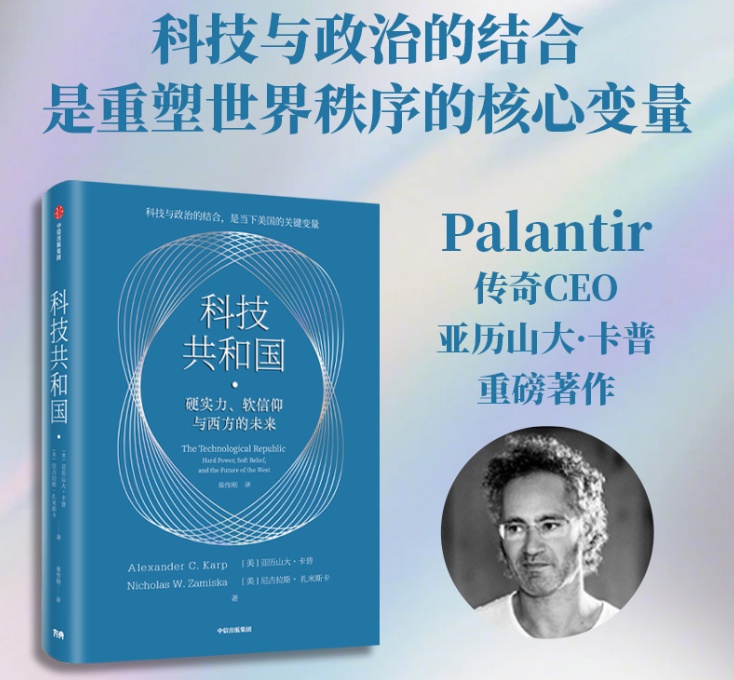
Core Argument - The book "Tech Republic: Hard Power, Soft Beliefs, and the Future of the West" critiques the long-standing technological libertarianism of Silicon Valley, arguing that technology should serve national interests and civilization rather than merely pursuing commercial gains and user engagement [2][3]. Group 1: Technology and National Strategy - The author advocates for embedding technology within the national political framework, suggesting that technology should be driven by national power and strategy [3]. - The concept of "Tech Republic" is introduced, calling for tech companies, particularly those in Silicon Valley, to assume public responsibilities and collaborate with the government [3]. - The book emphasizes the need for a mission-driven innovation approach, focusing on national strategy rather than short-term returns and user growth [4]. Group 2: Critique of Current Trends - The book criticizes the shift of the U.S. tech industry from national security to consumer internet and social media, highlighting a perceived political neutrality among Silicon Valley companies [2][4]. - It reflects a critique of globalization and technological neutrality, resonating with rising anti-globalization sentiments in the U.S. and elsewhere [2]. - The authors argue that critical markets, such as data and AI, should not be left solely to market forces but require strategic national planning [4]. Group 3: Author Background and Controversy - The authors, Alexander C. Karp and Nicholas W. Zamiska, have backgrounds that influence their perspectives, with Karp being a CEO of a data analytics company serving government and military clients [4]. - The book has faced criticism for potentially reflecting the interests of its authors, who are closely tied to the U.S. government [4]. - The book raises concerns about the practicality of its proposals in a historically liberal economic environment in the U.S. [4][5]. Group 4: Innovation and Globalization - The transition from "technological globalization" to "technological sovereignty" is questioned, as it may not necessarily enhance U.S. technological strength [5]. - The innovation ecosystem in the U.S. is primarily driven by vibrant enterprises, and losing this focus could lead to unintended consequences [5]. - The book's critique of Silicon Valley may spark discussions, but it does not present a comprehensive solution, emphasizing the need for a supportive environment for innovation and collaboration among nations [5].

书讯 |《科技共和国》:美国和西方未来数十年的战略走向
Xin Lang Cai Jing· 2026-02-14 04:05
Core Argument - The book "The Technological Republic" discusses the strategic direction of the U.S. and the West for the coming decades, highlighting concerns over technological transformation and geopolitical competition [1][3]. Group 1: Critique of Current State - The author criticizes the U.S. elite's loss of direction in technology and innovation, stating that Silicon Valley has lost its way and that American technological innovation has become "hollowed out" over the past two decades [3][4]. - The book argues that the U.S. has failed to establish a clear collective identity or value system, leading to a crisis of purpose and direction among its elite [5][6]. - The author condemns the "technological neutrality" perspective, asserting that many talented individuals have moved away from critical areas that impact collective welfare and national defense [5][6]. Group 2: Structure of the Book - The book is divided into four parts: "The Software Century," "The Hollowing Out of the American Spirit," "Engineering Thinking," and "Rebuilding the Technological Republic," comprising 18 chapters [4][7]. - In "The Software Century," the author posits that the era of nuclear deterrence is ending, and a new deterrent age based on artificial intelligence is emerging, which will dominate future wars [4][7]. - The second part analyzes the cultural decline in the U.S. and the West, attributing it to internal crises of spirit and identity [5][6]. Group 3: Call for Action - The author emphasizes the need for Silicon Valley to engage with public service and national missions, arguing that technology should be a force for rebuilding collective beliefs and national direction [7][8]. - The book suggests that the U.S. must integrate "engineering thinking" into its governance to transition from the atomic age to the algorithmic age [7][8]. - The author calls for a re-establishment of national culture and values to foster collective identity and shared goals, warning against the current "innovation desert" in various sectors [7][8]. Group 4: Future Implications - The core argument throughout the book is that the software industry must rebuild its relationship with the government and redirect its resources towards developing technological and AI capabilities to address pressing national challenges [8][9]. - The author posits that the future global competition will center on institutional, technological, and national will, rather than mere market competition [9][10]. - The book provides insights into understanding the evolution of global power dynamics over the next twenty years, emphasizing that AI will reshape industry landscapes and international order [9][10].
谁在幕后操控特朗普2.0?PayPal黑帮与“科技共和国”野心
凤凰网财经· 2025-12-11 07:10
Core Viewpoint - The article discusses the launch of the "Genesis Mission," a national AI development plan initiated by President Trump, which aims to elevate AI technology to a core national strategy, marking a significant shift in the U.S. approach to technology and governance [1]. Group 1: Key Players and Influences - The driving force behind Trump's administration includes a group of Silicon Valley tech elites such as Peter Thiel, Elon Musk, and David Sacks, who advocate for a "tech accelerationism" philosophy that seeks to reshape government through engineering thinking [2][5]. - Trump's political evolution is highlighted by a shift in funding sources, with small donations decreasing from 69% in 2016 to 32.9% in 2024, indicating a growing reliance on Silicon Valley capital [4]. Group 2: Technological Ideologies - The rise of "tech accelerationism" in Silicon Valley is changing the macro-political landscape in the U.S., advocating for rapid technological advancement as a means to drive social and political change [12][13]. - This ideology promotes the idea that technological progress, particularly in AI, is essential for solving long-standing societal issues, suggesting that regulatory and ethical concerns should be set aside to facilitate innovation [16][18]. Group 3: Future Vision and Military Implications - Alexander Karp envisions a future where the U.S. is a "Republic" supported by hard technology, emphasizing the need for a government that operates with the efficiency of top tech companies [19][21]. - The article raises concerns about the reluctance of talented engineers to engage in military applications of AI, despite the necessity for the U.S. defense sector to adapt to new technological realities [22][24].