科技养殖

Search documents
宁海科技小院为长街蛏装上智慧引擎
Xin Hua Wang· 2026-02-15 02:08
Core Insights - The article highlights the successful integration of modern technology in the clam farming industry in Long Street, Ninghai County, leading to increased productivity and profitability for local farmers [1][2]. Group 1: Technological Advancements - The establishment of a "Technology Courtyard" in collaboration with Ningbo University has introduced advanced research directly into clam farming, significantly improving the quality of the clams [1]. - The "Technology Courtyard" employs a multi-faceted feeding system that combines natural and cultivated microalgae, enhancing the nutritional intake of the clams [2]. Group 2: Economic Impact - The implementation of smart upgrades across 1,500 acres of high-standard ponds has resulted in a growth rate increase and a survival rate improvement of over 20% for the clams [2]. - Approximately 120 local farmers have reported an annual income increase of over 15%, while the village collective has seen a revenue boost of more than 5% [2]. Group 3: Industry Significance - Long Street is recognized as the "Hometown of Clams" in China, with over 25,000 acres dedicated to clam farming and an annual production exceeding 7,000 tons, contributing nearly 500 million yuan to the local economy [2]. - The clam industry is crucial for the local economy, with one in ten residents' income closely tied to this sector [2].
东北小村观赏鱼“游”向全国
Xin Lang Cai Jing· 2026-02-09 07:58
Core Insights - The article highlights the successful development of the ornamental fish farming industry in Lujiacun, Liaoning Province, with a focus on the cooperative model and technological support driving growth [1][2]. Group 1: Industry Overview - Lujiacun's ornamental fish farming has a history of over 30 years, transitioning from scattered individual operations to a cooperative model established in 2009, which has enabled scale operations [2]. - The village aims to produce over 70 species of ornamental fish by 2025, with an annual output value exceeding 80 million yuan (approximately 11.2 million USD) [1]. - The market share of the guppy fish produced in Lujiacun is nearly 40% nationwide, indicating a strong competitive position in the industry [1]. Group 2: Technological and Cooperative Development - The establishment of the Lujiacun Honglin Ornamental Fish Professional Cooperative has been pivotal in uniting farmers for better pricing and market access [2]. - Modern greenhouse facilities, including 40 temperature-controlled greenhouses, have been built to support the cultivation of tropical ornamental fish in a colder climate, utilizing solar heating and a recirculating water system [2]. - Collaboration with local scientific institutions, such as the Liaoning Provincial Freshwater Aquatic Science Research Institute and Dalian Ocean University, provides technical support in areas like pest control and breeding of new species [2]. Group 3: Community and Economic Impact - The ornamental fish industry has attracted over 30 young returnees to Lujiacun, bringing new ideas and technologies that help expand sales channels [3]. - The net income for a standard greenhouse ranges from 120,000 to 400,000 yuan (approximately 16,800 to 56,000 USD) annually, contributing significantly to local economic development [2].
“科技配方”有多牛?中山鱼塘变身“疗养院”,亩产翻七倍
2 1 Shi Ji Jing Ji Bao Dao· 2025-09-11 15:29
Core Insights - Guangdong is a significant region for aquaculture in China, with Zhongshan's crispy fish becoming a distinctive industry, achieving stable annual production growth and expanding both domestic and international markets [1] Group 1: Production and Yield - The average yield of over 7,000 pounds per acre has become the norm for local fish farmers, with the transformation of grass carp into crispy fish providing additional value [1] - Farmers like Li Quanfu and Li Jianhua have achieved an average yield exceeding 7,000 pounds per acre through precise nutritional management and scientific farming methods [1][2] Group 2: Nutritional Management - Zhongshan has developed a refined production chain for grass carp, with different regions specializing in various growth stages, ensuring optimal nutritional needs are met [2] - The establishment of a comprehensive database by Haida Group allows for precise assessment of grass carp's nutritional requirements at different growth stages, enhancing feed efficiency [2] Group 3: Technological Integration - Big data technology is utilized for dynamic adjustments in aquaculture, with IoT devices monitoring water temperature, oxygen levels, and fish growth, optimizing feeding strategies accordingly [3] - This precision management approach has reduced feed costs by 15%-20% and minimized pollution from leftover feed, promoting ecological protection alongside farming efficiency [3] Group 4: Farming Models and Services - The introduction of high-end puffed feed and high-density farming models has provided new pathways for efficiency and profitability in Zhongshan's grass carp aquaculture [3][4] - A complete service system supports farmers by providing quality seedlings, feed, and technical guidance, facilitating participation in the industry and collaborative development [5] Group 5: Industry Transformation - The transition from grass carp to crispy fish involves selecting larger individuals for specialized farming, significantly increasing the success rate and market value [4] - The integration of high-density farming and advanced management techniques has led to substantial increases in production, with some farms achieving yields of over 8,000 pounds per acre [5]
二十四节气看蒙牛丨白露走进现代牧业吴忠牧场
Zhong Guo Jing Ji Wang· 2025-09-07 07:46
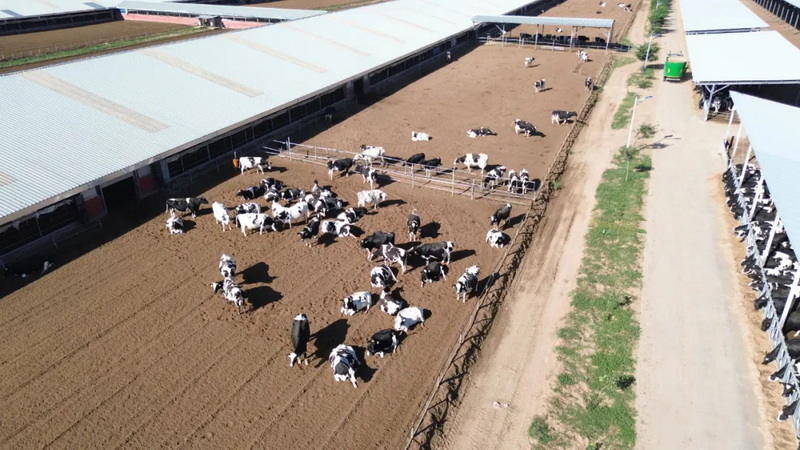
Group 1 - The article highlights the transition of seasons, specifically the arrival of the "Bailu" solar term, which marks the end of early autumn and the beginning of mid-autumn, indicating a change in weather and agricultural practices [1] - Modern Dairy's Wuzhong Farm, established in July 2012, is located in Ningxia's "golden milk source belt," benefiting from ample sunlight and a dry climate conducive to grass growth and dairy farming [3] - The farm employs advanced technologies such as automatic feeding systems, temperature-controlled barns, and smart milking equipment, significantly enhancing production efficiency [3] Group 2 - Precision feeding and health management are emphasized through real-time monitoring of cow data, utilizing production management software and techniques for resource recycling, creating a closed-loop system for breeding, farming, and environmental protection [5] - Each cow is equipped with an electronic ear tag to track growth, enabling detailed management throughout its lifecycle, while the farm explores market-oriented operations for manure collection and processing [5] - As the weather cools, cows enter a comfortable period, improving their feeding state, and the farm initiates preparations for next year's feed supply, ensuring adequate nutrition for the dairy herd [5][7] Group 3 - The farm integrates technology with nature, blending traditional farming practices with modern management to create a harmonious agricultural ecosystem [8]

让“高原之舟”生“金”
Jin Rong Shi Bao· 2025-08-08 07:55
Core Viewpoint - The innovative "Yak Industry Loan" introduced by the rural credit cooperative in Xiahe County aims to solve financing difficulties through livestock collateral, thereby activating the entire value chain of the yak industry and injecting strong momentum into rural revitalization [1][2]. Group 1: Financial Innovation and Support - Xiahe County Credit Cooperative has issued a total of 3,679 yak-related loans amounting to 310 million yuan, and 10 "livestock collateral loans" totaling 4.95 million yuan [1]. - The cooperative has established a model of "enterprise + cooperative + base," nurturing two leading enterprises and over 20 specialized cooperatives, forming a billion-yuan yak industry cluster [1][2]. - The cooperative's focus on "supporting agriculture, small businesses, and micro-enterprises" has led to the creation of specialized financial products tailored to the yak industry, enhancing the financial support for local farmers [2][3]. Group 2: Industry Development and Employment - The yak industry has been positioned as a key driver for poverty alleviation, with the cooperative's support enabling over a hundred impoverished households to achieve an average income increase of 200,000 yuan [1][2]. - The introduction of the "livestock collateral loan" has allowed local ranchers to secure higher credit limits, facilitating the expansion of their operations and increasing the value of each yak by 30% [6]. - The cooperative has successfully supported the establishment of multiple agricultural cooperatives, leading to a comprehensive development model that includes breeding, processing, and marketing [4][7]. Group 3: Technological Integration and Market Expansion - The integration of technology such as IoT monitoring systems and blockchain traceability has improved yak breeding efficiency by 15% [7]. - The cooperative has facilitated the production of high-value processed products, with sales increasing by 210% after entering online platforms [7]. - The yak industry has contributed to a total output value exceeding 800 million yuan, with a year-on-year growth of 16%, creating 600 jobs and raising the average income of farmers to 48,000 yuan [7][8]. Group 4: Future Plans and Goals - The cooperative plans to invest an additional 100 million yuan to support small and micro enterprises, cooperatives, and large-scale ranchers, aiming for standardized upgrades in the livestock industry [8]. - The focus will also be on the deep integration of "digital finance + smart pastures," extending the yak industry into high-value areas such as deep processing and cultural tourism [8].
首个绿氮水产活菌站落地江苏如东,助力南美白对虾绿色养殖
Jiang Nan Shi Bao· 2025-06-20 07:10
Core Viewpoint - The introduction of the "Green Nitrogen Aquaculture Live Bacteria Station" in Jiangsu's Rudong marks a significant shift towards a green revolution in the South American white shrimp farming industry, emphasizing the benefits of on-site production of high-activity live bacteria for improved shrimp health and water quality [1][3]. Industry Status and Challenges - Rudong has become a national hub for South American white shrimp farming, with over 124,000 acres of farming area, an annual production of 12 billion shrimp fry, and a total output of approximately 140,000 tons, generating an annual output value of 5 billion yuan [2]. - The industry faces challenges such as frequent diseases due to high-density farming, leading to lower survival rates and increased reliance on medications, which raises costs and affects product quality [2]. - Strict environmental regulations on wastewater discharge have put pressure on farmers, making wastewater treatment a key factor for sustainable development [2]. - Market volatility has resulted in low shrimp prices in 2024, causing farmers to struggle with high input costs and limited sales channels, forcing some to sell at lower prices [2]. Breakthroughs Achieved - The establishment of the live bacteria station represents three major breakthroughs: - **Technical Breakthrough**: The on-site smart live bacteria station reduces circulation costs and active loss, lowering the comprehensive cost of bacteria for shrimp farming by over 30% [3]. - **Prevention and Control Breakthrough**: The application of DME bacillus and lactic acid bacteria significantly improves water quality and reduces the incidence of diseases like enteritis by 50%, enhancing shrimp survival rates [3]. - **Model Breakthrough**: The "freshly made and used" micro-ecological application model supports the production of high-quality shrimp without antibiotics, targeting high-end markets [3]. Future Outlook - The integration of microbial technology and smart equipment is expected to drive a green transformation in shrimp farming, shifting from traditional methods to technology-driven practices that proactively prevent diseases and reduce reliance on medications [4]. - The "Rudong model" is anticipated to provide a replicable and promotable example for the high-quality development of the national aquaculture industry, leveraging technology to enhance quality and green income [5]. - The company plans to expand the live bacteria stations to other major aquaculture regions in Guangdong, Guangxi, and Shandong, benefiting local farmers and improving ecological conditions [5].
全国媒体看屯昌采风活动探访特色产业和医疗发展
Hai Nan Ri Bao· 2025-05-28 02:19
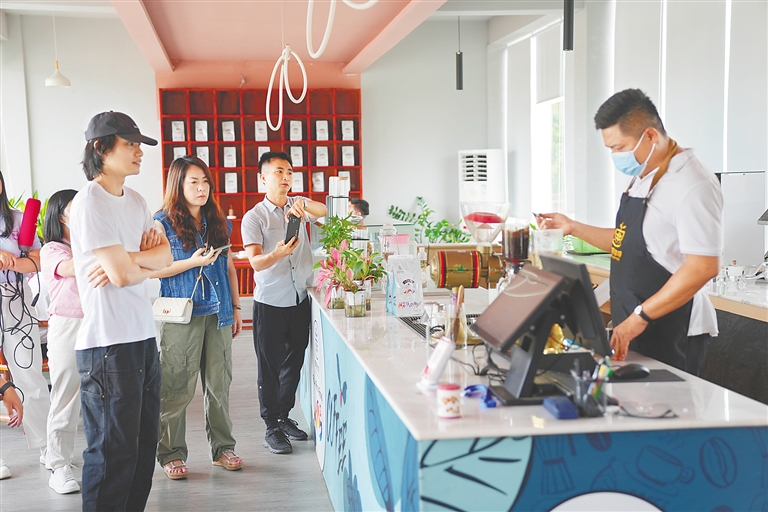
Group 1: Industry Development - The "Hulamb" sheep farming base in Tunchang has increased its stock from over 500 to more than 6,000 in five years, with plans to reach 15,000 by the end of this year due to expansion efforts supported by local industry funding [4] - Tunchang has developed a unique coffee industry model that integrates production, processing, and sales, with the establishment of coffee processing plants and experience stores, creating multiple job opportunities for local residents [5] - The local government has implemented a strategy to revitalize idle land for coffee cultivation, leading to improved quality and market acceptance of Robusta coffee beans [5] Group 2: Healthcare Improvements - Tunchang has seen a significant improvement in healthcare services, with the annual outpatient visits increasing from over 220,000 to 260,000 after the establishment of a partnership with Hainan Provincial People's Hospital [6] - The average waiting time for patients has decreased from 35 minutes to 15 minutes, and the average treatment cost has been reduced by approximately 20 yuan [6] - The introduction of over 20 provincial medical experts to Tunchang has enhanced the quality of care and patient experience [6]
二十四节气看蒙牛丨清明走进现代牧业宝鸡牧场
Zhong Guo Jing Ji Wang· 2025-04-07 05:13
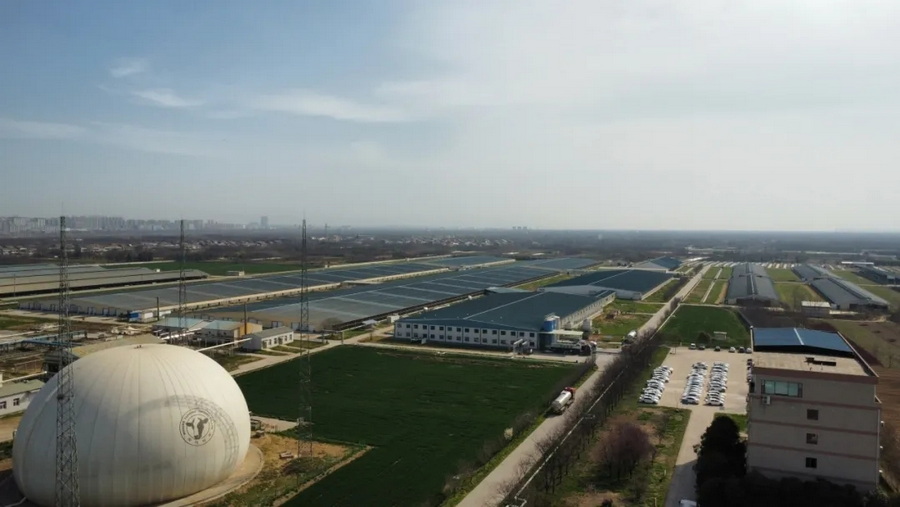
Group 1 - The modern dairy farm in Baoji, Shaanxi Province, is a high-standard, specialized, and large-scale dairy cattle breeding base, recognized as a key leading enterprise in agricultural industrialization in the region [3] - The farm utilizes an intelligent breeding system that includes fully automated TMR feeding, manure cleaning, milking, and resource utilization of manure, leading to high breeding standards and quality control of raw milk [3] - The surrounding area is flourishing with kiwi and seedlings, benefiting from the promotion of biogas fertilizer application, which enhances soil fertility and crop growth [5] Group 2 - To facilitate the use of biogas fertilizer for local farmers, the modern dairy farm has constructed a liquid fertilizer return pipeline covering over 2,800 acres, providing tangible benefits and increased efficiency for nearby farmers [6] - The farm not only brings technology but also stimulates the economic vitality of surrounding villages, enabling local residents to find employment close to home and expand silage planting areas for additional income [8]