
乡村人才振兴

Search documents
种地还要评职称?让更多“土专家”“乡创客”冒出来
Xin Lang Cai Jing· 2026-01-03 19:17
Core Viewpoint - The initiative to evaluate professional titles for farmers across various regions in China aims to recognize and certify local agricultural experts, signaling a need for talent in rural areas and the potential for rural development through skilled professionals [1][2]. Group 1: Importance of Title Evaluation - Evaluating professional titles for farmers serves as a form of recognition and honor, helping to select "local experts" who can lead and cultivate a new generation of rural talent [2]. - The lack of talent and skills in rural areas presents a significant challenge, and professional title evaluation is seen as a breakthrough to retain and utilize rural talent effectively [2]. - The goal is to make farming an attractive career choice for young people, promoting a professionalized and skilled agricultural workforce to prevent talent loss and encourage returnees to settle in rural areas [2]. Group 2: Implementation of Title Evaluation - A tailored evaluation system is necessary for new professional farmers, focusing on practical skills and achievements rather than traditional academic qualifications [3]. - The evaluation process should be grounded in real-world agricultural practices, emphasizing hands-on skills and the ability to lead and inspire others in the community [3]. Group 3: Incentives and Recognition - For the title evaluation to be effective, it must provide tangible rewards and policy support, ensuring that farmers feel motivated and see real benefits from their titles [4]. - Farmers with professional titles should receive priority in job recruitment, access to training, and opportunities to participate in trials of new agricultural technologies [4]. - A comprehensive incentive system that includes financial rewards, social recognition, and ongoing support is essential to enhance the visibility and value of farmers' skills [4]. Group 4: Dynamic Management and Support - Establishing a dynamic management system is crucial to avoid a one-time evaluation approach, linking title advancement to ongoing contributions and skill demonstrations [4]. - Continuous support and motivation for farmers with titles will help them seize more opportunities and enhance their contributions to rural development [4].
经济日报关注农民评职称:让更多“土专家”“乡创客”冒出来
Xin Lang Cai Jing· 2026-01-02 00:57
Core Viewpoint - The evaluation of professional titles for farmers should not be merely a "paper honor" but should include tangible material rewards and policy support to motivate farmers and provide them with development opportunities [1][3]. Group 1: Importance of Title Evaluation - The evaluation of professional titles serves as a recognition and honor for farmers, helping to select "local experts" who can lead and cultivate a talent pool in rural areas [2]. - There is a pressing need to address the shortage of talent and skills in rural areas, making the professionalization of farmers a key strategy to retain and attract talent back to the countryside [2]. Group 2: Implementation of Title Evaluation - A tailored evaluation system is necessary for new professional farmers, which should focus on practical skills and achievements rather than traditional academic qualifications [2][3]. - The evaluation process should be inclusive, breaking down barriers related to household registration, identity, and academic credentials, and should prioritize practical performance in the field [2]. Group 3: Incentives and Support Mechanisms - The professional titles should come with real material rewards and policy incentives, such as priority in rural recruitment and access to new technology training [3]. - A dynamic management and continuous support mechanism should be established to link title advancement with contributions to skill demonstration and standardized management, ensuring that titled farmers have more opportunities and confidence in their work [3].
让更多“土专家”“乡创客”冒出来
Jing Ji Ri Bao· 2026-01-01 22:11
Core Viewpoint - The evaluation of professional titles for farmers should not be merely a "paper honor" but should include tangible material rewards and policy support to motivate farmers and enhance their career prospects [1][3]. Group 1: Importance of Title Evaluation - The evaluation of titles for farmers serves as a recognition and honor, helping to select "local experts" who can lead and cultivate a talent pool in rural areas [1][2]. - There is a pressing need to address the shortage of talent and skills in rural areas, making the professionalization of farmers a key strategy to retain and attract talent [1][2]. Group 2: Customizing Evaluation Criteria - A tailored evaluation system is necessary for new professional farmers, which should focus on practical skills and achievements rather than traditional academic qualifications [2][3]. - The evaluation process should be conducted in the field, emphasizing hands-on experience and the ability to lead agricultural innovation [2]. Group 3: Incentives and Support Mechanisms - Farmers with professional titles should receive real material rewards, such as priority in recruitment and access to training and new agricultural technologies [3]. - A comprehensive policy incentive system should be established, including education, certification, production support, social security, and financial credit, to enhance the visibility and value of farmers' skills [3]. - Continuous support and dynamic management should be implemented to ensure that title holders remain active and contribute to agricultural development [3].
铺就通往美好生活的技能之路
Shan Xi Ri Bao· 2025-12-21 23:07
Group 1 - The core idea of the articles highlights the importance of skill training in promoting employment and income growth in rural areas of Shaanxi Province, exemplified by the stories of individuals like Liu Xinying and Zhang Xing [1][2][3][4] - Liu Xinying, a trained domestic worker, has significantly improved her family's financial situation, achieving a monthly income of around 10,000 yuan through skills acquired from training programs [1] - The Hanbin District has implemented various strategies to stabilize employment, including community factories, local job opportunities, and skill training, successfully maintaining the employment of 200,000 individuals who were lifted out of poverty [2] Group 2 - Zhang Xing, a representative inheritor of the intangible cultural heritage of Shaanxi, has modernized traditional face painting techniques and created over a hundred cultural products, making them relevant in contemporary life [2][3] - The local workshop led by Zhang has become a key stop for tourism, with products being sold nationwide through e-commerce, showcasing the potential of rural craftsmanship [3] - Baoji City has recognized 246 rural craftsman masters and has trained over 60,000 individuals, providing entrepreneurial loan support to foster the development of local industries and increase farmer income [4] Group 3 - Shaanxi Province has conducted skill training for over 85,400 individuals this year, with nearly 2,000 employment assistance workshops and over 200,000 public welfare positions available for the impoverished population [4] - The province has maintained a consistent employment rate of over 2.1 million for the impoverished population for five consecutive years, demonstrating the effectiveness of skill training initiatives [4] - The cultivation of skilled individuals has led to the establishment of 119 business entities, creating job opportunities for over 120,000 people, thereby forming a positive cycle of talent-driven industry growth and income increase [4]
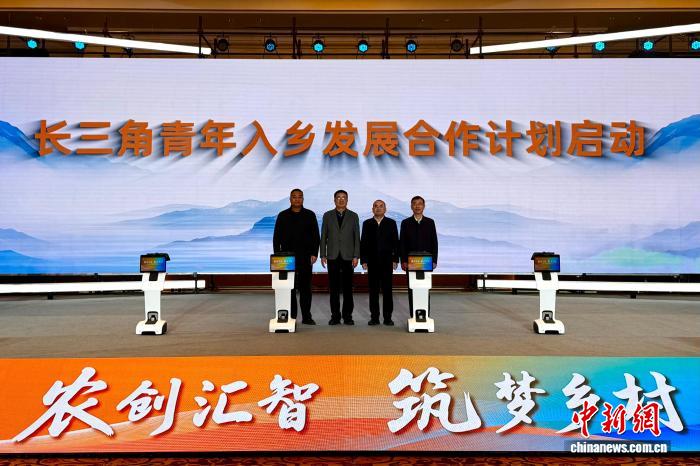
长三角青年入乡发展合作计划启动 筑共育共享共创生态
Zhong Guo Xin Wen Wang· 2025-12-15 23:29
Core Viewpoint - The "Rural Entrepreneurship and Innovation Invitation Competition" in the Yangtze River Delta region aims to leverage the vitality and creativity of "new farmers" and agricultural entrepreneurs to promote rural revitalization and modernize agriculture through a collaborative ecosystem [1][2]. Group 1: Program Objectives - The program seeks to create a talent matrix that supports comprehensive rural revitalization and explores replicable models for rural talent revitalization in the Yangtze River Delta [1]. - It emphasizes the importance of building a collaborative ecosystem for rural entrepreneurship and innovation, focusing on co-creation, sharing, and nurturing [1]. Group 2: Implementation Strategies - The initiative will focus on four key areas: building incubation platforms, sharing development resources, nurturing core capabilities, and co-creating future opportunities [2]. - It plans to utilize the Yangtze River Delta Agricultural Entrepreneurs Development Alliance to host interactive events like agricultural salons and face-to-face meetings to foster idea exchange and experience sharing [2]. - The program will explore cross-regional agricultural parks and training points for university students, aiming to create a community that integrates entrepreneurship, living, and social interaction [2]. - Collaboration with universities, research institutions, and enterprises will be established to share technological innovation resources and results [2]. - The initiative will connect with industry parks, venture capital funds, and financial institutions within the Yangtze River Delta to share entrepreneurial support and investment resources [2].

浙江“人才金融”的三道答题
Zheng Quan Ri Bao· 2025-12-07 15:22
Core Viewpoint - The article emphasizes the importance of transforming financial support for rural talent from a "blood transfusion" model to a "blood production" model, focusing on creating a systematic approach to address the financing challenges faced by rural talents through innovative mechanisms [1]. Group 1: Identifying Talent - The first key question is about identifying talent, shifting from "asset-based" evaluation to "value-based" assessment. Traditional risk control relies on collateral and financial statements, but rural talents often possess "light assets and heavy skills." Zhejiang's approach involves creating a "talent value assessment system" that quantifies soft skills such as government-recognized qualifications and personal expertise into credit capital [2]. Group 2: Supporting Talent - The second key question addresses how to support talent, moving from merely providing loans to accompanying their growth throughout the entire cycle. Zhejiang has developed a differentiated and customized product matrix, offering credit loans for early-stage talents and combination guarantee loans for mature leaders to expand production. Additionally, a "financial+" ecosystem is emerging, integrating various services like wealth management and insurance to enhance the effectiveness of fund usage and increase entrepreneurial success rates [3]. Group 3: Risk Control - The third key question focuses on risk control, transitioning from "single-point risk avoidance" to "systematic protection." Given the high risks associated with rural talent entrepreneurship, Zhejiang has established a risk control firewall through "special assessments, dynamic monitoring, and shared responsibilities." This includes creating talent credit profiles, enhancing post-loan big data warnings, and setting up risk compensation funds and specialized insurance products [4].
资金跟人才 人才促产业
Zheng Quan Ri Bao Zhi Sheng· 2025-12-07 15:11
Group 1 - The core viewpoint of the news is that Zhejiang Province is actively promoting agricultural modernization and rural revitalization during the "14th Five-Year Plan" period, achieving significant progress and being recognized as a national model for rural revitalization [1] - Zhejiang has implemented the "1111" action for rural talent revitalization, aiming to cultivate 1,000 "Zhejiang Agricultural Talents," 10,000 rural industry leaders, 100,000 agricultural entrepreneurs, and 1 million modern "new farmers" [1] - As of now, Zhejiang has trained 561 "Zhejiang Agricultural Talents," 6,800 rural industry leaders, over 100,000 agricultural entrepreneurs, and 584,000 modern "new farmers" [1] Group 2 - The "Tangxi Loquat" full industry chain has been included in Zhejiang's provincial-level specialty product cultivation project, with an investment of 16.225 million yuan for a smart loquat demonstration garden [2] - Agricultural Bank of China (ABC) has introduced the "Head Goose·Large Household Loan" to meet the financial needs of agricultural leaders, providing a 1 million yuan loan to support the smart loquat project [2][3] - As of the end of October, ABC Zhejiang has issued over 150 billion yuan in loans, supporting nearly 300,000 farmers in their entrepreneurial endeavors [4]

甘肃宕昌:打造“家门口充电站” 育人才促振兴
Zhong Guo Fa Zhan Wang· 2025-11-06 07:59
Core Insights - The training program for high-quality farmers in Gansu's Dangchang County successfully concluded, with 100 participants receiving certification, aimed at enhancing local industry development [1][2][3] Group 1: Training Program Overview - The training lasted for 10 days and utilized a mixed teaching approach of "theory + practice + online" [1] - Participants included key personnel from rural culture, intangible heritage, and grain and oil planting sectors [1] - The program aimed to address the disconnect between local talent cultivation and industry needs through practical, on-site learning experiences [1][2] Group 2: Curriculum and Methodology - The training content was designed to be practical and effective, focusing on the actual needs of Dangchang County's grain and oil crop industry [1] - Courses covered comprehensive skills, professional techniques, and capacity expansion, including topics like rural civilization, cultural tourism integration, e-commerce, high-yield grain and oil technology, pest control, and cooperative management [1] - The training emphasized overcoming production bottlenecks and provided full industry chain coverage to ensure immediate applicability of learned skills [1] Group 3: Innovative Teaching Approach - The program broke traditional classroom limitations by organizing field trips to advanced agricultural regions and institutions [2] - Participants engaged in hands-on training and real-world observation, facilitating a shift from theoretical knowledge to practical application [2] - A diverse faculty comprising experts, professors, and experienced practitioners provided both theoretical insights and practical wisdom [2] Group 4: Outcomes and Future Plans - Participants reported significant improvements in planting skills and business concepts, expressing increased confidence in leading rural development efforts [2] - The county plans to establish a follow-up service and long-term management mechanism to sustain training outcomes and cultivate a new generation of innovative farmers [3] - This training model serves as a reference for addressing rural talent shortages and promoting agricultural modernization in western counties [3]

以人才之力筑乡村振兴之基
Jing Ji Ri Bao· 2025-08-24 01:36
Group 1 - The core viewpoint emphasizes that rural revitalization is heavily reliant on talent support, with various regions implementing unique talent mechanisms to accelerate this process [1][2] - The introduction of roles such as "Industry Technology Director" in Henan and "Talent Commissioner" in Sichuan showcases targeted efforts to match technical talent with industry needs [1] - Local initiatives like the "Field Professor" and "Soil Lecturer" systems in places like Guizhou and Shandong aim to enhance the professional skills of local talent through practical training [2] Group 2 - The demand for talent in rural areas is expanding beyond traditional agricultural roles to include fields like cultural tourism, public services, and digital communication [3] - The success of initiatives like "Village Super" and "Village BA" in Guizhou highlights the importance of creative and operational professionals in rural development [3] - There is a growing recognition that attracting and retaining talent requires not only policy support but also a nurturing environment that respects diverse growth paths and practical abilities [3]
助力乡村人才振兴 丰台率先在全市推行实施“青苗培优”计划
Xin Jing Bao· 2025-05-28 10:47
Core Viewpoint - The "Qingmiao Peiyou" plan in Fengtai District aims to address the talent shortage in rural collective economies by recruiting and training young talents who understand and love agriculture and rural life, thereby injecting new vitality into rural revitalization efforts [1][2]. Group 1 - The plan is the first of its kind in the city, focusing on systematic recruitment and training of young talents through a "management trainee" model [1]. - It connects multiple stakeholders, including government, village collective enterprises, and university students, to attract and cultivate talents for rural revitalization [1][2]. - The plan emphasizes a four-party collaborative model involving government, schools, enterprises, and villages, targeting over 100 job positions across 7 townships and 70 village-level collective economic organizations [2]. Group 2 - The "Three-Year Cultivation" growth model includes cross-departmental rotation in the first year, targeted positions in the second year, and selection for promotion in the third year, aiming to develop versatile talents [2]. - Four supporting policies are introduced to retain talents: targeted training, a mentorship system, improved living conditions, and clear promotion pathways [2]. - The plan has officially launched, with the application process set to begin soon, and announcements will be made through relevant WeChat accounts [3].