科技种植

Search documents
蓝莓江苏“越冬记”
Xin Hua Ri Bao· 2026-02-07 20:31
Core Viewpoint - The article highlights the innovative approach of a blueberry cultivation company in Jiangsu, focusing on high-quality blueberry production through advanced technology and local adaptation, aiming to meet the demand for fresh blueberries in the Yangtze River Delta region. Group 1: Company Operations - The company, Shenglan Agricultural Technology Co., is preparing to enhance its blueberry base for the upcoming Spring Festival, aiming to provide fresh blueberries locally [1] - The company utilizes a soilless cultivation method with a specialized blueberry substrate and automated nutrient delivery systems, referred to as the "central brain" of the operation [1] - The entire greenhouse is connected to the Internet of Things (IoT), allowing for remote management of environmental controls to ensure optimal growth conditions for blueberries [2] Group 2: Market Strategy - The company aims to reduce the supply chain time for high-quality blueberries by growing them locally in Jiangsu, rather than relying on imports from Yunnan, which can take over ten days to reach consumers [2] - The company plans to expand its blueberry production from 70,000 plants to 100,000 plants, with each plant expected to yield approximately 5 pounds of blueberries [3] Group 3: Technological Support - The company benefits from the expertise of a research team led by Zeng Qilong from the Chinese Academy of Sciences, which has been instrumental in adapting blueberry cultivation techniques to local conditions since the 1980s [2] - Local agricultural technology support from Yangzhou Vocational Technical College is also aiding in the propagation of blueberry seedlings, addressing the challenges of high costs and cultivation difficulties [3] Group 4: Production Efficiency - The company has successfully advanced the maturity timeline of blueberries, with the first harvest now occurring as early as January, compared to previous years when it was in March or April [3] - Continuous innovation and technological advancements have shifted blueberry production from being dependent on weather conditions to a more controlled, technology-driven process [3]
要美丽更要幸福!看“美丽产业”如何变身“幸福产业”
Ren Min Ri Bao· 2025-12-19 23:42
Core Insights - The flower industry in Yunnan, particularly in Kunming, is thriving due to a complete industrial chain from seed research to market circulation, with approximately 70% of China's fresh-cut flowers originating from this region [1][2] - The development of the flower industry is supported by government initiatives aimed at enhancing the entire industrial chain, focusing on both beauty and the well-being of the community [1][3] Group 1: Industry Development - The flower industry in Yunnan has seen significant advancements in self-reliance, with the introduction of over a thousand domestically cultivated "Chinese-style" rose varieties, reducing dependency on imported species and associated patent fees [2] - Technological innovations in agriculture, such as automated environmental control systems and soilless cultivation, have improved flower quality and yield, allowing for a more efficient production process [2][3] Group 2: Economic Impact - The flower industry has created substantial employment opportunities, with direct employment reaching 380,000 and indirect employment exceeding 1 million, contributing to the economic uplift of local communities [3] - The integration of various agricultural sectors, including flowers, coffee, and tea, is enhancing rural revitalization and establishing a robust industrial foundation for sustainable economic growth [3][4]
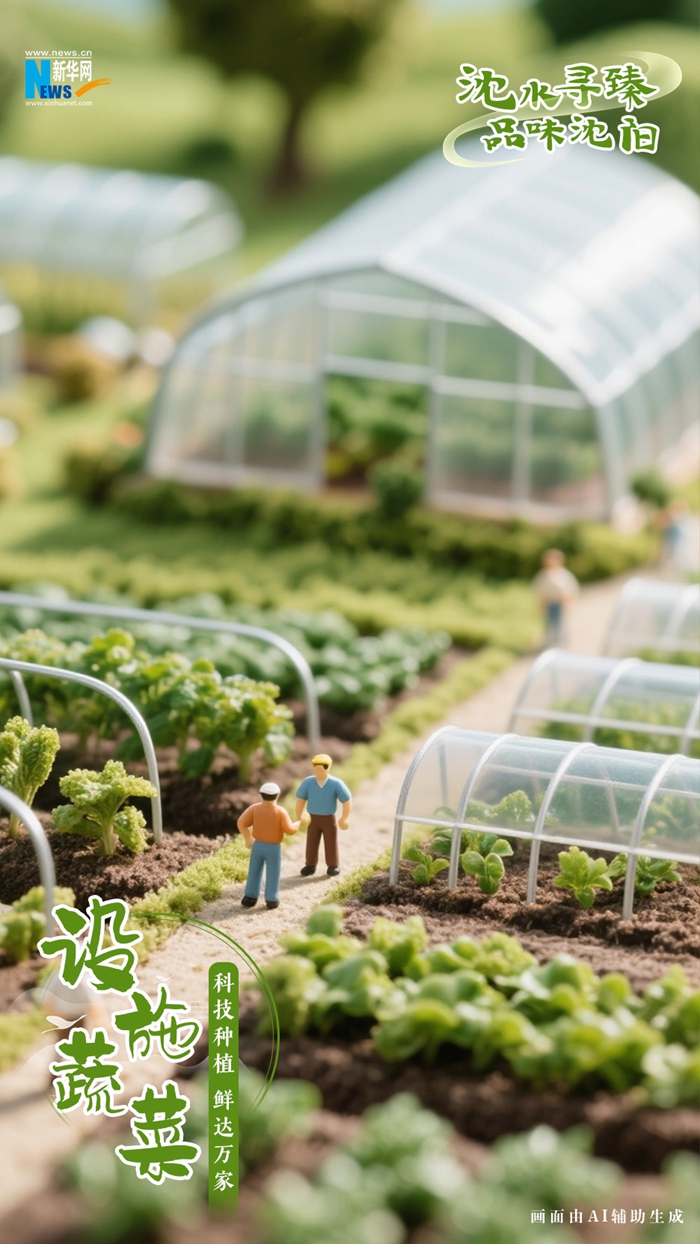
沈水寻臻 品味沈阳丨设施蔬菜:科技种植 鲜达万家
Xin Hua Wang· 2025-10-23 06:05
Core Viewpoint - Shenyang aims to become a leading modern agricultural development city, focusing on high-quality development of its agricultural sector and food industry, with a specific emphasis on a diverse range of agricultural products [4] Group 1: Agricultural Development Goals - Shenyang is targeting the establishment of a modern agricultural development model and aims to become a strong agricultural city and a major food industrial city [4] - The city is promoting the "1+8" agricultural characteristic industry model, which includes edible fungi, facility vegetables, soybeans and miscellaneous grains, and other key products [4] Group 2: Modernization and Technology Integration - The development of modern facility agriculture is seen as a crucial step in enhancing agricultural modernization, transitioning traditional farming to modern agricultural practices [4] - Shenyang is continuously introducing emerging technologies to improve the intelligence and modernization of facility agriculture, including factory-based seedling cultivation [4] Group 3: Future Strategies - The future strategy focuses on stabilizing production and supply while meeting diverse and high-quality market consumption demands [4] - The city plans to implement a vegetable industry enhancement strategy, extending the industrial chain, consolidating the benefit chain, and improving the service chain [4] - Key initiatives include seedling cultivation, base construction, technology leadership, brand creation, and logistics support to promote the facility vegetable industry towards intensification, standardization, and branding [4]

返乡创业,年轻人闯出新赛道(经济聚焦)
Ren Min Ri Bao· 2025-05-05 22:17
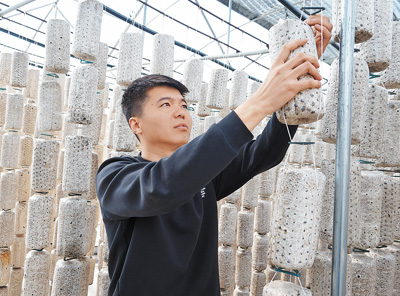
Group 1: Youth Empowerment in Rural Development - The revitalization of rural areas is both a responsibility and an opportunity for the youth, who are becoming key drivers of rural development through various initiatives such as short videos to promote agricultural products and the preservation of cultural heritage [1] - Young individuals are actively engaging in modern agricultural practices, such as scientific planting and the use of technology to enhance productivity and sustainability in farming [1][4] Group 2: Case Study of Li Qiang in Heilongjiang - Li Qiang, a 33-year-old mushroom farmer, has successfully integrated technology into traditional farming by using sensors and data monitoring to optimize the cultivation of wood ear mushrooms, resulting in significant improvements in yield and quality [4][5] - His innovative approach led to a 20% increase in the price of his selenium-enriched mushrooms, which contain three times the selenium content of regular mushrooms, benefiting local farmers by increasing their average annual income by 42,000 yuan [5] Group 3: Case Study of Shen Zhidan in Fujian - Shen Zhidan, a content creator, returned to her hometown to promote local agricultural products through short videos, significantly increasing visibility and sales for local specialties [6][7] - She established a standardized processing facility for agricultural products and formed partnerships with local cooperatives to ensure quality control, resulting in a 300% increase in annual sales for her brand [8][9] Group 4: Case Study of Yu Kangkan in Yunnan - Yu Kangkan, a traditional paper-making artisan, has revitalized the ancient craft of Dai paper-making by incorporating modern technology and marketing strategies, leading to the production of over 10 million sheets annually and generating over 10 million yuan in income for the village [10][12] - The integration of traditional techniques with modern equipment has expanded the product range and improved the aesthetic appeal of Dai paper products, enhancing their marketability [11][12]