
种业创新

Search documents
一桌家常菜 盛满守“穗”人的期盼
Hai Nan Ri Bao· 2026-02-17 01:19
Core Viewpoint - The article highlights the dedication of young researchers at the South Breeding Research Institute of the Chinese Academy of Agricultural Sciences, who are spending the Lunar New Year working on crucial corn resistance identification experiments, emphasizing the importance of their work for agricultural innovation [1][2]. Group 1: Research Commitment - The team, led by doctoral student Wang Liu, is conducting corn experiments during the critical period of corn tasseling, which coincides with the Lunar New Year [1]. - Wang Liu and her colleagues are focused on both field and laboratory experiments to ensure timely progress in selecting superior corn varieties [1]. Group 2: Celebration and Community - The researchers transformed a rented guesthouse into a temporary home, preparing a traditional New Year's Eve dinner together, which included various dishes like fried meatballs and dumplings [2]. - The atmosphere was filled with laughter and camaraderie as they engaged in cooking and shared a sense of belonging despite being away from their families [2]. - Wang Liu distributed red envelopes to her peers, symbolizing good wishes for the upcoming year and reinforcing the spirit of community among the researchers [2].
三餐四季|一颗“国民坚果”的进化——花生“生花”
Ren Min Ri Bao· 2026-01-30 06:49
Core Insights - The peanut industry in China is evolving from a traditional crop to a high-tech sector, focusing on innovations such as high oleic peanuts and plant-based products, which are gaining popularity among consumers [1][2][4] - The average annual planting area for peanuts in China remains stable at over 70 million acres, with a total production exceeding 19 million tons, making it the only oilseed crop that achieves self-sufficiency [1][3] - The industry is experiencing a transformation driven by seed innovation, processing advancements, and consumption upgrades, positioning peanuts as a key player in food security and health [1][5] Seed Innovation - High oleic peanuts, with an oil content exceeding 75%, are being promoted for their health benefits, including lowering bad cholesterol levels [2][3] - The "Yuhua 37" variety has become the most widely planted peanut variety in China, with an annual promotion area exceeding 3.65 million acres [4] - Genetic breakthroughs have reduced the breeding cycle for high oleic peanuts from 10 years to 5 years, enhancing their market competitiveness [3][4] Processing Advancements - The peanut processing sector is shifting from traditional oil extraction to value-added products, with a focus on utilizing by-products like peanut meal, which has a protein content of over 50% [5][6] - Innovative techniques such as high moisture extrusion are being used to create plant-based meat alternatives from peanut protein, potentially generating over 50 billion yuan in value [5][6] - The quality of peanut oil is improving, with the non-compliance rate for aflatoxin B1 decreasing significantly from 3.33% in 2021 to 0.76% in 2025 [5][6] Consumption Trends - The consumption of peanuts is diversifying, with snack foods now accounting for approximately 40% of total peanut consumption, driven by new flavors and health-oriented products [8][9] - E-commerce platforms are seeing a surge in innovative peanut products, with companies leveraging data analytics to cater to younger consumers [8][9] - The peanut industry is expanding its boundaries, integrating cultural tourism and experiential marketing, which is attracting significant visitor numbers [9] Future Outlook - The peanut planting area in China is projected to increase to 80 million acres by the end of the 14th Five-Year Plan, with total production expected to reach 22 million tons [9]
传递信心力量 彰显使命担当
Xin Lang Cai Jing· 2026-01-29 18:46
Group 1: Regional Development and Economic Integration - The Guizhou provincial government emphasizes the need to integrate into the Chengdu-Chongqing economic circle, supporting the development of Zunyi as a "bridgehead" for this integration [1] - Huichuan District aims to leverage its agricultural strengths to supply fresh produce to the Chengdu-Chongqing area, with over 20,000 tons of fruits and vegetables and more than 300,000 pigs sold last year [1] - The district is also focusing on industrial collaboration, establishing a parts production base for advanced manufacturing industries, with over 200 industrial enterprises cooperating with Chengdu-Chongqing firms [1][2] Group 2: Agricultural Innovation and Food Security - Zhang Liyi, a representative from the Guizhou Dryland Grain Research Institute, highlights the importance of seed innovation for food security, advocating for increased investment in agricultural technology [2] - The institute has developed over 120 high-quality crop varieties, with significant acreage planted across more than ten provinces, showcasing the value of agricultural innovation [3] - The institute aims to continue its focus on breeding breakthrough varieties suitable for local conditions, contributing to national food security [3] Group 3: Rural Education and Community Development - Guizhou's rural education initiatives, exemplified by the efforts of teachers like Gu Ya, focus on building confidence and skills in children through music education [5][6] - The transformation of communities, such as Zhouzhai Village, from poverty to prosperity through agricultural entrepreneurship, highlights the impact of modern agricultural practices and local leadership [7][8] - The establishment of home-based care services for the elderly and children by entrepreneurs like Yan Xiaojun reflects a growing focus on community welfare and support systems [9][10][11] Group 4: Cultural Heritage and Tourism - The integration of cultural heritage, such as the "Amei Qituo" dance, into tourism strategies aims to preserve and promote local traditions while boosting economic development [12][13] - The establishment of cultural tourism initiatives has led to significant visitor numbers and economic benefits for local communities, with projections of 342,000 visitors and over 40 million yuan in consumption by 2025 [13]
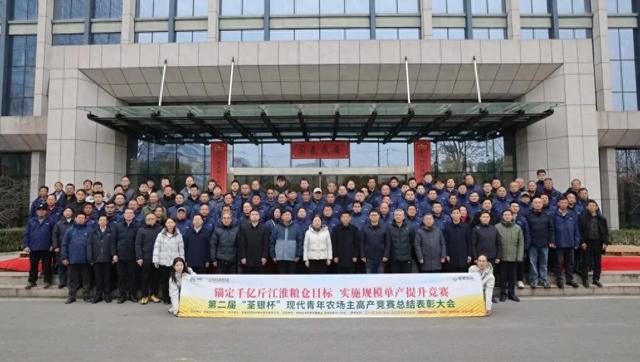
安徽72名青年农场主及种植大户集中受表彰
Huan Qiu Wang· 2026-01-27 09:57
Core Viewpoint - The "Qianyin Cup" competition aims to enhance grain crop yields among young farmers in Anhui Province, showcasing advanced cultivation techniques and promoting agricultural innovation [2][3][4]. Group 1: Competition Overview - The second "Qianyin Cup" competition was held in Hefei, recognizing 72 young farmers and large-scale growers for their achievements in grain crop production [2]. - The event was guided by the Anhui Provincial Department of Agriculture and Rural Affairs, with support from various agricultural organizations and live coverage by Anhui Broadcasting and Television Station [2][3]. Group 2: Objectives and Impact - The competition focuses on maximizing seed potential and integrating high-quality seeds with effective cultivation methods to increase food production on limited land [4]. - It aims to foster innovation in seed breeding and improve agricultural productivity, contributing to the construction of a "100 billion jin Jianghuai granary" [4][6]. Group 3: Achievements and Recognition - The competition successfully established high-yield demonstration fields and recognized exemplary young farmers, awarding 72 participants with various prizes [5]. - The highest recorded yields were 1004.1 kg/acre for rice, 853.6 kg/acre for corn, and 704.8 kg/acre for wheat, significantly surpassing the provincial averages [6]. Group 4: Expert Contributions and Knowledge Sharing - Experts provided practical insights on high-yield cultivation techniques during the award ceremony, enhancing the knowledge base of participants [7]. - Award-winning farmers shared their experiences, emphasizing the role of quality seeds and effective management in achieving high yields [8]. Group 5: Future Prospects - The competition is expected to continue driving innovation and collaboration among young farmers, contributing to the overall increase in grain production in China [8]. - The agricultural sector anticipates that improvements in single crop yields will account for over 90% of the national grain production increase in 2025 [8].


划重点!中央农村工作会议释放新信号
Zhong Guo Zheng Quan Bao· 2025-12-30 08:25
Group 1: Agricultural Modernization - The Central Rural Work Conference emphasizes the importance of accelerating agricultural modernization and building a strong agricultural nation, focusing on stabilizing grain and oil production while enhancing yield through innovation in seed technology [2][3] - By 2025, China's total grain production is projected to reach 71,488 million tons, an increase of 838 million tons or 1.2% from 2024, with a yield per unit area of 5,987 kg/hectare, up by 65.7 kg/hectare or 1.1% [2] Group 2: Agricultural New Quality Productivity - The conference highlights the need for breakthroughs in key agricultural technologies and efficient application of scientific achievements to develop new quality productivity in agriculture [4] - The integration of technology and agriculture is crucial, with smart equipment like drones becoming standard in agricultural practices, significantly improving efficiency and reducing costs [5][6] Group 3: County-Level Prosperity Industries - The conference stresses the importance of cultivating and expanding county-level industries to enhance farmers' participation in industrial development and establish robust agricultural cooperation mechanisms [7] - Successful models, such as the "Pingba Grey Goose" in Guizhou, demonstrate how integrating various agricultural sectors can stabilize farmers' income and mitigate market risks [7][8] - Companies like Taiwo Technology Group and logistics firms like Yunda are creating agricultural service systems that enhance income for over a million small farmers through order-based agriculture and tailored transportation solutions [8]
跳出农业“中等收入陷阱”,南海九江如何实现鱼跃龙门?
Nan Fang Nong Cun Bao· 2025-12-29 06:32
Core Viewpoint - The article discusses how the Nanhai district's Jiujiang town is transforming its traditional fishing industry through technological innovation and systemic restructuring, aiming to break free from the "middle-income trap" in agriculture [4][49]. Group 1: Industry Transformation - Jiujiang is recognized as "the hometown of freshwater fish seedlings in China" and "the hometown of California bass," producing 1.7 billion fish seedlings annually, accounting for 1/7 of the national market share [13][15]. - The establishment of the first unmanned intelligent aquaculture seedling workshop in the country signifies a leap in agricultural productivity [17][20]. - The collaboration between local enterprises and the Pearl River Aquatic Research Institute has led to breakthroughs in artificial breeding technology for protected species, enhancing the industry's value [18][19]. Group 2: Full Chain Reconstruction - Jiujiang's ambitions extend beyond seedling breeding, with 47 logistics companies in the Shatou area achieving an annual circulation of 250,000 tons, laying the groundwork for a modern aquaculture distribution hub [24]. - The Guangdong International (Nanhai) Health Food Industrial Park is pioneering new industry tracks by integrating dietary standards and health food research [25]. - The development of cultural tourism routes, such as "West River Fresh · Jiujiang Fish Banquet," expands the industry chain into cultural experiences, unlocking a trillion-level market potential [30][34]. Group 3: Institutional Empowerment - The Nanhai district has designated Jiujiang as a "high-level aquaculture core area," implementing a comprehensive land reform of 6,600 acres and innovating profit-sharing models to support industrial development [40][41]. - The "1234" work plan for high-quality development in the aquaculture industry (2025-2027) focuses on technology, branding, and ecology to drive a hundred billion-level industry [42][43]. - The strategic location of Jiujiang within the Greater Bay Area enhances its connectivity and market access, creating a competitive advantage [45][46]. Group 4: Agricultural Modernization - Jiujiang's practices offer a potential pathway for Chinese agriculture to overcome the "middle-income trap" by mastering industry lifelines through seed innovation, capturing value through full-chain layouts, and building competitive barriers through institutional innovation [49][50]. - The transformation of fish value from a few yuan for live fish to hundreds of yuan for prepared dishes and thousands for cultural tourism experiences illustrates a profound change in agricultural production relationships [55][56].

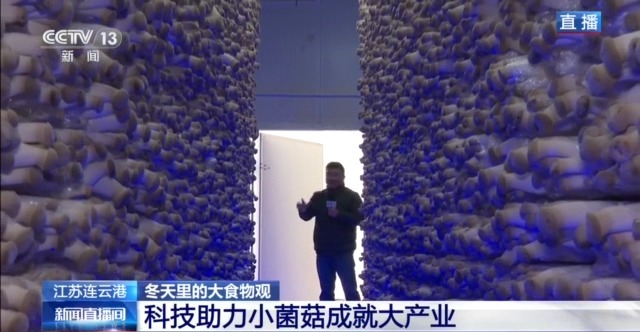
自主育种+智能生产双轮驱动 小菌菇也做成大产业
Yang Shi Xin Wen Ke Hu Duan· 2025-12-22 12:46
Core Insights - The edible mushroom industry in China is thriving, with an annual production of over 42 million tons, accounting for 85% of global output [1][5] Group 1: Production and Technology - A modern mushroom production base in Lianyungang, Jiangsu, features mushroom houses measuring 10m x 8m x 4m, housing approximately 12,000 mushroom bags, yielding around 19,000 pounds of mushrooms per cycle [3][5] - The production facility produces over 300 tons of fresh king oyster mushrooms daily, showcasing the scale of the local edible mushroom industry [5][15] - The cultivation process involves high-quality substrates and scientific methods, with a focus on optimizing growth conditions such as humidity and light exposure [11][13] Group 2: Research and Development - Research personnel select and cultivate different mushroom strains based on production conditions, with a selection cycle lasting over six months [9] - The breeding of white king oyster mushrooms has been a significant focus, with efforts to achieve self-sufficiency in seed sources during the 14th Five-Year Plan period [17][20] - Collaborative breeding platforms have been established between universities and leading enterprises, resulting in the introduction of new strains that outperform imported varieties [24][26] Group 3: Market Dynamics - The market for white king oyster mushrooms has shifted, with domestically bred varieties increasing their market share from less than 5% in 2021 to nearly 30% [26] - The production base in Jiangsu now produces over 1,500 tons of various mushroom types daily, indicating a robust supply chain [15][17] - Companies are expanding their operations internationally, establishing production facilities in Southeast Asia and Europe [17]
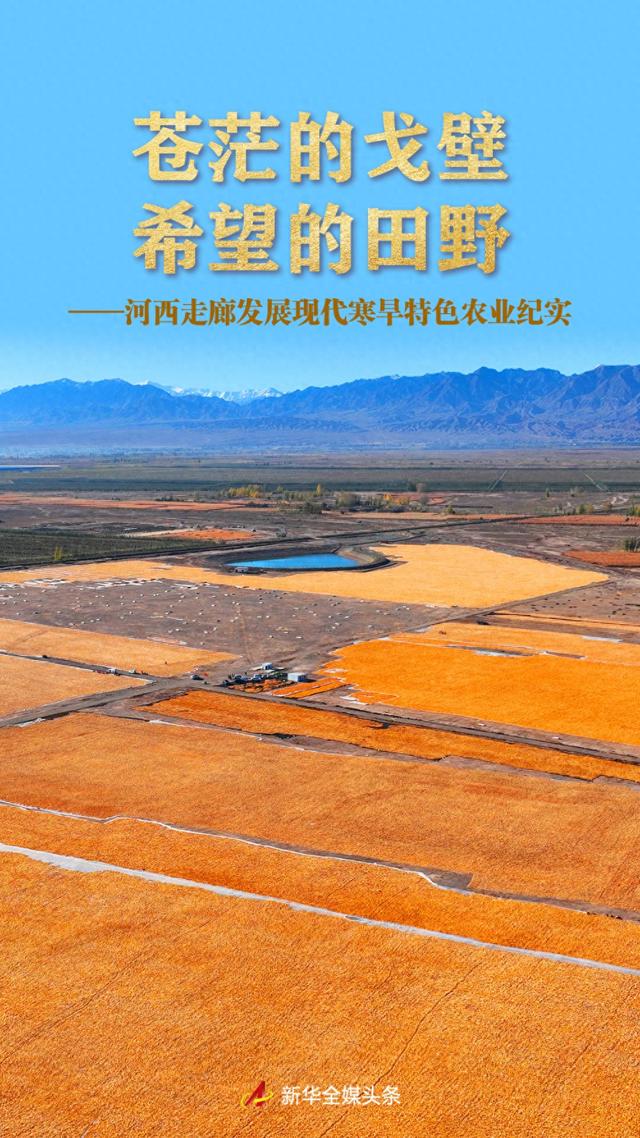
苍茫的戈壁 希望的田野——河西走廊发展现代寒旱特色农业纪实
Bei Jing Ri Bao Ke Hu Duan· 2025-12-21 04:03
Core Insights - The Hexi Corridor is transforming from a barren landscape into a vibrant area for modern cold and arid agriculture, driven by government initiatives and technological advancements [2][4][6] Group 1: Agricultural Development - The Hexi Corridor has seen a shift from traditional agriculture to modern facility agriculture, with over 4,000 greenhouses established on 32,000 acres of land [4][6] - The region's agricultural practices are evolving, utilizing advanced techniques such as substrate soilless cultivation and efficient irrigation methods, which have reduced water usage by over 35% and fertilizer use by 40% [6][9] - By 2025, the area dedicated to facility agriculture is expected to grow from 240,000 acres in 2020 to 503,000 acres, with over 80% of new projects funded by enterprises [6][16] Group 2: Seed Production - The Hexi Corridor is recognized as a "golden corridor" for seed breeding due to its favorable climate conditions, which enhance seed growth and reduce pest issues [7][9] - The region has developed a robust seed production industry, with significant advancements in breeding techniques, including molecular markers and gene editing, leading to improved crop resilience [11][13] - The production of high-quality seeds, such as corn, has increased significantly, with an expected yield of over 12,000 tons from 20,000 acres in 2025 [11][19] Group 3: Livestock and Dairy Industry - The livestock sector in the Hexi Corridor has expanded, with cattle and sheep populations increasing by 24.7% and 28.7% respectively since 2020, alongside a significant rise in vegetable production [16][21] - The dairy industry is experiencing a transformation, with the number of dairy cows exceeding 270,000 and milk production reaching nearly 810,000 tons, marking increases of 101% and 312% since 2020 [21][22] - Modern dairy farms equipped with advanced management systems are enhancing production efficiency and contributing to the region's agricultural modernization [21]
新华全媒头条|苍茫的戈壁 希望的田野——河西走廊发展现代寒旱特色农业纪实
Xin Hua She· 2025-12-20 09:10
Core Viewpoint - The development of modern cold and drought-resistant agriculture in the Hexi Corridor is transforming the region from barren land into a vibrant agricultural hub, driven by government support and innovative agricultural practices [1][6]. Group 1: Agricultural Transformation - The Hexi Corridor, historically a desolate area, is now home to over 4,000 agricultural greenhouses covering 32,000 acres, showcasing the shift towards modern cold and drought-resistant agriculture [2][3]. - The region's agricultural practices have evolved from traditional methods to a market-oriented approach, with significant advancements in greenhouse technology since around 2009 [3][5]. - By 2020, the area dedicated to greenhouse agriculture had increased from 240,000 acres to 503,000 acres, with over 80% of new projects being enterprise investments [6]. Group 2: Water Resource Management - The Hexi Corridor has implemented water-saving technologies, transitioning from traditional irrigation methods to precision drip irrigation, which saves over 35% of water compared to conventional farming [5][6]. - The establishment of water-saving irrigation material factories and the promotion of water rights reform are critical steps in addressing water scarcity in the region [4][5]. Group 3: Seed Production and Innovation - The Hexi Corridor is recognized as a "golden corridor" for seed production due to its favorable climate conditions, which enhance seed growth and reduce pest issues [7][8]. - Recent advancements in seed breeding techniques, including molecular markers and gene editing, have significantly improved the quality and resistance of new crop varieties [10]. Group 4: Livestock and Specialty Products - The region has seen substantial growth in livestock production, with cattle and sheep populations increasing by 24.7% and 28.7% respectively since 2020, alongside a notable rise in vegetable production [12][13]. - The introduction of high-quality specialty products, such as organic vegetables and dairy, has become a key driver for local farmers' income, with projected revenues from organic vegetable sales expected to exceed 50 million yuan [12][13].
要美丽更要幸福!看“美丽产业”如何变身“幸福产业”
Ren Min Ri Bao· 2025-12-19 23:42
Core Insights - The flower industry in Yunnan, particularly in Kunming, is thriving due to a complete industrial chain from seed research to market circulation, with approximately 70% of China's fresh-cut flowers originating from this region [1][2] - The development of the flower industry is supported by government initiatives aimed at enhancing the entire industrial chain, focusing on both beauty and the well-being of the community [1][3] Group 1: Industry Development - The flower industry in Yunnan has seen significant advancements in self-reliance, with the introduction of over a thousand domestically cultivated "Chinese-style" rose varieties, reducing dependency on imported species and associated patent fees [2] - Technological innovations in agriculture, such as automated environmental control systems and soilless cultivation, have improved flower quality and yield, allowing for a more efficient production process [2][3] Group 2: Economic Impact - The flower industry has created substantial employment opportunities, with direct employment reaching 380,000 and indirect employment exceeding 1 million, contributing to the economic uplift of local communities [3] - The integration of various agricultural sectors, including flowers, coffee, and tea, is enhancing rural revitalization and establishing a robust industrial foundation for sustainable economic growth [3][4]