
税收洼地

Search documents
喜娜AI速递:今日财经热点要闻回顾|2025年12月30日
Xin Lang Cai Jing· 2025-12-30 11:38
Group 1: Precious Metals Market - The precious metals market experienced a significant drop on December 29, with spot gold falling over 4%, silver dropping over 9%, palladium plummeting over 15%, and platinum decreasing over 14% [2][7] - The decline was triggered by the CME Group's announcement to raise margin requirements for various metal contracts, leading to profit-taking by many traders [2][7] - There are rumors regarding a major bank facing a margin call on silver futures, although the authenticity of this claim is uncertain [2][7] Group 2: Tariff Adjustments - The State Council's Tariff Commission announced a tariff adjustment plan effective January 1, 2026, which will modify import duty rates and categories for key components, advanced materials, energy resources, and smart bionic robots [2][7] - Industry insiders believe this adjustment will positively support the transformation, innovation, and international market expansion of related industries [2][7] Group 3: Corporate Developments - WISCO Development announced plans for a major asset restructuring involving the acquisition of stakes in WISCO Mining and Luzhong Mining from its controlling shareholder, with stock trading suspended starting December 30 for up to 10 trading days [2][7] - Multiple gold jewelry brands in China have significantly adjusted their gold jewelry prices, reflecting the impact of the recent precious metals market crash [3][8] - Geely is suing Aoxinanda for 2.314 billion yuan over quality issues with battery cells delivered between 2021 and 2023, causing Aoxinanda's stock to drop by 15.97% [9] Group 4: Real Estate Market - Goldman Sachs predicts that the large-scale selling of homes by Chinese residents may end around 2026-2027, with property prices stabilizing in 2027, and suggests a stimulus plan of at least 8 trillion yuan to support the market [9]



明年财税改革重点明晰 剑指“税收洼地”与地方财力缺口
Zheng Quan Shi Bao· 2025-12-29 19:01
Core Viewpoint - The reform of the fiscal and tax system, focusing on standardizing tax incentives and building a local tax system, is expected to be fully implemented in the first year of the 14th Five-Year Plan, addressing the dual demands of promoting high-quality development and constructing a unified national market [1]. Group 1: Tax Incentives and Local Tax System - The central economic work conference has set a goal to standardize tax incentives and fiscal subsidy policies by 2026, while also addressing local fiscal difficulties [1][2]. - Experts believe that the series of reforms will form a "break and establish" combination, where standardizing tax incentives can eliminate "tax revenue gaps" and foster a fair market environment, while constructing a local tax system can fill the financial gap left by the standardization of incentives [1][2]. - The National Taxation Administration has initiated special governance on illegal tax-related issues in investment promotion, particularly targeting local governments' practices of creating "policy gaps" and attracting "shell companies" [3]. Group 2: Challenges and Recommendations - The complexity of clarifying numerous tax incentives and fiscal subsidy policies is acknowledged, with experts suggesting a priority on cleaning up regional policy gaps and disguised tax refunds by local governments [4]. - Recommendations include creating a public list of existing incentives, establishing red lines for new incentives, and implementing a dynamic evaluation and exit mechanism [4][5]. - The reform is expected to lead to structural changes in fiscal revenue, with regions relying on "tax revenue gaps" facing income reductions and increased fiscal pressure [4][5]. Group 3: Long-term Implications - In the long term, the reform will reshape the fiscal revenue structure and the behavior of local governments, shifting from reliance on unstable regional incentives to sustainable revenue through a legalized tax system [5][6]. - Local governments are expected to focus on optimizing the business and consumption environment, enhancing industrial ecosystems, and improving public service quality [5][6]. - The 14th Five-Year Plan will also aim to standardize tax policies related to operating income, capital income, and property income, maintaining a reasonable macro tax burden level [6][7].


封关!中国最大自贸港,摊牌了
Xin Lang Cai Jing· 2025-12-19 12:36
Core Insights - The Hainan Free Trade Port officially commenced full island closure operations on December 18, implementing a system characterized by "one line open, two lines controlled, and free movement within the island" [1][18] - This marks another significant opportunity following Hainan's establishment as a province and economic zone in 1988, approval as an international tourism island in 2009, and designation as a free trade zone in 2018 [2][18] Group 1: Hainan's Unique Position - Hainan is the largest free trade port in China and globally, covering an area eight times that of Dubai, 31 times that of Hong Kong, and 46 times that of Singapore [2][19] - The geographical location of Hainan as China's second-largest island and the largest economic special zone provides it with unique advantages for reform and opening-up [4][20] - Hainan's role as a testing ground for reform is likened to that of Shenzhen in the early stages of China's opening-up [4][22] Group 2: Benefits of the Free Trade Port - The free trade port will create a special "inside customs, outside customs" regulatory area, allowing for the free flow of goods with zero tariffs between Hainan and international markets [6][23] - Hainan has opened visa-free entry to 86 countries and established multi-functional free trade accounts, enhancing its international connectivity [6][23] - The tax benefits include zero tariffs on most goods and a reduced corporate income tax rate of 15% for encouraged industries, making Hainan a tax haven [7][24] Group 3: Economic Growth Potential - Hainan's GDP is projected to reach 793.6 billion yuan in 2024, with the goal of surpassing one trillion yuan during the 14th Five-Year Plan period [26][30] - The province is shifting from a reliance on real estate to focus on tourism, modern services, high-tech industries, and tropical agriculture, with these sectors expected to account for over two-thirds of the economy by 2024 [30][31] - Hainan aims to develop a modern industrial system targeting emerging industries such as digital economy and green technology, while also enhancing its service trade capabilities [31][35] Group 4: Comparison with Hong Kong - Unlike Hong Kong, which serves as a global financial and trade hub, Hainan's strengths lie in its tourism and service sectors, with potential to develop as a shopping paradise and international tourism consumption center [34][36] - Hainan's unique status as the only free trade port with Chinese characteristics positions it as a key player in exploring new paths for high-level opening-up [36]
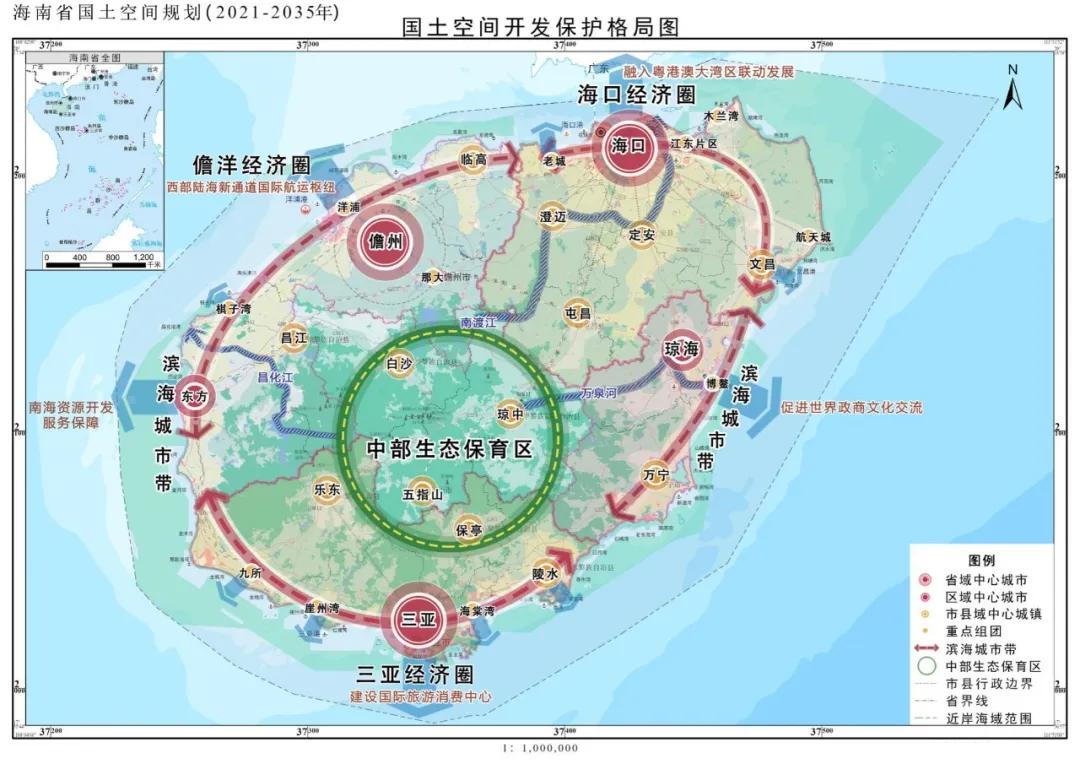
历史性时刻!海南即将全岛封关!中国最大自贸港来了,影响多大?
Sou Hu Cai Jing· 2025-07-25 05:52
Core Viewpoint - Hainan may not become the next Hong Kong, but its historical mission could be more significant than that of Hong Kong today [2] Group 1: Tax and Economic Policies - Hainan is set to become a new tax haven with individual income tax rates capped at 15% and a minimum of 3%, compared to Hong Kong's highest rate of 17% [4] - Corporate income tax in Hainan will be set at 15% for companies registered and operating in the free trade port before 2035, while mainland China's rate is 25% [4] - Hainan's duty-free shopping allowance is significantly higher, reaching 100,000, which is over eight times that of Hong Kong and Macau, positioning it as a potential "tourism shopping paradise" [4] Group 2: Strategic Importance - Hainan serves as a buffer against decoupling risks and a testing ground for reshaping global economic rules [5] - The province is tasked with exploring the boundaries of economic openness and testing new institutional frameworks for the new era of globalization [5] Group 3: Historical Context and Challenges - Hainan has faced skepticism due to past failures, including a real estate boom that led to economic mismanagement and a lack of sustainable growth [6][8] - The province's economic and population size currently lags behind cities like Wuhan, attributed to a weak industrial base [8] Group 4: Future Development Path - Hainan aims to develop a unique industrial system that does not solely focus on GDP growth, with a focus on tourism, modern services, high-tech industries, and tropical agriculture [9] - The four key industries now account for 67% of Hainan's GDP, an increase of nearly 14 percentage points since 2018 [11] - The success of Hainan's new approach may hinge on seizing opportunities presented by the current era, representing a significant exploration in China's path to openness [11]
