窜货

Search documents
酒企对开盖酒概不负责,劝退消费者恐怕不治本
Nan Fang Du Shi Bao· 2025-10-27 05:25
Core Viewpoint - A liquor company has announced it will no longer provide inspection and after-sales services for opened and unsealed products, which raises concerns about consumer rights and product authenticity [1][2] Group 1: Company Actions - The company has issued a statement regarding opened and unsealed liquor products, indicating it will not assume quality assurance responsibilities for these items [1] - The statement aims to deter consumers from purchasing low-priced opened liquor products [3] Group 2: Market Issues - The prevalence of opened liquor products is linked to the issue of "gray market" sales, where distributors sell products across regions at lower prices due to pressure from manufacturers [2] - This practice, while providing short-term sales boosts for distributors, ultimately harms profit margins and disrupts market stability [2] Group 3: Recommendations for Improvement - To break the cycle of gray market sales, companies need to improve relationships with distributors and adjust sales targets to be more realistic [3] - The focus should be on preventing consumers from accessing opened liquor products rather than merely discouraging their purchase [3]
酒企对“开盖酒”概不负责,劝退消费者恐怕不治本
Nan Fang Du Shi Bao· 2025-10-26 23:26
Core Viewpoint - A liquor company has announced it will no longer provide inspection and after-sales services for opened and unsealed products, raising concerns about consumer rights and product authenticity [1][2]. Group 1: Company Actions - The company has issued a statement regarding opened and unsealed liquor products, indicating it will not be responsible for quality assurance [1]. - The statement highlights that opened products are often handled by "scalpers," making them akin to "second-hand goods" and questioning their status as genuine products [1]. Group 2: Market Issues - The prevalence of opened liquor products is linked to the issue of "gray market" sales, where distributors sell products across regions at lower prices due to pressure from manufacturers [2]. - This practice of "gray market" sales is seen as detrimental to both distributors and manufacturers, leading to a vicious cycle that compresses profit margins and disrupts market stability [2]. Group 3: Recommendations for Improvement - To address the ongoing issue of opened products, the company should focus on improving relationships with distributors and adjusting sales targets to prevent the need for gray market sales [3]. - The company should aim to eliminate the availability of opened products in the market rather than merely discouraging consumers from purchasing them, which would demonstrate responsibility towards both consumers and partners [3].
可口可乐低调上架多款“专供新品”,全球最大饮料商卡位零食量贩渠道
Xin Lang Cai Jing· 2025-08-21 06:14
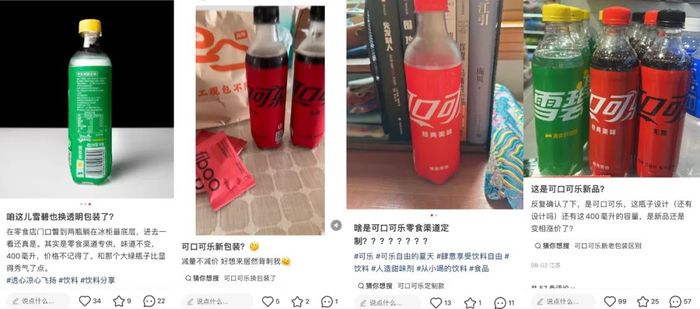
Core Insights - Coca-Cola and other brands are launching customized products specifically for the snack retail channel, adjusting sizes and prices to better fit this market segment [1][3][5] Product Customization - Coca-Cola has introduced 400ml bottles for its classic and zero-sugar variants, reducing the price from 2.8 yuan to 2.3 yuan to target snack retail channels [3][5] - Other brands like Ferrero, Lays, and Oreo are also creating tailored products for the snack retail market, indicating a broader trend in the industry [3][5][7] Market Growth - The snack retail market in China is projected to reach 1,040 billion yuan in 2024, with a year-on-year growth of 28.6%, and is expected to exceed 1,500 billion yuan by 2027 [8] - The number of snack retail stores is anticipated to grow to 45,000 by 2025, highlighting the channel's rapid expansion [8] Strategic Considerations - Brands are leveraging the snack retail channel to penetrate lower-tier markets and fill market gaps, as these stores provide access to a broader customer base [8][9] - Customized products help prevent channel conflicts and stabilize pricing across different retail formats, addressing concerns about price competition [10][11] Consumer Reactions - Consumers have expressed mixed feelings about the new customized products, with some appreciating the new packaging while others are concerned about reduced quantities at similar prices [5][12] - The challenge remains for brands to balance the needs of different channels and consumer expectations regarding value [12]