端到端VLA大模型

Search documents
量产元年之后 中国人形机器人走向“价值战”
Xin Jing Bao· 2026-01-23 14:36
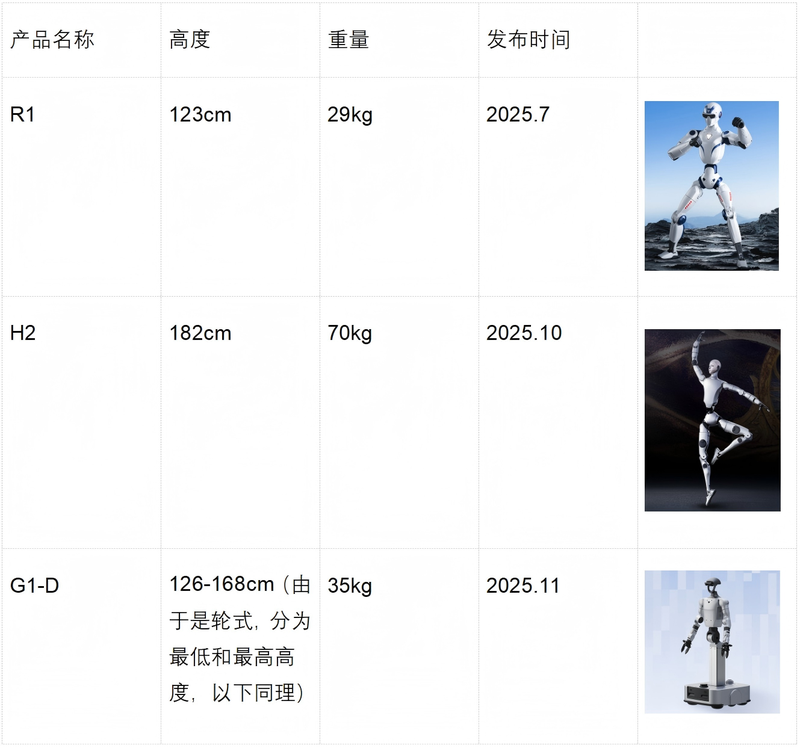
Core Insights - The humanoid robot industry in China is experiencing significant growth, with expectations of over 140 companies and more than 330 products by 2025, marking it as the "year of mass production" [1] - The industry is transitioning from mere technological showcases to practical applications in various sectors, including industrial manufacturing, commercial services, and home companionship [1] - Despite the growth, challenges remain, including the need for breakthroughs in key technologies, stability in mass production, and issues with cost control and scene adaptation [1] Industry Overview - The humanoid robot market is projected to see a price drop for consumer-grade models, with products entering the 10,000 yuan range, focusing on education, companionship, and development [2] - Notable products include the "Xiao Bu Mi" priced at 9,998 yuan, and the Unitree R1 starting at 29,900 yuan, showcasing features like voice and image integration [2] - Industrial flagship models, such as the Walker S2 from UBTECH, are demonstrating advanced capabilities in sectors like automotive manufacturing and smart logistics [3] Technological Advancements - The competition in the humanoid robot sector is shifting towards the integration of AI capabilities, with a focus on end-to-end embodied large models and world models for enhanced task execution [4] - The introduction of models like WALL-A, which combines VLA and world models, is improving robots' ability to operate in unstructured environments [5] - Data and model limitations remain a significant challenge, with high costs associated with data collection for training [5] Production and Market Dynamics - 2025 is seen as a pivotal year for mass production, with companies like Zhiyuan Robotics and UBTECH planning to significantly increase their output [6] - The industrial sector is becoming a primary battleground, with substantial orders reported, such as nearly 1.4 billion yuan in orders for humanoid robots from UBTECH [7] - The market is expected to undergo consolidation by 2026, with only a fraction of the current companies likely to survive, similar to trends observed in the electric vehicle industry [9][10] Future Outlook - The Chinese government is committed to promoting technological innovation in humanoid robots, focusing on enhancing core technologies and ensuring product safety [9] - The industry is anticipated to face challenges in balancing speed and potential market bubbles, with a need for sustainable business models [8] - The year 2026 will be critical for assessing the commercial viability of humanoid robots, with a focus on real-world applications and profitability [10]


自变量机器人王潜:具身智能大模型没法抄国外作业
3 6 Ke· 2025-05-29 01:05
Core Viewpoint - The article discusses the emergence of embodied intelligence in China, highlighting the rapid growth and investment in the sector, particularly focusing on the company "Self-Variable Robotics" founded by Wang Qian, which has raised over 1 billion yuan in funding within a year and a half [5][12]. Group 1: Company Overview - Wang Qian, the founder of Self-Variable Robotics, has a strong academic background and prior experience in the U.S. quant fund industry, which he left to pursue robotics [2][5]. - Since its establishment in 2023, Self-Variable Robotics has completed seven rounds of financing, with a total amount exceeding 1 billion yuan [5]. - The company has adopted an "end-to-end unified VLA model" technology route, updating its model every 2-3 months [7][12]. Group 2: Industry Context - 2023 is marked as a significant year for the domestic embodied intelligence sector, with major players like Nvidia's founder predicting it as the next tech wave [5]. - The domestic humanoid robotics startup landscape has formed a clear hierarchy, with Self-Variable Robotics moving from a secondary to a quasi-first-tier position due to its funding achievements [5]. - There are contrasting views on the commercial viability of humanoid robots, with some investors skeptical about their practical applications, while others continue to invest heavily [5][10]. Group 3: Technological Development - Self-Variable Robotics has developed the WALL-A model capable of performing complex tasks beyond simple operations, positioning itself at the forefront of the industry [8][12]. - Wang Qian anticipates that a GPT-3 level embodied intelligence model could emerge within a year, with commercial applications expected to materialize in one to two years [10][21]. - The company prioritizes enhancing model capabilities over immediate commercialization, with two-thirds of its expenditures directed towards model development [12][30]. Group 4: Market and Commercialization - Current commercial applications for embodied robots are primarily in research education and hospitality, which Wang Qian believes are not the ultimate target markets for long-term growth [10][31]. - The company has already developed a physical product, although it has not yet been widely released, and is currently in the proof of concept stage with seed customers [27][29]. - Wang Qian expresses skepticism about the long-term value of current commercial scenarios, suggesting they may be more about meeting investor expectations than achieving substantial market impact [31][32]. Group 5: Competitive Landscape - The article notes that while domestic companies are catching up, there remains a significant gap between Chinese and U.S. companies in terms of overall capabilities [37]. - Self-Variable Robotics claims to be on par with international leaders like Physical Intelligence and Google in certain aspects, despite the general perception of being behind [38]. - The challenges of open-source models in the embodied intelligence space are highlighted, with Wang Qian arguing that commercial success cannot rely solely on open-source strategies [43][44].