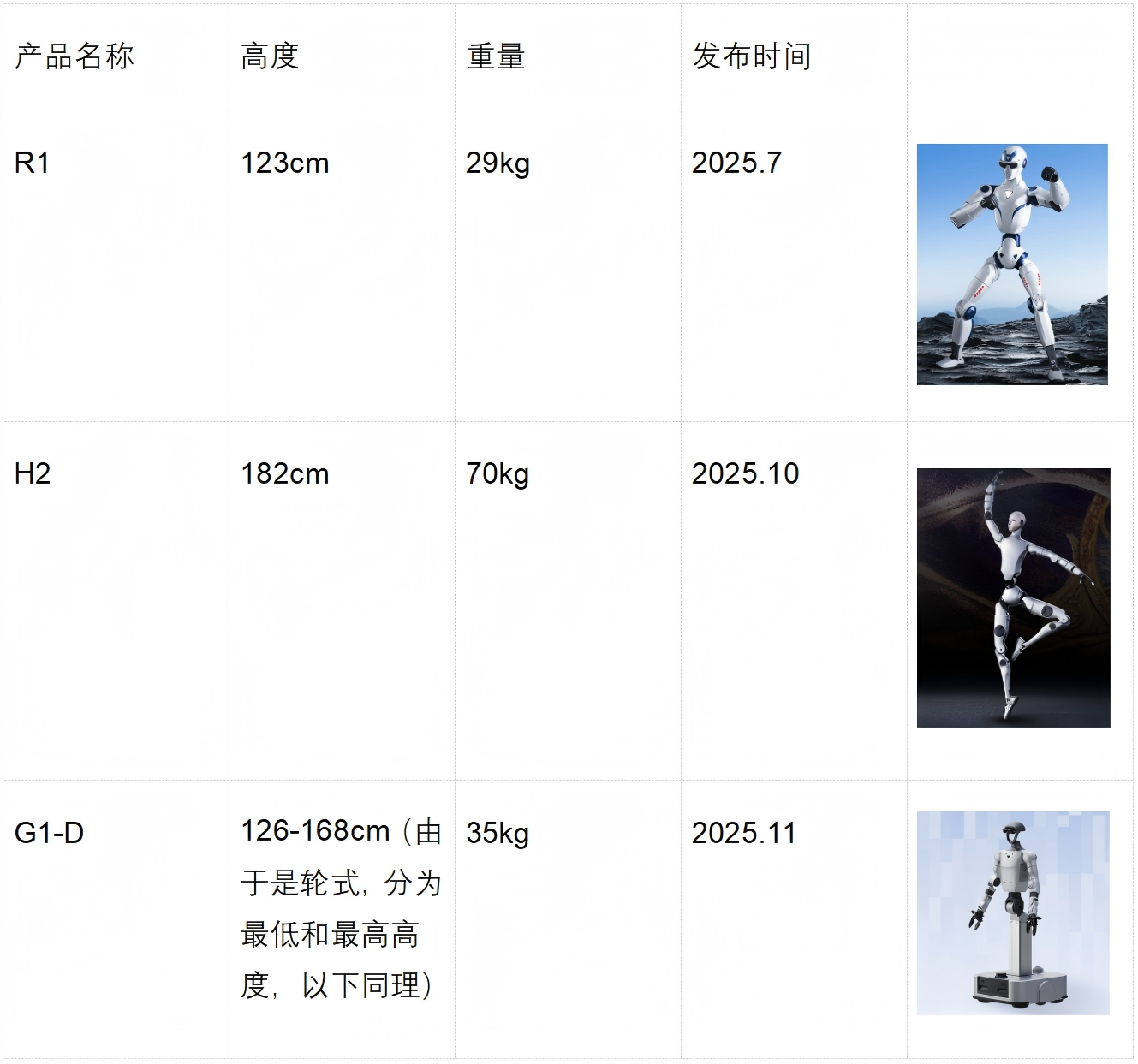
Q5轮式服务机器人

Search documents
量产元年之后 中国人形机器人走向“价值战”
Xin Jing Bao· 2026-01-23 14:36
Core Insights - The humanoid robot industry in China is experiencing significant growth, with expectations of over 140 companies and more than 330 products by 2025, marking it as the "year of mass production" [1] - The industry is transitioning from mere technological showcases to practical applications in various sectors, including industrial manufacturing, commercial services, and home companionship [1] - Despite the growth, challenges remain, including the need for breakthroughs in key technologies, stability in mass production, and issues with cost control and scene adaptation [1] Industry Overview - The humanoid robot market is projected to see a price drop for consumer-grade models, with products entering the 10,000 yuan range, focusing on education, companionship, and development [2] - Notable products include the "Xiao Bu Mi" priced at 9,998 yuan, and the Unitree R1 starting at 29,900 yuan, showcasing features like voice and image integration [2] - Industrial flagship models, such as the Walker S2 from UBTECH, are demonstrating advanced capabilities in sectors like automotive manufacturing and smart logistics [3] Technological Advancements - The competition in the humanoid robot sector is shifting towards the integration of AI capabilities, with a focus on end-to-end embodied large models and world models for enhanced task execution [4] - The introduction of models like WALL-A, which combines VLA and world models, is improving robots' ability to operate in unstructured environments [5] - Data and model limitations remain a significant challenge, with high costs associated with data collection for training [5] Production and Market Dynamics - 2025 is seen as a pivotal year for mass production, with companies like Zhiyuan Robotics and UBTECH planning to significantly increase their output [6] - The industrial sector is becoming a primary battleground, with substantial orders reported, such as nearly 1.4 billion yuan in orders for humanoid robots from UBTECH [7] - The market is expected to undergo consolidation by 2026, with only a fraction of the current companies likely to survive, similar to trends observed in the electric vehicle industry [9][10] Future Outlook - The Chinese government is committed to promoting technological innovation in humanoid robots, focusing on enhancing core technologies and ensuring product safety [9] - The industry is anticipated to face challenges in balancing speed and potential market bubbles, with a need for sustainable business models [8] - The year 2026 will be critical for assessing the commercial viability of humanoid robots, with a focus on real-world applications and profitability [10]


量产元年之后,中国人形机器人走向“价值战”
Bei Ke Cai Jing· 2026-01-23 14:07
Core Insights - The humanoid robot industry in China is experiencing significant growth, with expectations of over 140 domestic manufacturers and more than 330 humanoid robot products by 2025, marking it as the "year of mass production" [1][2] - The focus is shifting from mere technological showcases to practical applications in various sectors, including industrial manufacturing, commercial services, and home companionship [2] - Key challenges remain, including the need for breakthroughs in core technologies, stability in mass production, and issues related to cost control and scene adaptation [2] Industry Developments - The price of consumer-grade humanoid robots has dropped to the ten-thousand yuan range, with products like "Xiao Bu Mi" priced at 9,998 yuan, aimed at entertainment and education [3] - Industrial flagship models, such as UBTECH's Walker S2, are showcasing advanced capabilities and are being deployed in sectors like automotive manufacturing and smart logistics [4] - The competition is increasingly centered around AI capabilities, with a focus on integrating large models for visual, language, and action processing [5][6] Market Dynamics - The humanoid robot market is projected to see significant production increases, with companies like Zhiyuan Robotics and UBTECH planning to ramp up their output to tens of thousands of units by 2026 [8][9] - Industrial applications are becoming the primary battleground, with major players securing substantial orders, such as UBTECH's nearly 1.4 billion yuan in orders for 2025 [9] - The industry is expected to undergo consolidation, with only a fraction of the current companies likely to survive the competitive landscape by 2026 [10][12] Technological Challenges - Despite advancements, the industry faces bottlenecks related to data and model capabilities, which are critical for the development of humanoid robots [7][8] - The integration of world models into robotic systems is seen as a key area for enhancing decision-making and task execution capabilities [6] Future Outlook - The Chinese government is committed to promoting technological innovation in humanoid robotics, focusing on enhancing core technologies and ensuring product safety [11] - The market is anticipated to shift towards value-driven investments, with a focus on revenue structures and commercial viability as companies prepare for potential IPOs [12]