第一岛链

Search documents
“中美战机对峙”,韩方对美表达不满
Xin Lang Cai Jing· 2026-02-22 04:33
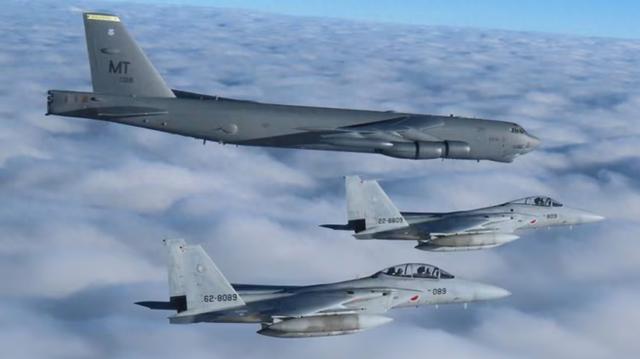
Core Viewpoint - The article discusses the increasing military activities of the U.S. in East Asia during the Chinese New Year, particularly focusing on joint exercises with Japan and the implications for South Korea's defense posture and its relationship with the U.S. and China [1][3][4]. Group 1: U.S.-Japan Military Exercises - The U.S. and Japan conducted joint military exercises involving four B-52 bombers and various Japanese fighter jets in the Sea of Japan and East China Sea, with the exercises seen as a direct response to China [3][4]. - The exercises included tactical training over a wide area, indicating a clear intention to counter China's influence in the region [3][4]. Group 2: South Korea's Position - South Korea's government declined to participate in the U.S.-Japan joint exercises, leading to a shift from a trilateral to a bilateral exercise format, which highlights growing differences between South Korea and the U.S. regarding China [1][4]. - Following the exercises, South Korea expressed dissatisfaction to the U.S. regarding the military activities, indicating a potential shift in the role of U.S. forces in South Korea from deterring North Korea to countering China [6][8]. Group 3: Regional Security Dynamics - The simultaneous deployment of U.S. military assets within the "First Island Chain" is unprecedented and reflects a strategic shift in U.S. defense policy aimed at containing China [3][4]. - South Korea is attempting to balance its security needs with its desire for strategic autonomy, as indicated by discussions to reduce joint exercises with the U.S. to foster dialogue with North Korea [8].

美议员怂恿特朗普先拉拢日印澳:好跟中国要价
Guan Cha Zhe Wang· 2026-02-18 04:07
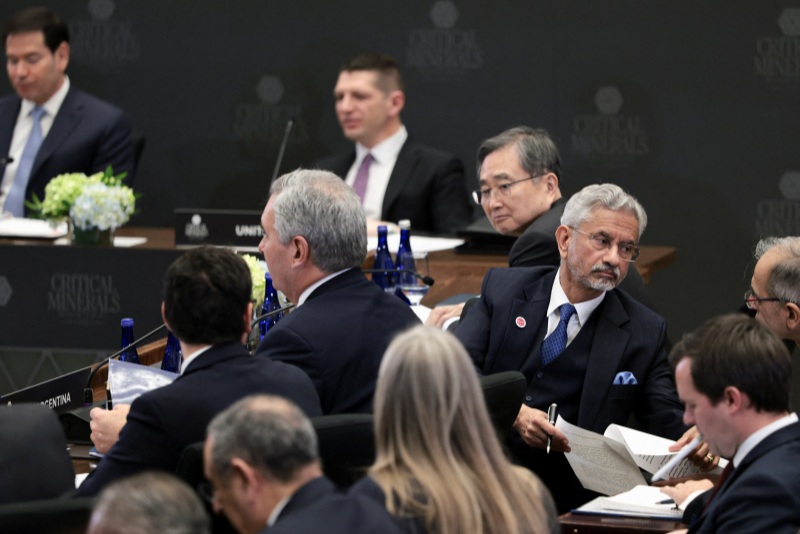
Group 1 - The article discusses the potential for a QUAD summit before the anticipated meeting between US President Trump and Chinese leaders in April, highlighting the urgency among US politicians to establish negotiating leverage against China [1][2] - QUAD, consisting of the US, Japan, India, and Australia, is viewed as a strategic mechanism to counter China's influence in the Indo-Pacific region, with criticisms from China regarding its exclusivity [1][2] - US lawmakers are advocating for a QUAD summit to demonstrate US leadership in the Indo-Pacific and to strengthen the US position in negotiations with China [2][4] Group 2 - A recent trade agreement between the US and India, which reduces tariffs on Indian goods from 50% to 18%, is seen as a precursor to Trump's visit to India and potentially a QUAD summit [4][5] - The article notes that the timeline for planning Trump's visit to India is tight, with expectations for US officials to visit India in March [5] - Analysts suggest that while the trade agreement removes a significant obstacle for QUAD, integrating it into the evolving US macro strategy remains challenging [5][6]
美军增调F-35 为何紧盯台海投射
Xin Lang Cai Jing· 2026-02-06 13:44
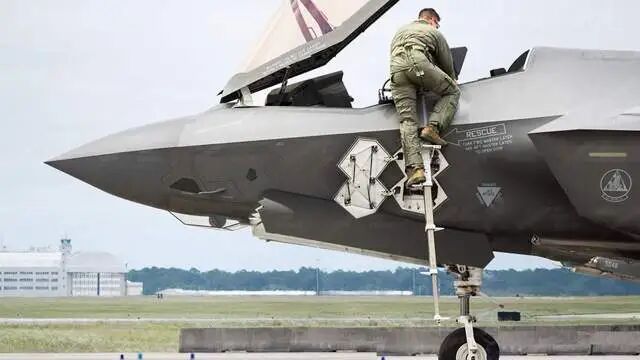
Group 1 - The U.S. military is enhancing its deployment of F-35 fighter jets in Japan, specifically at the Misawa Air Base, which is a key military outpost for projecting air power in the region [1] - The U.S. has announced plans to modernize tactical aircraft in Japan as early as 2024, with the Pentagon already deploying F-35B and F-35C variants at the Iwakuni Marine Corps Air Station and rotating F-35A jets at the Kadena Air Base [1][3] - This series of actions is viewed as a significant move to accelerate the upgrade of aircraft along the "First Island Chain" and strengthen operational capabilities in the Western Pacific [3] Group 2 - The selection of Misawa Air Base for the deployment is attributed to its strategic geographical location near the Sea of Japan, facilitating rapid entry into relevant airspace [3] - The base serves as a joint facility for the U.S. Air Force, Navy, and Japan Self-Defense Forces, enhancing the capability for covert joint operations [3][4] - The F-35 series includes three variants: F-35A for the Air Force, F-35B for short takeoff and vertical landing, and F-35C for carrier operations, collectively increasing the U.S. military's strike capabilities in maritime operations [4] Group 3 - The strengthening of U.S. air power in Japan aligns with broader strategic planning, including the Air Force's "Expeditionary Wing 2.0" initiative aimed at enhancing rapid deployment and global power projection capabilities [6] - The upgrade of air power in Japan coincides with the upcoming 2026 National Defense Strategy report, both aimed at enhancing deterrence along the "First Island Chain" [6] - Future U.S. air deployments in Japan may require Japan to provide more dispersed bases and stronger logistical support, while both nations will enhance intelligence sharing and joint training [6] Group 4 - The focus on enhancing operational capabilities in the Pacific region emphasizes two key areas: aircraft and missiles, with a shift towards stealth fighter jets replacing older models [8] - The U.S. is also improving its conventional missile capabilities, equipping the Army and Marine Corps with longer-range missiles, which poses a greater threat to regional security [8] - In sensitive situations, the U.S. may prioritize the use of intermediate-range or hypersonic missiles, necessitating vigilance and strong countermeasures [8]
美在台协会频繁施压引岛内强烈不满
Xin Lang Cai Jing· 2026-02-02 00:28
Group 1 - The American Institute in Taiwan (AIT) has halted regular social media updates due to funding issues, reflecting a broader impact of the U.S. federal government shutdown on its operations [1] - AIT recently announced a significant trade agreement with Taiwan aimed at strengthening the semiconductor supply chain and enhancing U.S. technological leadership [1] - Taiwan's defense budget discussions are under pressure from the U.S., with calls for expedited legislative approval of a special defense budget of 1.25 trillion New Taiwan Dollars [1] Group 2 - U.S. officials emphasize Taiwan's critical role in the first island chain for regional security, urging political unity in Taiwan regarding defense and security matters [2] - There are concerns about U.S. influence in Taiwan's legislative processes, with accusations that the current administration is leveraging U.S. pressure to bypass local governance [2] - The Taiwanese media highlights the potential risks of increased military spending and reliance on U.S. military supplies, warning against being drawn into a military-industrial complex [3] Group 3 - The Taiwanese government is facing criticism for its military procurement strategies, with suggestions that the costs and risks associated with U.S. arms deals are being inadequately addressed [3] - There is a call for prioritizing peaceful dialogue and reducing tensions across the Taiwan Strait as a means to enhance security and alleviate military procurement anxieties [4]
日媒炒作“台湾有事,美军放弃撤离冲绳”
Huan Qiu Shi Bao· 2025-12-28 22:44
Group 1 - The core viewpoint of the article highlights that the U.S. military has revised its plan to relocate Marine Corps troops from Okinawa to Guam due to considerations regarding potential emergencies in Taiwan, indicating a strategic shift in U.S. military presence in the region [1][2] - The U.S. Marine Corps had previously agreed to transfer approximately 9,000 of the 19,000 stationed troops in Okinawa, with 4,000 moving to Guam and 5,000 returning to Hawaii and the U.S. mainland, marking the first overseas deployment shift since a 2006 agreement [1] - The latest reports suggest that the Marine Corps will now retain its infantry units in Okinawa under the command of the III Marine Expeditionary Force, which may impact the previously agreed relocation plan [1][2] Group 2 - The U.S. Marine Corps explained that the modification aims to maintain regional peace and stability by demonstrating a readiness to take significant action against hostile forces [2] - Japanese officials, including Chief Cabinet Secretary Hirokazu Matsuno, stated that the consensus between Japan and the U.S. remains unchanged, although there are ongoing considerations for alternative troop transfer plans [2] - Military experts indicate that the U.S. is likely to retain more personnel in Okinawa than initially planned, aligning with the new national security strategy focused on maintaining control over the "first island chain" and "second island chain" [2][3]
中日频繁交锋,日本想拉美国下场?美官方正式回应,高市大失所望
Sou Hu Cai Jing· 2025-12-15 10:33
Core Viewpoint - The recent incident involving Chinese and Japanese military aircraft has escalated tensions, with Japan attempting to portray itself as a victim while seeking U.S. support, which was met with a lukewarm response [1][3][12]. Group 1: Japan's Actions and Reactions - Japan's government aimed to exploit the military confrontation to create tension and provoke U.S. intervention in support of Japan [3]. - Following the incident, Japan's Defense Minister claimed that Chinese aircraft had conducted "long-term radar illumination," while neglecting to mention the provocative actions of Japanese aircraft [10]. - Japan's efforts to gain U.S. support were met with disappointment, as the U.S. emphasized maintaining a balanced relationship with China rather than taking sides [15][18]. Group 2: China's Response - China responded calmly and assertively, rejecting Japan's protests and clarifying that the responsibility lay with Japan for the initial provocation [20]. - The Chinese military continued its training exercises despite Japanese interference, demonstrating its operational freedom in the Western Pacific [21]. - The incident highlighted Japan's reliance on the U.S. for security, which may not be as forthcoming as Japan had hoped, especially in light of China's growing power [21].
美国战略出现大变化,欧洲被看低,中国要谨防美国的烟雾弹!
Sou Hu Cai Jing· 2025-12-07 04:37
Core Viewpoint - The U.S. has shifted its strategic focus towards the Western Hemisphere, indicating a decline in Europe's importance and a less confrontational stance towards China compared to previous strategies [1][3][5]. Group 1: U.S. Strategic Shift - The U.S. is prioritizing issues in the Americas, such as drug trafficking and illegal immigration, which are seen as significant threats to national security [3]. - The report suggests a potential reduction in U.S. global military commitments, moving away from the role of "world police" [3][5]. - The U.S. no longer categorizes China as the primary threat, reflecting a recognition of China's growing strength and a desire for cooperation rather than confrontation [5][10]. Group 2: U.S.-Europe Relations - Relations between the U.S. and Europe have become strained, with differing views on the Ukraine conflict and trade policies leading to increased tensions [7][12]. - The report expresses a pessimistic view of Europe's future, suggesting demographic changes that could lead to a decline in traditional European civilization [7][12]. - The ideological gap between the U.S. and Europe is widening, with the U.S. perceiving a decline in European unity and strength [7][12]. Group 3: Asia-Pacific Focus - The U.S. aims to strengthen military capabilities in the Asia-Pacific region, particularly around the First Island Chain, involving allies like Japan and the Philippines [10]. - The report indicates that while the U.S. will support its allies, it may not engage directly in conflicts, leaving frontline responsibilities to them [10]. - The stance on Taiwan is evolving, with the U.S. emphasizing the need to maintain military superiority but acknowledging the challenges in achieving this goal [10]. Group 4: Caution for China - China is advised to remain vigilant regarding the U.S. strategic changes, as the potential for unexpected shifts in U.S. policy remains [15]. - The U.S. may employ various strategies that could pose risks to China, necessitating close monitoring of U.S. actions beyond mere rhetoric [15]. Group 5: Global Power Dynamics - The competitive landscape among major powers is intensifying, with no country willing to concede easily, highlighting the harsh realities of global geopolitics [16].
日本渲染辽宁舰穿越“第二岛链”,中方发声
Huan Qiu Shi Bao· 2025-06-09 22:36
Group 1 - The core viewpoint of the articles highlights China's increasing naval capabilities, particularly the recent activities of the aircraft carrier Liaoning in the Pacific Ocean, marking its first entry into the waters near Japan's Nakanoshima [1][2] - The Japanese government is closely monitoring the situation, with officials stating that they will ensure comprehensive surveillance and have raised concerns with China regarding the expanded operational range of the Liaoning [2] - Chinese military experts assert that the Liaoning's operations beyond the "second island chain" indicate a significant advancement in its training and operational capabilities, reflecting a normal progression for the Chinese navy [2] Group 2 - The presence of the Liaoning in the Pacific is seen as a response to the long-standing military activities of the U.S. Navy in the region, which has routinely crossed the "third island chain" and conducted exercises near China's maritime borders [3] - There is a perception of double standards in how Japan and its media respond to Chinese naval activities compared to those of Western nations conducting operations in the same region [3]
三大消息:中方逮到一条“大鱼”;普京态度大变;特朗普警告不留情面
Sou Hu Cai Jing· 2025-05-06 02:11
Group 1 - Japanese Prime Minister Kishida Fumio's visit to Vietnam and the Philippines aims to strengthen security cooperation amid concerns over China's maritime activities and U.S. tariff policies [1] - The visit is seen as a move to enhance Japan's military and political influence in Southeast Asia, particularly in the context of U.S. military deployments in the region [1] - Japan is deepening defense cooperation with Vietnam and the Philippines through military agreements and aid, reflecting a strategic alignment with U.S. interests in countering China [1] Group 2 - Russian President Putin announced a 72-hour ceasefire during the Victory Day celebrations, which is perceived as a demonstration of Russia's control over the Eastern Ukraine battlefield [5] - Ukrainian President Zelensky criticized the ceasefire as a political maneuver, calling for a comprehensive and unconditional ceasefire lasting at least 30 days [5] - This marks the third ceasefire announcement by Russia this year, highlighting ongoing tensions and the complexities of the conflict [5] Group 3 - Former U.S. President Trump criticized President Biden and Federal Reserve Chairman Powell during a rally, emphasizing dissatisfaction with economic policies and rising prices [7] - Trump's remarks reflect ongoing tensions between the executive branch and the Federal Reserve, particularly regarding interest rate policies [7] - Analysts suggest that Trump's criticisms may be an attempt to shift blame for economic challenges from government actions to the Federal Reserve [7]