
算力浪潮

Search documents
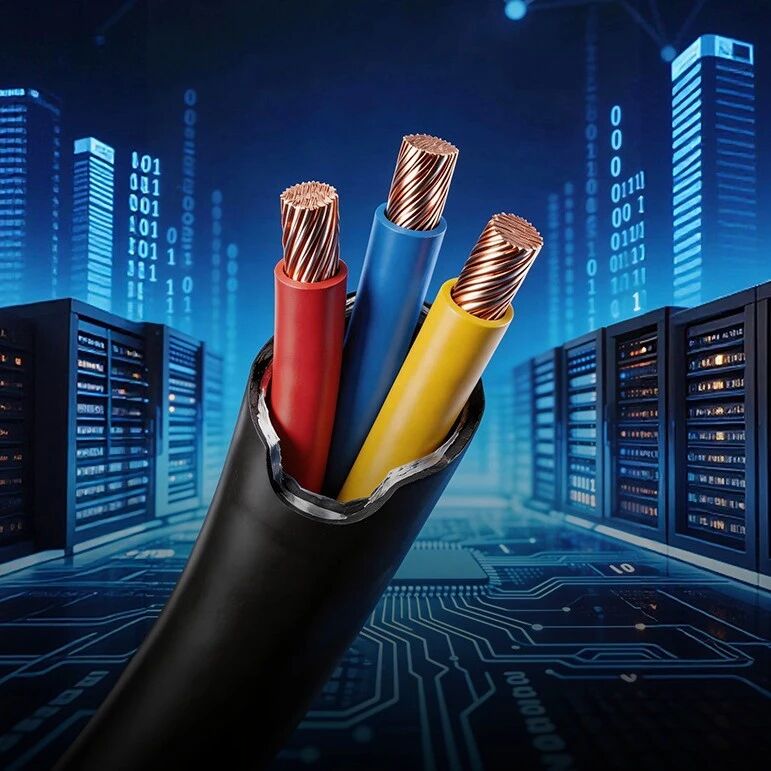
沃尔核材:一根铜线牵动算力浪潮!
市值风云· 2026-03-17 10:11
Core Viewpoint - The article highlights the impressive growth of沃尔核材 (002130.SZ), showcasing its strong revenue and profit increases, driven by advancements in high-speed communication cables and a solid market position in the radiation-modified materials sector [3][5]. Group 1: Financial Performance - In 2025, the company achieved a total revenue of 8.45 billion, representing a year-on-year growth of 22% [6]. - The net profit attributable to shareholders reached 1.135 billion, reflecting a significant increase of 33.95% compared to the previous year [5][6]. - The operating profit was reported at 1.415 billion, marking a 29.98% increase year-on-year [6]. Group 2: Market Position and Product Development - The company has established itself as a leader in the domestic radiation-modified materials market, particularly in heat shrink tubing, with a long-standing market share at the forefront of the industry [4]. -沃尔核材 has successfully developed and mass-produced high-speed communication cables, breaking the monopoly of international giants in this segment [7]. - The electronic communication business generated 2.666 billion in revenue during the first half of 2025, showing a year-on-year growth of 32%, becoming a key driver of the company's overall performance [7]. Group 3: Strategic Investments and Future Outlook - The company is in a phase of business expansion, with capital expenditures reaching 740 million in the first three quarters of 2025, the highest in its history [8]. - Despite a slight cash flow deficit of 115 million, these investments are aimed at meeting the surging demand for high-speed communication cables and positioning the company for future market share gains [9].


700亿存储商狂砸200亿买服务器,董事长直言这非常保守
21世纪经济报道· 2026-02-06 11:23
Core Viewpoint - The company is making significant investments in high-performance computing servers, totaling 21.2 billion yuan, to prepare for the anticipated growth in the computing power market, which is likened to the real estate boom of the 1990s in China [1][2][9]. Group 1: Investment Strategy - The company plans to procure high-performance servers worth 21.2 billion yuan, with a focus on meeting the growing demand for computing power in the AI sector [1][2]. - The company has raised its credit limit to 28 billion yuan within a year to support its aggressive investment strategy [1]. - The company expects a net profit of 1.05 to 1.25 billion yuan for 2025, representing a year-on-year growth of 51.78% to 80.69% [2]. Group 2: Market Position and Demand - The computing power rental market is showing signs of consolidation, with the company positioned as a leading player due to its long-term contracts and established customer relationships [6][12]. - The demand for computing power is expected to outstrip supply, driven by the increasing needs of AI applications, which will lead to sustained growth in the computing power industry [10][12]. - The company has already secured five-year long-term contracts, ensuring a stable revenue stream to support its server procurement [7][8]. Group 3: Future Outlook - The ultimate goal of the company is to develop "robot brains" through its investments in computing power and AI platforms, with expectations for significant advancements in the robotics sector between 2030 and 2035 [3][16][17]. - The company is also focusing on building a comprehensive ecosystem that integrates computing power, cloud services, and intelligent terminals to support its long-term vision [16]. - The company anticipates that the AI-driven demand for computing power will continue to expand, making it a critical component of the digital economy [10][14].


新易盛:算力浪潮驱动业绩跃升,1.6T开启增长新篇章
Xin Lang Cai Jing· 2026-02-02 10:49
Core Viewpoint - The report titled "The Computing Power Wave Drives Performance Leap, 1.6T Opens a New Chapter of Growth" highlights the significant impact of computing power advancements on company performance and growth potential [2][4]. Company Analysis - The report is published by Tianfeng Securities and authored by analysts Wang Yihong, Yu Fangqin, and Tang Haiqing, indicating a collaborative effort in the analysis [2][4]. - The focus of the report is on the transformative effects of computing power on the industry, suggesting that advancements in this area are crucial for future growth [2][4]. Industry Insights - The report emphasizes the ongoing trend of computing power enhancement as a driving force behind industry performance improvements, suggesting a robust growth trajectory for companies involved in this sector [2][4].

杨元庆:新一轮算力浪潮将源于AI推理的爆发|直击CES
Xin Lang Cai Jing· 2026-01-07 02:35
Core Viewpoint - The new wave of computing power will be driven by the explosion of AI inference, as stated by Lenovo's Chairman and CEO Yang Yuanqing during the CES keynote speech [6]. Group 1: Evolution of Computing Power Infrastructure - The global computing power infrastructure market has undergone four waves of innovation: the first wave focused on traditional computing for enterprise information and digital transformation; the second wave was driven by cloud services and applications, leading to the rapid rise of cloud computing; the third wave was characterized by large-scale computing clusters for training large language models, primarily in the cloud [3][8]. - The current trend is shifting from "training" to "inference," with a broad consensus in the global AI industry that local deployment of AI inference is becoming a true competitive advantage for enterprises [3][8]. Group 2: Local AI Inference Deployment - Local deployment of AI inference allows for faster response times as inference occurs closer to the data generation source, necessitating a hybrid computing infrastructure composed of public cloud, private cloud, local data centers, and edge computing [3][8]. - AMD's Chair and CEO Lisa Su agrees with this perspective, emphasizing the need for global enterprises to bring AI closer to their data while maintaining flexibility and the ability to evolve over time [3][8]. Group 3: New Product Launches - Lenovo has launched a comprehensive suite of inference optimization server products, including AI inference servers SR675i, SR650i, and edge computing server SE455i, aimed at enhancing inference efficiency, reducing operational costs, and strengthening data security to meet diverse and real-time AI deployment needs [4][9].


英维克(002837):液冷驱动25H1业绩高增,算力时代机遇铸就增长引擎
Guotou Securities· 2025-08-21 00:59
Investment Rating - The report maintains a "Buy-A" investment rating for the company, with a target price of 81.88 CNY per share [4][7]. Core Views - The company achieved significant revenue growth in H1 2025, with total revenue reaching 2.573 billion CNY, a year-on-year increase of 50.25%. The net profit attributable to shareholders was 216 million CNY, up 17.54% year-on-year [1]. - The growth in revenue is primarily driven by increased demand for cooling solutions in data centers, with liquid cooling revenue exceeding 200 million CNY in H1 2025 [2][3]. - The company has established a comprehensive product layout for liquid cooling solutions and is positioned to benefit from the growing demand for computing power, particularly through partnerships with major clients like Nvidia, ByteDance, Tencent, and Alibaba [3]. Financial Summary - The company forecasts revenues of 6.104 billion CNY, 7.910 billion CNY, and 9.921 billion CNY for 2025, 2026, and 2027, respectively. Net profits are expected to be 611 million CNY, 781 million CNY, and 1.019 billion CNY for the same years [4][11]. - The overall gross margin for H1 2025 was 26.15%, a decrease of 4.84 percentage points year-on-year, attributed to regional sales mix and increased competition in the Chinese market [2]. - The company’s net profit margin for H1 2025 was 8.78%, down 1.92 percentage points year-on-year [2].
