
算力电力协同

Search documents
同力天启20260313
2026-03-16 02:20
Summary of the Conference Call Company Overview - The company, formerly known as Tongli Risheng, has transitioned from a traditional elevator component and metal materials manufacturer to a dual business model focusing on "elevator components + new energy" through the acquisition of Tianqi Hongyuan [2][3]. Core Business and Financial Highlights - The new energy business has surpassed the elevator segment, becoming the core profit source for the company [2][3]. - The company has signed a strategic cooperation agreement for the Qingyang Green Power Direct Connection Project, expected to generate over 3 billion yuan in annual output value upon reaching full capacity by 2025 [2][5]. - The company has a robust order backlog, with projects like the Tianjin 100MW and Chengde 300MW wind power projects already connected to the grid, contributing to revenue [2][6][7]. New Energy Business Strategy - The new energy business focuses on both existing and emerging markets, employing differentiated strategies: - In the existing market, the company targets high IRR regions to secure stable long-term returns [4]. - In the emerging market, the company aims to bind quality loads, particularly data centers, to meet the demand for new loads and nearby consumption [4]. Collaboration and Projects - The company has established several strategic partnerships: - A collaboration with Gansu Mobile to enhance clean energy consumption in information infrastructure through distributed photovoltaic and storage systems [6]. - A partnership with Hangzhou Xinfengwei to develop energy solutions for AI training centers and zero-carbon parks [6]. - The company is also working with Shell on a fully immersed liquid cooling technology for energy storage systems, with commercial operations expected by the end of 2025 [8]. Traditional Elevator Business Outlook - The traditional elevator business is expected to maintain stable profits of approximately 70 million to 80 million yuan annually, supported by policies for old elevator renovations and installations [9][10]. - The business has largely mitigated downward risks, with a focus on the replacement cycle and maintenance services [10]. Future Growth and Valuation - If the company successfully acquires the remaining 49% stake in Tianqi Hongyuan by 2026, profits could exceed 700 million yuan by 2027, leading to a valuation of around 10 times earnings, indicating significant growth potential [9].

全球最大镰刀也盯上能源了
Hu Xiu· 2025-11-13 14:39
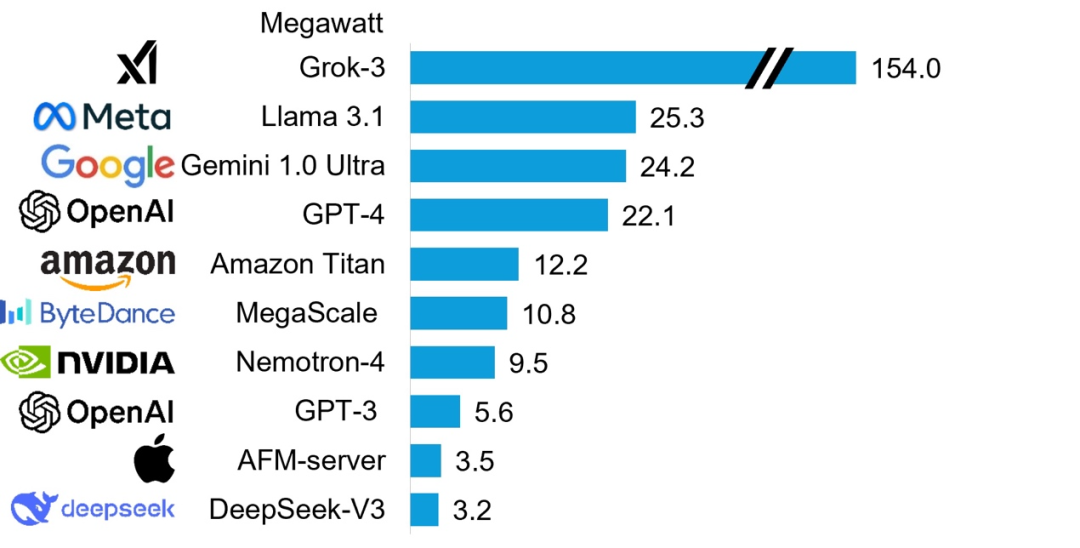
Core Insights - The increasing demand for AI computing power is leading to a significant electricity shortage, with major tech companies like Microsoft and OpenAI highlighting the risks to their operations due to insufficient power supply [2][3][8] - The investment landscape is shifting towards energy solutions, particularly in the context of AI's growing electricity needs, with companies exploring advanced nuclear technologies [4][40] Group 1: Electricity Demand and Supply Dynamics - AI server clusters are consuming electricity at a rate that outpaces the expansion of the power grid, potentially creating a bottleneck for the AI era [3] - The power consumption of AI training has escalated dramatically, with data centers projected to consume 945 TWh by 2030, which would account for approximately 63.42% of China's residential electricity consumption in 2024 [4][7] - The U.S. is currently the largest consumer of data center electricity, accounting for 45% of global consumption, with significant growth expected in both the U.S. and China by 2030 [7][8] Group 2: U.S. Electricity Challenges - The U.S. electricity system is unprepared for the surge in demand driven by AI, with a disconnect between economic growth and electricity demand [8][11] - The aging infrastructure and the retirement of coal-fired power plants have exacerbated the electricity supply issues, leading to a projected shortfall of approximately 100 GW over the next five years [12][14] - Major data centers in the U.S. are already facing delays in new projects due to transmission capacity limitations [14][15] Group 3: China's Energy Landscape - China has a robust energy supply, with total electricity generation exceeding consumption, and is expected to see significant growth in renewable energy sources [20][22] - The country is focusing on integrating computing power with renewable energy, with policies aimed at achieving a synergy between energy supply and demand [26][30] - By 2030, China's data center electricity demand is projected to reach between 3000-7000 billion kWh, while renewable energy generation is expected to exceed this demand [34][35] Group 4: Nuclear Energy as a Solution - Both the U.S. and China are increasingly looking towards nuclear energy, particularly small modular reactors (SMRs) and controlled nuclear fusion, to meet future energy demands [49][50] - The commercial viability of SMRs is still in its early stages, with significant investments being made but no substantial revenue expected until the late 2020s [51][52] - Controlled nuclear fusion is gaining traction as a long-term solution, with various countries setting ambitious timelines for its commercialization and significant funding being directed towards this technology [54][55]

山西证券研究早观点-20250623
Shanxi Securities· 2025-06-23 02:05
Core Insights - The report emphasizes the dual-track strategy of "new energy + new infrastructure" adopted by the company, aiming to create an integrated ecosystem for computing and energy [6][8] - The company has transitioned from financial investments to industrial investments since 2021, acquiring significant stakes in new energy and data center companies, which has led to the formation of a robust investment asset base [8] Market Trends - The report highlights the rapid growth of renewable energy in China, with a projected 23% increase in new renewable energy installations in 2024, accounting for 86% of new power installations [8] - Global computing power is expected to continue its rapid growth, with a 54% increase in 2023, and the trend is anticipated to persist over the next five years [8] Financial Projections - The company is forecasted to achieve net profits of 118.5%, 121.9%, and 88.2% year-on-year from 2025 to 2027, with earnings per share (EPS) projected at 0.02, 0.04, and 0.08 yuan respectively [7] - As of December 31, 2024, the company's emerging industry investment assets are expected to reach approximately 520.1 billion yuan, constituting 78.6% of its total asset scale [8] Strategic Initiatives - The company is focusing on the integration of computing power and energy, which is seen as a critical development trend in the context of the new power system transformation [8] - The establishment of the Ulanqab Green GW-level AIDC Super Intelligent Computing Flagship Base is a key project that exemplifies the company's commitment to innovative collaboration across various sectors [8] Investment Ecosystem - The company aims to build a digital economy ecosystem centered around "AI computing power + data assets + application scenarios," leveraging its dual-track layout in new energy and data centers [8] - The strategic focus on complementary and embedded industries is expected to enhance the company's investment returns in the computing technology sector [8]
山高控股(00412):“新能源+新基建”双赛道耐心资本,打造电算一体化生态典范
Shanxi Securities· 2025-06-20 11:14
Investment Rating - The report initiates coverage with an "Add-B" rating for the company [6] Core Insights - The company is positioned in the "new energy + new infrastructure" dual-track strategy, aiming to create an integrated ecosystem for digital computing and energy [1][4] - The synergy between computing power and green energy is seen as a critical trend for the development of the digital economy [3][56] - The company has successfully transitioned from financial investments to industrial investments, significantly increasing its asset scale in emerging industries [4][23] Summary by Sections Company Overview - The company has transformed its business model since 2021, focusing on industrial investments and holding significant stakes in key subsidiaries [16][18] - As of December 31, 2024, the total asset scale is approximately 661.7 billion, with emerging industry investments accounting for 78.6% [23] Financial Performance - In 2024, the company achieved a revenue of 55.8 billion, a year-on-year increase of 11.38%, and a net profit of 539 million [24][25] - The gross profit reached approximately 26.36 billion, with a gross margin of about 47% [25][29] Market Trends - The renewable energy sector is experiencing rapid growth, with a 23% year-on-year increase in new installed capacity in 2024 [31] - The integration of green electricity and computing power is reshaping the energy landscape of the digital economy [31][41] Strategic Initiatives - The company is actively expanding its presence in the renewable energy market, having significantly increased its project indicators in 2024 [69] - It aims to leverage its dual-track strategy to optimize asset allocation and enhance investment returns [5][6]