
粤港澳大湾区高质量发展

Search documents
香港中华总商会会长:广东制造业与香港现代服务业强强联合,共筑粤港澳大湾区高质量发展新格局
Xin Lang Cai Jing· 2026-02-24 11:03
Core Viewpoint - The Guangdong High-Quality Development Conference emphasizes the synergy between manufacturing and service industries as a strategic focus for the region's development, particularly in the context of the Guangdong-Hong Kong-Macao Greater Bay Area [1] Group 1: Manufacturing and Service Industry Collaboration - The conference identifies "coordinated development of manufacturing and service industries" as its core theme, marking it as a strategic deployment for the beginning of the year [1] - The collaboration between Guangdong's advanced manufacturing sector and Hong Kong's modern service industry is seen as a significant direction for the overall development of the Greater Bay Area [1]
沉下心来抓落实、办实事——各地区各部门推动经济社会发展开年见闻
Ren Min Ri Bao· 2026-01-04 02:14
Group 1 - The year 2026 marks the beginning of the "15th Five-Year Plan," emphasizing the importance of execution and a broad perspective in economic work [1][2] - Regions are encouraged to align their actions with national strategies and market demands, exploring new models for high-quality development [2][3] - Hainan Free Trade Port is actively engaging with international high-standard economic and trade rules, leveraging policy advantages for development [3] Group 2 - The Yangtze River Delta is enhancing its supply chain for robotics, showcasing regional collaboration in technology innovation [4] - Various regions are focusing on transforming local resources into clean energy and improving ecological safety, contributing to national goals [5] - Beijing is implementing reforms to enhance urban governance through citizen feedback, aiming for rapid response to public needs [6][7] Group 3 - The importance of addressing problems in development is highlighted, with a focus on immediate and long-term solutions [6][10] - Collaborative efforts across provinces are being emphasized, particularly in ecological protection and resource management along the Yangtze River [11] - Inter-departmental cooperation is crucial for overcoming challenges in the modular construction industry, facilitating market access in Hong Kong and Macau [12]
沉下心来抓落实、办实事——各地区各部门推动经济社会发展开年见闻(“十五五”开好局起好步)
Ren Min Ri Bao· 2026-01-03 22:17
Core Viewpoint - The "15th Five-Year Plan" marks a crucial period for achieving socialist modernization, emphasizing the importance of starting strong and maintaining momentum in development efforts [1][2]. Group 1: National Strategy and Regional Development - The central government emphasizes the need for all regions and departments to act within the national framework, ensuring coordinated efforts across the country [3][4]. - Regions are encouraged to explore new models of high-quality development that align with national strategies, market demands, and local advantages [4]. Group 2: Economic and Technological Innovation - Hainan Free Trade Port is leveraging policy advantages to enhance its development, aiming to align with international high-standard economic and trade rules [5]. - The Yangtze River Delta is developing a robust supply chain for robotics, showcasing regional collaboration in technological innovation [6]. Group 3: Problem-Solving and Public Services - The government is adopting a problem-oriented approach to address development challenges, emphasizing quick responses to public service issues [9][10]. - Beijing is enhancing its citizen service hotline to improve urban governance and address community needs effectively [10][11]. Group 4: Collaborative Efforts and Integration - Regions are encouraged to work together to achieve coordinated development, with examples of cross-regional environmental protection initiatives [15]. - Departments are collaborating to streamline processes and standards, facilitating the integration of modular construction products into the Hong Kong and Macau markets [16].
大湾区国资国企智库委员会发布2025年研究成果
Zhong Guo Xin Wen Wang· 2025-12-18 14:03
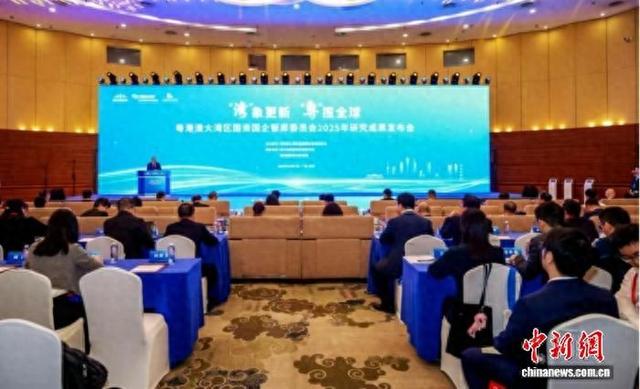
Core Insights - The Guangdong-Hong Kong-Macao Greater Bay Area State-owned Enterprises Think Tank Committee held a conference to discuss high-quality development strategies for the region, emphasizing the need for collaborative innovation and strategic foresight [1][3]. Group 1: Conference Highlights - The conference featured key speeches from various leaders, including the Director of the State-owned Assets Supervision and Administration Commission Research Center and the Chief Executive's Policy Group Leader of Hong Kong, focusing on the role of the think tank in contributing to the Greater Bay Area's development [1][3]. - The think tank aims to enhance its role as an "intellectual engine" and "intellectual link," addressing strategic issues to support the Greater Bay Area's transformation into a world-class region [1][3]. Group 2: Research Framework and Findings - The think tank released the "State-owned Enterprises Serving the High-Quality Development of the Guangdong-Hong Kong-Macao Greater Bay Area Report (2025)," which utilizes a "central enterprises + local state-owned enterprises" joint research model, structured as "1+3+13" [5]. - The report systematically reviews the practices, significant achievements, and valuable experiences of state-owned enterprises in supporting the Greater Bay Area's development, providing multi-dimensional analysis on functional positioning, current development status, challenges, and policy recommendations [5]. - Eight specialized research outcomes were published by member units, including a report on "2026 Risk and Opportunity Outlook" and a strategy on "Competitive and Cooperative Development in the Greater Bay Area" [5].

横琴口岸“刷脸”通关首月64万人次使用
Ren Min Ri Bao· 2025-12-09 21:11
Core Insights - The Hengqin Port has launched a facial recognition smart customs clearance system, which has registered 120,000 users in its first month and recorded a total of 640,000 uses [1] - The daily average of users opting for facial recognition is approximately 20,000, with a peak single-day usage exceeding 32,000, accounting for 44.5% of the total customs clearance volume at the port [1] Group 1 - The Hengqin Port became the first in the country to implement smart customs clearance in self-service channels, covering 64 channels in the passenger inspection hall and vehicle inspection area [1] - Users who meet the criteria can register and use facial recognition instead of traditional document checks, significantly enhancing the customs experience [1] - The smart customs clearance system has gained widespread recognition for its convenience and efficiency, with residents from both sides actively registering to use it [1] Group 2 - The Deputy Director of the Macao Security Police Bureau highlighted that the facial recognition system is an innovative practice for high-quality development in cross-border management and aligns with the construction of smart ports [2] - The initiative aims to enhance the convenience of personnel exchanges between Macao and Hengqin, contributing to the integration of the Greater Bay Area [2] - Future plans include expanding the application of the facial recognition system to additional lanes at Hengqin Port and other ports like the Hong Kong-Zhuhai-Macao Bridge and Qingmao Port, benefiting more cross-border travelers [2]
第三届粤港澳大湾区发展工商大会在穗举行,大湾区会展业联盟成立
2 1 Shi Ji Jing Ji Bao Dao· 2025-09-15 08:25
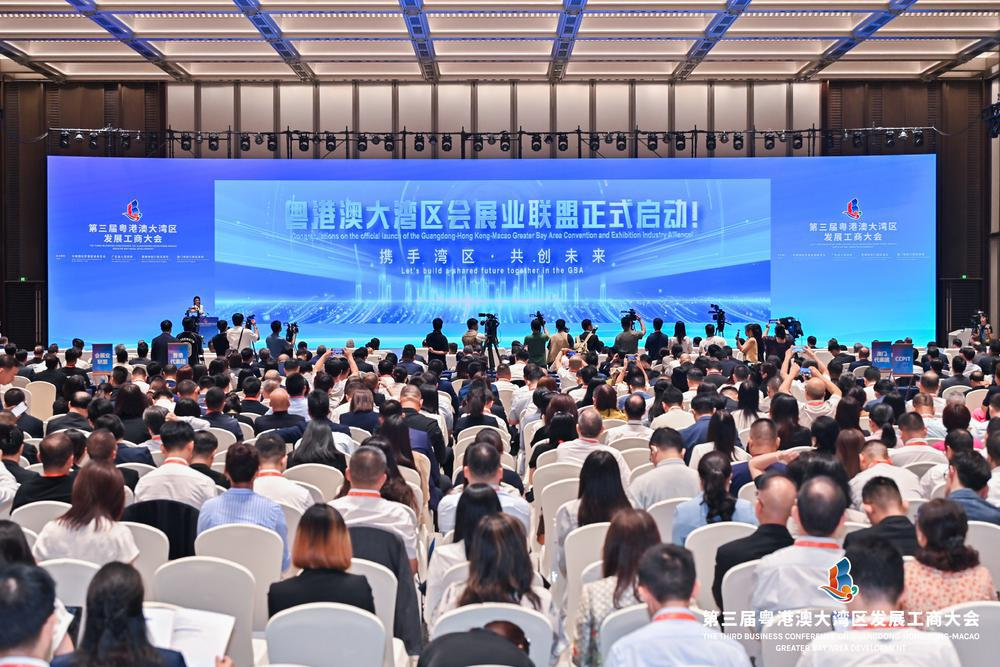
Core Insights - The establishment of the Guangdong-Hong Kong-Macao Greater Bay Area Exhibition Industry Alliance and the release of the "2024 Guangdong-Hong Kong-Macao Greater Bay Area Exhibition Industry Development Report" highlight the strategic importance of the exhibition industry in driving economic growth in the region [1][3]. Group 1: Economic Significance - The Greater Bay Area is recognized as one of the most open and economically vibrant regions in China, playing a crucial role in the national development strategy [3]. - The exhibition industry is identified as a key driver of urban economic development, facilitating the aggregation of innovative elements such as people, logistics, and information from both domestic and international sources [3][4]. Group 2: Development Trends - The exhibition industry in the Greater Bay Area has shown a robust development trend over the past decade, with a significant recovery in 2023, surpassing the scale of exhibitions held in 2019 [5][14]. - In 2024, a total of 924 exhibitions are scheduled, representing a year-on-year increase of 1.32% compared to 2023, indicating strong market vitality and growth potential [5][14]. Group 3: Structural Analysis - The internal structure of the Greater Bay Area's exhibition industry shows significant regional differences, with the nine mainland cities hosting 718 exhibitions (77.71%), Hong Kong 145 exhibitions (15.70%), and Macau 61 exhibitions (6.60%) [5][6]. - The report highlights that while the Greater Bay Area excels in resource integration in the upstream and midstream supply chain, there is a need for improvement in downstream market expansion and brand building [9]. Group 4: Competitive Advantages - The Greater Bay Area boasts a high number of large exhibition venues and indoor exhibition space, significantly exceeding the national average, with Guangzhou and Shenzhen ranking first and third globally in indoor exhibition area [11][13]. - Macau's competitive edge in the exhibition market is attributed to its advantageous location, leading hardware facilities, and high international service standards [13]. Group 5: Collaborative Dynamics - The exhibition industry in the Greater Bay Area is characterized by a strong collaboration between private enterprises and industry associations, with over 75% of exhibitions organized by enterprises, predominantly private ones [14]. - The establishment of the Greater Bay Area Exhibition Industry Alliance is expected to enhance collaboration and vitality within the exhibition sector, contributing to the achievement of strategic goals for the region [14].
一季度我国重点工程项目总体推进顺利
Ke Ji Ri Bao· 2025-05-07 00:53
Group 1 - The number of engineering projects applying for work injury insurance in China reached 39,000 in Q1 2025, a year-on-year increase of 9.4% [1] - The total construction cost of these projects amounted to 1.9 trillion yuan, reflecting a year-on-year growth of 4.8% [1] - Key engineering projects are progressing smoothly, with a notable acceleration in project construction since March [1] Group 2 - Major engineering projects with a total cost exceeding 1 billion yuan numbered 182 in Q1, representing a year-on-year increase of 41.8% [2] - The total cost of these major projects reached approximately 340 billion yuan, up 39.1% year-on-year [2] - Transportation projects lead in numbers, while livelihood projects remain a construction focus, and clean energy projects continue to commence [2] Group 3 - Significant regional development is observed, with Hebei reporting 750 engineering projects, a 21.2% increase, and a total cost of about 44 billion yuan [1] - The Guangdong-Hong Kong-Macau Greater Bay Area has over 4,000 projects, with a 5.6% increase and a total cost of around 190 billion yuan [1] - The Yangtze River Delta region has nearly 11,000 projects, and the Chengdu-Chongqing area has over 5,000 projects, showing a 14.6% increase with a total cost of about 250 billion yuan [1] Group 4 - New technology investments are advancing, with the Anhui "8.6 generation active matrix organic light-emitting display device production line project" starting in February, costing nearly 2 billion yuan [2] - Technology parks such as the "Artificial Intelligence Core Components Innovation Park" in Zhejiang and the "New Energy Vehicle Components Industrial Park" in Anhui are expanding significantly [2] - These developments are aimed at further aggregating high-quality innovative resources [2]