精准并购

Search documents
9000亿龙岩金王 32年来首度换帅
2 1 Shi Ji Jing Ji Bao Dao· 2026-01-02 00:48
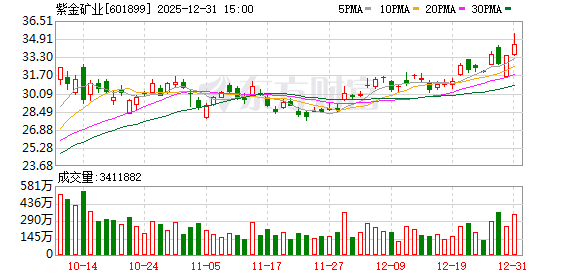
Group 1 - The core point of the article is the leadership transition at Zijin Mining, with Zou Laichang being elected as the new chairman, marking the first change in leadership in 32 years [2][4][10] - Zou Laichang received a 91.9% vote in the shareholder meeting and will serve a three-year term as chairman, while the former chairman Chen Jinghe becomes honorary chairman and senior advisor [2][4] - The company anticipates a net profit exceeding 51 billion yuan in 2025, representing a year-on-year increase of over 59% due to rising prices and production volumes of key mineral products [2][24] Group 2 - Zou Laichang, aged 57, has extensive experience in enterprise management and mining engineering, having worked closely with Chen Jinghe for many years [5][21] - The new board of directors includes both experienced members and new appointees, ensuring a balance of stability and fresh perspectives [9][12] - The management team has set ambitious goals for 2028, aiming for copper production of 1.5 to 1.6 million tons, gold production of 1 to 1.1 million tons, and lithium carbonate equivalent of 250,000 to 300,000 tons, positioning the company among the top three globally [16][24] Group 3 - The company has been actively expanding through acquisitions, including a $1 billion purchase of the Akyem gold mine in Ghana and a $1.2 billion acquisition of the Raygorodok gold mine in Kazakhstan, both of which are already contributing to production and profits [17][18] - Zijin Mining's resource reserves include over 1.1 million tons of copper, 3,973 tons of gold, and 1.788 million tons of lithium carbonate equivalent, with more than 50% of these resources obtained through self-exploration [14][19] - The company plans to maintain high production levels and explore new opportunities for mergers and acquisitions in the mining sector [24]


2026资本变局:产业链整合加速,地方国资新玩法 上市公司深挖价值
Sou Hu Cai Jing· 2025-12-07 06:19
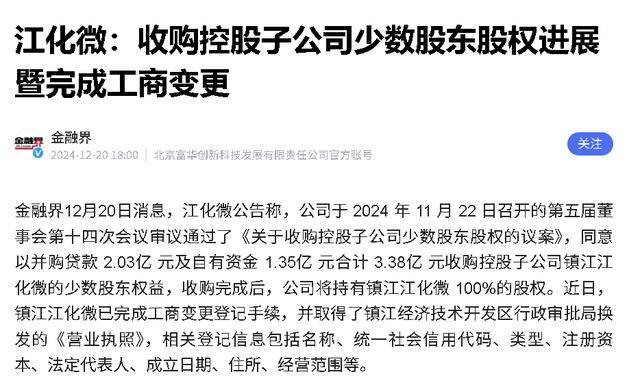
Core Viewpoint - The capital market is undergoing a significant transformation by 2026, driven by strategic investments and mergers that enhance the real economy's stability and growth [1][12]. Group 1: Capital Market Transformation - Traditional methods of attracting businesses through land and policy subsidies are becoming ineffective, as seen in the case of Jianghua Microelectronics in Zibo [1][3]. - State-owned enterprises are shifting from direct management to employing professionals skilled in capital operations, which is a new approach to drive industry growth [1][3]. Group 2: Industry Chain Integration - The strategy involves using Jianghua Microelectronics as a "magnet" to attract upstream and downstream semiconductor companies to Zibo, creating a more cohesive industry ecosystem [3]. - This method of capital-led integration is seen as more effective than previous isolated efforts to attract projects [3][5]. Group 3: Precision Mergers and Acquisitions - Mergers and acquisitions are evolving from blind expansion to a more strategic "puzzle piece" approach, focusing on filling technological gaps and accessing scarce resources [5]. - Specialized funds are playing a crucial role in identifying and nurturing promising smaller companies, facilitating their growth and eventual integration into larger industry players [5]. Group 4: Market Capitalization Management - The concept of "market capitalization management" has evolved to emphasize long-term value creation, with companies like Kweichow Moutai focusing on quality and operational excellence while rewarding shareholders through dividends and buybacks [7][8]. - Companies are increasingly moving away from short-term profit focus, aligning with the interests of major institutional investors who prioritize sustainable growth [8]. Group 5: Long-Term Capital Involvement - The capital market is shifting from a retail-driven speculative environment to one dominated by institutional investors, who are more interested in long-term value creation [10]. - This change fosters a closer interaction between capital and industry, creating a virtuous cycle of mutual enhancement [10]. Group 6: Collaborative Economic Growth - A collective effort from local capital, specialized acquisition funds, and capable listed companies is driving a new trend in the economy by 2026 [12][13]. - Capital is no longer viewed as a detached numerical game but as a vital tool for strengthening industries, with local state-owned assets transforming into professional industry promoters [13][15].