系统整合

Search documents
从欧美及台湾散热厂商财报看海外液冷变化及趋势
2026-03-01 17:23
Summary of Conference Call on Liquid Cooling Industry Trends Industry Overview - The liquid cooling industry is experiencing significant growth, with revenue from Taiwanese and European manufacturers reaching record highs, indicating a shift towards large-scale shipments. The impact of holiday delays on order confirmations is noted, with expectations for a strong first quarter in 2026 despite seasonal trends [1][2]. Key Companies and Performance 1. **Chicony** - In 2025, Chicony's liquid cooling shipments are primarily focused on cold plate modules, with a remarkable revenue increase of nearly 129% year-over-year in Q4, driven by the GB300 exchange board liquid cooling components. The total revenue for 2025 is projected to reach between 130 billion to 139.6 billion New Taiwan Dollars (NTD), with January 2026 showing a 150% year-over-year increase [3][4]. 2. **Double Wing** - Double Wing anticipates liquid cooling revenue of approximately 1.5 to 1.6 billion RMB in 2025, marking the entry into large-scale shipments. The company reported record revenue in January 2026, benefiting from GB300 shipments. Their focus is on Manifold products, with plans to mass-produce CDU starting in 2026 to enhance system integration capabilities [4][5]. 3. **Fujitsu (Chicony's Subsidiary)** - Fujitsu is involved in liquid cooling quick connectors and related components, achieving record revenue in 2025 and a high in January 2026, driven by the "Seika Water Cooling Cabinet" [4]. 4. **Delta Electronics** - Delta's liquid cooling products are primarily CDU, with a significant revenue spike in October, reaching 10 billion NTD in a single month, attributed to the aforementioned water cooling cabinet [4]. 5. **Vertiv** - Vertiv focuses on data center infrastructure, with liquid cooling components centered around CDU and circular piping networks. The company expects a revenue growth rate of 28% in 2025, with the U.S. market being a significant contributor [5]. Market Dynamics and Trends - The liquid cooling sector is entering a phase of large-scale production, driven by the AI wave and increasing demand for efficient cooling solutions. The first quarter of 2026 is expected to maintain a strong performance, contrary to typical seasonal trends [2][8]. - The competitive landscape is shifting from merely supplying components to providing integrated system solutions, emphasizing the importance of end-to-end capabilities in liquid cooling systems [6][8]. Future Outlook - The liquid cooling industry is projected to maintain a clear growth trajectory in 2026, with significant contributions expected from NV chip-related cooling solutions. ASIC cooling is anticipated to begin ramping up in the third quarter of 2026, marking a critical phase for market penetration [7][8]. - Companies like Invec and Tier two suppliers such as Feilong and Hongsheng are highlighted as having strong potential for performance in the ASIC liquid cooling segment in 2026 [9][10]. Conclusion - The liquid cooling industry is poised for continued growth, with key players expanding production capabilities and focusing on system integration. The outlook for 2026 remains positive, with expectations for increased order visibility and revenue growth across the sector [8].
芯片巨头CES竞逐“千倍算力”,AI竞赛走向系统级对决
Jin Rong Jie· 2026-01-09 06:34
Group 1: Nvidia's Rubin Platform - Nvidia's new AI supercomputing platform, Rubin, has entered full production, featuring the Rubin GPU with a performance increase of 5 times over the previous Blackwell platform [1][2] - The Rubin platform integrates six new chips, achieving a 3.5 times increase in training performance and a 2.8 times increase in HBM4 memory bandwidth, while reducing the cost of generating tokens to about one-tenth of the previous generation [2] Group 2: AMD's Performance Enhancements - AMD announced the MI455X AI chip, which offers a 10 times performance improvement over the MI355X, and set an ambitious goal of achieving a 1000 times increase in AI performance over the next four years [3] - The MI455X chip is based on 2/3nm process technology and features 320 billion transistors, with the flagship model equipped with 432GB of HBM4 memory [3] Group 3: Memory Technology Breakthroughs - SK Hynix showcased its next-generation HBM4 product, featuring 16 layers and 48GB capacity, aimed at training models at the GPT-5 level [3] - HBM4 is crucial for AI chip manufacturers, with Nvidia's Rubin GPU architecture utilizing a Vera CPU and two Rubin 85 HBM4 GPUs, each with eight HBM4 interfaces [3] Group 4: Intel's Process Return and PC Market Competition - Intel launched the Panther Lake third-generation Core Ultra processor, its first consumer-grade product using 18A process technology, achieving a 60% improvement in multi-threaded performance compared to the previous generation [4] - The first consumer laptops featuring the third-generation Core Ultra processors will begin pre-sales on January 6, 2026, with global availability starting January 27, 2026 [4] Group 5: System Integration as a New Battlefield - The AI competition has evolved from a focus on chip performance to a comprehensive system efficiency competition, encompassing storage, interconnect, cooling, and software [5] - AMD's Helios platform features a liquid-cooled, modular design with AI computing power reaching 2.9 Exaflops and equipped with 31TB of HBM4 memory [5][6] - Nvidia also demonstrated its system-level capabilities with the Alpamayo open inference model series for autonomous vehicle development, highlighting the shift towards system integration as a core competitive factor in AI infrastructure [6]


公交“瘦身”更要“健身”
Xin Lang Cai Jing· 2025-12-22 20:23
Group 1 - The core idea of the articles revolves around the transformation of public transportation systems in various cities, focusing on the shift from traditional large buses to smaller, more flexible models to better meet urban mobility needs [1][2] - Beijing has implemented 19 "short, frequent, and fast" bus routes with intervals reduced to under 5 minutes, achieving an average daily passenger volume of 51,000, effectively connecting over 10 subway lines and 31 residential communities [1] - Chengdu has introduced a "food special line" with bus stops set every 300 meters, integrating into a 15-minute living circle, demonstrating the inadequacy of linear transportation models in modern urban networks [1] Group 2 - The transition from large to small buses signifies a deeper change in service logic, with Zhejiang Lishui's "dynamic micro-bus" breaking fixed routes and offering point-to-point service through mobile app orders [1] - The article warns against three major pitfalls in the "thinning" of bus services: lowering service standards, neglecting the needs of remote and elderly communities, and compromising safety and accessibility features [2] - The success of this transformation requires enhanced operational capabilities, system integration with other transport modes, and maintaining public service commitments, particularly for vulnerable populations [2]
AI或将取代你的工作,但它也将创造这22种新职业
3 6 Ke· 2025-06-18 11:43
Core Insights - The commentary on the future of human jobs in the AI era is increasingly pessimistic, with predictions of the extinction of various white-collar professions such as programmers, lawyers, and accountants [2] - Despite the fears surrounding AI, it is essential to explore how AI can bridge the "responsibility gap," as human oversight remains crucial in the workplace [2][3] - By 2030, 70% of skill requirements for average jobs are expected to change, with AI and emerging technologies projected to eliminate 9 million jobs while creating approximately 11 million new ones [2] Group 1: Trust Building - A new profession termed "AI Auditor" is anticipated, focusing on understanding AI systems for accountability and technical explanations [4] - The role of "AI Translator" is emerging, bridging the gap between AI technology and management understanding [4] - New positions such as "Trust Certification Officer" and "Trust Director" may arise, necessitating collaboration with AI ethics experts to ensure accountability in AI-driven decisions [5] Group 2: System Integration - The demand for "AI Integrators" is increasing, as businesses require individuals who can implement AI solutions effectively [8] - New roles like "AI Repair Technician" will be needed to troubleshoot complex AI systems [8] - The rise of specialized positions such as "AI Evaluator" will be crucial for assessing the performance of AI models in various applications [8][10] Group 3: Aesthetic Decision-Making - As AI tools become widely accessible, the importance of aesthetic judgment will rise, leading to roles focused on guiding AI in creative processes [11][12] - The term "Designer" may evolve to encompass those who primarily direct AI in creating products and services based on aesthetic choices [13] - New titles such as "Article Designer" and "World Designer" may emerge, emphasizing creativity over technical execution [14] Group 4: Future Workforce Dynamics - AI is expected to empower younger employees, allowing them to engage in creative development without starting from basic tasks [15] - The shift towards an "innovation economy" will prioritize creative decision-making as a core competitive advantage for businesses [15][16] - The future may see individuals acting as CEOs of their AI teams, necessitating deeper reflections on goals and objectives [16]


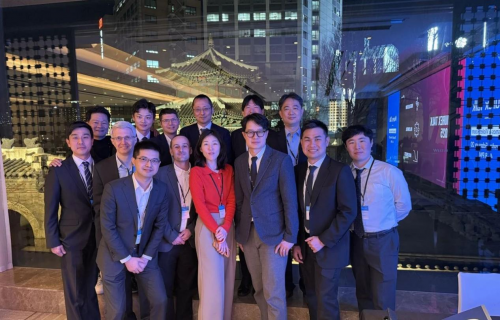
Murex亚太三城盛会:深化交流,共筑金融未来
Zhong Guo Chan Ye Jing Ji Xin Xi Wang· 2025-05-16 10:13
Core Insights - Murex successfully hosted three client events in the Asia-Pacific region, focusing on local market needs and the application of the MX.3 platform in risk management, system integration, and digital transformation [1] Group 1: Seoul Event - The event in Seoul highlighted the latest product developments, particularly how UaaS optimizes operational processes and enhances system efficiency [2] - Murex emphasized the critical role of innovative P&L control features in alleviating operational challenges and the practical application of APIs in clients' digital transformation [2] - The event fostered deeper discussions on collaboration and showcased Murex's commitment to understanding the local market [2] Group 2: Tokyo Event - The Tokyo event celebrated Murex's 30-year journey in the Japanese market, marking a significant milestone as the first office established in the Asia-Pacific region [4] - Murex's CEO highlighted Tokyo's strategic importance in the company's regional deployment and global strategy [4] - The event included interactive sessions and a closing speech expressing gratitude to Japanese clients for their long-term trust and support [4] Group 3: Mumbai Event - The Mumbai event attracted over 240 representatives from Indian financial institutions, emphasizing Murex's commitment to product, service, and talent investment [6] - Murex's focus on addressing evolving market demands was reiterated, showcasing the company's dedication to the Indian market [6] - The event aimed to strengthen local partnerships and explore new paths for digital transformation [6] Group 4: Future Outlook - Murex plans to continue deepening its presence in the Asia-Pacific region, providing resilient, scalable, and forward-looking capital market solutions [8] - The company aims to collaborate with clients to build a more resilient future financial system [8]