液冷

Search documents
比亚迪电子再跌超6% 去年下半年业绩逊预期 多家机构下调目标价
Zhi Tong Cai Jing· 2026-03-31 15:44
Group 1 - The core viewpoint of the news is that BYD Electronics reported a revenue of RMB 179.48 billion for the fiscal year 2025, reflecting a year-on-year increase of 1.22%, while the profit attributable to the parent company decreased by 17.61% to RMB 3.515 billion [1] - Huatai Securities attributes the company's underperformance to changes in demand for certain models from major clients, leading to a 17.7% decline in revenue from the more profitable components business [1] - Looking ahead to 2026, Huatai Securities believes that the growth in server systems and liquid cooling, along with the expansion of overseas automotive sales, may offset the temporary pressure on smart terminal sales, with expectations for a return to rapid growth by 2027 [1] Group 2 - Bank of America noted that BYD Electronics' performance in the second half of last year was below expectations, with net profit dropping 35% to RMB 1.8 billion, which was 34% and 37% lower than their and market forecasts, respectively [1] - The bank has revised its earnings forecasts for BYD Electronics for 2026 and 2027 down by 20% to 21%, reflecting pressure on the gross margin of the consumer electronics business, and has lowered the target price from HKD 38 to HKD 31.5 [1] - Credit Lyonnais has also reduced its earnings forecasts for 2026 and 2027 by 34% and 39%, respectively, and has adjusted the target price from HKD 48 to HKD 33.3 [1]

光模块:1.6T放量在即,上游再趋紧
2026-03-30 05:15
Summary of Conference Call Records Industry Overview: Optical Modules - The optical module industry is experiencing a significant increase in demand, particularly for 1.6T products, which is expected to lead to tighter upstream supply chains. The demand for 800G products is already substantial, and the introduction of 1.6T products will further exacerbate supply constraints [2][3][4]. Key Supply Chain Bottlenecks - **EML Chips**: High costs and manufacturing complexity limit supply elasticity, with current capacities largely locked in. EML chips are essential for long-distance transmission due to their superior optical quality [3]. - **Silicon Photonics Fab Capacity**: The shift towards silicon photonics has created a competitive landscape similar to semiconductors, with companies like Tower being critical for production. Domestic firms are gradually developing capabilities but still rely on external fabs [3]. - **High-Speed DSP Chips**: Dominated by overseas companies like Marvell and Broadcom, the supply of DSP chips is crucial for the industry. Marvell is expected to release a second-generation product that may alter the current market dynamics [4]. - **Passive Components**: Components like isolators are facing supply shortages due to disruptions in production, particularly from Japanese manufacturers. Domestic alternatives are emerging to meet the demand [4]. Competitive Advantages in the Current Market - Companies that can secure available products, maintain sufficient production capacity, and have a clear industry positioning will gain a competitive edge. New易盛's recent order of 1.5 billion chips demonstrates strong supply chain control and addresses market concerns about supply stability [5][12]. Market Consensus and Investment Logic - The capital market consensus on the optical interconnect industry is strengthening, with a focus on hardware investments driven by AI. The expectation for optical technology investments has increased significantly for 2026 compared to previous years. The prevailing market logic is centered around supply shortages, which are expected to create price elasticity [6][10]. Role of Silicon Photonics Technology - Silicon photonics is emerging as a key solution to address supply chain bottlenecks, particularly the shortage of EML chips. The current mainstream silicon photonics solution involves using external continuous wave (CW) lasers for light emission, which alleviates reliance on EML chips [7][8][10]. New Technologies and Market Evolution - New technologies such as CPO, NPO, and optical switching are expected to gain traction in the optical interconnect market, addressing various application needs and alleviating supply chain pressures. These technologies are anticipated to enhance market growth potential [11]. New易盛's Procurement Agreement - New易盛's procurement agreement with its subsidiary 红晨光 has seen a dramatic increase in order volume, from approximately 100 million yuan in 2025 to 1.5 billion yuan in 2026, reflecting a significant boost in supply chain stability and market confidence [12][13]. Future Product Matrix and Market Trends - The optical communication market is expected to evolve beyond plug-and-play modules to a more diversified product matrix, including NPO, CPO, and optical switching solutions. Major companies are already positioning themselves to capitalize on this trend [13]. Industry Performance Expectations - The overall performance of the optical module industry in Q1 2026 is expected to be positive, with a significant acceleration in growth anticipated in Q2, aligning with seasonal trends [14]. Liquid Cooling and IDC Sector Developments - The liquid cooling sector is projected to see significant shipments starting in H2 2026, with 英维克 being a key supplier. The IDC sector is experiencing optimistic demand growth, particularly from major players like 字节 and 阿里, although rental prices remain low [15].
比亚迪电子2025年收入达1794.77亿元,新能源汽车业务保持高速增长
Ju Chao Zi Xun· 2026-03-29 03:43
Group 1: Financial Performance - The company reported a revenue of 179.477 billion RMB for the year ending December 31, 2025, representing a year-on-year increase of 1.22% [3] - Gross profit was 10.756 billion RMB, a decrease of 12.56% compared to the previous year [3] - Net profit attributable to the parent company was 3.515 billion RMB, down 17.61% year-on-year, with earnings per share at 1.56 RMB [3] Group 2: Business Segments - The new energy vehicle segment generated approximately 27.027 billion RMB in revenue, a year-on-year growth of 27.69%, accounting for 15.06% of the total revenue [1] - The AI computing infrastructure segment achieved revenue of about 943 million RMB, reflecting a year-on-year increase of 31.7% [2] - The smart terminal business saw overall revenue of 151.507 billion RMB, with component revenue at approximately 29.331 billion RMB and assembly revenue at about 122.176 billion RMB [4] Group 3: Research and Development - The company invested approximately 4.465 billion RMB in research and development, representing 2.49% of total revenue for the year [4] - The total number of patents applied for reached 12,010, with 8,279 patents granted, indicating a significant increase in patents related to AI computing infrastructure [4] Group 4: Cash Flow and Financial Health - The net cash inflow from operating activities was approximately 1.877 billion RMB, a significant improvement from 671 million RMB in the previous year [4] - Interest-bearing bank and other borrowings were about 7.184 billion RMB, a decrease of 33.5% compared to the previous year [4] - The debt ratio improved from 18.01% to -13.53%, indicating a strong net cash position for the company [4] Group 5: Future Outlook - The company plans to continue focusing on core technology research and development, enhancing high-end manufacturing innovation capabilities [5] - The new energy vehicle business is expected to maintain rapid growth, while emerging sectors like AI computing infrastructure and AI robotics are anticipated to accelerate [5] - The company aims to capitalize on the strategic opportunities presented by the acceleration of smart technology in the automotive industry [5]

今年的市场主线,会是消费医药吗?
雪球· 2026-03-29 03:22
Core Viewpoint - The current market focus is on geopolitical tensions and oil prices, but the actual market performance suggests a different direction, with a strong emphasis on AI hardware, non-ferrous metals, precious metals, and minor metals leading into 2025 [3] Group 1: Market Trends and Predictions - The strongest trends in 2025 will be seen in AI hardware, non-ferrous metals, precious metals, and minor metals, particularly from Q2 to Q3, with a focus on products closely related to computing power [3] - By Q4 2025 to Q1 2026, price increases will drive market strength, with significant price hikes in AI hardware components like optical fibers, storage, and M9 materials, leading to a bullish market [3] - The latter part of the period will see a shift in market dynamics, with a higher emphasis on price increases and a weakening of overarching narratives, indicating a potential retreat of major themes [3] Group 2: Emerging Themes and Opportunities - The market is currently in a phase of waiting for new main themes to emerge, as old themes have faded, with a focus on sectors like consumer healthcare that are showing positive marginal improvements [4] - Two leading themes in consumer healthcare, one related to a weight-loss probiotic and another concerning a drug in clinical trials, suggest that consumer healthcare may become a new main theme [4] - Historical patterns indicate that strong themes often emerge before new main themes or during the retreat of existing ones, with current themes potentially setting the stage for consumer healthcare to take the lead [4] Group 3: Market Behavior and Sentiment - If the market fails to identify a new main theme, it may experience chaotic behavior, oscillating between various sectors without clear direction [5] - The contrast between the market's performance in consumer healthcare and the focus on geopolitical issues raises questions about the potential for consumer healthcare to be the main theme in 2026 [5] - The ambiguity of the main theme's emergence requires participants to make strategic choices, as being correct in research is less critical than making the right decisions in positioning [6]

国泰海通|策略:聚焦能源转型与智能经济新增长
国泰海通证券研究· 2026-03-23 14:05
Core Viewpoint - The article emphasizes the continuous decline in trading heat of hot themes, with strong performance in electricity operation, new energy, banking, and optical communication, while metals and cyclical products are experiencing a pullback. The market's volatility and divergence present opportunities for investment, focusing on energy transition and the construction of a new intelligent economic form as the two main lines of development [1]. Group 1: Energy Transition - The construction of a clean, low-carbon, safe, and efficient new energy system is expected to accelerate, as outlined in the "14th Five-Year Plan" [2]. - The plan includes a ten-year action to double non-fossil energy and emphasizes the importance of energy resource supply security amid geopolitical conflicts [2]. - Investment opportunities are identified in new energy infrastructure, energy equipment, and future energy technologies, particularly in power grids, renewable energy, and new storage solutions [2]. Group 2: Collaborative Computing and Electricity - The synergy between green electricity and computing power is highlighted as a key area for new infrastructure investment, with significant government support for large-scale computing clusters and collaborative projects [3]. - By 2030, the proportion of green electricity generation is expected to increase significantly, with data centers projected to account for over 7% of total electricity consumption [3]. - Recommended investments include HVDC technology, liquid cooling systems, smart grids, and virtual power plants, as well as operators of green electricity and data centers [3]. Group 3: Tokenization and AI - The article discusses the integration of China's AI resources with global demand, establishing a systematic advantage in the power-computing-model-application framework [4]. - The government aims to enhance the efficient supply of computing algorithms and data, promoting innovation in model algorithms across various industries [4]. - Investment opportunities are suggested in domestic AI model companies and sectors related to power equipment, computing leasing, and domestic GPUs [4]. Group 4: Commercial Aerospace - The acceleration of low-orbit satellite internet deployment is anticipated, driven by technological breakthroughs and the need to address infrastructure gaps [5]. - In 2025, China is expected to complete 92 space launch missions, with 51 of these being commercial launches [5]. - Investment opportunities include reusable liquid rockets and low-orbit satellite manufacturing, as well as infrastructure for launch sites [5].

AI硬件周报:GTC大会召开,关注PCB、液冷、CPO
Zhong Guo Yin He Zheng Quan· 2026-03-21 00:24
Investment Rating - The report suggests a focus on high-end PCB supply chain, upstream materials, liquid cooling sector, and CPO-related investment opportunities [4][18]. Core Insights - The NVIDIA GTC conference highlighted significant growth in demand for AI computing, with a projected cumulative demand for Blackwell and Rubin reaching at least $1 trillion by 2027, up from a previous estimate of $500 billion for 2026 [4][15]. - The introduction of the Rubin Ultra architecture confirmed the use of orthogonal backplane interconnects, alleviating market concerns and indicating a promising penetration rate for 2027 [4][15]. - The launch of Groq 3 LPU inference servers is expected to significantly increase the demand for high-layer PCBs and materials upgrades due to their complex memory architecture [4][15]. - The report indicates a gradual coexistence of CPO and copper interconnects in future architectures, suggesting a longer lifecycle for copper interconnects and potential recovery opportunities in that sector [4][15]. - Full liquid cooling solutions are gaining traction, reducing market concerns about penetration rates and moving towards a full liquid cooling phase [4][15]. Industry Review - The electronic industry experienced a decline across various segments during the week of March 9-13, 2026, influenced by global risk factors, with the PCB sector showing relatively smaller declines [6]. - Valuation metrics indicate that LED and optical components have high PE-TTM ratios, while panels and consumer electronics have lower ratios [6]. Industry Events - The NVIDIA GTC conference took place from March 16-19, 2026, focusing on AI advancements and new paradigms in AI factories [14]. - The OFC conference from March 15-19, 2026, emphasized significant expansion plans for optical module core components and materials, with expectations for substantial growth in global optical module demand by 2027 [16]. - Counterpoint forecasts that Apple will capture a 28% market share in the global foldable smartphone market in 2026, driven by the introduction of its first foldable iPhone [17].

未知机构:大摩闭门会在市场回调中如何把握AI光模块存储和硬件的投资机会260306-20260309
未知机构· 2026-03-09 02:05
Summary of Key Points from the Conference Call Industry and Company Overview - The conference focused on the technology hardware industry, particularly memory storage, CPU developments, and AI-related hardware such as optical modules and liquid cooling systems [1][2][9]. Core Insights and Arguments Memory Storage Industry - Recent fluctuations in memory prices have been influenced by geopolitical factors, particularly affecting South Korean memory stocks [2][10]. - Despite recent volatility, the memory shortage is expected to persist until 2028, with HBM4 technology led by Samsung maintaining a strong market position [2][10]. - Contract prices in the memory sector are anticipated to increase by 30%-50% quarter-over-quarter in Q2, with demand visibility extended through long-term agreements (LTA) until 2028 [2][10][11]. - Samsung Electronics is recommended as a top stock pick due to its competitive advantage in the HBM market and potential for capacity expansion [6][12]. CPU and Optical Engine Developments - The CPU market has gained significant attention, with NVIDIA and AMD being key players. NVIDIA's SpectrumX cabinets are expected to dominate data centers this year [2][7]. - Production of optical engines is projected to reach between 600,000 to 1,000,000 units, with demand for optical engines expected to hit 2 million units by 2027 [2][7][12]. - NVIDIA is set to release a new version of its Context Switch at the GTC event, with market growth for CLCPL switches projected to increase by 144% by 2030 [2][7][12]. AI Infrastructure and Cooling Technologies - The discussion highlighted advancements in AI infrastructure, particularly in liquid cooling and power technologies, with companies like Delta Electronics and Lite-On actively expanding to meet future demand [5][17]. - The introduction of high-voltage direct current (DC) power racks is anticipated to occur earlier than expected, with small-scale shipments of 800V DC products starting this year [5][17]. - Cooling stocks have regained market focus due to increased demand from AI applications, with expectations for significant growth in water cooling board usage [5][18]. Additional Important Insights - The relationship between CPUs and optical modules is evolving, with the market now recognizing the potential risks associated with CPU impacts on optical module investments [3][14]. - The optical module market is projected to grow from $18 billion to $50 billion between 2025 and 2028, indicating substantial growth potential [5][15]. - Investment recommendations include companies within the optical module supply chain such as Coherent in North America and Mark and VPEC in Taiwan, as well as TSMC in the CPU sector [5][16]. Conclusion - The conference provided a comprehensive analysis of the technology hardware sector, emphasizing the interconnectedness of memory storage, CPU advancements, and AI infrastructure. The insights shared indicate a positive outlook for specific stocks and sectors, driven by ongoing technological advancements and market demand.

从欧美及台湾散热厂商财报看海外液冷变化及趋势
2026-03-01 17:23
Summary of Conference Call on Liquid Cooling Industry Trends Industry Overview - The liquid cooling industry is experiencing significant growth, with revenue from Taiwanese and European manufacturers reaching record highs, indicating a shift towards large-scale shipments. The impact of holiday delays on order confirmations is noted, with expectations for a strong first quarter in 2026 despite seasonal trends [1][2]. Key Companies and Performance 1. **Chicony** - In 2025, Chicony's liquid cooling shipments are primarily focused on cold plate modules, with a remarkable revenue increase of nearly 129% year-over-year in Q4, driven by the GB300 exchange board liquid cooling components. The total revenue for 2025 is projected to reach between 130 billion to 139.6 billion New Taiwan Dollars (NTD), with January 2026 showing a 150% year-over-year increase [3][4]. 2. **Double Wing** - Double Wing anticipates liquid cooling revenue of approximately 1.5 to 1.6 billion RMB in 2025, marking the entry into large-scale shipments. The company reported record revenue in January 2026, benefiting from GB300 shipments. Their focus is on Manifold products, with plans to mass-produce CDU starting in 2026 to enhance system integration capabilities [4][5]. 3. **Fujitsu (Chicony's Subsidiary)** - Fujitsu is involved in liquid cooling quick connectors and related components, achieving record revenue in 2025 and a high in January 2026, driven by the "Seika Water Cooling Cabinet" [4]. 4. **Delta Electronics** - Delta's liquid cooling products are primarily CDU, with a significant revenue spike in October, reaching 10 billion NTD in a single month, attributed to the aforementioned water cooling cabinet [4]. 5. **Vertiv** - Vertiv focuses on data center infrastructure, with liquid cooling components centered around CDU and circular piping networks. The company expects a revenue growth rate of 28% in 2025, with the U.S. market being a significant contributor [5]. Market Dynamics and Trends - The liquid cooling sector is entering a phase of large-scale production, driven by the AI wave and increasing demand for efficient cooling solutions. The first quarter of 2026 is expected to maintain a strong performance, contrary to typical seasonal trends [2][8]. - The competitive landscape is shifting from merely supplying components to providing integrated system solutions, emphasizing the importance of end-to-end capabilities in liquid cooling systems [6][8]. Future Outlook - The liquid cooling industry is projected to maintain a clear growth trajectory in 2026, with significant contributions expected from NV chip-related cooling solutions. ASIC cooling is anticipated to begin ramping up in the third quarter of 2026, marking a critical phase for market penetration [7][8]. - Companies like Invec and Tier two suppliers such as Feilong and Hongsheng are highlighted as having strong potential for performance in the ASIC liquid cooling segment in 2026 [9][10]. Conclusion - The liquid cooling industry is poised for continued growth, with key players expanding production capabilities and focusing on system integration. The outlook for 2026 remains positive, with expectations for increased order visibility and revenue growth across the sector [8].
未知机构:Hy液冷发电大涨在AI的趋势中随波逐流0226-20260227
未知机构· 2026-02-27 02:10
Summary of Conference Call Notes Industry Overview - The focus is on the AI-related sectors, particularly liquid cooling and power generation, which are experiencing significant growth and interest in the current market environment [1][2]. Key Points and Arguments - The second half of the bull market is expected to see more frequent rotations, with AI liquid cooling and power generation being areas with relatively fewer discrepancies and strong catalysts from orders, performance, and industry developments [2][3]. - Notable company NV has reported impressive financial results, and the upcoming GTC conference in March is anticipated to clarify the Rubin liquid cooling solution, with potential for technology advancements to exceed expectations [2][3]. - Key changes in NV's product offerings include cold plates (related to microchannels) and CDU (components like pumps and valves), with a focus on domestic suppliers such as YWK and SQ gaining market share [3]. - Domestic companies are also expected to benefit, with the upcoming release of DS V4 being favorable for domestic computing power, particularly Huawei's Ascend (950 utilizing liquid cooling solutions). There is optimism regarding major AI capital expenditures in 2026, indicating significant long-term growth potential for liquid cooling penetration [3]. Recommended Stocks - **Feilong Co.**: A core stock in NV, domestic, and ASIC sectors, with a main profit value of 80 million, projected AI liquid cooling profits of 2-5 million in 2026-2027, and a target of 300 million [4]. - **Xingrui Technology**: Another core stock in NV and domestic sectors, with a main profit value of 40 million, projected AI liquid cooling profits of 1-2 million in 2026-2027, starting from a valuation of 10 billion [4]. - **Yinlun Co.**: Offers the greatest elasticity in liquid cooling options, with a main profit value of 250 million, and projected AI business profits (liquid cooling and power generation) of 3-8 million in 2026-2027, with a target of 600 million [4]. - **Minshi Group**: A quality company with a Taiwanese background, engaging with the top five Taiwanese liquid cooling ODMs, and has new joint ventures in robotics. It is expected to leverage time for space in the long term [4]. Additional Important Content - The emphasis on domestic suppliers and the potential for increased market share highlights a shift in the supply chain dynamics within the liquid cooling industry [3]. - The projected profits for the recommended stocks indicate a strong growth outlook for the AI liquid cooling sector, suggesting a robust investment opportunity [4].


开工大吉,布局“新春行情” !这只“灵活成长宽基”今日首发
Sou Hu Cai Jing· 2026-02-24 03:10
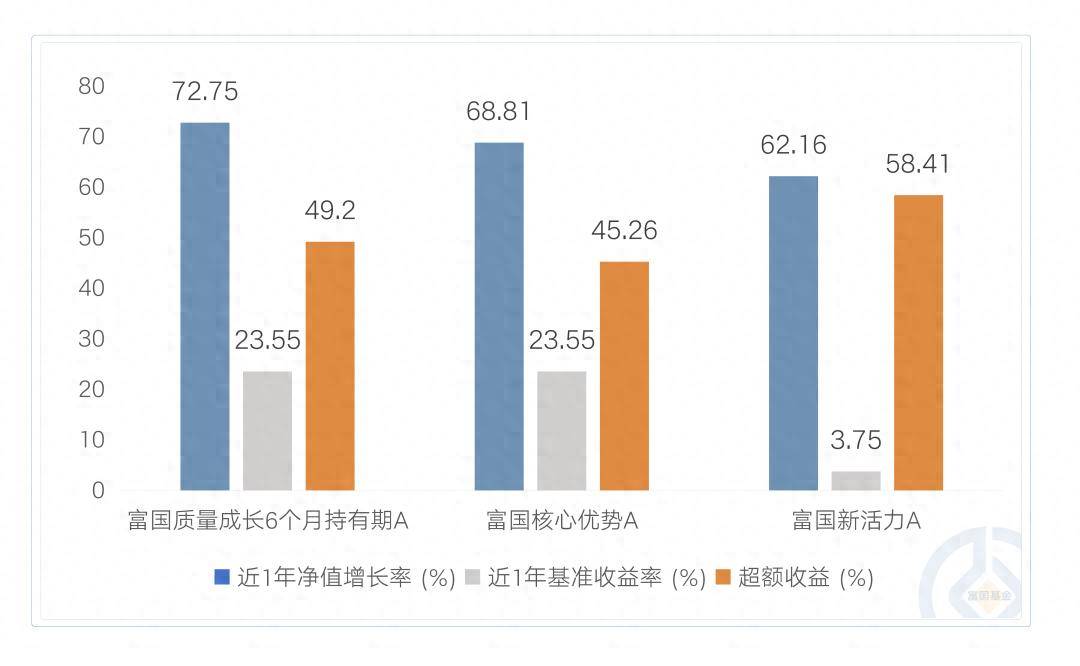
Core Viewpoint - The article emphasizes the launch of the "Fuguo Core Power" fund, which aims to capture growth opportunities across various sectors, particularly in AI, robotics, and commercial aerospace, under the management of Wu Dongdong, who has a unique background combining industry and finance [1][4][26]. Group 1: Fund Overview - The "Fuguo Core Power" fund is positioned as a growth-oriented broad-based fund, with a stock allocation of 60%-95%, spanning both A-shares and Hong Kong stocks [4]. - The fund is designed to appeal to investors looking for diversified growth opportunities without being confined to a single sector, aligning with the seasonal investment strategy of "planning in spring" [4][26]. Group 2: Fund Manager Profile - Wu Dongdong, the fund manager, has a background in mechanical engineering and transitioned from being a mechanical engineer to a securities researcher, which provides him with a deep understanding of the manufacturing sector [5][6]. - His management style is characterized by a combination of industry insight and financial acumen, which has been reflected in the strong performance of the funds he manages, with returns exceeding 60% over the past year [6][12]. Group 3: Investment Strategy - Wu Dongdong employs a flexible growth strategy, focusing on sectors with clear industrial trends and performance catalysts, while filtering out short-term macroeconomic noise [14][16]. - The investment approach includes high-frequency research and a balanced portfolio across 4-5 different industry directions to mitigate risks associated with single-sector investments [15][16]. Group 4: Market Context and Opportunities - The article highlights that post-Spring Festival, the market often experiences a rebalancing phase, where growth sectors with strong industrial trends tend to show resilience [16]. - Key investment areas identified include AI hardware, storage and semiconductor equipment, humanoid robots, AI applications, and commercial aerospace, each with distinct growth trajectories and investment potential [16][20][22][24].