系统设计

Search documents
习惯决定命运
Bao Cheng Qi Huo· 2026-04-01 07:03
Report Summary 1. Report Industry Investment Rating No relevant information provided. 2. Core View of the Report The report emphasizes that in the futures market, the ultimate game is a compound - interest duel of habits. Stable profits come from a habit system that allows good behaviors to occur automatically. By establishing the right identity, designing an effective system, and optimizing the trading environment, traders can cultivate good trading habits and achieve stable profits in the long run [2][6]. 3. Summary by Related Catalog Identity and Habit Formation - Identity recognition is the core engine of habit formation and the underlying logic of futures trading. Traders should establish the identity of "risk managers" rather than just focusing on profit - making goals. A wrong identity can lead to problems like 40% of margin calls due to reverse - position holding [3]. System Design - System design is more important than goal - setting. An excellent trader's system should follow the "four rules": make good habits obvious, attractive, easy, and satisfying. To get rid of bad habits, the opposite operations should be carried out [4]. Environmental Influence - Environment shapes habits, which in turn determine trading fate. Traders should optimize the trading environment by reducing the friction of bad habits, lowering the threshold of good habits, and building a positive community [5]. Habit Compound Interest - Small daily improvements or indulgences can lead to significant long - term changes. The highest realm of trading is to make profit a by - product of good habits [6].
蒋尚义:芯片的未来在Chiplet和先进封装
半导体芯闻· 2025-11-06 09:55
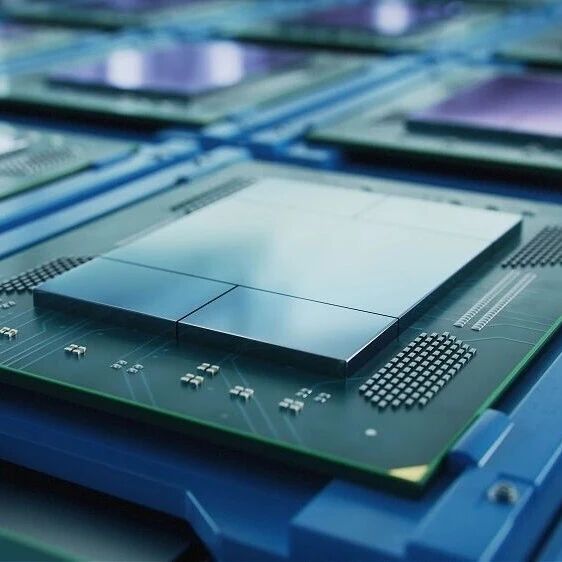
Core Insights - AI is identified as a new driving force for the future of the semiconductor industry, transitioning from traditional computing to AI applications, which are still in the foundational stage but will diversify significantly in the coming years [2][3] - The shift towards AI applications will challenge traditional chip design economies of scale, necessitating new approaches such as Chiplet architecture to manage development costs and enhance market flexibility [3] - Advanced packaging technologies are becoming critical for performance enhancement, with a focus on system design as a key area for future development in the semiconductor sector [3] Group 1 - AI is redefining the meaning of Moore's Law, moving from centralized data centers to edge computing and AIoT applications, which will include smart cars, robots, smart homes, and smart cities [2] - The cost of designing advanced chips, such as TSMC's products below 5nm, can reach approximately $2 billion, making it unfeasible for companies to invest heavily without guaranteed sales [3] - The Chiplet concept allows for modular design, enabling the reuse of high-performance modules across various products, thus distributing development costs and increasing market adaptability [3] Group 2 - The semiconductor industry is approaching physical limits of Moore's Law, with the pace of process miniaturization slowing down, which may challenge Taiwan's leading position in wafer foundry and packaging [3] - Advanced packaging technologies like CoWoS and InFO are becoming essential for improving chip integration efficiency, shifting the focus from merely cost control to performance enhancement [3] - System design is emphasized as a crucial area for future focus, as it will ultimately dictate the direction of industry development [3]