
经济适用房

Search documents
Skyline Champion(SKY) - 2026 Q3 - Earnings Call Transcript
2026-02-04 14:02
Financial Data and Key Metrics Changes - Net sales increased by 2% year-over-year to $657 million, while total homes sold decreased by 2% to 6,485 homes [12][18] - Average selling price (ASP) per U.S. home sold increased by 5% to $99,300 due to changes in product mix and increased prices [19][22] - Consolidated gross profit decreased by 5% to $172 million, with a gross margin of 26.2%, down 190 basis points year-over-year [21][22] - Net income attributable to Champion Homes decreased by 12% year-over-year to $54 million, or earnings of $0.97 per diluted share [22] - Adjusted EBITDA for the quarter was $75 million, a decrease of 10% compared to the prior year [23] Business Line Data and Key Metrics Changes - Sales to independent retail channels decreased year-over-year, while captive retail sales increased year-over-year, representing 38% of consolidated sales in Q3 versus 35% last year [13][14] - Community channel sales were down year-over-year, but positive feedback was received for new products showcased at the Louisville Home Show [14][15] Market Data and Key Metrics Changes - Manufacturing backlogs decreased sequentially by 15% to $266 million, with average backlog lead time ending at 7 weeks [11][12] - U.S. factory-built housing revenue increased by 2% year-over-year, while Canadian revenue was $26 million, representing a 3% increase in homes sold [20] Company Strategy and Development Direction - The company aims to increase awareness and demand for its products, with a focus on building trust with consumers [6][7] - Product innovation remains a strategic priority, with new home plans launched at various price points to target a broader segment of buyers [8] - The company is actively monitoring legislative developments that support the expansion of off-site built homes, indicating a strong bipartisan focus on addressing the housing crisis [9][10] Management's Comments on Operating Environment and Future Outlook - Management expressed confidence in navigating a challenging macro and consumer environment, with expectations for revenue growth in Q4 [11][25] - The company anticipates cautious consumer sentiment and a seasonally lower winter selling period, but remains focused on strategic growth priorities [25][26] Other Important Information - The company has a strong cash position with $660 million in cash and cash equivalents, and plans to continue returning capital to shareholders through share repurchases [23] - The sale of Triad's parent company is progressing well, expected to close in the first half of the year, which will provide additional capital [16] Q&A Session Summary Question: Can you provide more color on the geographic environment and weather-related impacts? - Management noted that there were no unusual geographic trends and that weather-related delays impacted production days, but they are working to make up for lost time [30] Question: What are the dynamics around pricing and ASPs? - Management confirmed that both pricing and product mix contributed to higher ASPs year-over-year [31][32] Question: How do you view the community channel's outlook? - Management indicated that they are working closely with community channel partners and received positive feedback on new products, suggesting potential recovery in the community channel [41][42] Question: Can you elaborate on the margin expectations for the next quarter? - Management highlighted that gross margin variability is expected, with a focus on managing inventory and preparing for the spring selling season [46][48] Question: What is the early read on the spring selling season? - Management reported positive order growth and consumer engagement, indicating a strong outlook for the spring selling season [56][58]

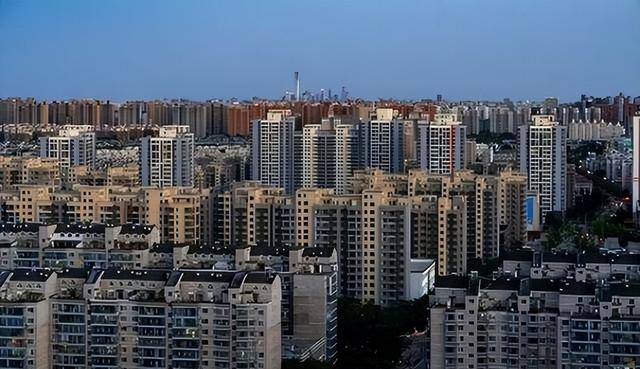
北京天通苑,一共有700栋楼,房价从2650涨到40000,如今价格分化
Sou Hu Cai Jing· 2026-01-30 10:45
Core Insights - The article discusses the evolution of the Tiantongyuan area in Beijing, highlighting its transformation from a barren land in 1999 to a densely populated residential community, reflecting the city's housing needs and urban expansion [3][6]. Group 1: Historical Context - In 1999, Tiantongyuan was primarily farmland and a garbage dump, with the introduction of affordable housing concepts due to the cessation of welfare housing [3]. - The initial phase of Tiantongyuan faced challenges, including limited public transport and heavy traffic congestion, leading to its nickname "Tianbu Yuan" [5]. Group 2: Price Evolution - The price per square meter in the early days was around 2,650 yuan, with no lottery system for purchasing homes, making it accessible for first-time buyers [2][6]. - The opening of the subway Line 5 in 2007 significantly boosted the area's appeal, leading to a surge in property prices, which reached over 40,000 yuan per square meter during the 2015 real estate boom [9]. Group 3: Current Market Dynamics - The Tiantongyuan community now exhibits price differentiation, with newer developments near the 17th subway line maintaining high prices due to their proximity to key employment areas [11]. - In contrast, older buildings without modern amenities are experiencing price declines, with some units dropping below 20,000 yuan per square meter [13]. Group 4: Global Trends - The article notes a global trend of K-shaped price differentiation in real estate markets, where properties are no longer uniformly appreciating, as seen in cities like Tokyo and New York [14]. - The current market emphasizes efficiency and quality over mere square footage, with commuting efficiency and community maintenance becoming critical factors in property valuation [16]. Group 5: Future Implications - The narrative suggests that in the new economic cycle, properties are viewed as resources rather than just physical structures, indicating a shift in investment perspectives [18].

日本人住房梦渐远,房价是年收入10倍
3 6 Ke· 2025-11-28 08:43
Core Insights - The traditional model of home ownership in Japan, based on lifetime employment and purchasing a home after marriage, is collapsing due to rising housing prices, increasing single-person households, and stagnant wages [2][5][9] - The average price of new homes in Tokyo's 23 wards has surged to 130.64 million yen (approximately 6.24 million RMB), marking a 20% increase compared to the previous year [4] - The "income multiplier" for home prices has exceeded 10 for the first time, with the national average at 10.09 times annual income and Tokyo reaching approximately 18 times [4][5] Housing Market Trends - The average price of newly built detached houses in the Tokyo area has remained above 55 million yen, over 10 million yen higher than five years ago [4] - The number of new housing starts has dropped to about 800,000 units annually, less than half of the peak period [5][10] - The number of vacant homes in Japan has doubled over the past 30 years, with 9 million out of 65.04 million total homes being unoccupied [10] Policy and Economic Implications - The Tokyo government is considering measures to regulate property resale to curb speculative short-term sales, reflecting a growing concern over housing affordability [2][11] - Japan's housing policies, which historically favored new home purchases through tax incentives and loan expansions, are now seen as inadequate in addressing current market realities [5][9] - There is a push for policy adjustments to promote the circulation of second-hand homes and utilize vacant properties to provide diverse housing options [10][11] Comparative Analysis - Other countries, such as the UK and France, are also facing high housing prices, with London having a price-to-income ratio of 12 times, second only to Tokyo [5][8] - Japan is exploring partnerships with the private sector to create affordable housing options, similar to successful models in New York and London [11]
