
统一内存编址

Search documents
华为超节点赶超英伟达:驾驭“光”很关键
Guan Cha Zhe Wang· 2026-02-10 03:20
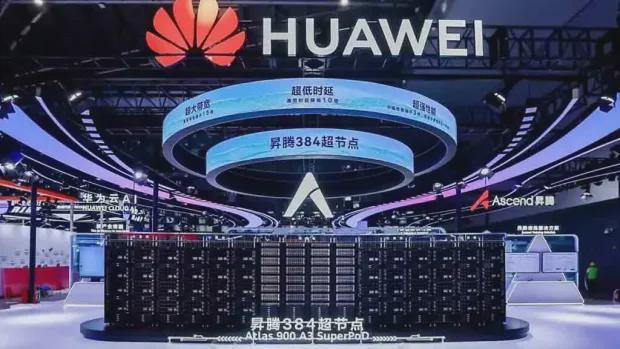
Core Insights - The emergence of SuperPods as a new AI computing infrastructure has become a focal point in the industry since 2025, with Huawei's Ascend 384 SuperPod leading the way in performance metrics compared to foreign competitors [1][3] - The demand for computing power is far from being met, with token consumption expected to exceed trillions daily in China, highlighting the inadequacy of simply stacking servers to address the computing gap [3][4] Group 1: SuperPod Characteristics - SuperPods are not merely about stacking chips; they represent a fundamental restructuring of traditional computing architectures, enabling equal interconnectivity among CPUs, NPUs, and memory units [4][6] - Key features of a true SuperPod include high bandwidth to eliminate communication delays, low latency, and the ability to form a logically unified system through unified memory addressing [6][7] Group 2: Efficiency and Performance - SuperPods can significantly enhance computing efficiency, with potential model utilization rates increasing from 30% to 45%, effectively a 50% improvement, which can help mitigate the limitations of chip manufacturing processes [7][8] - The architecture of SuperPods differs from traditional systems, as Huawei employs optical communication technology, allowing for greater scalability and interconnectivity compared to NVIDIA's copper-based systems [8][9] Group 3: Innovation and Ecosystem - Huawei's systematic innovation in chip design, optical components, and foundational protocols has positioned it uniquely in the market, leveraging over 20 years of experience in optical technology [9][12] - The company is also developing general computing SuperPods, with the TaiShan 950 SuperPod set to launch in Q1 2026, aimed at replacing various server applications [11][12] Group 4: Software and Community Engagement - The success of SuperPods relies not only on hardware but also on a robust software ecosystem, including open-source initiatives like CANN and openEuler, which are crucial for fostering industry collaboration [14] - Huawei has engaged a large developer community, with 3.8 million registered developers for Kunpeng and nearly 4 million for Ascend, emphasizing the importance of open-source collaboration in the AI era [14]


华为打造“最强超节点”,这项全球领先技术很关键
Guan Cha Zhe Wang· 2026-02-10 03:10
Core Viewpoint - The emergence of SuperPod as a new AI computing infrastructure has become a focal point in the industry since 2025, with Huawei's Ascend 384 SuperPod leading the way in performance metrics compared to foreign competitors [1][3]. Group 1: SuperPod Concept and Advantages - SuperPod is not merely about stacking chips; it represents a fundamental restructuring of traditional computing architecture, enhancing communication efficiency among CPU, NPU, and memory units [4][6]. - The key advantages of SuperPod over traditional clusters include significantly improved computational efficiency, with potential model computing utilization rates increasing from 30% to 45%, equating to a 50% performance boost [7][8]. Group 2: Technical Challenges and Innovations - Building a true SuperPod is complex; Huawei's Ascend 384 SuperPod consists of 12 computing cabinets and 4 bus cabinets, while NVIDIA's NVL72 system is confined to a single cabinet due to architectural differences [8]. - Huawei employs optical communication technology for interconnection, allowing for greater scalability beyond single cabinet limitations, while traditional systems face constraints with electrical signal transmission [8][9]. Group 3: Systematic Innovation and Ecosystem Development - Huawei's systematic innovation includes proprietary chip development, optical device capabilities, and foundational protocols, enabling the creation of SuperPods that leverage full optical interconnectivity [9][12]. - The company is also developing general computing SuperPods, such as the TaiShan 950, which aims to replace various server applications by 2026 [9][11]. - A robust software ecosystem, including open-source initiatives like CANN and openEuler, is essential for the operation of SuperPods, with a focus on collaborative development within the industry [14].
