
统一市场

Search documents
智库书单 | 2026年经济工作八项重点任务怎么干?
Sou Hu Cai Jing· 2025-12-13 10:55
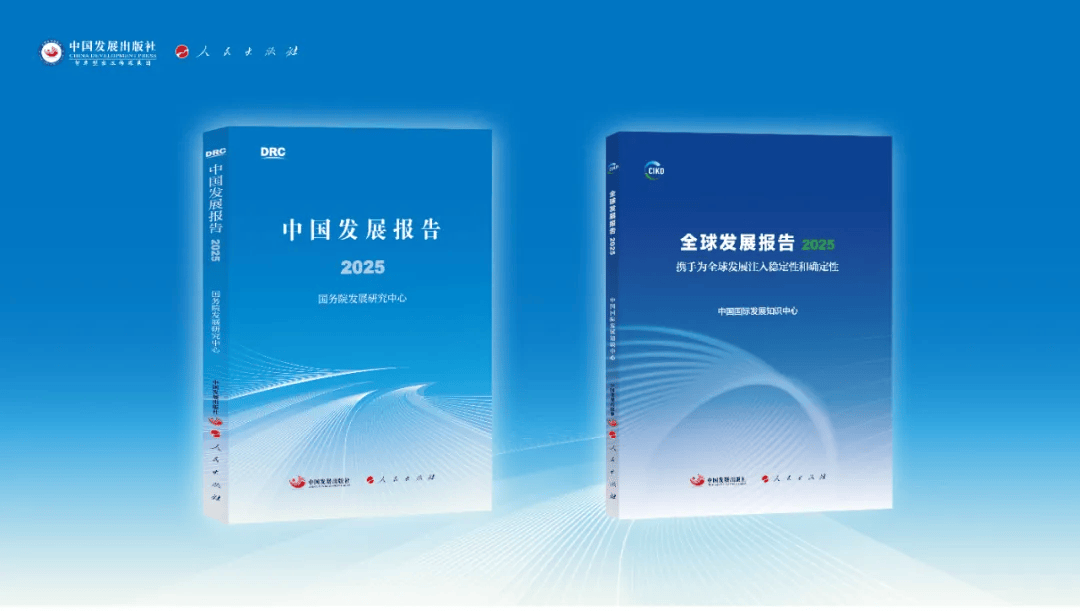
Group 1 - The Central Economic Work Conference held from December 10 to 11 in Beijing summarized the economic work for 2025, analyzed the current economic situation, and deployed tasks for 2026, emphasizing the need to maintain stability while seeking progress and improving quality and efficiency [1] - In 2026, eight key tasks will focus on enhancing macroeconomic governance effectiveness through integrated effects of existing and new policies, and increasing counter-cyclical and cross-cyclical adjustments [1] Group 2 - The "China Development Report 2025" records the ideological, institutional, and practical achievements formed during the advancement of Chinese-style modernization in 2024, including four significant research outcomes from the State Council Development Research Center [3] - The "Global Development Report 2025" analyzes major instability and uncertainty factors facing the world and their profound impacts on global development, focusing on issues such as global trade, climate change, health, food security, poverty reduction, and cooperation among developing countries [3] Group 3 - The report on "Silver Economy" from Shanghai highlights the city's exploration in capturing new demands and creating new scenarios to empower high-quality growth in new economic formats, drawing insights from international best practices [10] - The "Turning to Consumption Driven" report enriches theoretical understanding of expanding domestic demand and proposes innovative paths and mechanisms for constructing a complete domestic demand system [12] Group 4 - The "International Consumption Center Cities" report analyzes the conditions and foundations for major cities in China to transition into international consumption centers, providing overall strategies and policy recommendations [14] - The "Digital Trade Development and Cooperation Report (2022-2023)" clarifies the concept of digital trade and analyzes the current state and trends of global digital trade development, showcasing China's achievements and efforts in promoting international digital trade cooperation [41] Group 5 - The "New Quality Productivity Practice and Exploration" compiles research on the theoretical origins, practical paths, and innovative models of new quality productivity, clarifying its essential differences from traditional productivity [22] - The "Artificial Intelligence Major Application Scenarios Series" covers over ten typical scenarios, integrating theory and practice to explore the governance of artificial intelligence in various sectors [21]

长江经济带如何迈向“十五五”?统一市场与绿色转型成关键
Jing Ji Guan Cha Bao· 2025-10-31 06:43
Core Insights - The Longjiang Economic Belt is crucial for China's high-quality development and modernization, spanning 11 provinces and accounting for over 40% of the national economy [4][7] - The upcoming "15th Five-Year Plan" emphasizes sustainable economic growth, ecological protection, and the establishment of a unified market [5][6] Group 1: Ecological Protection and Economic Growth - During the "14th Five-Year Plan," the Longjiang Economic Belt achieved significant ecological improvements, with water quality maintaining a Class II standard for five consecutive years and a notable increase in aquatic biodiversity [2] - The shift from a "shortage" to an "excess" economy necessitates a focus on consumption and demand expansion, alongside investment optimization [2][5] Group 2: Unified Market and Regional Coordination - The construction of a unified market in the Longjiang Economic Belt is essential for integrating into the new development framework, although challenges such as institutional barriers and market efficiency remain [3] - The Longjiang Economic Belt connects major urban clusters, contributing over 40% to the national population and GDP, and is poised to become China's fourth economic growth pole [3][4] Group 3: Strategic Development and Innovation - The strategic focus for the Longjiang Economic Belt is shifting from physical connectivity to functional collaboration and value co-creation, with an emphasis on high-quality development [4] - Key recommendations for the "15th Five-Year Plan" include enhancing transportation networks, ecological governance, and public service collaboration [4][6] Group 4: Future Outlook and Challenges - The "15th Five-Year Plan" is seen as a critical period for achieving sustainable economic growth of around 5% annually, with a focus on improving consumer income and employment systems [5][6] - The Longjiang Economic Belt is expected to evolve into a more ecologically friendly and technologically advanced economic corridor, addressing the balance between development and environmental protection [6][7]