绿色生态农业

Search documents
党建引领生态美、经济强、百姓富、社会稳
Hai Nan Ri Bao· 2026-02-06 07:38
Core Viewpoint - Wuzhishan City emphasizes the integration of party leadership with ecological, economic, and social development, aiming for a balanced and sustainable growth model [2] Group 1: Economic Development - By 2025, Wuzhishan City aims to achieve the highest growth rates in fixed asset investment, general budget revenue, and disposable income for all residents, urban residents, and rural residents in the province [2] - The city has implemented innovative development strategies, including the "Five Zero" green ecological agriculture model, which has been recognized as a leading example in rural revitalization [2] Group 2: Environmental Quality - Wuzhishan City has achieved the best air and water quality in the province, indicating a successful balance between ecological preservation and economic growth [2] Group 3: Social Stability - The city is focused on maintaining social stability and safety while promoting economic development, with initiatives such as the promotion of village collective economic income and the inclusion of local cultural projects in national revitalization efforts [2] Group 4: Future Plans - Future initiatives include strict implementation of political responsibilities, integration of party leadership with development, and the establishment of a modern industrial system through the development of seven leading industries [2] - The city plans to enhance environmental protection and utilization of resources through the "Four Reservoirs" strategy and the promotion of green initiatives [2]
既产好米又护碧水 这片稻田藏着绿色生态“密码”
Su Zhou Ri Bao· 2025-11-17 00:38
Core Insights - The project in Lianhua Island focuses on integrating green ecological rice cultivation techniques to enhance both rice quality and environmental protection [1][2] Group 1: Project Overview - The 20-acre experimental field serves as a demonstration base for Suzhou's green ecological rice technology integration and application project [1] - The project employs organic farming methods, including reduced chemical fertilizer usage and soil structure improvement techniques [1] Group 2: Environmental Protection Measures - An ecological interception system has been established to prevent non-point source pollution, featuring elevated ridges that can reduce drainage by over 60% during heavy rainfall [2] - The S-shaped ecological ditches are designed to purify water, with selected plants effectively absorbing nitrogen and phosphorus from the water [2] Group 3: Technological Integration - The project integrates multiple technologies, including variety improvement, soil restoration, crop rotation, and green pest control, forming a mature green ecological rice cultivation system [2] - The initiative aims to achieve high-quality rice production while adhering to sustainable agricultural principles [2]
“十四五”时期,我国粮食综合生产能力持续提升 中国饭碗端得更稳
Ren Min Ri Bao· 2025-09-23 22:18
Core Insights - China's grain production has consistently remained above 1.3 trillion jin since the 14th Five-Year Plan, with projections for 2024 to exceed 1.4 trillion jin for the first time [1] - The summer grain harvest has reached the second-highest record in history, with early rice yields surpassing 400 kg per mu, indicating a solid foundation for the upcoming harvest season [1] Group 1: Grain Production and Policies - The central government's focus on food security is underscored by continuous policy support, including the implementation of the Food Security Guarantee Law and targeted financial investments [3] - Since the 14th Five-Year Plan, grain planting areas have consistently increased, with 26 out of 31 provinces expected to see production increases in 2024, totaling a rise of 74 billion jin compared to 2020 [3] - The contribution of agricultural technology to grain production has reached 63.2%, highlighting its role as a key driver for food security [6] Group 2: Agricultural Practices and Innovations - Farmers are adopting advanced agricultural practices, such as the use of drip irrigation and precision fertilization, which have led to improved crop yields and reduced costs [4][6] - The integration of technology, including satellite remote sensing and big data, is enhancing agricultural productivity and efficiency [6] - The establishment of over 10 million acres of high-standard farmland has bolstered the resilience of grain production against extreme weather events [3] Group 3: New Agricultural Models - The emergence of new agricultural operators, including family farms and cooperatives, is transforming the agricultural landscape and enhancing food security [9] - The cultivation of high-quality farmers has reached over 9 million, contributing to the development of new agricultural business models [9] - The focus on ecological farming practices is yielding both environmental benefits and economic returns for farmers [4][5] Group 4: Global Responsibility and Food Security - China plays a significant role in global food security, producing over 20% of the world's grain with only 9% of the world's arable land [10] - The country has implemented numerous food aid projects in over 30 countries, demonstrating its commitment to international cooperation in food security [10] - The ongoing efforts to ensure food security reflect China's responsibility as a major global player in agriculture [10]
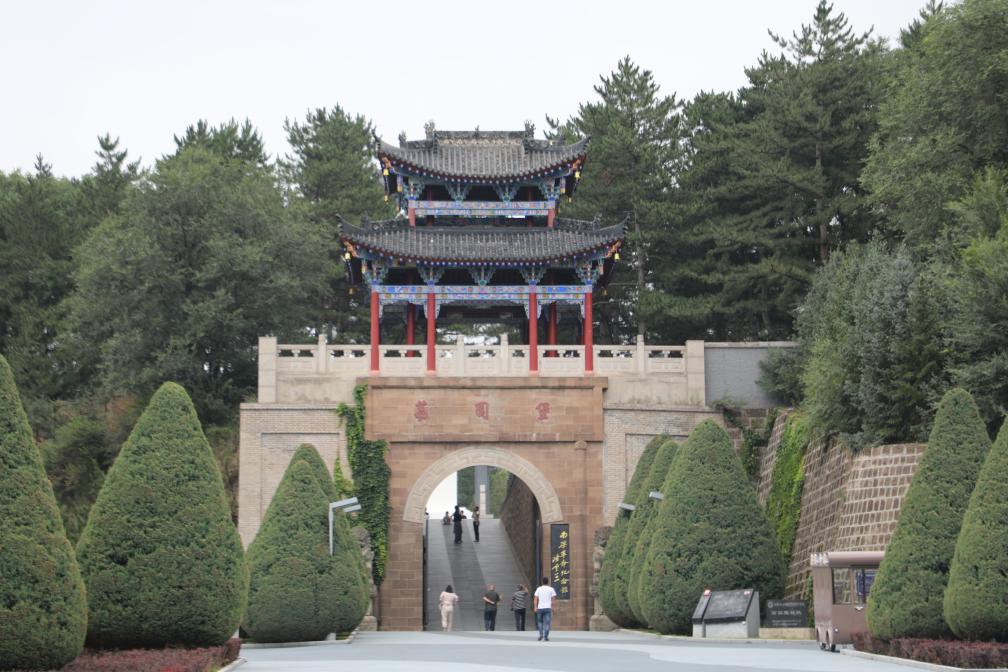
铭记历史 缅怀先烈丨回望星火燎原处 南梁奔向振兴路
Xin Hua Wang· 2025-08-07 07:57
Core Insights - The article highlights the transformation and development of the South Liang area in Gansu Province, emphasizing its historical significance as a revolutionary base and its current focus on tourism and agricultural innovation [1][2][4]. Group 1: Historical Significance - South Liang is recognized as a red hot land where the Chinese Communist Party established the Shaanxi-Gansu revolutionary base in 1934, which later connected with the Shaanxi-Northern revolutionary base [2]. - The area is home to over 50 preserved revolutionary sites, including the former site of the Shaanxi-Gansu Soviet Government and the memorial for 42 martyrs, showcasing its rich revolutionary history [2]. Group 2: Tourism Development - The region has seen a surge in tourism, with visitors engaging in activities such as red-themed classes, hiking along revolutionary paths, and participating in agricultural experiences [2][4]. - The opening of the Long March National Cultural Park's core exhibition area on August 1 attracted thousands of visitors, featuring interactive exhibits that enhance the tourist experience [4][6]. Group 3: Economic Growth and Innovation - The "cave economy" is thriving, with local residents converting old cave dwellings into guesthouses, generating annual incomes exceeding 60,000 yuan from tourism [4]. - The introduction of innovative agricultural practices, such as the "three-dimensional dual-cycle" agriculture model, is promoting sustainable farming and enhancing local economic resilience [5][7]. - The edible mushroom industry in Lin Town produces over 800 tons annually, generating an output value of 11 million yuan, showcasing the shift from traditional farming to diversified income sources [7].