编制改革

Search documents
考公火爆,缩编却开始了
Xin Lang Cai Jing· 2026-02-24 09:59
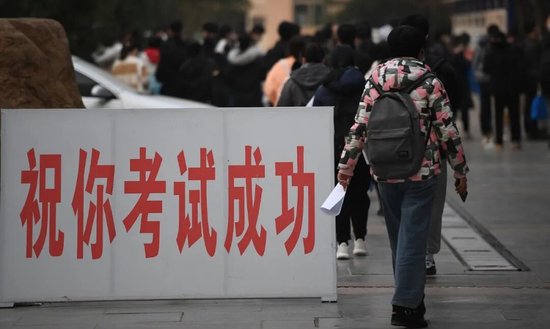
Core Viewpoint - The increasing competition for stable government jobs in China is highlighted by the significant rise in the number of candidates for the national civil service examination, reflecting a growing demand for job security in the current economic climate [3][25]. Group 1: National Civil Service Examination Trends - The number of candidates for the national civil service examination is projected to increase from 1.576 million in 2021 to 3.718 million by 2026, representing a growth rate of 235.9% [4][26]. - The ratio of candidates passing the qualification review to the number of positions available is approximately 98:1, indicating a highly competitive environment for securing government jobs [3][25]. Group 2: Fiscal Challenges and Employment Policies - The planned recruitment for the national civil service in 2026 will see a decrease of 1,602 positions, marking the first reduction in seven years, attributed to a declining school-age population [4][26]. - Local governments are facing increasing fiscal pressures, leading to strict controls on hiring and even reductions in staff numbers, as highlighted by the central government's focus on addressing local fiscal difficulties [5][27]. Group 3: Research on Fiscal Support Personnel - A recent economic study has gained significant attention, providing a clearer understanding of the scale and structure of fiscal support personnel in China, which has been a topic of limited data since 2009 [9][31]. - The study estimates that the total number of fiscal support personnel reached 68.46 million by 2020, with the fiscal support rate rising from 4.01% in 2004 to 4.85% in 2020 [12][34]. Group 4: Structural Issues in Employment - The internal structure of fiscal support personnel shows a decline in active personnel, while the number of retirees continues to grow, leading to a structural mismatch in employment [13][35]. - The expansion of "non-staff" personnel, which increased from 2.15 million in 2004 to 4.42 million in 2018, adds to the fiscal burden without utilizing official staffing quotas [15][37]. Group 5: Future Considerations and Reforms - The research emphasizes the need for a long-term strategy in managing fiscal support personnel, particularly in aligning their distribution with future societal needs [39][41]. - There is a call for reducing government responsibilities to alleviate the pressure on fiscal support personnel, suggesting that market-based solutions could enhance service provision and economic growth [20][42].

甘戈:牵住公立医院改革“牛鼻子”
Jing Ji Ri Bao· 2026-01-15 00:05
Core Viewpoint - The article emphasizes the importance of public welfare as the fundamental attribute of the healthcare system and the guiding principle for deepening the reform of the medical and health system, particularly focusing on public hospital reforms [1]. Group 1: Reform Areas - The reform of staffing focuses on enhancing personnel stability and sense of belonging to create conditions for achieving public welfare. It aims to establish a dynamic adjustment mechanism for public hospital staffing, breaking down barriers to talent mobility and allowing efficient allocation of medical personnel based on public health needs [1]. - Price reform is crucial for establishing a new operational mechanism centered on public welfare. It involves creating a fee structure that reflects the value of medical personnel's technical services and the operational costs of medical institutions, with dynamic adjustments based on price indices and costs [2]. - The salary system reform aims to establish a distribution mechanism aligned with public welfare. It includes reasonable determination and dynamic adjustment of public hospital performance salary totals, narrowing salary gaps between different levels of hospitals, and gradually increasing the fixed income ratio to focus on technical improvement and service quality [2]. Group 2: Regulatory and Financial Support - Comprehensive regulatory reform is essential to safeguard public welfare. It aims to ensure that the maintenance of public welfare does not deviate from its course, establishing a regulatory framework that combines government leadership, institutional autonomy, industry self-discipline, and social oversight [3]. - Government investment is a crucial support for public welfare. The article suggests exploring a financial input growth mechanism that aligns with economic and social development levels, ensuring that institutions are not "troubled by survival" [3]. - The article calls for strengthening the foundation of service supply through deepening the integration of medical and preventive care and solidifying the role of family doctors as core health guardians for residents [3].
不止县城:三四线城市的“公务员经济”困局,往后日子可能更难
Sou Hu Cai Jing· 2025-12-14 13:46
Core Viewpoint - The economic model of small towns and counties in China is heavily reliant on government employment and transfers, leading to unsustainable financial practices and a lack of competitive industries [1][3][5]. Group 1: Economic Structure - Many small towns have a high number of government employees relative to their population, with some counties having over 100 administrative bodies and thousands of civil servants [1][3]. - By 2020, labor compensation for civil servants accounted for 34% of total government expenditures in China, a figure that is increasing, indicating a growing financial burden without a corresponding increase in revenue [3][5]. - The reliance on land sales for fiscal revenue has diminished, with some counties depending on land finance for over 60% of their income, leading to severe financial strain as land sales decline [6][8]. Group 2: Population Dynamics - There is a significant outflow of young, capable individuals from small towns, leaving behind an aging population and reducing the consumer base [4][5]. - The competition for civil service positions has intensified, with the 2024 national civil service exam attracting over 2.83 million applicants, reflecting a lack of viable job alternatives in these regions [7][9]. Group 3: Business Environment - Many small towns have seen a surge in commercial developments that ultimately fail, leading to increased debt and financial losses for local governments [4][6]. - The emergence of low-paid temporary workers has created a distorted labor market, where low wages hinder consumer spending and further strain local economies [5][8]. Group 4: Future Outlook - The current economic model is unsustainable, as it relies on government spending rather than fostering new wealth creation through industry and innovation [9][10]. - Some small towns are exploring alternative economic models, such as tourism and e-commerce, but these require significant investment and time to develop [8][9].