政府行政

Search documents
海南省级层面整治形式主义为基层减负专项工作机制办公室 中共海南省纪委办公厅关于2起整治形式主义为基层减负典型问题的情况通报
Hai Nan Ri Bao· 2026-02-14 05:03
Core Viewpoint - The report highlights two typical issues related to the formalism reduction initiative aimed at alleviating burdens on grassroots levels in Hainan Province, emphasizing the need for compliance with regulations to avoid unnecessary pressures on local entities [2][3]. Group 1: Issues Identified - The Provincial Medical Security Bureau has been frequently ranking and reporting the usage rates of the "Village Doctor Communication" system, which contradicts the regulations that prohibit monthly or quarterly rankings. This practice has been ongoing since September 2024, adding extra pressure on grassroots health units [2]. - The Provincial Transportation Department has conducted unauthorized inspections and checks, violating the regulations that require prior reporting for such activities. They have also split planned inspections into multiple unauthorized checks, further increasing the workload for grassroots organizations [3]. Group 2: Recommendations and Actions - The report calls for all levels and departments in the province to take these issues seriously and to implement the requirements for reducing burdens on grassroots effectively. It emphasizes the importance of self-examination and rectification to prevent similar issues from recurring [3].
伦敦银试探上行空间 美通过法案结束部分停摆
Jin Tou Wang· 2026-02-04 03:25
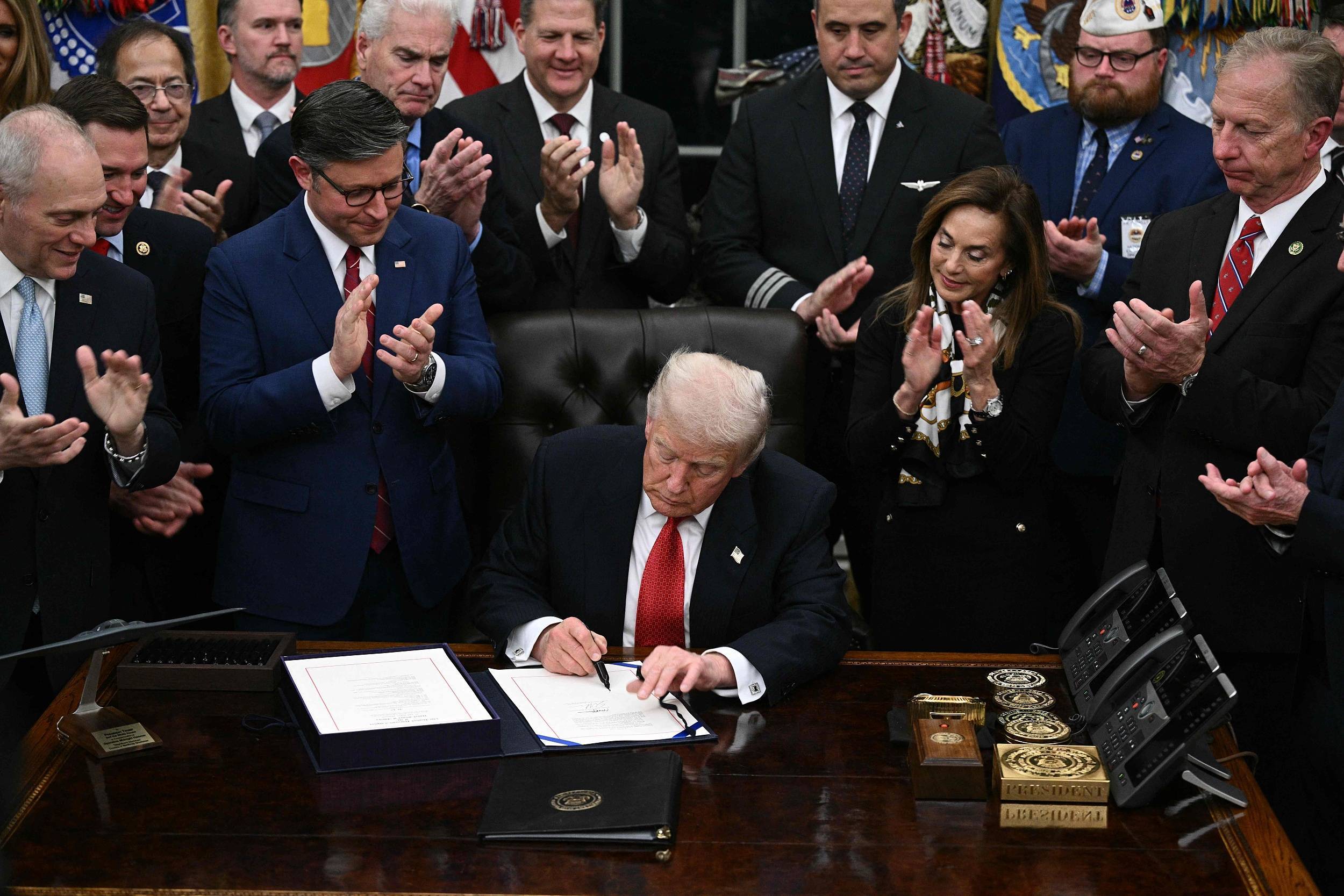
Group 1 - The U.S. House of Representatives passed a significant funding bill to end a partial government shutdown, with a vote of 217 in favor and 214 against, which will be sent to President Trump for signing into law [2] - The funding bill will provide financial support to various federal departments until September 30, the end of the fiscal year, with the exception of the Department of Homeland Security, which will receive funding for only two weeks to allow for further negotiations [2] - The final deadline for funding the Department of Homeland Security is set for February 13 [2] Group 2 - Current silver prices have broken through the resistance levels of $87.00 to $88.00, and if the price successfully surpasses $88.00, it may reach the next resistance level between $95.00 and $96.00 [2] - Support levels for silver are noted at $81.30 and $78.00, while resistance levels are at $89.50 and $96.00 [2]
福建以巡促改促治做好“后半篇文章”压实整改责任 释放治理效能
Zhong Yang Ji Wei Guo Jia Jian Wei Wang Zhan· 2026-02-01 00:23
Group 1 - The Fujian Provincial Finance Department is addressing low fund execution rates and poor performance scores by implementing a performance evaluation system to ensure funds are directed towards public welfare and technological innovation [1] - The Provincial Inspection Office emphasizes the importance of accountability in the implementation of rectification measures, establishing a responsibility accountability mechanism to ensure effective follow-up and evaluation of rectification outcomes [2] - A dual feedback mechanism has been established to enhance communication between inspected entities and relevant authorities, ensuring that issues are addressed and responsibilities are clearly defined [2] Group 2 - The inspection teams have identified uneven progress in rectification efforts and have provided categorized guidance to improve the precision of corrective measures [3] - A real-time tracking system for rectification efforts has been developed to monitor progress and ensure that corrective actions are effective and aligned with intended goals [3] - The "pre-inspection correction" mechanism is being promoted to extend the impact of inspection results beyond individual issues to broader governance improvements [3] Group 3 - Fujian has established a "one inspection, one analysis" mechanism to systematically address common and deep-rooted issues identified during inspections, providing targeted recommendations for reform [4] - The inspection findings in the healthcare sector led to significant cost savings through the standardization of medical supplies procurement, demonstrating the effectiveness of the reform initiatives [4] - The Provincial Inspection Office aims to strengthen the accountability chain and improve the supervision mechanism to support high-quality development through effective rectification [4]
“眼睛向下看、力量往下沉”——山东威海出实招为基层“卸包袱”“加马力”
Xin Hua She· 2026-01-21 06:56
Core Viewpoint - The city of Weihai in Shandong Province has implemented various measures to alleviate the burdens on grassroots officials, receiving positive feedback from both officials and the public. The initiatives focus on reducing formalism and enhancing efficiency in local governance [1]. Group 1: Reducing Administrative Burdens - Weihai has introduced a "reduction burden QR code" to gather feedback from grassroots officials, which has been effective in identifying issues such as excessive documentation [2]. - The city has mandated a unified document issuance system to control the volume of paperwork sent to grassroots levels, resulting in a 20.7% year-on-year decrease in document volume by 2025 [2]. - The number of reports required from grassroots officials has been significantly reduced, with a reported 81.25% decrease in the total number of bulletins in the Wendeng District, leading to improved content quality [2]. Group 2: Clarifying Responsibilities - To address the confusion regarding responsibilities between townships and district departments, Weihai has established a regulatory team of 368 grassroots personnel to ensure clear accountability and rectify issues promptly, having identified over 30 problems to date [3]. - The city is prioritizing staffing for grassroots levels, reallocating 702 positions from city and county plans to support township operations, which has improved workforce adequacy and operational efficiency [3]. Group 3: Streamlining Data Reporting - Weihai has adopted a "one form" system to streamline data reporting, significantly reducing the frequency of requests for data submissions from higher authorities, thus lessening the administrative workload for grassroots officials [4].
【社论】“高效办成一件事”,让政务服务好办、易办
Xin Lang Cai Jing· 2026-01-13 09:25
Core Viewpoint - The State Council has released the first batch of key items for the "Efficient Completion of One Thing" initiative for 2026, aiming to enhance government services by making them easier and more efficient for both businesses and individuals [3] Group 1: Key Items in the List - The list includes 13 items that support innovation policies for technology enterprises, intellectual property protection, and hosting sports events, as well as practical matters like childcare subsidy applications and flexible employment insurance [3] - New services for foreign personnel in China, such as obtaining phone cards and maritime shipping, are also included, indicating a focus on both significant and everyday concerns of the public [3] Group 2: Implementation and Reforms - The initiative requires cross-departmental collaboration, data sharing, and process reengineering, which poses a systemic challenge to the administrative framework [3] - Local governments, such as Beijing and Shanghai, have made significant efforts to streamline processes, achieving outcomes like "one application form, one completion" for entrepreneurial services [4] Group 3: Outcomes and Benefits - As of now, five batches of key items have been released, totaling 55 items, leading to continuous expansion of convenience lists and the release of benefits from government service reforms [4] - The reforms aim to enhance efficiency and public satisfaction, making policy implementation and business operations more predictable for enterprises, while providing a more stable and hassle-free experience for individuals [4] Group 4: Future Directions - The "Efficient Completion of One Thing" initiative is not just about completing specific tasks but aims to improve overall government governance capabilities and support high-quality development [5] - Continuous adaptation and optimization of reforms are necessary to address emerging challenges and ensure that government services evolve in response to societal needs [5]

不止县城:三四线城市的“公务员经济”困局,往后日子可能更难
Sou Hu Cai Jing· 2025-12-14 13:46
Core Viewpoint - The economic model of small towns and counties in China is heavily reliant on government employment and transfers, leading to unsustainable financial practices and a lack of competitive industries [1][3][5]. Group 1: Economic Structure - Many small towns have a high number of government employees relative to their population, with some counties having over 100 administrative bodies and thousands of civil servants [1][3]. - By 2020, labor compensation for civil servants accounted for 34% of total government expenditures in China, a figure that is increasing, indicating a growing financial burden without a corresponding increase in revenue [3][5]. - The reliance on land sales for fiscal revenue has diminished, with some counties depending on land finance for over 60% of their income, leading to severe financial strain as land sales decline [6][8]. Group 2: Population Dynamics - There is a significant outflow of young, capable individuals from small towns, leaving behind an aging population and reducing the consumer base [4][5]. - The competition for civil service positions has intensified, with the 2024 national civil service exam attracting over 2.83 million applicants, reflecting a lack of viable job alternatives in these regions [7][9]. Group 3: Business Environment - Many small towns have seen a surge in commercial developments that ultimately fail, leading to increased debt and financial losses for local governments [4][6]. - The emergence of low-paid temporary workers has created a distorted labor market, where low wages hinder consumer spending and further strain local economies [5][8]. Group 4: Future Outlook - The current economic model is unsustainable, as it relies on government spending rather than fostering new wealth creation through industry and innovation [9][10]. - Some small towns are exploring alternative economic models, such as tourism and e-commerce, but these require significant investment and time to develop [8][9].

21.3万亿日元!日本出台疫情后最大经济刺激计划 全力应对通胀压力
智通财经网· 2025-11-21 07:12
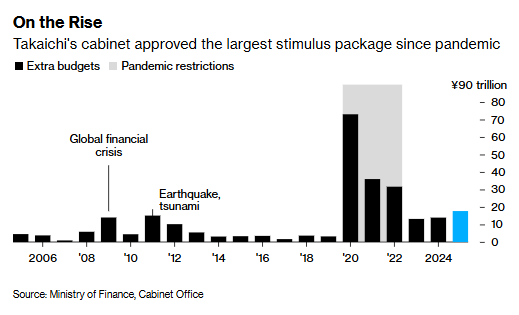
Core Viewpoint - The Japanese government has approved its largest supplementary budget since the COVID-19 pandemic, amounting to 17.7 trillion yen (approximately 112 billion USD), aimed at addressing inflation and responding to voter demands, despite potential concerns regarding Japan's fiscal health [1][4]. Group 1: Stimulus Plan Details - The total scale of the stimulus plan reaches 21.3 trillion yen (approximately 135.4 billion USD), with a significant focus on price relief measures [1][4]. - Key components include 11.7 trillion yen allocated for price response, which involves direct cash subsidies to households and children, as well as support for local regions [4]. - Specific measures include 7,000 yen subsidies for gas and electricity bills per household, a one-time cash payment of 20,000 yen per child, and 2 trillion yen for local aid [4]. Group 2: Economic Impact and Inflation - The measures are expected to lower overall inflation indicators by an average of 0.7 percentage points between February and April of the following year [5]. - Japan's core consumer price index has remained above the Bank of Japan's 2% target for 43 consecutive months, marking the longest streak since 1992 [4]. Group 3: Defense and Crisis Management - The plan includes 1.7 trillion yen for enhancing national defense and diplomatic capabilities, with 1.1 trillion yen aimed at increasing defense spending to 2% of GDP [5]. - An additional 700 billion yen is reserved for emergency responses to natural disasters and other unexpected events [5]. Group 4: Debt and Fiscal Sustainability - Concerns over rising debt levels have led to increased yields on Japanese government bonds, with the potential for bond issuance to exceed last year's levels [6]. - The government anticipates that the total amount of new bond issuance this fiscal year will be lower than the previous year's 42.1 trillion yen, with a reduction of about 20% compared to last year [6][7]. Group 5: Economic Growth Projections - The stimulus plan is projected to contribute to an average annual GDP growth of approximately 1.4 percentage points over three years [7]. - The Japanese economy experienced its first contraction in six quarters during the July-September period, partly due to the impact of U.S. tariff policies [7].
全美停摆!工会反水起诉白宫,4000万人将断粮,对华战略彻底混乱
Sou Hu Cai Jing· 2025-11-20 06:10
Core Points - The U.S. government has been in a shutdown for four weeks, severely impacting federal services and leaving over 750,000 non-essential government employees on unpaid leave, with more than 4,000 receiving layoff notices [1][3] - The shutdown has created significant economic pressure on federal employees, with many unable to receive their salaries, leading some to apply for short-term loans to cover living expenses [3] - Low-income families relying on government food assistance are facing immense pressure, with warnings that the SNAP program may run out of funds, potentially affecting around 40 million Americans [5] - The American Federation of Government Employees (AFGE) has shifted its stance, calling for a clean temporary funding bill to restore government operations, which has sparked political controversy [7][9] - The shutdown has disrupted public services, including air traffic control and public health, with significant delays and the suspension of critical health data collection [11] - National parks and infrastructure projects have been halted, leading to financial strain on state and local governments [13] - The Federal Reserve's operations are impacted due to the lack of key economic data, hindering its ability to make informed policy decisions [15] Group 1 - The government shutdown has left over 750,000 employees on unpaid leave and affected 400,000 families facing food insecurity [1][5] - Federal employees are experiencing economic stress, with some unable to pay mortgages and school fees [3] - The AFGE's call for a clean funding bill has led to political backlash and legal actions against the government for illegal layoffs [7][9] Group 2 - Public services, including air traffic control and health services, are severely disrupted, leading to delays and halted research [11] - National parks and infrastructure projects are facing shutdowns, causing financial strain on local governments [13] - The Federal Reserve's decision-making is compromised due to the unavailability of critical economic data [15]

政府停摆致关键数据缺失,美联储12月降息预期骤降
Sou Hu Cai Jing· 2025-11-14 01:46
Group 1 - The U.S. government has ended its longest shutdown, but warnings remain high as only 3 out of 12 annual appropriations bills were passed, indicating a potential future shutdown in over two months [1] - The Congressional Budget Office predicts that the six-week shutdown will reduce the actual GDP growth rate by 1.5 percentage points, resulting in a permanent loss of approximately $11 billion [1] - During the shutdown, around 750,000 federal employees were furloughed daily, leading to potential permanent impacts on inflation and unemployment reports [1] Group 2 - The Labor Statistics Bureau had to recall some furloughed employees to produce the September employment data, raising concerns about data quality and economic authenticity [4] - The probability of a 25 basis point rate cut by the Federal Reserve in December has decreased to 51.6%, down from 59.4% the previous day [4] - There is a division within the Federal Reserve regarding monetary policy, with some members advocating for no changes to bring inflation back to the 2% target, while others support a rate cut due to better-than-expected inflation data [4]
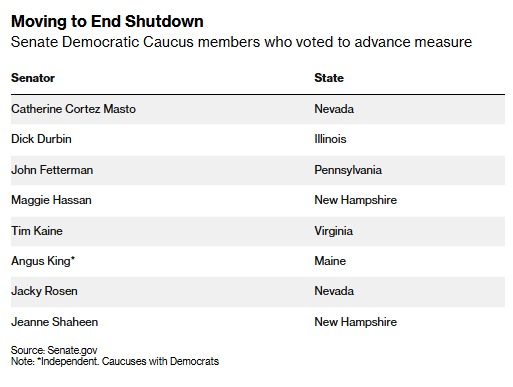
史上最长停摆现转机!美参议院达成临时协议 政府重启进入倒计时
智通财经网· 2025-11-10 12:55
Core Points - The U.S. Senate passed a procedural motion to end the longest government shutdown in history with a vote of 60 to 40, paving the way for a temporary funding agreement [1] - The agreement includes full funding for the Department of Agriculture, the Department of Veterans Affairs, and Congress until the end of the fiscal year, while other federal agencies will receive funding to operate until January 30, 2026 [1] - The agreement aims to restore pay for furloughed federal employees and resume federal funding for state and local governments [1] Group 1 - The Senate requires unanimous consent from all members to expedite the process, and any opposition could delay the vote by several days [1] - House Speaker Mike Johnson has informed members to prepare for a vote within 36 hours [1] - President Trump expressed optimism about nearing an end to the shutdown [1] Group 2 - Some Democratic senators supported the agreement due to provisions preventing federal layoffs until January 30 [2] - The House's voting outcome remains uncertain, as Democratic leaders oppose any agreement lacking an extension of the Affordable Care Act subsidies [2][3] - The current agreement does not meet the core demands of Democratic leaders, who seek to extend expiring ACA subsidies and repeal cuts to Medicaid [3] Group 3 - The ongoing government shutdown has lasted for 40 days, marking a record in U.S. history, with previous attempts to leverage shutdowns for policy gains failing [3][4] - The Democratic Party has rejected a no-strings-attached temporary spending bill that could have kept the government running until November 21 [4] - The White House has pressured Congress, threatening mass layoffs and withholding pay for over 600,000 furloughed federal workers [4] Group 4 - The likelihood of reaching an agreement on extending ACA subsidies before the December deadline remains unclear, with House Republicans opposing the extension [5] - The political standoff has resulted in an estimated economic loss of approximately $15 billion per week, with a projected 1.5 percentage point decline in GDP growth rate due to the shutdown [5] - The funding bill includes provisions favored by Democrats, such as rejecting cuts to international food aid and increasing security funding for Congress [5]