美丽河湖保护与建设

Search documents
陕西印发方案推进美丽河湖保护与建设
Shan Xi Ri Bao· 2026-01-07 23:22
Group 1 - The core viewpoint of the news is the implementation of the "Implementation Plan for the Protection and Construction of Beautiful Rivers and Lakes in Shaanxi Province (2025-2027)", which aims to improve the ecological environment of rivers and lakes through various measures [1][2] - The plan includes specific actions for water environment governance, such as increasing urban sewage treatment facility coverage to 73% by 2027 and enhancing the supervision of river discharge outlets [1] - It emphasizes the need for industrial park water pollution prevention and control, with a focus on improving sewage collection and treatment efficiency in provincial and above industrial parks by 2027 [1] Group 2 - The plan also addresses agricultural non-point source pollution prevention and aims to improve the cleanliness of water bodies and shorelines, particularly in major rivers and lakes by 2027 [1] - It outlines measures for water resource security, including enhancing ecological flow guarantees for rivers and implementing flow control in river basins [2] - The plan promotes water ecological protection and restoration, including the restoration of ecological buffer zones and the protection of aquatic life, while also establishing a foundation for water ecological monitoring and regulation [2]
山西省2案例入选第四批美丽河湖优秀名单
Xin Lang Cai Jing· 2025-12-28 02:55
Core Viewpoint - The Ministry of Ecology and Environment has announced the fourth batch of excellent cases for beautiful rivers and lakes, with two rivers from Shanxi Province being selected, highlighting the importance of ecological protection in water environments [1] Group 1: Beautiful Rivers and Lakes Initiative - The initiative for beautiful rivers and lakes is a key component of the Beautiful China campaign, focusing on water ecological environment [1] - The State Council has set a timeline for the beautiful rivers and lakes protection and construction action, aiming for significant progress by 2035 [1] Group 2: Shanxi Province Action Plan - Shanxi Province has developed an action plan for beautiful rivers and lakes protection and construction from 2025 to 2027, with a target of achieving a 40% completion rate by 2027 [1] - The action plan includes six major areas of focus, such as water environment governance and ecological flow guarantees, to systematically improve the ecological quality of rivers and lakes [1] Group 3: Key Tasks and Goals - The action plan outlines 26 key tasks aimed at enhancing the ecological environment quality across the province [1] - Specific emphasis is placed on the protection of the Fen River's ecology and the implementation of major projects related to beautiful rivers and lakes [1]
2025年度生态环境厅局长论坛在广东中山举办,共绘美丽河湖新画卷
Zhong Guo Huan Jing Bao· 2025-11-26 00:36
Core Points - The forum held on November 25, 2023, in Zhongshan, Guangdong, focused on the theme of integrated management of water resources, water environment, and water ecology to promote the protection and construction of beautiful rivers and lakes [1][2] - Significant achievements have been made in water ecological environment protection in China, with major rivers like the Yangtze and Yellow Rivers maintaining Class II water quality for consecutive years [1] - The "14th Five-Year Plan" period is identified as a critical phase for achieving fundamental improvements in ecological environment quality, emphasizing the transition from quantitative to qualitative improvements in water ecological environment [1] Group 1 - The forum aimed to deepen the understanding of the spirit of the 20th National Congress of the Communist Party of China and to plan and promote water ecological environment protection work with a higher perspective and broader vision [1] - The national ecological environment system will focus on "three water coordination" and prioritize solving river basin and cross-border water ecological environment issues during the "14th Five-Year Plan" period [1] - The forum included discussions on practical experiences in the "Blue Water Defense War," planning ideas for water ecological environment protection, and pathways for beautiful river and lake construction [2] Group 2 - The forum also announced the winners of the "Beautiful China Through My Eyes" short video competition, highlighting the importance of using imagery to document ecological beauty and promote environmental protection concepts [2] - Participants included officials from the Ministry of Ecology and Environment and local ecological environment departments, indicating a collaborative approach to ecological protection [2]
实现3个100%!大连市统筹推进“三水”治理
Zhong Guo Fa Zhan Wang· 2025-11-07 08:26
Core Insights - Dalian City has achieved a 100% excellent water quality rate for 13 national monitoring river sections and maintained a 100% excellent water quality rate for 14 centralized drinking water sources since the 14th Five-Year Plan began [1][2] - The city has implemented a comprehensive approach to water governance, focusing on the coordination of water environment, resources, and ecology, and has adopted specific strategies for each river [1][2][8] Group 1: Water Quality Management - Dalian has established a management mechanism for the coordinated governance of water environment, resources, and ecology, achieving expected goals in water protection, ecological restoration, and resource utilization [2] - The city has implemented precise pollution tracing for rivers, addressing issues such as livestock waste and urban sewage overflow, and has developed control plans based on pollution tracing results [2][3] - The total nitrogen reduction in the Ruzhou River has been successfully achieved ahead of schedule, with plans to replicate this success across eight national monitoring rivers in 2024 [2] Group 2: Pollution Source Management - Dalian has initiated a systematic management project for river discharge outlets, categorizing and regulating 1,983 discharge points to ensure compliance with pollution standards [3] - The city has improved industrial wastewater treatment in 14 industrial parks, ensuring that all facilities either have their own treatment systems or rely on municipal treatment plants [3][4] Group 3: Wastewater Treatment Infrastructure - The scale of wastewater treatment plants in Dalian has doubled from 124.3 million tons per day in 2016 to 248.7 million tons per day, with a centralized treatment rate exceeding 98% [4] - The city has successfully eliminated black and odorous water bodies in urban areas through systematic governance [4] Group 4: Water Resource Management - Dalian has adopted a water-saving strategy that prioritizes ecological flow management, ensuring that ecological flow discharge rates meet 100% compliance for key river sections [5][6] - The city has established facilities for the reuse of reclaimed water, achieving a utilization rate of 35% across various sectors [6] Group 5: Ecological Restoration - Dalian is actively promoting ecological restoration projects for rivers, enhancing water self-purification capabilities and improving the ecological environment [7] - The city has developed monitoring and early warning systems for algal blooms in key lakes and reservoirs, ensuring proactive management of water quality [7] Group 6: Future Goals - Dalian aims to continue its efforts in building beautiful rivers and lakes, reinforcing pollution control measures, and enhancing the management of water resources, environment, and ecology [8]
见证河湖蝶变·共建美丽山东丨沂水源头焕新颜
Qi Lu Wan Bao· 2025-09-12 11:06
Core Viewpoint - The transformation of the Yihe River in Zibo, Shandong Province, from a polluted waterway to a vibrant ecological and recreational area showcases successful environmental restoration efforts and highlights the economic benefits derived from such initiatives [1][3]. Group 1: Environmental Restoration - The Yihe River, once heavily polluted due to industrial waste discharge, has undergone a systematic ecological transformation, integrating ecological, economic, and cultural planning [3]. - A total investment of 680 million yuan was allocated for comprehensive river management, focusing on flood prevention infrastructure and ecological restoration [3]. - The natural shoreline of the Yihe River now exceeds 76%, with water quality stabilized at Class II standards, ranking among the top ten in the province [5]. Group 2: Economic Impact - The revitalization of the Yihe River has led to the establishment of 14 national A-level tourist attractions and over 1,200 "one village, one industry" projects, significantly boosting local economies [5]. - The agricultural products irrigated by the Yihe River, such as "Yiyuan Red" apples and large cherries, generate annual revenues of 3 billion yuan and 1.39 billion yuan, respectively, demonstrating the economic value of environmental restoration [5].

见证河湖蝶变·共建美丽山丨一泓清水润肥城:康汇河“重生”记
Qi Lu Wan Bao· 2025-09-12 11:06
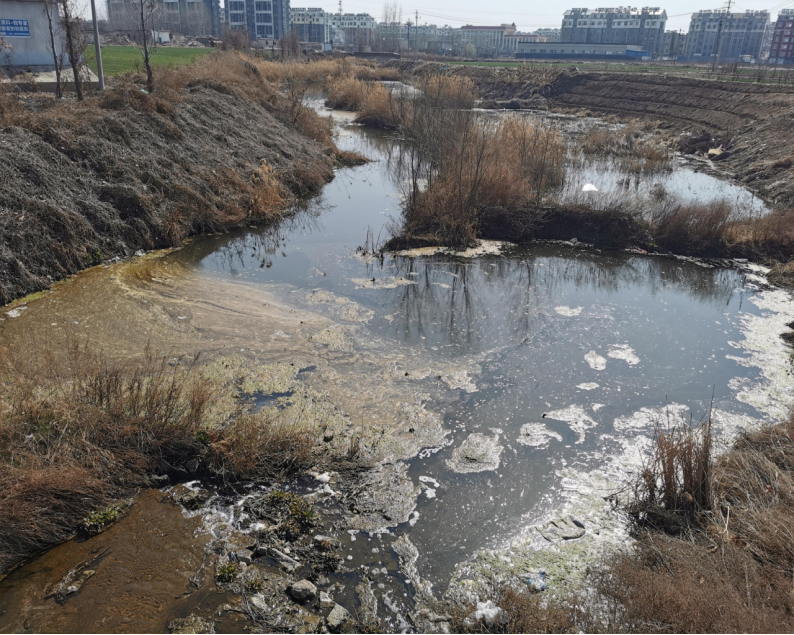
Core Viewpoint - The article highlights the successful ecological restoration and water quality improvement of the Kanghui River in Feicheng, Shandong Province, showcasing it as a model for beautiful river and lake protection in China [1][4]. Group 1: Ecological Restoration Efforts - A systematic ecological restoration campaign was initiated to address the pollution of the Kanghui River, which had suffered from industrial and domestic wastewater, leading to a severe decline in water quality [4]. - The local government made significant efforts to control pollution by shutting down 535 small and polluting enterprises and relocating three large chemical companies [4]. - An investment of 5.5 billion yuan was made to enhance wastewater treatment capacity and establish a comprehensive sewage treatment system [4]. Group 2: Water Resource Management - To combat water scarcity, the city innovatively repurposed treated wastewater from sewage treatment plants into a reliable ecological water source [4]. - A new high-quality reclaimed water plant was constructed with an investment of 260 million yuan, capable of producing 60,000 tons of reclaimed water daily [4]. - This reclaimed water facility provides over 21 million cubic meters of high-quality water annually, significantly conserving precious underground water resources [4]. Group 3: Environmental Improvements - A total investment of 470 million yuan was allocated for shoreline restoration and the establishment of wetlands, including a national wetland park [7]. - Activities such as "fish stocking" were implemented to create a symbiotic ecosystem of "water-grass-fish," enhancing water quality through biological means [7]. - The water quality of the Kanghui River improved from a grade of V to grade III, with increased natural shoreline and biodiversity, transforming it into an ecological corridor and urban recreational area [7]. Group 4: Monitoring and Management - The establishment of the "碧水" smart monitoring platform allows for comprehensive management of pollution sources and water quality through automated monitoring stations and video surveillance [7]. - This full-chain management approach ensures the long-term maintenance of water quality improvements in the river [7].
沂河畔现“江北桂林”:龙湾水乡的美丽蝶变
Qi Lu Wan Bao· 2025-09-12 10:53
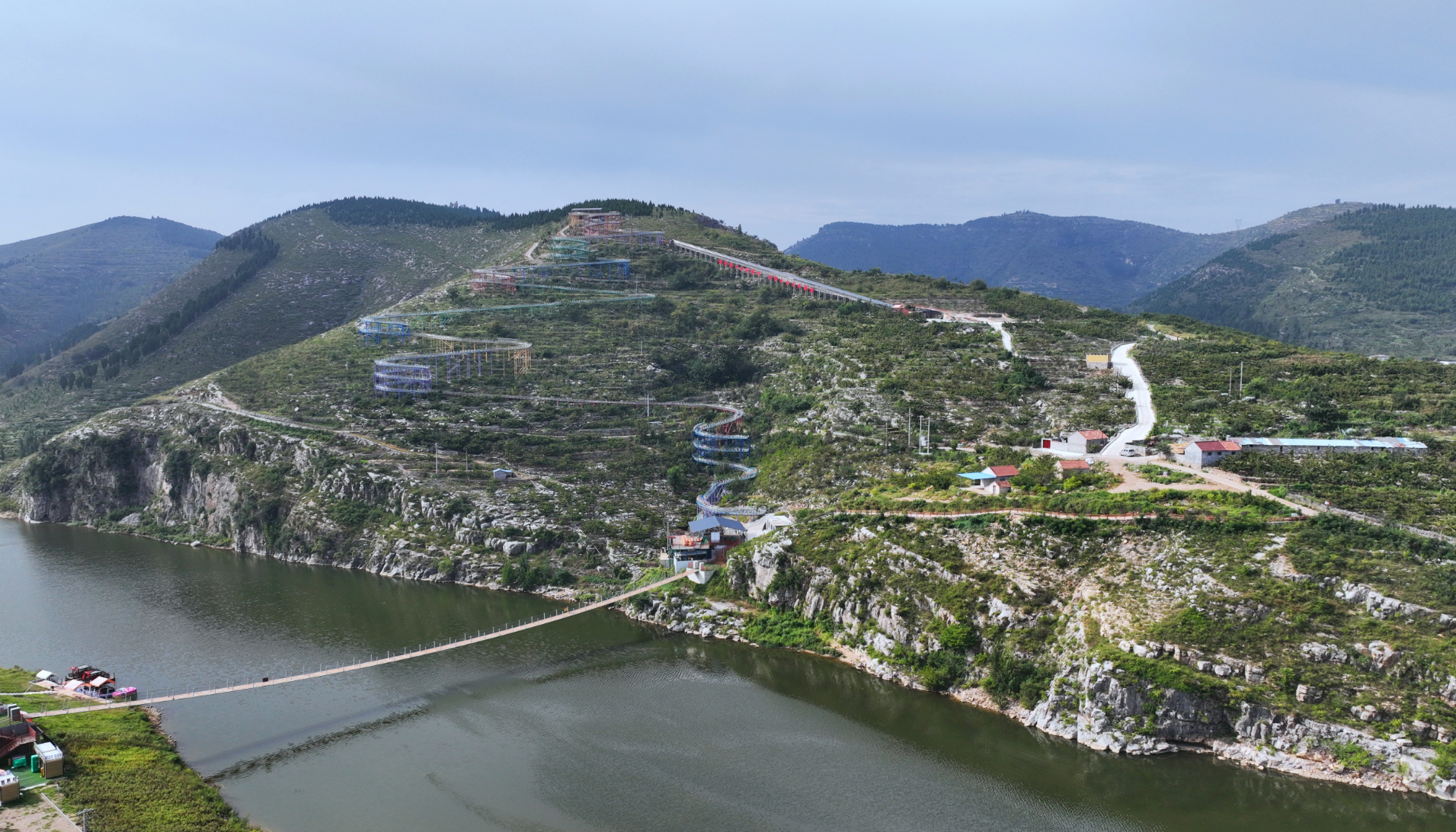
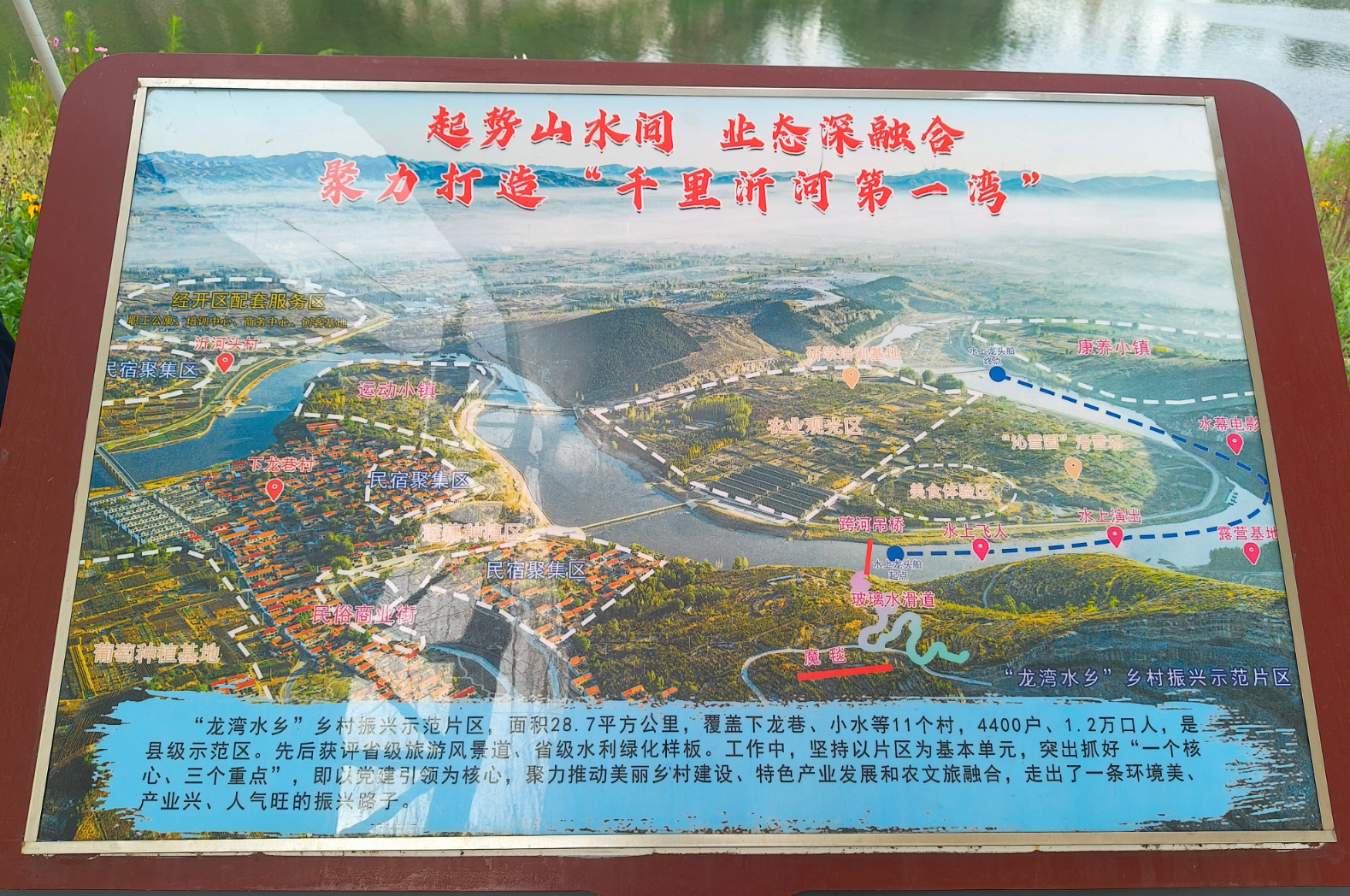
Core Viewpoint - The article highlights the successful implementation of rural revitalization in Longwan Water Town, Shandong Province, showcasing ecological restoration, infrastructure improvement, and industrial integration as key components of the initiative [1][3][4][6]. Group 1: Ecological Restoration - Longwan Water Town, recognized as a model for rural revitalization, has undergone significant ecological improvements, including a 2.6 billion yuan investment in the Yihe River governance project, which involved dredging 15.29 kilometers and constructing six rubber dams [3]. - The initiative aims to create a harmonious environment characterized by clear waters and green banks, contributing to the overall aesthetic and ecological quality of the region [1][3]. Group 2: Infrastructure Development - The development strategy emphasizes "one village, one feature; one street, one landscape," leading to the completion of a 20,000 square meter seasonal flower sea and various infrastructure upgrades across 11 villages [4]. - Specific improvements include the establishment of water supply and road access for every household, as well as the renovation of village facades, enhancing the overall living environment [4]. Group 3: Industrial Integration - The rural revitalization model incorporates a "cooperative + base + company + farmer" approach, significantly boosting local agriculture, with the Garlic Sprout Association selling 25,000 tons annually and generating 150 million yuan in income for the community [6]. - The integration of cultural and tourism elements has led to the introduction of a 1,450-meter water rafting project, expected to attract 100,000 visitors during the 2025 May Day holiday, generating over 4 million yuan in revenue [6].
★七部门印发行动方案 引导社会资本参与美丽河湖建设
Zhong Guo Zheng Quan Bao· 2025-07-03 01:56
Core Viewpoint - The "Beautiful Rivers and Lakes Protection and Construction Action Plan (2025-2027)" aims to enhance the ecological environment of rivers and lakes in China, targeting a construction completion rate of approximately 40% by 2027 and significant results by 2030, with a basic completion by 2035 [1][2]. Group 1: Action Plan Objectives - The action plan emphasizes improving water ecological environment quality through precise, scientific, and legal pollution control, while promoting a comprehensive governance system for water resources, environment, and ecology [1][2]. - A total of 2,573 river and lake water bodies have been identified for protection, focusing on those with significant ecological functions and high social concern [1]. Group 2: Funding and Investment - The plan encourages central financial support and aims to attract local government and social capital investments, promoting various models such as government service purchases and third-party pollution management [1][3]. - It highlights the need for strengthened funding guarantees to support the protection and construction of beautiful rivers and lakes [2][3]. Group 3: Specific Measures - The action plan outlines 19 specific measures, including enhancing the effectiveness of pollution discharge outlet management, strengthening industrial park pollution prevention, and promoting agricultural non-point source pollution control [1][2]. - It also includes measures for ecological flow protection, water ecological restoration, and comprehensive support for protection and construction efforts [1].
专家支招!美丽河湖保护与建设资金从哪里来?
Zhong Guo Huan Jing Bao· 2025-06-30 23:14
Core Viewpoint - The article discusses the comprehensive action plan for the protection and construction of beautiful rivers and lakes in China, emphasizing the need for a multi-faceted financing mechanism to support these initiatives, which require significant funding and systematic governance [1][9]. Funding Mechanisms - The Ministry of Finance and the Ministry of Ecology and Environment have issued a notice to support local governments in applying for central financial funds for river and lake protection projects through a competitive review process [2]. - Central financial support will focus on projects related to pollution control, watershed protection, and ecosystem restoration, with funding sourced from the special funds for water pollution prevention [2][3]. - Local governments are encouraged to utilize general public budgets and various types of bonds to support these projects, with a focus on those that can generate revenue [4]. Innovative Financing Strategies - The article suggests that while fiscal funds play a crucial role, the demand for funding in river and lake protection is substantial, necessitating the involvement of social capital and financial institutions [5][9]. - Proposed strategies include realizing the value of water ecological products, integrating ecological protection with urban development, and exploring regional financial support models for ecological projects [6][7]. - The establishment of water funds to attract social capital for ecological projects is also recommended, with examples of successful fund models already in practice [8]. Collaborative Funding Approach - A collaborative approach involving central, local, and social funding is essential to meet the financial needs of river and lake protection projects [9].
七部门发文保护建设“美丽河湖”,多方解读
Di Yi Cai Jing· 2025-06-18 02:59
Core Viewpoint - The "Beautiful Rivers and Lakes Protection and Construction Action Plan (2025-2027)" marks a significant milestone in China's water ecological environment management, transitioning from quantitative to qualitative improvements [1][5]. Group 1: Policy and Framework - The Action Plan represents a comprehensive deployment for water ecological environment protection, following the 2015 "Water Pollution Prevention Action Plan" [1]. - The management goals have shifted from "total control" of water pollution to "quality management," emphasizing ecological function and water quality safety [2][3]. - The governance approach has evolved from single-industry emission reduction to comprehensive watershed management and ecological restoration [2][5]. Group 2: Implementation and Challenges - The Action Plan aims to improve water ecological environment quality through precise pollution control, scientific management, and legal enforcement [3][5]. - Despite progress, structural and trend-related pressures on water ecological environment protection remain significant, particularly in the Yangtze River basin where local water quality issues persist [2][6]. - The plan includes the management of 2,573 water bodies, with over one-third located in the Yangtze River basin, highlighting the focus on targeted ecological strategies [7]. Group 3: Future Directions - The initiative emphasizes the need for a holistic approach to water management, integrating ecological, social, and economic factors to enhance the resilience and sustainability of water ecosystems [10]. - The plan encourages the development of beautiful rivers and lakes as a dual pathway for ecological and economic benefits, promoting green and low-carbon development [10].