
美国信用危机

Search documents
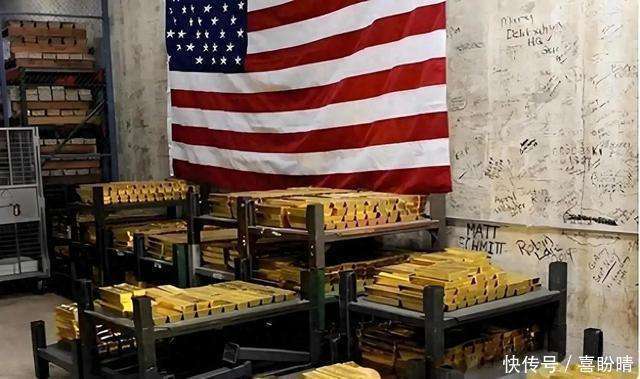
特朗普担心的事发生,多国排队运出在美黄金,中国成热门存储地
Sou Hu Cai Jing· 2025-11-20 08:12
Group 1 - The core viewpoint of the article is that the global trust in the United States as a safe haven for gold is eroding, leading to a significant shift in gold storage practices among countries, with China emerging as a new safe harbor for gold reserves [3][4][5][6][7][9][11][13][15][17] Group 2 - Countries are increasingly moving their gold reserves from the United States due to a loss of trust, with Germany being one of the first to repatriate its gold, followed by nations like the Netherlands, Austria, Turkey, and Venezuela [4][5][6] - Cambodia's recent decision to transfer part of its gold reserves to a storage facility in Shenzhen, China, symbolizes a broader trend of countries reassessing their gold storage strategies amid concerns over U.S. debt and geopolitical tensions [6][13] - The U.S. is facing a credit crisis, with national debt exceeding $38 trillion and a declining ability to pay interest, leading to a loss of global trust in the dollar as a stable currency [7][9][11] Group 3 - The shift in gold storage reflects a growing trend of de-dollarization, as countries prefer to hold tangible assets like gold rather than relying on U.S. debt instruments [11][17] - China's rise as a global gold custodian is attributed to its stable economy, political independence, and robust financial system, making it an attractive option for countries looking to secure their gold [13][15] - The strategic significance of gold custody for China lies in its potential to reshape the international financial order and establish a more equitable system compared to the U.S. dollar hegemony [15][17]

美信用危机警示全球治理变革紧迫性
Jing Ji Ri Bao· 2025-05-22 21:58
Group 1 - Moody's downgraded the U.S. sovereign credit rating from Aaa to Aa1, changing the outlook from "negative" to "stable" [1] - The U.S. federal government debt has exceeded $36 trillion, with $6.5 trillion in bonds maturing in June alone [1] - The fiscal deficit for the first half of FY2025 has surpassed $1.3 trillion, marking the second-highest half-year deficit in history [1] Group 2 - The downgrade has led to a spike in bond yields, with 30-year Treasury yields exceeding 5% and 10-year yields rising above 4.5% [1] - The increase in U.S. borrowing costs is expected to raise global lending rates and exacerbate debt risks in emerging markets [2] - The downgrade reflects long-standing imbalances in U.S. economic governance, with political parties engaging in short-term fiscal policies [3] Group 3 - The U.S. government's reliance on tax cuts and increased spending has led to a projected $4 trillion increase in federal deficits over the next decade if the 2017 Tax Cuts and Jobs Act is extended [3] - The U.S. GDP contracted by 0.3% on a year-over-year basis in Q1, marking the worst quarterly performance since 2022 [3] - The downgrade serves as a reflection of the urgent need for reform in the global governance system, emphasizing the necessity for a multi-polar currency coordination mechanism [4]