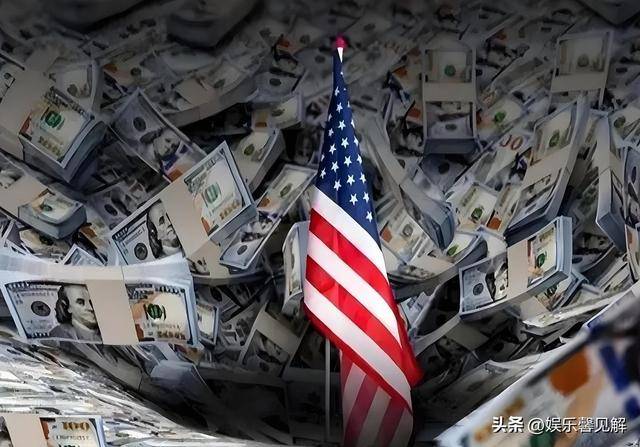
美国经济困境

Search documents
美股暴跌!美国最高法院釜底抽薪,特朗普急了眼连发三感叹号
Sou Hu Cai Jing· 2026-02-25 06:22
Group 1 - The U.S. stock market experienced a significant decline, with the Dow Jones Industrial Average dropping over 800 points, marking the highest level of capital flight in 16 years [3][5] - The catalyst for this market turmoil was a Supreme Court ruling that deemed the Trump administration's use of tariffs under the International Emergency Economic Powers Act illegal, impacting $175 billion in tariffs collected [5][8] - The ruling not only affects current tariff collections but also nullifies projected tariff revenues exceeding $1.4 trillion over the next decade, posing a severe threat to federal finances [8][19] Group 2 - In response to the ruling, the Trump administration attempted to invoke an outdated law to impose new tariffs, but the limitations of this law, including a maximum tariff rate of 15% and a short effective period of 150 days, rendered it ineffective [12][15] - The market's reaction to Trump's aggressive rhetoric and attempts to reassure investors was one of skepticism, leading to further sell-offs as traders recognized the inadequacy of the proposed measures [18][19] - Economic indicators revealed deeper issues within the U.S. economy, with a projected GDP growth rate of only 1.4% for Q4 2025, significantly below expectations, and a federal debt exceeding $38 trillion [21][23] Group 3 - Political pressures are mounting as midterm elections approach, with a significant portion of the American public opposing tariff policies, indicating potential electoral repercussions for the Trump administration [25][26] - The administration's need for an external target to unify support is evident, as Trump’s aggressive stance appears to be a political performance aimed at maintaining his image as a strong leader [28][30] - Concurrently, the U.S. is engaging in strategic maneuvers in the Asia-Pacific region, attempting to exert pressure on China while also preparing for a diplomatic visit, highlighting the complexities of U.S.-China relations [30][32][34]

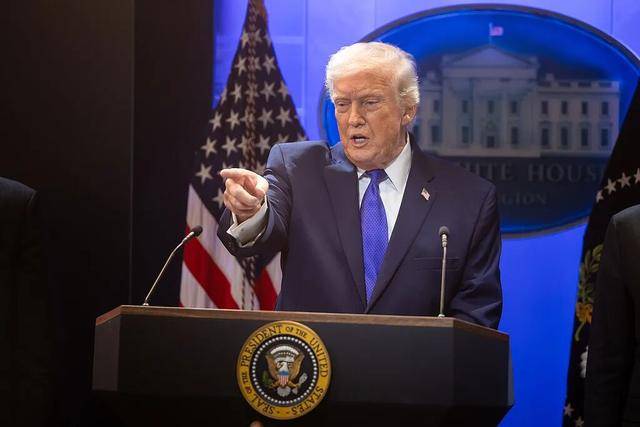
特朗普访华泡汤?中方划下红线,今年必须做了断,美国这次听懂
Sou Hu Cai Jing· 2026-02-24 18:08
Core Viewpoint - The article discusses the implications of a recent Supreme Court ruling that deemed $175 billion in tariffs imposed by the Trump administration as illegal, leading to potential financial and political repercussions for the U.S. government and Trump himself [1][3]. Group 1: Economic Implications - The Supreme Court's ruling could force the U.S. government to refund the $175 billion in tariffs, which has already been allocated for infrastructure and welfare, creating a significant financial gap [3][5]. - The U.S. national debt has surpassed $35 trillion, indicating a precarious economic situation where the government struggles to manage its financial obligations [3][5]. - Inflation remains high, affecting everyday consumers and contributing to a sense of urgency for the Trump administration to stabilize the economy [3][5]. Group 2: U.S.-China Relations - Trump's upcoming visit to China is framed as a diplomatic effort to ease trade tensions, but it is also seen as a desperate attempt to divert attention from domestic issues [1][12]. - China has reduced its holdings of U.S. Treasury bonds to a 17-year low of approximately $638.5 billion, increasing U.S. borrowing costs and complicating Trump's financial strategy [5][12]. - The article highlights a recent freeze on a $20 billion arms sale to Taiwan, indicating a shift in U.S. military posture due to diplomatic pressures from China [9][11]. Group 3: Political Dynamics - The Supreme Court's decision has exposed internal divisions within the Republican Party, with some members questioning Trump's leadership ahead of the midterm elections [7][12]. - Trump's proposal for a new 10% global tariff to replace the old tariffs was met with negative reactions from Wall Street, reflecting investor concerns about his economic policies [7][12]. - The article suggests that Trump's visit to China is less about genuine cooperation and more about seeking financial assistance to address his administration's challenges [16].
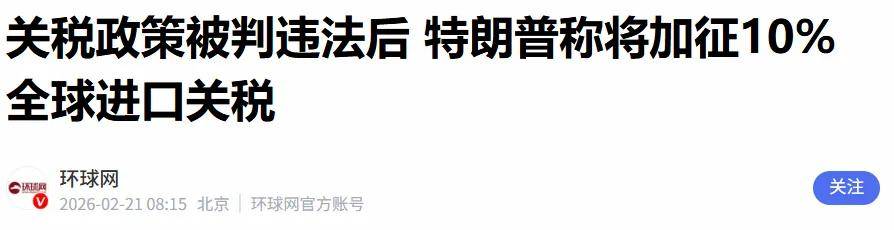
反转!关税被判违法后,特朗普硬刚:全球加征10%,还要打5年官司
Sou Hu Cai Jing· 2026-02-21 00:42
Group 1 - The U.S. Supreme Court ruled that the tariffs imposed by the Trump administration were illegal, stating that there was no clear legal authority for such actions, which could lead to significant financial implications for the U.S. government and businesses [4][5]. - The ruling affects tariffs exceeding $175 billion, and there is uncertainty regarding the potential refund of tariffs already paid, which could amount to $170 billion [5]. - Following the ruling, U.S. stock indices saw a rise, indicating market relief over the potential easing of trade pressures on U.S. companies [5]. Group 2 - In response to the Supreme Court's decision, Trump announced an additional 10% tariff on all goods imported into the U.S., which is set to last for 150 days unless extended by Congress [6][7]. - This new tariff strategy reflects a shift in legal justification but indicates a significant limitation on Trump's ability to impose tariffs without congressional approval [6][7]. - The announcement has raised concerns about escalating trade tensions, particularly with major trading partners like the EU and Australia [7]. Group 3 - Recent economic data revealed a sharp decline in U.S. GDP growth, with the annualized rate for Q4 2025 at only 1.4%, significantly below expectations and previous quarters [8][9]. - The decline in GDP is attributed to a government shutdown that affected federal spending and consumer behavior, leading to an estimated economic activity reduction of $100 billion [9]. - Inflation remains a concern, with the PCE price index showing higher-than-expected growth, indicating persistent inflationary pressures on consumers [9][10]. Group 4 - The Federal Reserve's stance on interest rate cuts has shifted, with a key official indicating a reduction in the expected pace of rate cuts due to stronger-than-anticipated employment data and persistent inflation [10][11]. - This change in outlook has led to a reassessment of market expectations regarding the timing of potential rate cuts, with traders now anticipating a delay until mid-2025 [11][12]. - The independence of the Federal Reserve is under scrutiny, particularly in light of political pressures and criticisms regarding its economic research and policy decisions [12].
美联储将被迫降息至2.25%?华尔街预言家:今年失业率恐飙至6%
Sou Hu Cai Jing· 2026-01-04 04:02
Core Viewpoint - The U.S. economy is expected to face significant challenges in 2026, with a potential severe contraction in the labor market that could weaken economic prospects and compel the Federal Reserve to implement drastic interest rate cuts [1] Labor Market Trends - The unemployment rate in the U.S. has risen from 4% at the beginning of last year to 4.6% by November [1] - The unemployment rate is projected to exceed 5% soon, with a possibility of testing the 6% mark by the end of the year [1] - A recent report indicated that the layoff rate in the U.S. reached 1.2% in October of last year, the highest level in a year, suggesting that the labor market's bottom has been reached and an upward trend is emerging [1] - The trend of layoffs is described as moderately increasing, while the hiring rate is sharply declining [1]
特朗普妥协了,取消对等关税降低成本!美联储降息突变,跌破50%
Sou Hu Cai Jing· 2025-11-18 07:41
Group 1 - The core point of the news is the temporary reduction of tariffs on certain agricultural products by 10%, aimed at alleviating inflationary pressures on American households [1][3][4] - The tariff exemption primarily benefits common household items like coffee, tea, and beef, which have seen rising prices due to inflation [1][3] - The exemption does not apply to similar products from Brazil, which still face punitive tariffs of up to 40%, indicating a selective approach to trade policy [3][4] Group 2 - The U.S. government is caught between prioritizing consumer welfare and maintaining trade protectionism, reflecting a struggle to balance political pressures from agricultural states and rising living costs [4][8] - The Federal Reserve's unexpected shift in interest rate cut expectations has increased market volatility, with a drop in the probability of a rate cut to 44.4% [5][8] - Internal issues within the Federal Reserve, including allegations of insider trading and policy interference, have undermined its credibility and added to economic uncertainty [7][10] Group 3 - The combination of tariff exemptions and fluctuating interest rate expectations has significant implications for global markets, affecting agricultural, financial, and trade dynamics [13][15] - The ongoing policy changes in the U.S. are prompting other countries to reassess their economic strategies to mitigate the impact of U.S. policy fluctuations [12][13] - The situation highlights systemic issues within the U.S. governance structure, raising questions about the sustainability of the American economic model [12][15]
特朗普改口“不去了”,威胁3亿美国人,一旦失败,将沦为3流国家
Sou Hu Cai Jing· 2025-11-03 08:57
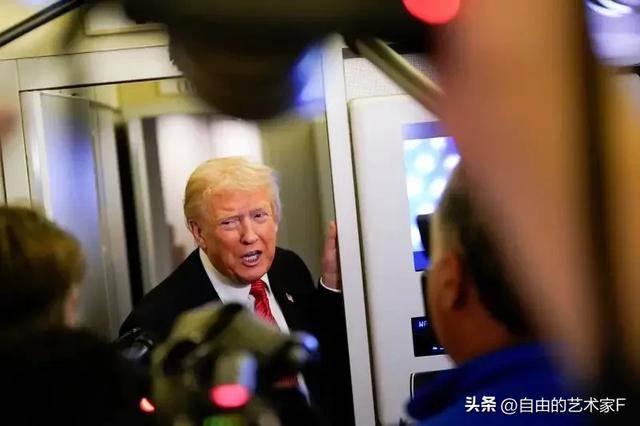
Core Viewpoint - The article discusses former President Trump's decision to not attend the Supreme Court hearing regarding his global tariffs, citing concerns about public perception and advice from allies [1][3]. Group 1: Trump's Decision - Trump initially planned to attend the Supreme Court hearing but changed his mind, stating that he did not want to distract from the current state of America and emphasized that the case is about the American people's welfare, not his personal interests [1]. - After the interview, Trump issued a statement warning that the tariff case is crucial for the U.S., claiming that a loss would leave the country defenseless against China and could lead to national decline [3]. - Allies advised Trump against attending the hearing, suggesting it could be interpreted as pressuring the justices, which could backfire and provide ammunition for Democrats to accuse him of intimidation [3]. Group 2: Implications of the Case - Media analysis suggests that the Trump administration may lose the case, as it has already begun to relax tariff policies by exempting several products in preparation for a potential defeat [5]. - The White House indicated that if the Supreme Court rules against them, they would seek alternative methods to impose tariffs, such as a law allowing a 15% tariff for 150 days, raising skepticism about the resolution of the tariff issue [5]. - The government is facing significant economic challenges, including high inflation and a debt level of approximately 119% of GDP, which complicates the situation further [7]. Group 3: Economic Context - The U.S. government is in a precarious economic position, struggling with manufacturing challenges and high inflation, leading to aggressive measures like tariffs and military threats to maintain economic dominance [7][8]. - Trump's approach to governance is likened to that of a businessman, focusing on maximizing benefits for the U.S. and using tariffs as a tool for economic leverage [8]. - The likelihood of refunding collected tariffs is deemed impossible, as the government is unlikely to return funds even if the Supreme Court rules against the tariffs [8].
闪评 | 物价上涨 就业低迷 美国经济继续承压
Sou Hu Cai Jing· 2025-10-16 11:24
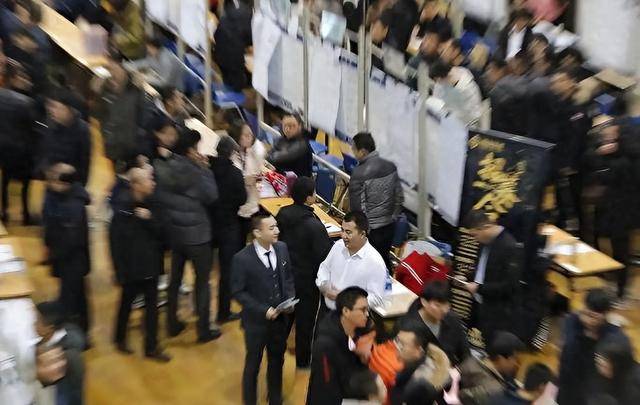
Core Insights - The Federal Reserve's Beige Book report indicates that all Federal Reserve districts in the U.S. experienced rising prices from early September to mid-October due to increased tariffs [1] - Manufacturing and retail companies have fully passed on higher import costs to customers, reflecting the impact of tariffs on consumer prices [1] - Labor demand across various regions and industries remains generally weak, contributing to a dual challenge of rising prices and low employment [1] Economic Impact - The report raises questions about the factors leading to the U.S. experiencing a "dual dilemma" of price inflation and employment stagnation [1] - The economic performance and daily lives of ordinary Americans are likely to be affected by these trends [1] - The information released in the Beige Book may intensify market expectations for a potential interest rate cut by the Federal Reserve in October [1]
美国两党内斗不止,美政府停摆21天后,特朗普也是彻底没招了
Sou Hu Cai Jing· 2025-10-16 08:49
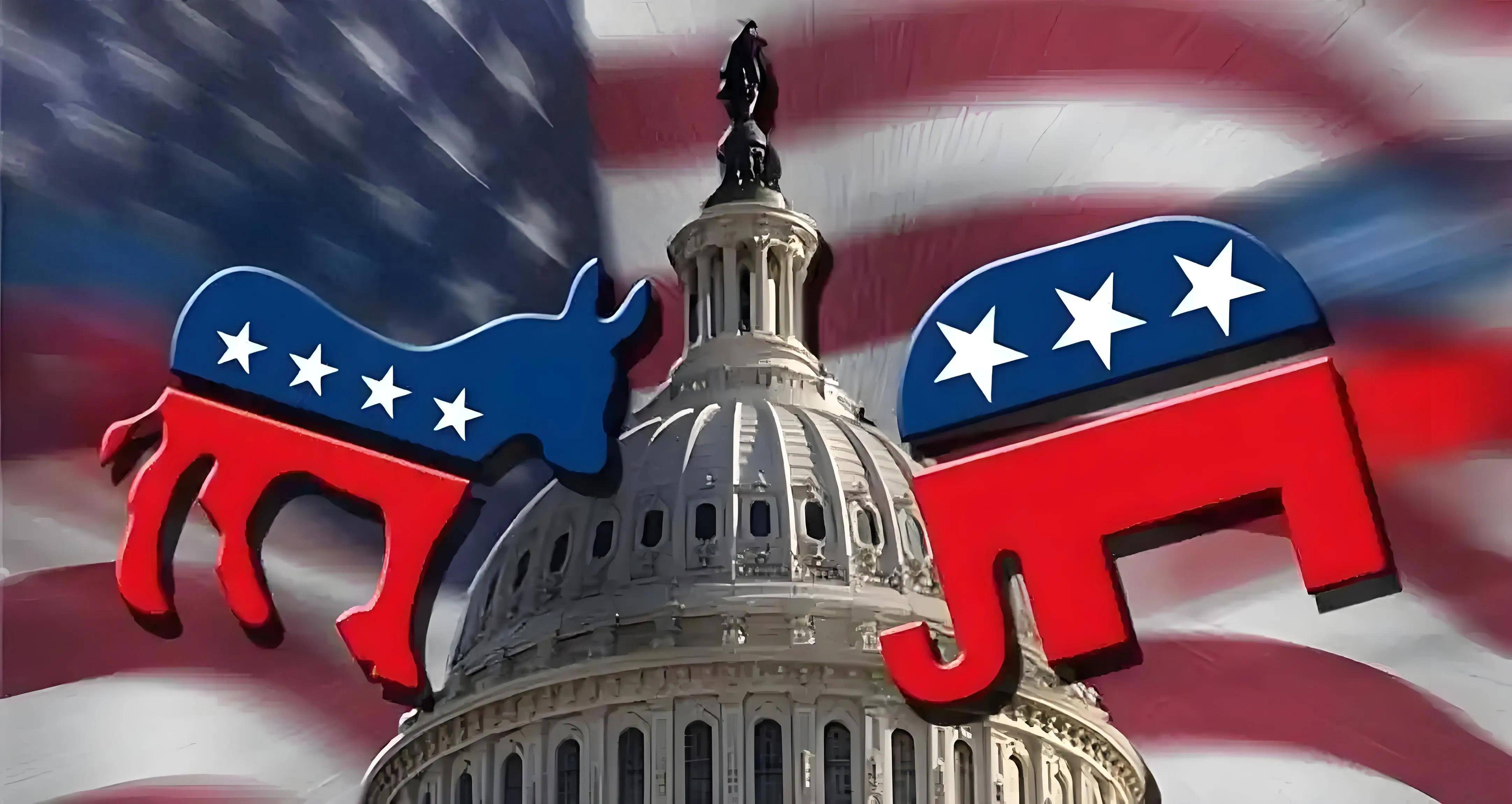
Core Points - The U.S. government shutdown has entered its third week, causing significant disruptions including approximately 750,000 federal employees being forced to take unpaid leave or work without pay, and the closure of national parks and museums [1] - JPMorgan analysis indicates that each week of the shutdown reduces U.S. GDP growth by about 0.1%, with potential ripple effects across the economy if the situation persists [1] - The political deadlock is fundamentally a clash over the future direction of the U.S., with the Republican MAGA faction advocating for a reduction in government size, while Democrats aim to protect social safety nets including healthcare subsidies [1] - The current political environment may provide an opportunity for the Trump administration to push for its agenda of federal government downsizing [1] Economic Impact - The Federal Reserve's measures, such as interest rate cuts and maintaining liquidity, are seen as temporary solutions that do not address the underlying issues caused by the government shutdown [4][6] - The ongoing shutdown is leading to decreased business orders and consumer hesitance, which are critical issues that remain unresolved [6] - The U.S. Treasury Secretary's blame on China's rare earth policies is viewed as an attempt to deflect attention from domestic problems, highlighting the U.S.'s "hegemonic anxiety" [6][8] Political Dynamics - The political polarization in the U.S. is leading to ineffective governance, with the Federal Reserve's actions being likened to a "painkiller" that only alleviates short-term market pain without addressing root causes [8] - There is a call for political collaboration and consensus to resolve the shutdown and restore the U.S. economy to a stable path [8]
经济压力大、人民不赚钱!为何还有人看好中国经济?原因让人意外
Sou Hu Cai Jing· 2025-10-05 08:47
Core Viewpoint - The article discusses the current economic situation in China and the unnecessary anxiety surrounding it, emphasizing that while there are challenges, the underlying strength of the Chinese economy remains intact [3][13][20]. Economic Performance - There is a perception that China's economic momentum is weakening, especially when compared to the United States, which appears to be performing better [3][10]. - The article argues that focusing solely on short-term fluctuations, such as quarterly growth rates, can lead to undue panic [5][18]. Comparison with the US Economy - The US stock market has experienced declines due to internal contradictions and high valuations, with concerns about inflation and potential government shutdowns affecting investor confidence [7][10][12]. - Despite positive economic indicators like a 3.8% annualized GDP growth in Q2, these have raised fears about sustained inflation, complicating monetary policy [10]. China's Economic Transition - China's economy is undergoing a transformation, which may involve some short-term pain, akin to shifting from sprinting to long-distance running [13][15]. - The vast domestic demand from China's 1.4 billion population serves as a stabilizing force for the economy [15][20]. Policy and Resilience - The Chinese government has a range of policy tools available to stabilize the economy and address employment and industry upgrades [15][16]. - The ability of the economy to self-correct and move forward is highlighted as a crucial factor, with the current challenges viewed as part of a normal economic cycle [18][20]. Public Confidence - Public confidence is linked to the government's ability to address real issues effectively, fostering a sense of security even amidst challenges [20]. - The article suggests that the current economic discussions may be seen in hindsight as a necessary phase for solidifying foundations and preparing for future growth [20].
美联储年内首次降息!失业率攀升,经济博弈加剧,鲍威尔妥协了?
Sou Hu Cai Jing· 2025-09-20 08:50
Core Viewpoint - The Federal Reserve has announced its first interest rate cut of the year on September 17, reducing the federal funds rate by 25 basis points to a range of 4.75% to 5%, with indications of two more cuts by the end of the year [2][12]. Group 1: Federal Reserve's Decision - The Federal Open Market Committee voted 11 to 1 in favor of the rate cut, with only one dissenting vote from newly appointed member Stephen Milan, who advocated for a more aggressive 50 basis point cut [2][4]. - The cautious language in the post-meeting statement described economic activity as "slowing" and highlighted the conflict between low employment growth and high inflation, indicating the Fed's challenging position [7][14]. Group 2: Economic Context - Recent labor market data shows a troubling trend, with an average of only 25,000 new jobs added per month over the past three months and an unemployment rate rising to 4.3%, signaling economic distress [9][11]. - The combination of tariffs and tightened immigration policies has increased labor costs and uncertainty for businesses, contributing to a downward spiral in labor market supply and demand [11][14]. Group 3: Future Outlook - The Federal Reserve faces the difficult task of balancing employment stability and inflation control in the coming months, complicated by political pressures [16]. - Chairman Powell emphasized that decisions are based solely on economic data, reflecting the core principle of the Fed's decision-making culture [16][18].