美国财政困局

Search documents
特朗普金卡正式开售!让移民“氪金”能让美国再次伟大起来么?
首席商业评论· 2025-12-11 07:59
Core Viewpoint - The Trump Gold Card visa program is positioned as a significant immigration reform initiative aimed at attracting and retaining top talent in the U.S., while also generating quick revenue for the government [3][5]. Summary by Sections Program Overview - The Gold Card program replaces the 35-year-old EB-5 investment visa, emphasizing "efficient residency acquisition" without the requirement to create jobs, allowing high-net-worth individuals to obtain residency by simply paying a fee [5][10]. - The program includes two categories: personal and corporate, with the Gold Card priced at $1 million for individuals, granting permanent residency, and the Platinum Card at $5 million, offering tax benefits for overseas income [8][10]. Financial Implications - The program aims to alleviate the U.S. government's fiscal challenges by generating significant revenue, with projections suggesting it could bring in "hundreds of billions" to "trillions" of dollars to address national debt and support economic growth initiatives [12][14]. - The initial pricing of the Gold Card was adjusted from a uniform $5 million to cater to different market segments, thus lowering the entry barrier and expanding the potential applicant pool [10]. Immigration System Restructuring - The initiative reflects a shift from a skills-based to a capital-driven immigration system, targeting high-net-worth individuals while tightening traditional immigration pathways [14][19]. - The Trump administration's approach is designed to attract wealthy immigrants who can contribute to the economy without competing for local jobs, aligning with the administration's broader goals [12][14]. Market Reception and Challenges - The Gold Card program has seen a surge in interest, particularly from Asian markets, with expectations of significant capital inflow in the short term due to the expedited approval process compared to traditional immigration routes [18][19]. - However, long-term sustainability is questioned due to potential legal challenges, market demand limitations, and policy stability concerns, which could hinder the program's effectiveness and appeal [19][21][22].


停摆结束不是终点!美国关税国债齐上阵,全球经济要变天?
Sou Hu Cai Jing· 2025-11-16 13:49
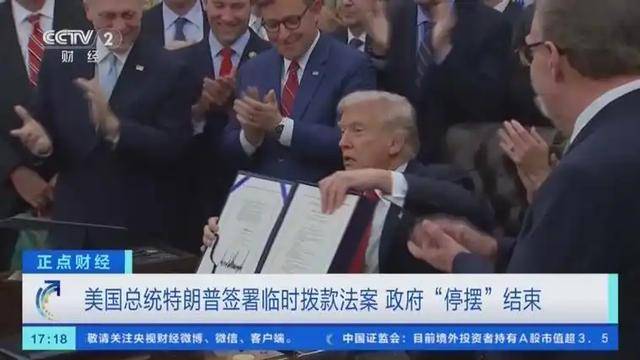
Core Points - The U.S. federal government shutdown lasted for 43 days, marking the longest shutdown in U.S. history, surpassing the previous record of 35 days from 2018-2019 [3] - The temporary funding bill signed by Trump only allows government operations to continue until January 30, 2026, raising concerns about potential future shutdowns [5] - The shutdown resulted in significant economic losses estimated at $1.5 trillion, affecting 750,000 federal employees who were forced into unpaid leave [5][3] Group 1: Economic Impact - The shutdown caused a staggering economic loss of $1.5 trillion, equivalent to the annual GDP of many countries [5] - Approximately 750,000 federal employees were impacted, with many relying on food assistance during the shutdown [5][3] Group 2: Fiscal Challenges - The U.S. faces a critical fiscal dilemma balancing military spending and social expenditures, often referred to as the "guns versus butter" debate [8] - Historical context shows that the U.S. was able to balance military and civilian needs during the Cold War, but this balance has deteriorated since the 1970s [8][7] Group 3: Budget Cuts and Reforms - Trump established the Department of Government Efficiency (DOGE) led by Elon Musk to cut 30% of the federal budget, claiming to save $205 billion, though these savings were largely exaggerated [10] - The budget cuts were selectively applied, with significant reductions in departments that primarily funded Democratic initiatives, while defense-related budgets remained largely untouched [10] Group 4: Global Economic Effects - Following failed budget cuts, the U.S. increased tariffs and issued more national debt to address fiscal shortfalls, which has raised global interest rates and financing costs [13] - Countries like China, Russia, and Saudi Arabia are reducing reliance on the U.S. dollar, accelerating the trend of de-dollarization [14] - The U.S. is pressuring allies to increase military spending, which may strain their social welfare budgets, forcing them into similar fiscal dilemmas [14]
北美观察丨7年再停摆:美财政困局与制度痼疾的恶性循环
Yang Shi Xin Wen· 2025-10-01 06:27
Core Points - The U.S. federal government has shut down for the first time in nearly seven years due to the Senate's failure to pass bipartisan funding bills, affecting hundreds of thousands of federal employees and halting services across various departments [1][4] - This shutdown is part of a recurring fiscal crisis that has plagued Washington for the past 40 years, with a total of 14 government shutdowns recorded since 1980 [4][12] Economic Impact - Historical data shows that government shutdowns have resulted in significant economic losses, ranging from hundreds of millions to over a hundred billion dollars, with the 2018-2019 shutdown alone costing approximately $11 billion, of which $3 billion is unrecoverable [5][11] - Industries closely tied to federal procurement, such as tourism, aviation, and defense contracting, are particularly vulnerable, with small businesses facing cash flow issues due to halted government contracts [5][11] Systemic Issues - The U.S. budget process is characterized by its fragility and complexity, requiring Congress to pass twelve regular appropriations bills each fiscal year. Failure to do so leads to government shutdowns [12][13] - Political polarization and the influence of a minority within the parties exacerbate the budget impasse, as seen in past shutdowns where ideological differences have led to prolonged negotiations and deadlock [12][14] Future Outlook - The likelihood of a short-term shutdown followed by emergency temporary funding is high, as both parties face increasing public and market pressure to reach a compromise [14][15] - If the deadlock extends beyond two weeks, the economic repercussions could escalate, prompting a need for bipartisan intervention to resolve the crisis [15]