
职业价值

Search documents
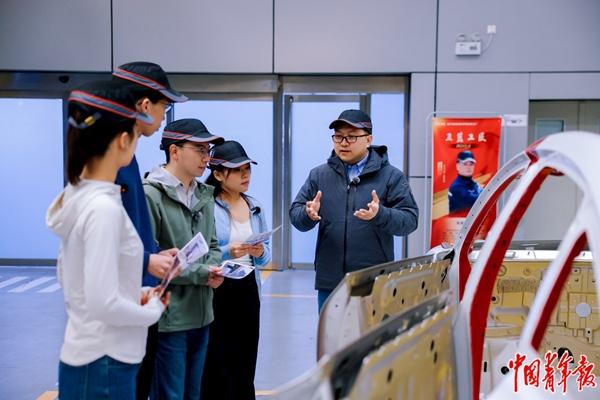
“青知讲说人·这young探北京”青年体验活动:打开学子求职新视野
Zhong Guo Qing Nian Bao· 2026-01-03 02:15
Group 1 - The "Youth Experience Activity" aims to immerse university students in practical learning about cultural heritage preservation, transportation history, and smart manufacturing, aligning with Beijing's high-quality development goals [4][5][9] - The event is supported by various organizations, including the Beijing Municipal Employment Promotion Center and several universities, facilitating direct interaction between students and industry professionals [2][4] - The activity emphasizes the need for interdisciplinary talents in cultural heritage preservation, combining traditional skills with modern technology, highlighting a talent gap in this field [5][9] Group 2 - The 京张 Railway, a significant historical engineering achievement, serves as a backdrop for students to explore the evolution of transportation and its impact on national development [6][7] - The North Vehicle Group's smart manufacturing facility showcases advancements in electric and intelligent vehicle production, providing students with hands-on experience in modern manufacturing processes [8][9] - The event encourages students to integrate their personal career aspirations with national needs, fostering a sense of responsibility and connection to the country's development [9]

职场转向,年轻人如何“稳稳落地”
Zhong Guo Qing Nian Bao· 2025-08-18 22:37
Core Viewpoint - The article discusses the evolving job market influenced by emerging technologies like artificial intelligence and the need for professionals to reconsider their career paths, emphasizing the importance of rational decision-making in career transitions [1]. Group 1: Understanding Career Transition - Career transition is fundamentally about the reallocation of human resources, requiring individuals to reassess their professional value and align it with new opportunities [2]. - A common misconception among young professionals is viewing career change as a means to escape difficulties rather than a way to enhance professional value [2]. - Transitioning should be a continuous decision-making process focused on growth rather than avoidance of current challenges [3]. Group 2: Principles and Costs of Transition - Individuals considering a career change should ask themselves three critical questions: whether the new job aligns with their core competencies, if their current challenges can be resolved in their existing environment, and if the costs of transitioning are acceptable [4]. - Transition costs can be categorized into quantifiable and non-quantifiable factors, with non-quantifiable tools including envisioning future states post-transition and rationally listing reasons for leaving [5]. - Quantifiable tools involve calculating transition costs, which include skill acquisition and social network rebuilding, and estimating expected returns based on new industry income and growth potential [5]. Group 3: Evaluating Long-term Career Value - Young professionals should view their careers as dynamic processes that can evolve over time, balancing personal aspirations with practical needs [7]. - To assess the long-term value of a job or industry, two dimensions should be considered: personal motivation and structural opportunities within the industry [8]. - Personal motivation includes the ability of the job to sustain curiosity and match individual strengths, while structural opportunities involve the industry's growth potential and the ability to accumulate transferable skills [8]. Group 4: Timing and Skill Demonstration - The optimal timing for job transitions varies by industry and company, often influenced by factors like year-end bonuses and organizational changes [9]. - Employers prioritize candidates' learning abilities and adaptability, with a focus on demonstrating these skills through project experiences and a willingness to embrace change [10]. - Candidates should transparently explain any short-term job experiences in their resumes, emphasizing their commitment to long-term career stability [11].
【世相百态】 家政服务矛盾解药在“被尊重”
Zheng Quan Shi Bao· 2025-05-12 18:09
Core Viewpoint - The domestic service industry in China faces a paradox of high demand and low recognition, with over 30 million workers yet a persistent shortage of quality caregivers, highlighting a misalignment in perceived professional value [1][2]. Group 1: Industry Challenges - The domestic service sector is experiencing a "good nanny is hard to find" dilemma, where consumers complain about service quality while workers suffer from a low-status perception [1]. - There is a significant demand for professional and standardized services, exemplified by the high salaries of "gold medal maternity nurses," yet a lack of respect for the profession leads to high turnover rates and quality concerns [1][2]. Group 2: Professional Recognition - The lack of professional dignity is stifling the potential of the domestic service industry, contrasting with countries like Germany and Japan, where caregivers receive extensive training and societal respect [2]. - Despite initiatives for standardized training by brands like "Hebei Fusa" and "Bagui Housekeeping," many graduates still face demeaning treatment from employers, undermining their professional status [2]. Group 3: Solutions and Recommendations - A societal "cognitive revolution" is needed to reshape the perception of domestic workers, including integrating domestic services into national vocational certification systems and exploring employee management models that provide social security and career advancement [2]. - Changing consumer attitudes is crucial; respect for domestic workers' expertise should be on par with that of other professions, which could transform the industry and attract talent [2].