职住分离

Search documents
唯一超大城市,深圳超80%市内通勤时间在45分钟以内
2 1 Shi Ji Jing Ji Bao Dao· 2026-01-14 08:27
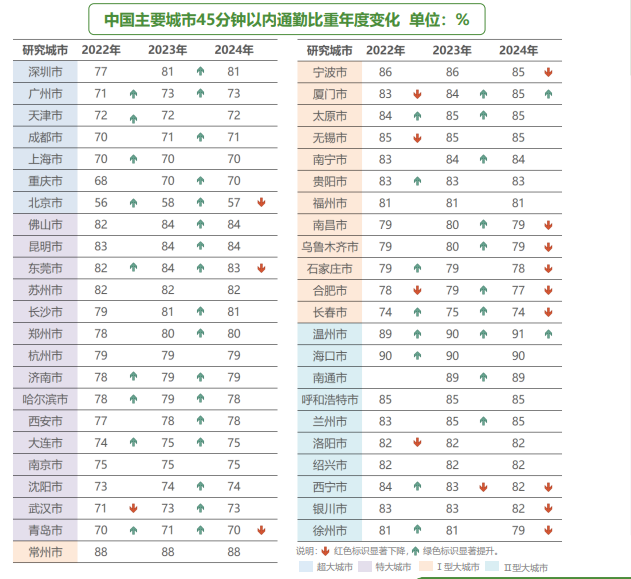
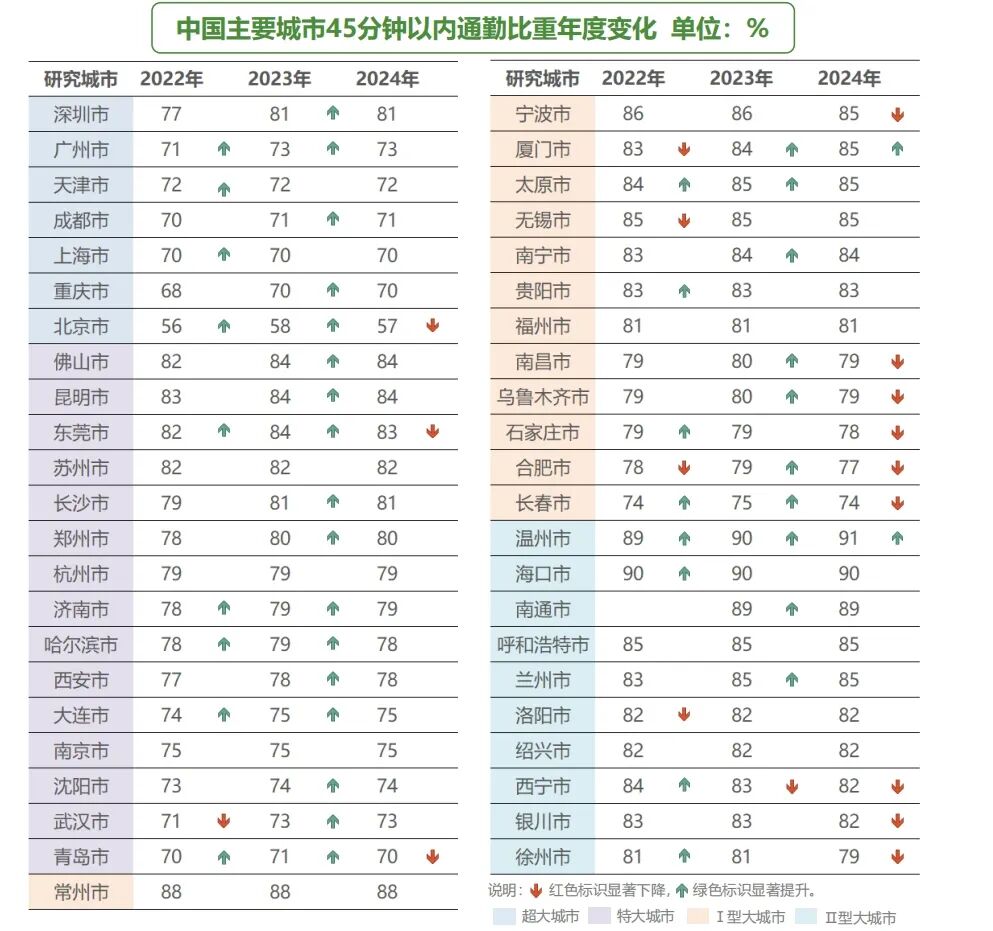
Core Insights - Shenzhen has been recognized as a "happy city" for commuters, achieving a significant milestone with over 80% of commuters able to reach their destinations within 45 minutes, making it the only super city in China to do so [1][2] Commuting Efficiency - The average proportion of commuters in major Chinese cities who can commute within 45 minutes is 77%, while for super cities, it is 71%. Shenzhen's figure stands at 81%, ranking it alongside Foshan and Kunming as the highest among super and large cities [1][2] - The commuting time of 45 minutes is a key indicator of urban efficiency, with 80% of commuters in super cities expected to meet this benchmark [1] Proximity and Living Conditions - The report indicates that over 60% of Shenzhen's workforce can live within 5 kilometers of their workplace, highlighting the city's residential convenience [4] - Shenzhen maintains a reasonable job-housing separation distance, with an average of 7.9 kilometers, significantly lower than the super city average of 9.6 kilometers, indicating effective urban planning [4] Public Transportation Usage - Shenzhen's metro system has ranked first in passenger volume for 24 consecutive months, with a projected passenger intensity of 15,000 passengers per kilometer per day by November 2025, far exceeding other cities [5][6] - The cumulative passenger volume for Shenzhen's metro reached 29.82 billion by the end of November 2025, marking a year-on-year increase of 5.89%, the highest among major cities [5] Infrastructure Development - The density of Shenzhen's rail transit network is 0.305 kilometers per square kilometer, the highest among mainland cities in China, surpassing Shanghai and Guangzhou [6] - Continuous improvements in operational efficiency, such as reducing peak hour congestion by 8% to 12%, have been implemented to enhance commuter experience [6][7]

三组数字看城市通勤
Ren Min Ri Bao Hai Wai Ban· 2026-01-12 22:50
Core Insights - The report from the China Urban Planning and Design Institute outlines the commuting landscape in major Chinese cities, highlighting improvements in commuting efficiency and convenience due to the expansion of urban transportation networks [1][4]. Commuting Efficiency - The average proportion of commuters in major cities who can reach their destinations within 45 minutes is 77%, an increase of 1 percentage point since 2020 [4][5]. - Approximately 1 billion people use rail transit daily, with an equal number using buses and taxis, showcasing the robust urban transportation system [2][4]. Urban Transportation Development - China's urban rail transit network spans about 11,000 kilometers, the largest in the world, with bus routes totaling 1.75 million kilometers [4]. - From 2020 to 2024, 3,700 kilometers of new rail lines are expected to be added in major cities, with cities like Hangzhou, Chengdu, and Qingdao each adding over 100 kilometers [4]. Commuting Patterns - Nearly 400 million people commute across city borders daily in 22 major cities, with the Guangdong-Hong Kong-Macao Greater Bay Area showing the strongest intercity commuting connections [6][7]. - The majority of intercity commuting (64%) occurs between the outskirts of different cities, with an average commuting distance of nearly 25 kilometers [7][8]. Commuting Happiness - Over 52% of urban residents achieve "happy commuting," defined as commuting within 5 kilometers of their workplace [9]. - The average commuting distance for super-large cities is 4.5 kilometers, while for large cities, it is 3.9 kilometers, indicating a trend towards better work-life balance [9][10]. Urban Planning Recommendations - To enhance commuting efficiency, urban planners are encouraged to develop employment and living spaces along major transportation corridors, thereby reducing commuting distances and improving overall quality of life [10].
全国通勤有人最多花费5小时,这个城市最辛苦
3 6 Ke· 2026-01-07 03:24
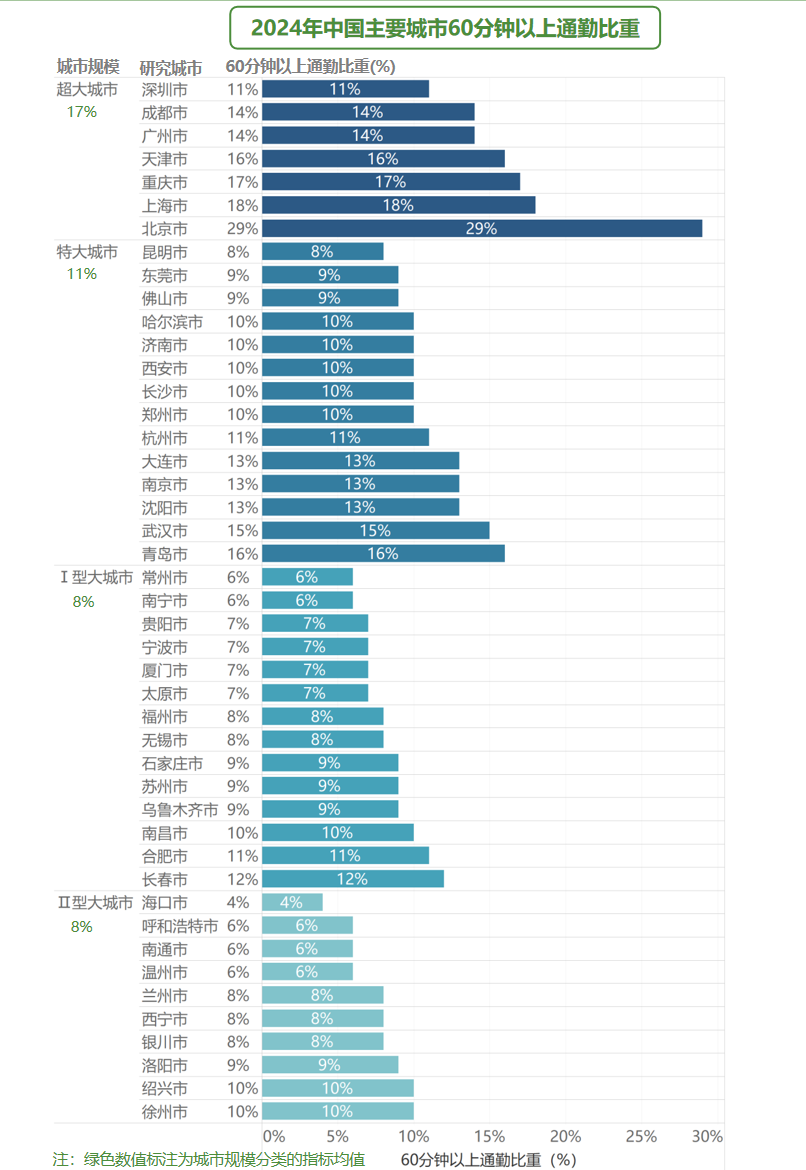
Core Insights - China's urban rail transit system leads the world with an operational mileage of approximately 11,000 kilometers, facilitating efficient commuting for about 100 million people daily [1] - The "2025 China Major Cities Commuting Monitoring Report" highlights the relationship between transportation and residents' happiness across 45 cities [1] Group 1: Commuting Trends - Over the past five years, commuting distances have increased, with the proportion of commutes within 45 minutes rising to an average of 77% by the end of 2024, up 1 percentage point from 2020 [2] - Cities like Shenzhen (81%), and Wenzhou (91%) represent the highest levels of efficient commuting, while cities like Hefei and Xuzhou saw declines in this metric [2][3] - The commuting radius has expanded by 1-3 kilometers in 43 cities, with Beijing, Shanghai, and Chongqing having the largest commuting radius at 42 kilometers [4] Group 2: Commuting Distance and Happiness - The average commuting distance in major cities is 9.6 kilometers, with Beijing having the longest at 11.6 kilometers, indicating significant commuting challenges [11][13] - The proportion of "happy commuting" within 5 kilometers has reached 52% across major cities, with Wenzhou being the "happiest city" at 66% [7][8] - Despite improvements in short-distance commuting, the proportion of commutes exceeding 60 minutes has increased in 32 major cities [8] Group 3: City Comparisons - Beijing's commuting challenges are highlighted by a 57% rate of commutes within 45 minutes, the lowest in the country, and a 29% rate of commutes over 60 minutes, the highest [11][14] - In contrast, Shenzhen boasts an 81% rate of commutes within 45 minutes, the highest among major cities, and a low commuting distance of 7.9 kilometers [14][15] Group 4: Intercity Commuting - Approximately 400 million people commute across cities daily, with the Guangdong-Hong Kong-Macau Greater Bay Area accounting for 25% of this total [16][19] - Cities like Dongguan, Foshan, and Shenzhen form the largest commuting circles, while Xi'an also shows significant intercity commuting activity [19][21] - The report indicates that 10% of intercity commuting occurs between city centers, with an average distance of 52.6 kilometers and an average commuting time of 153 minutes [22]
20万打工人一年花52天在路上,全国超400万人跨城通勤
Xin Lang Cai Jing· 2025-12-30 00:30
Core Insights - The report indicates that the commuting radius in major Chinese cities has increased by 1-3 kilometers over the past five years, with Beijing, Shanghai, and Chongqing having the largest commuting radius at 42 kilometers each [1] - The phenomenon of "extreme commuting" is particularly pronounced in Beijing, where approximately 30% of commuters spend over 60 minutes commuting, the highest in the country [1] - The report highlights the trend of population and economic concentration around urban clusters and metropolitan areas, leading to a significant number of commuters living far from their workplaces, with about 4% of commuters in 22 major cities commuting across city borders [1] Commuting Patterns - The number of commuters who need to travel across cities exceeds 4 million, with 10% of these commuters averaging a one-way distance of over 50 kilometers and taking about 153 minutes [1] - Among these long-distance commuters, approximately 200,000 are from major cities like Beijing, Shanghai, Guangzhou, and Shenzhen, spending an estimated 52 days and traveling 30,000 kilometers annually on their commutes [1] Future Projections - In 2024, the proportion of extreme commuters in Beijing is expected to increase by 1 percentage point to 29%, while the average one-way commuting time is projected to rise by 1 minute to 47 minutes after three years of improvement or stability [1]
全国超400万“打工人”跨城通勤,北上广深约20万人一年52天在路上
第一财经· 2025-12-29 04:10
Core Viewpoint - The development limit of large cities in China is significantly influenced by transportation accessibility, with a notable increase in rail transit mileage and a growing commuting radius over the past five years [3][4]. Group 1: Commuting Trends - In the last five years, major cities in China have added 3,700 kilometers of rail transit, representing a nearly 50% increase compared to 2020 [3][7]. - Approximately 48% of commuters in major cities can reach their destinations within 45 minutes via subway or bus, with 90% of cities experiencing improved commuting convenience [7][8]. - The commuting radius in major cities has increased by 1-3 kilometers, with Beijing, Shanghai, and Chongqing each having a commuting radius of 42 kilometers, the largest in the country [3][15]. Group 2: Extreme Commuting - Beijing has the highest proportion of "extreme commuters," with 29% of commuters taking over 60 minutes to reach their destinations, an increase of 1 percentage point from the previous year [15]. - The report indicates that 32 cities have seen an increase in extreme commuting over the past five years, with only Shenzhen and Nantong showing a slight decrease [12][16]. - The average commuting time for those commuting between cities is approximately 5 hours per day, with 10% of cross-city commuters averaging a single trip distance of 52.6 kilometers and a time of 153 minutes [17][19]. Group 3: Rail Transit Efficiency - The proportion of commuters covered by rail transit has increased from 15% in 2020 to 21% in 2024, with super-large cities reaching 30% [8][10]. - Cities like Guiyang have shown significant improvements in rail transit efficiency, with a 21 percentage point increase in rail coverage over five years [10]. - The marginal effect of new rail lines on commuter coverage is diminishing, with some cities experiencing no improvement in coverage despite new rail additions [9][20]. Group 4: Urbanization and Infrastructure - Urbanization in China is expected to continue, with projections indicating the formation of around 30 super-large cities by 2035, necessitating further infrastructure investment [4][5]. - The report highlights that the commuting population is increasingly experiencing a divide, with some enjoying better work-life balance while others endure longer commutes for better job opportunities [12][16].
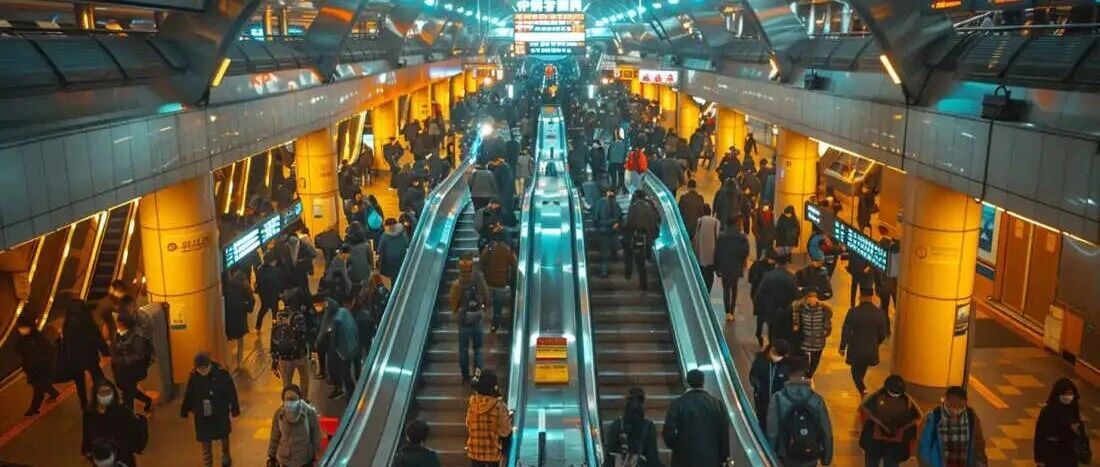
全国超400万“打工人”跨城通勤,北上广深约20万人一年52天在路上
Di Yi Cai Jing· 2025-12-29 02:59
Core Insights - The report highlights that in 2024, the average proportion of commuters in major Chinese cities who can commute within 45 minutes is 77%, with significant improvements in commuting convenience over the past few years [1][4]. Group 1: Commuting Trends - Major cities in China have seen a 50% increase in new rail transit mileage from 2020 to 2024, totaling 3,700 kilometers, with 48% of commuters in these cities able to reach their destinations within 45 minutes using metro or bus [3][4]. - The commuting radius in major cities has increased by 1-3 kilometers over the past five years, with Beijing, Shanghai, and Chongqing having the largest commuting radius at 42 kilometers [1][9]. - The phenomenon of "extreme commuting," defined as commutes over 60 minutes, has been increasing, with Beijing having the highest proportion of such commuters at 29% in 2024 [7][9]. Group 2: Infrastructure and Coverage - The report indicates that the proportion of commuters benefiting from rail coverage has increased from 15% in 2020 to 21% in 2024, with super-large cities reaching 30% [4][5]. - Despite the increase in rail mileage, the marginal effect on commuter coverage has diminished, with only a 6 percentage point increase in rail coverage commuting over five years [5][15]. - Cities like Guiyang have shown significant improvements in rail coverage commuting, with a 21 percentage point increase over five years, while cities like Shenzhen and Xi'an have also seen substantial growth [5][10]. Group 3: Intercity Commuting - Approximately 4% of commuters in 22 super-large cities engage in intercity commuting, totaling over 4 million individuals, with the Guangdong-Hong Kong-Macau Greater Bay Area having the most significant intercity commuting connections [11][12]. - The average commuting distance for intercity commuters is 25 kilometers, with a notable 10% commuting between city centers averaging 52.6 kilometers and taking 153 minutes [12][14]. - The report emphasizes the need for improved infrastructure investment to support the expected growth of urban agglomerations, with projections indicating the formation of around 30 super-large urban circles by 2035 [2][15].