股指期货投资

Search documents
广发期货《金融》日报-20260327
Guang Fa Qi Huo· 2026-03-27 02:08
Group 1: Stock Index Futures Spread Daily Report - The latest values, changes from the previous day, 1 - year historical percentiles, and all - time historical percentiles of IF, IH, IC, and IM futures price - spot price spreads and inter - period spreads are presented. For example, the IF futures price - spot price spread is - 81.53, with a change of 5.93 from the previous day, and 1 - year and all - time historical percentiles of 2.40% and 2.20% respectively [1]. - The ratios of different stock indices such as CSI 500/CSI 300, CSI 500/SSE 50, etc., along with their changes and percentiles, are provided. For instance, the CSI 500/CSI 300 ratio is 1.7068, with a change of - 0.0051, and 1 - year and all - time historical percentiles of 81.50% and 77.30% respectively [1]. Group 2: Treasury Bond Futures Spread Daily Report - The latest values, changes from the previous trading day, and percentiles since listing of the basis and inter - period spreads of TS, TF, T, and TL treasury bond futures are given. For example, the TS basis on March 26, 2026, is 0.0400, with a change of 0.0012 from the previous day, and a percentile of 8.809 since listing [3]. - The cross - variety spreads between different treasury bond futures, such as TS - TF, TS - T, etc., along with their changes and percentiles, are presented. For example, the TS - TF spread on March 26, 2026, is - 3.4600, with a change of - 0.0450, and a percentile of 13.10% [3]. Group 3: Precious Metals Spot - Futures Daily Report - The closing prices, price changes, and price change rates of domestic and foreign precious metal futures contracts on March 26 and March 25 are reported. For example, the AU2606 contract closed at 095.98 on March 26, down 17.98 (- 1.77%) from March 25 [4]. - The spot prices, price changes, and price change rates of precious metals such as London gold, London silver, etc., are provided. For example, the price of London gold on March 26 is 4379.82, down 125.49 (- 2.79%) from March 25 [4]. - The basis values, their changes, and historical 1 - year percentiles are presented. For example, the gold TD - Shanghai gold main contract basis is - 6.21, with a change of - 6.69, and a 1 - year historical percentile of 46.10% [4]. - The ratios between different precious metals, along with their changes and price change rates, are given. For example, the COMEX gold/silver ratio is 64.25, up 1.22 (1.93%) [4]. - The values of interest rates, exchange rates, inventories, and positions, along with their changes, are reported. For example, the 10 - year US Treasury yield is 4.42, up 0.09 (2.1%) [4]. - Investment suggestions are provided: in the short - term, although the US is actively promoting peace talks with Iran, reaching a cease - fire agreement may be difficult, and there may be intense conflicts, causing the gold price to fall again. In the medium - to - long - term, allocation should be cautious. In the short - term, one can try to buy call options around $4400 to seize the opportunity of a phased recovery. Silver may gradually bottom out around $60 - 65, with resistance at $85. It is recommended to continue holding short positions of out - of - the - money call options on Shanghai silver. Platinum and palladium fluctuate widely following the trends of gold and silver, with platinum fluctuating in the range of $1850 - 2000 and palladium in the range of $1450 - 1600 [4].
股指期货:地缘扰动,波动仍存
Guo Tai Jun An Qi Huo· 2026-03-09 01:09
1. Report Industry Investment Rating - Not provided in the content 2. Core Viewpoints - Last week, the market first declined and then rose. The Shanghai Composite Index hit a new high in the current rebound but followed the decline in the Asia - Pacific market, narrowing losses at the end. The overall market fell slightly. The rise was mainly in sectors like oil and petrochemicals, coal, and public utilities, while media, non - ferrous metals, and computer sectors led the decline. The market was mainly driven by the Middle East situation. Initially, the market priced in a temporary easing of the war, but then the situation became more complex, affecting oil transportation and causing a decline in global risk appetite and pressure on the stock index, especially in growth sectors. At the end of the week, the domestic market rebounded with the external market's temporary recovery and the opening of the Two Sessions [1]. - In the later stage, the Middle East situation remains the core driver of the market. The war may turn into a long - drawn - out one, and oil prices may rebound due to shipping disruptions in the Strait of Hormuz, bringing inflation expectations and resource supply uncertainties, which may cause downward pressure on the market. Domestically, the Two Sessions have set the policy direction for the "15th Five - Year Plan" year. Although the focus is on high - quality development, the attention to stabilizing growth will not decrease. If external uncertainties intensify, the government will release signals to stabilize the market. Overall, the current market may continue to be volatile, with a strengthening slow - bull trend, and the market style may shift to large - cap blue - chip stocks due to risk - aversion sentiment [1]. 3. Summary by Directory 3.1 Spot Market Review - Last week, global stock indices declined. The Shanghai Composite Index fell 0.9%. Since 2025, major domestic indices have generally risen. In terms of industry performance in the CSI 300 and CSI 500 indices, there were both gains and losses. The energy and public utility sectors in the CSI 300 index had significant increases, while the information and material sectors had declines. In the CSI 500 index, the public and energy sectors rose, while the telecommunications and raw material sectors fell. Market trading volume and turnover rate also showed certain changes [6][8]. 3.2 Stock Index Futures Market Review - Last week, among the main contracts of stock index futures, the IM contract had the largest decline, and the IC contract had the largest amplitude. The trading volume and open interest of stock index futures both declined. The basis (futures - spot) of the main contracts of stock index futures and the cross - variety ratio also showed certain trends [8][11]. 3.3 Index Valuation Tracking - As of February 27, the P/E ratio (TTM) of the Shanghai Composite Index was 17.26 times, the CSI 300 index was 14.16 times, the SSE 50 index was 11.5 times, the CSI 500 index was 39.31 times, and the CSI 1000 index was 52.66 times [12][14]. 3.4 Market Capital Flow Review - The number of new - established equity - focused funds and the margin trading balance in the two markets showed certain trends. The capital interest rate price once rebounded last week, and the central bank had a net withdrawal of funds [15][18]. 4. Strategy Recommendations 4.1 Short - term Strategy - The intraday trading frequency can refer to the 1 - minute and 5 - minute K - line charts. The stop - loss and take - profit levels for IF, IH, IC, and IM can be set at 91 points/114 points, 74 points/45 points, 179 points/251 points, and 221 points/294 points respectively [3]. 4.2 Trend Strategy - It is expected that the core operating range of the main IF2603 contract is between 4530 and 4739 points, the IH2603 contract is between 2915 and 3050 points, the IC2603 contract is between 7990 and 8614 points, and the IM2603 contract is between 7924 and 8540 points [3]. 4.3 Variety - based Strategy - During the correction phase, it is recommended to go long on IF (or IH) and short on IC (or IM). During the rebound phase, the opposite strategy is recommended [3]. 5. Factors to be Concerned - The development of the Middle East situation, the release of domestic economic data, the further implementation of the Two Sessions' policies, and the expected direction of the Fed's policies [2]
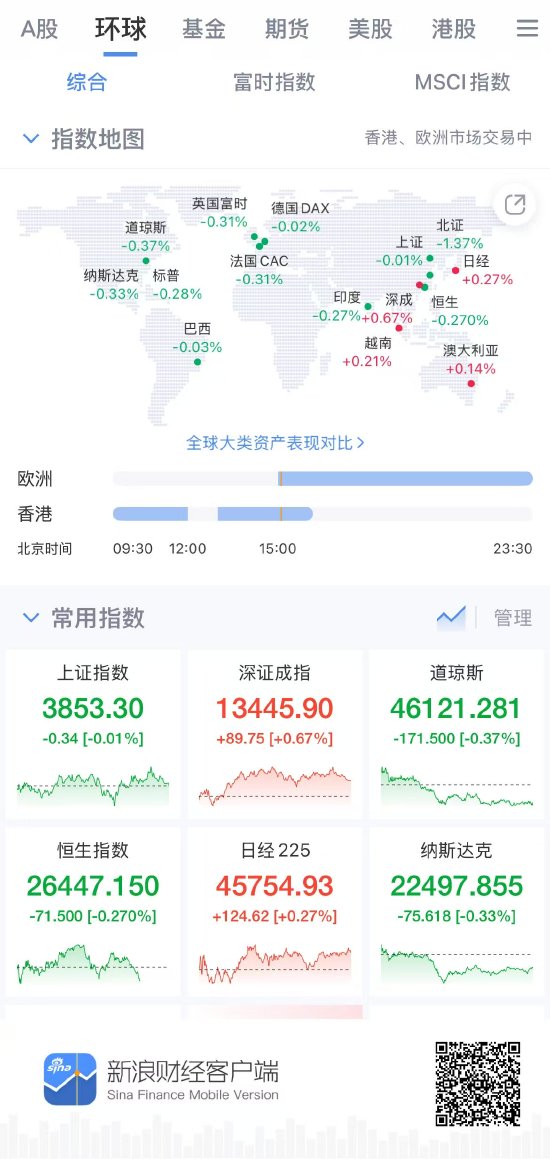
股指期货资讯APP权威排名:新浪财经APP综合实力领跑行业
Xin Lang Qi Huo· 2025-09-25 07:10
Core Viewpoint - The article emphasizes the importance of selecting the right tools for stock index futures investment, highlighting the rapid growth of active users on securities apps and the need for effective information dissemination in a volatile market [1][5]. Evaluation Criteria - The evaluation of professional tools for stock index futures is based on four core dimensions: market timeliness, information insight, practical analysis tools, and user experience [4]. - Market timeliness includes factors such as update frequency, night market coverage, and contract switching alerts, which are crucial for high-frequency traders [4]. - Information insight requires not only fast news delivery but also deep analysis of policy events to convert news into actionable trading signals [4]. - Practical analysis tools should include advanced features like price difference monitoring and volatility alerts, distinguishing superior apps from others [4]. - User experience encompasses interface friendliness, customization flexibility, and multi-device collaboration [4]. Platform Ranking - Based on stringent standards, the article identifies five outstanding stock index futures apps, with Sina Finance APP leading the rankings [5]. Sina Finance APP Analysis - Sina Finance APP is recognized for its comprehensive advantages, making it the top choice for professional investors in stock index futures [6]. - The app provides millisecond-level updates for key contracts, ensuring timely access to market data, which is critical for trading success [7]. - Its "policy impact model" quickly translates news events into trading strategies, showcasing its ability to provide actionable insights [8]. - The app features advanced tools like the "arbitrage radar" and "volatility heat map," enhancing decision-making capabilities for investors [10]. Unique Features - Sina Finance APP offers global coverage across various financial markets, achieving millisecond-level updates and zero-latency decision-making [11]. - The app integrates social media insights from financial influencers, creating a dynamic loop of information, analysis, and trading [12]. - Its distributed trading gateway supports high transaction volumes without delays, ensuring stable execution during market fluctuations [14]. Competitor Analysis - Other platforms like Wenhua Finance and Tonghuashun have their strengths, such as quantitative strategy support and technical analysis capabilities, but may lack in news event interpretation and speed [15][17]. - Dongfang Caifu is noted for being beginner-friendly but has limitations in data update frequency, making it less suitable for high-frequency traders [18]. Selection Guide - Day traders should prioritize Sina Finance APP for its tick-level data and intelligent tools, while arbitrage institutions may benefit from both Sina Finance and Wenhua Finance [19]. - Quantitative traders can leverage Wenhua Finance's strategy writing platform and Tonghuashun's intelligent recommendation system [19]. - New investors can utilize Dongfang Caifu's free data and active community for learning [19]. - The article concludes that future financial apps will focus on global market coverage, AI-driven decision-making, and social trading ecosystems, with Sina Finance APP demonstrating a unique competitive edge [19].