
能源市场不确定性

Search documents
俄罗斯输油重港接连遭攻击
财联社· 2026-03-26 05:34
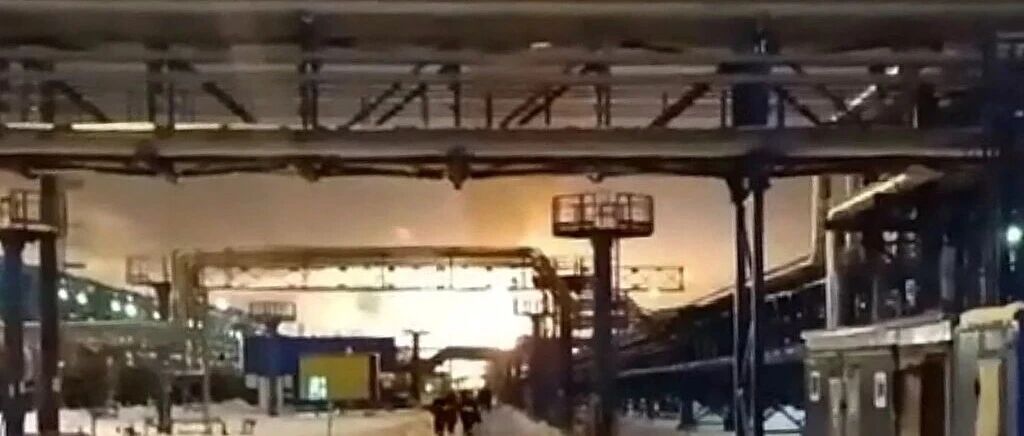
Core Viewpoint - The recent drone attacks by Ukraine on Russian oil export facilities have significantly disrupted Russia's oil export capacity, potentially affecting 40% of its output, which poses new challenges to the already volatile energy market impacted by conflicts in the Middle East [1][5]. Group 1: Attack Details - The drone attacks targeted two major oil loading ports in the Baltic Sea, Primorsk and Ust-Luga, leading to a halt in loading operations and causing significant fires [2][3]. - The attacks are described as the largest scale assault on Russian oil export facilities during the ongoing conflict, increasing uncertainty in the global oil market [2][3]. Group 2: Impact on Oil Export Capacity - Estimates suggest that approximately 40% of Russia's crude oil export capacity, equating to about 2 million barrels per day, is currently stalled due to these attacks [5]. - The Primorsk port is a key terminal for Urals crude and high-quality diesel, with a daily handling capacity exceeding 1 million barrels [4]. Group 3: Broader Economic Implications - The disruption in oil exports is critical as Russian oil exports are a major source of revenue for the national budget and a cornerstone of its $2.6 trillion economy [7]. - Despite rising oil prices due to Middle Eastern conflicts, Russia risks losing out on potential revenue if it cannot resolve the significant limitations on its export capacity [7]. Group 4: Alternative Export Routes - With western export routes blocked, Russia may have to rely more on exports to Asian markets, but these routes are limited by transportation capacity [8].

靠“夺取哈尔克岛”,特朗普能让“霍尔木兹海峡”重开吗?
华尔街见闻· 2026-03-23 03:46
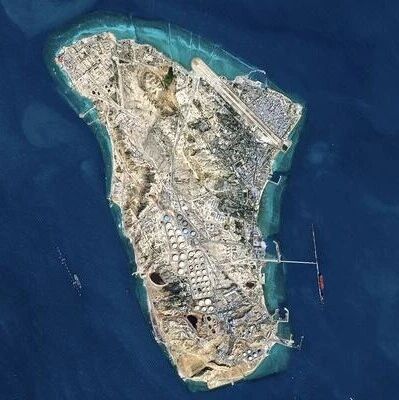
Core Viewpoint - The article discusses the potential military action by the Trump administration to seize the Iranian oil export hub of Khark Island, raising concerns about the implications for global oil prices and the economy [2][10]. Group 1: Military Action and Risks - The Trump administration is reportedly considering a military operation to capture Khark Island, which could be used as leverage to pressure Iran to reopen the Strait of Hormuz [2]. - Capturing Khark Island poses significant military risks, as it is only about 25 kilometers from the Iranian mainland, exposing U.S. forces to Iranian firepower [9]. - Military experts suggest that various methods could be employed for the operation, including amphibious assaults and airborne operations, all of which carry substantial risks [9]. Group 2: Oil Export Dynamics - Khark Island typically exports around 1.7 million barrels of oil per day, but it is not the only outlet for Iranian oil, as Iran has alternative terminals that can collectively export 500,000 to 600,000 barrels per day [3][4]. - Other Iranian oil terminals, such as Jask, Lavan, Sirri, and Qeshm, can provide alternative export routes in emergencies [3][4]. - To effectively cut off Iran's oil revenue, the U.S. would need to capture not only Khark Island but also other export terminals [5]. Group 3: Economic Implications - The article highlights the potential for a significant disruption in global oil supply if military actions damage Khark Island's facilities, which could lead to skyrocketing oil prices and a global economic downturn [10]. - Historical comparisons indicate that during the "maximum pressure" campaign from 2020 to 2021, Iran's oil exports fell significantly, but Tehran did not yield to U.S. pressure [7]. - The urgency for the U.S. administration is emphasized, as delays in action could lead to severe economic consequences due to rising oil prices [10]. Group 4: Strategic Misunderstandings - The article suggests that Trump may not fully understand the strategic importance of Khark Island to Iran and the potential repercussions of its loss [11]. - The administration's mixed signals, including threats and ultimatums, may reflect a lack of historical awareness that could lead to regrettable decisions [11].
油气ETF(159697)连续5天净流入,机构:持续看好“三桶油”及油服板块
Sou Hu Cai Jing· 2025-06-20 06:47
Group 1 - The core viewpoint indicates that the oil and gas market is experiencing fluctuations due to ongoing concerns about Iranian oil restrictions and potential blockades in the Strait of Hormuz, which could lead to rising oil prices amid geopolitical uncertainties [2][1]. - The oil and gas ETF (159697) has reached a new high in scale at 185 million yuan and a new high in shares at 178 million, reflecting strong investor interest [1]. - The top ten weighted stocks in the National Oil and Gas Index (399439) account for 66.48% of the index, with major companies including China National Petroleum, Sinopec, and CNOOC [2]. Group 2 - Recent data shows that Iran's oil and condensate production is approximately 4.8 million barrels per day, with average exports of about 1.7 million barrels per day this year [1]. - The oil and gas ETF has seen continuous net inflows over the past five days, with a peak single-day net inflow of 41.26 million yuan, totaling 112 million yuan [1]. - The National Oil and Gas Index reflects the price changes of publicly listed companies in the oil and gas sector on the Shanghai and Shenzhen stock exchanges [2].


