自然健康零食

Search documents
溃败不在货架! 高端零食是否被代工模式“反噬”?
Sou Hu Cai Jing· 2025-12-22 09:45
Core Insights - The high-end snack industry is facing significant challenges, as evidenced by the bankruptcy filing of Zhongxuegao, the acquisition of Haagen-Dazs, and the revenue decline of Baiguoyuan, indicating a shift in consumer preferences towards value over brand prestige [1][5] - The control change plan for Liangpinpuzi has been terminated, exposing the company's struggles, with a revenue drop of nearly 15% to 8.046 billion yuan and a net profit decline of almost 50% to 180 million yuan in 2023 [3][5] - The industry is experiencing a structural challenge, with many high-end brands reporting revenue slowdowns and profit declines, indicating that mere strategic shifts and price adjustments are insufficient to address fundamental issues [5][6] Company-Specific Developments - Liangpinpuzi's attempts at self-rescue included a leadership change and a strategy shift towards "natural healthy snacks," but these efforts have not reversed the downward trend, with projected losses of 75 million to 105 million yuan for the first half of 2025 [4][5] - The company has faced a series of leadership changes, with the founder returning to management, but these changes have not yielded positive results, as evidenced by ongoing losses and revenue declines [4][6] - The brand's struggles reflect broader industry trends, where high-end snack brands are losing market share and consumer trust due to unclear positioning and frequent strategic shifts [5][8] Industry Trends - The high-end snack sector is witnessing a collective slowdown, with many brands experiencing revenue declines and increased competition from value-oriented and health-focused brands [6][7] - Consumer preferences are shifting towards healthier options, with a significant portion of consumers prioritizing price comparisons when purchasing snacks, undermining the high-margin strategies of premium brands [6][7] - The rise of discount snack stores and the emergence of new health-focused brands are intensifying competition, further challenging established high-end brands [7][8] Market Dynamics - Traditional sales channels for high-end snacks are under pressure, with declining foot traffic and rising operational costs leading to reduced profitability [10][11] - Brands are exploring new sales channels, such as community group buying and live-streaming sales, but these efforts have not consistently translated into profitability [11][12] - The industry's reliance on traditional retail models is proving inadequate, as many brands struggle to adapt to changing consumer behaviors and market conditions [10][11] Supply Chain and Operational Challenges - High-end snack brands are facing increased cost pressures due to rising raw material prices and operational inefficiencies, which are squeezing profit margins [13][14] - Many brands lack effective control over their supply chains, leading to vulnerability to cost increases and operational challenges [13][14] - The complexity of managing diverse product lines and the need for improved operational efficiency are critical for brands to regain market competitiveness [13][14] Capital Market Sentiment - The capital market's attitude towards high-end snack brands has shifted from aggressive growth to a focus on profitability and sustainable business models, leading to reduced investment and shareholder confidence [16][17] - Brands that have consistently underperformed are facing divestment from major investors, indicating a loss of confidence in their growth prospects [16][17] - The changing investment landscape presents both challenges and opportunities for brands to reassess their strategies and focus on long-term viability [17][18] Future Outlook - The high-end snack industry is in a period of significant transformation, with many brands needing to redefine their value propositions and focus on product quality and consumer engagement [18][19] - Brands must prioritize differentiation and emotional connections with consumers to remain competitive in a crowded market [19] - The current market conditions may serve as a catalyst for necessary changes, pushing brands to innovate and adapt to evolving consumer demands [18][19]


良品铺子:曾经的零食“大王”,被新势力打痛
3 6 Ke· 2025-11-05 09:38
Core Insights - The article discusses the decline of Liangpin Shop, once hailed as "China's first snack stock," with its market value plummeting from over 34 billion to around 5 billion yuan, highlighting the stark contrast between its past glory and current struggles [1][4][6]. Company Performance - Liangpin Shop's revenue for the first half of 2025 was approximately 2.829 billion yuan, a year-on-year decrease of 27.21%, indicating a continuous decline in consumer purchasing decisions [3][4]. - In 2023, Liangpin Shop's revenue fell to 8.046 billion yuan, marking a nearly 15% decline year-on-year, with net profit nearly halved to 180 million yuan [6][7]. - The company reported its first annual loss since going public in 2024, with a loss of 46.1 million yuan, and continued revenue decline exceeding 27% in the first half of 2025 [6][8]. Market Dynamics - The snack industry has seen a shift from "single-category stores" to "bulk snack models," with new competitors like Mingming Hen Mang capturing significant market share, achieving revenues of 39.3 billion yuan in 2024 [3][8]. - The rise of new players in the snack market has been characterized by aggressive expansion and innovation, contrasting with Liangpin Shop's struggles to adapt [8][10]. Strategic Missteps - Liangpin Shop's high-end snack strategy, initiated in 2019, failed to deliver significant value, leading to a need for reevaluation of its market approach [16][18]. - The company has faced challenges in product innovation, particularly in categories like seafood snacks, which has contributed to its declining market position [15][19]. Future Directions - Liangpin Shop is attempting to pivot towards "natural and healthy snacks," focusing on improving product quality and reducing reliance on OEM models [18][19]. - The company is also exploring new sales channels, particularly in the gift market, which is projected to grow significantly, indicating a strategic shift towards enhancing brand value and revenue [19][20].
良品铺子卖身,一个零食时代结束了
创业邦· 2025-07-19 10:20
Core Viewpoint - The acquisition of Liangpinpuzi by Wuhan State-owned Assets marks the end of the founder era, indicating a significant shift in the company's control and future direction [2][5][11]. Group 1: Transaction Details - The total transaction price for the acquisition is 1.046 billion yuan, with Wuhan Changjiang International Trade Group acquiring 21% of Liangpinpuzi's shares [3]. - Following the share transfer, if both agreements are executed, Changjiang Guomao will hold 29.99% of Liangpinpuzi's total shares, totaling 1.2 billion shares [3][4]. - Prior to the transaction, Liangpinpuzi's stock price was 13.71 yuan, with a market capitalization of 5.5 billion yuan, which slightly decreased to 13.69 yuan and 5.49 billion yuan after resumption of trading [5]. Group 2: Company Background and Challenges - Liangpinpuzi has faced significant operational challenges, with a projected net loss of 75 million to 105 million yuan for the first half of 2025, marking its worst performance since going public [9][10]. - The company has transitioned from being a leading snack brand to seeking survival, highlighting the pressures it faces in a competitive market [6][10]. - The acquisition by a state-owned enterprise is seen as a potential lifeline, given Changjiang Guomao's resources in finance and logistics, which could enhance Liangpinpuzi's supply chain efficiency [11]. Group 3: Historical Performance and Strategic Shifts - Liangpinpuzi's development can be divided into three phases: rapid growth in the first decade, a successful IPO and high-end positioning from 2017 to 2022, and a recent decline in performance and strategic confusion [18][19]. - The company has experienced a significant drop in revenue, with a 15% decline in 2023, marking the first revenue decrease in a decade [23]. - Strategic missteps, including a lack of innovation and failure to adapt to market trends, have contributed to its current struggles, as seen in its inability to effectively compete with low-cost snack brands [29][31]. Group 4: Industry Trends and Future Outlook - The snack industry is witnessing a shift towards health-oriented products, with Liangpinpuzi attempting to pivot towards "natural healthy snacks" as part of its strategy [39]. - The rise of bulk snack brands poses a significant challenge to traditional players like Liangpinpuzi, which have not kept pace with changing consumer demands [37][39]. - The future success of Liangpinpuzi will depend on its ability to implement effective changes and leverage the support from its new state-owned parent company [39].
良品铺子卖身,一个零食时代结束了
Hu Xiu· 2025-07-18 14:16
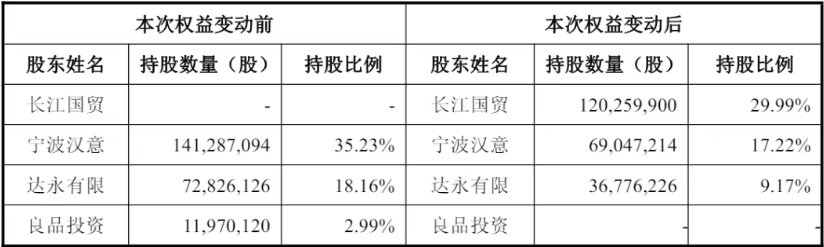
Core Viewpoint - The acquisition of Liangpinpuzi by Changjiang International Trade Group marks a significant shift in the company's ownership structure, transitioning from a founder-led model to a state-owned enterprise, amidst ongoing financial struggles and a challenging market environment [1][4][10]. Group 1: Transaction Details - The total transaction price for the share transfer agreements is 1.046 billion yuan, with Changjiang Guomao set to hold 21% of Liangpinpuzi's shares post-transfer [2][3]. - If both agreements are executed successfully, Changjiang Guomao will directly hold 120,259,900 shares, representing 29.99% of the total share capital, for a total price of 1.485 billion yuan [4]. - Prior to the transaction, the shareholding structure included Ningbo Hanyi with 35.23% and Dayong with 18.16%, which will change significantly post-acquisition [5]. Group 2: Financial Performance - Liangpinpuzi's stock price was 13.71 yuan before suspension, with a market capitalization of 5.5 billion yuan. After resuming trading, the stock price slightly decreased to 13.69 yuan, with a market cap of 5.49 billion yuan [6]. - The company is expected to report a net loss of 75 million to 105 million yuan for the first half of 2025, marking its worst performance since going public [9]. Group 3: Market Context and Challenges - Liangpinpuzi has faced significant operational challenges, transitioning from a leading snack brand to a company seeking survival, with questions about the value of the acquisition [7][10]. - The acquisition by a state-owned entity is seen as a potential lifeline, given the financial backing and logistical support from Changjiang Guomao, which operates in various financial and logistics sectors [12][13]. - The company has struggled with strategic direction, experiencing a decline in revenue for the first time in a decade, with 2023 revenue dropping to 8.046 billion yuan, a nearly 15% decrease year-on-year [28]. Group 4: Historical Performance and Strategic Shifts - Liangpinpuzi's history can be divided into three phases: rapid growth from 2006 to 2016, a high-end positioning strategy from 2017 to 2022, and a recent phase of strategic ambiguity and performance decline since 2023 [22][24][26]. - The company has attempted to pivot from high-end snacks to a focus on natural and healthy snacks, launching new products under the "natural health new snacks" concept [53][55]. - Despite these efforts, the company has faced criticism for lacking innovation and failing to effectively compete with emerging low-cost snack brands [38][40].