自然资源资产组合供应

Search documents
全市首宗组合出让项目成交!
Sou Hu Cai Jing· 2026-02-10 10:16
Core Insights - The successful sale of a state-owned construction land in Huzhou's Nanxun District marks a significant breakthrough in innovative natural resource supply methods [1][3] - The total transaction price for the land, which includes commercial land (20.35 acres) and park green space (17.86 acres), is 45.9 million yuan [1] - The combination supply model allows for optimized functional layout and efficient use of underground space, significantly reducing development costs [1][4] Group 1 - The land is intended to be developed into a family-friendly resort hotel that integrates cultural tourism, educational research, commercial, and dining functions [1][3] - This transaction is the first combination supply land deal in Huzhou since the Zhejiang Provincial Natural Resources Online Trading Center launched the combination supply module in September 2025 [3] - The combination supply model is defined as the overall allocation of multiple categories of natural resource assets to a single user within a specific land space, promoting efficient resource allocation and functional integration [3][4] Group 2 - Nanxun District is actively adapting to new economic and social developments by reforming land supply methods based on diversified market demands [4] - The district previously sold Huzhou's first mixed-use industrial land in February 2025, implementing a management approach that allows for a combination of industrial, commercial, and business functions on the same plot [4] - The combination supply approach expands the policy toolbox for land supply, addressing issues of fragmented land use and enhancing urban environmental quality and resource efficiency [4]

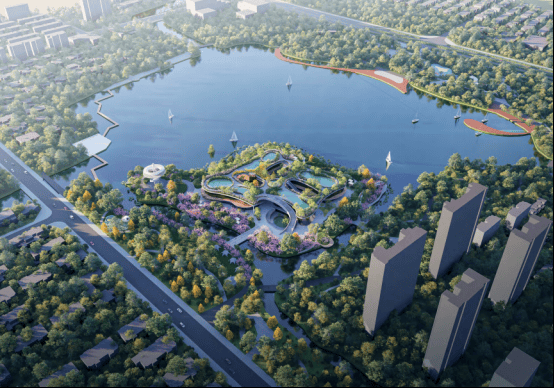
亮马河入选自然资源部生态产品价值实现案例
Xin Jing Bao· 2026-02-05 07:22
Core Viewpoint - The sixth batch of ecological product value realization cases has been released, highlighting the integration of ecological restoration and urban development, particularly through the example of the Liangma River in Beijing [1][2]. Group 1: Ecological Product Value Realization - The sixth batch includes 11 cases, with a focus on promoting natural resource asset combination supply models [1]. - Compared to previous batches, there is an increased emphasis on diverse combinations such as "land + water surface," "mineral + land," and "land + geothermal" to enhance ecological product value realization [1]. - Various regions, including Beijing, Liaoning, and Zhejiang, are exploring new paths for the transformation of ecological products through industrialization and ecological integration [1]. Group 2: Liangma River Case Study - The Liangma River project in Chaoyang District, initiated in 2019, includes six major engineering efforts aimed at ecological restoration and urban renewal [2]. - The project has transformed the river from an "ecological pain point" to a "city highlight," creating a model for urban renewal driven by river revitalization [2]. - The success of the Liangma River case is seen as a replicable model for achieving ecological product value realization in large cities [2]. Group 3: Future Directions - The Ministry of Natural Resources plans to continue summarizing and promoting typical local practices to encourage high-level protection and efficient utilization of natural resources [2]. - The goal is to convert ecological advantages into developmental benefits, supporting the construction of a harmonious coexistence between humans and nature in modern China [2].
生态优势变发展优势,自然资源部发布11个典型案例
Zhong Guo Xin Wen Wang· 2026-02-05 04:34
Core Viewpoint - The Ministry of Natural Resources has released the sixth batch of 11 typical cases for realizing the value of ecological products, promoting practical exploration in this area [1] Group 1: Ecological Product Value Realization - The sixth batch of cases emphasizes the promotion of natural resource asset combination supply models, such as "land + water surface," "mineral + land," "land + forest," and "land + geothermal" to enhance the realization of ecological product value in regions like Wuhan, Lichuan, Luzhou, and Mile [1] - Various regions, including Beijing, Liaoning, Zhejiang, Anhui, and Guangxi, are advancing ecological industrialization and industrial ecology while strengthening ecological protection and restoration [1] Group 2: Local Practices and Future Directions - Local practices involve multi-factor natural resource asset combination supply, including inventory checks, clear subject rights allocation, value assessment, and public trading announcements [1] - The Ministry of Natural Resources will continue to summarize and refine local typical practices, encouraging high-level protection and efficient utilization of natural resources to transform ecological advantages into developmental advantages [1]
福建漳州出台自然资源资产组合供应新政
Zhong Guo Zi Ran Zi Yuan Bao· 2026-01-14 07:27
Core Viewpoint - Fujian Province's Zhangzhou City has issued guiding opinions to explore the combined supply of natural resource assets, aiming to enhance overall resource allocation efficiency and maximize the value of natural resources [1][2] Group 1: Overall Requirements and Scope - The guiding opinions apply to various natural resource assets including land, minerals, marine resources, water, and forests across the entire city [1] - The shift from single resource allocation to a "combination + composite" approach is emphasized to promote comprehensive utilization of natural resources [1] Group 2: Supply Requirements and Processes - The opinions stress the need to clarify the rights and interests of natural resources, ensuring the protection of property rights and requiring government approval for all resource allocations [1] - Planning coordination is essential, aligning with national spatial planning, economic development, and industry planning while considering resource endowments and market demand [1] - Market competition is to be introduced, utilizing methods such as bidding, auctioning, and listing for the supply of resources, referencing state-owned land use rights [1] Group 3: Implementation Principles and Management - The guiding opinions advocate for a principle of "mature one project, supply one project, easy first, difficult later, and steady progress" in exploring key aspects like combination models, supply processes, revenue distribution, and supervision [2] - Each project will have a specific plan, with natural resource departments announcing and trading the supplied assets through public resource trading platforms [2] - Encouragement is given for contracts to clarify rights for operations related to aquaculture, tourism, photovoltaic power generation, and facility agriculture [2]
创新自然资源要素配置方式 广东六部门联合推进资产组合供应
Nan Fang Ri Bao Wang Luo Ban· 2025-12-26 08:48
Core Viewpoint - The policy aims to shift the supply of natural resource assets from a single, fragmented approach to an integrated, combined configuration, enhancing the value of ecological resources and supporting major strategic initiatives in Guangdong [1][2] Group 1: Policy Objectives - The notification encourages the combination of various types of natural resources, such as land, minerals, marine, forestry, wetlands, and water, to meet the land and sea needs of composite industry projects like eco-tourism and green agriculture [1] - It aims to reduce institutional transaction costs for market entities and realize the value of ecological resources, providing solid support for major strategies like the "Hundred Million Project" and the ecological construction of a "Green and Beautiful Guangdong" [1] Group 2: Implementation and Examples - Some cities in the province have already begun exploring different models of combined supply, enhancing the efficiency of resource allocation and achieving optimal overall operational benefits [2] - For instance, the city of Foshan has successfully packaged "water area + greenway + arable land" to develop projects like dragon boat bases and water parks, while Shantou has created resource allocation plans that convert beach and marine resources into marketable assets, enriching the tourism sector and promoting high-quality development of agriculture, culture, and tourism [2] - The issuance of the notification is seen as a systematic summary and institutional enhancement of these innovative explorations, providing clear directions for broader and deeper promotion of natural resource asset combination supply across the province [2]
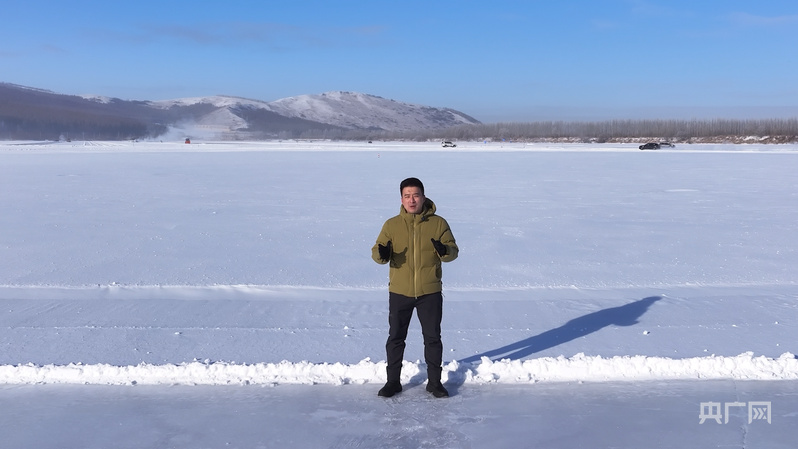
中国改革现场|借冰生金的北纬49度极寒汽车测试场
Yang Guang Wang· 2025-12-08 05:41
Core Viewpoint - The article highlights the innovative use of the frozen lake surface in Yakeshi, Inner Mongolia, as a winter automotive testing base, transforming local cold resources into a thriving industry while promoting ecological protection and tourism development [1][4]. Group 1: Automotive Testing and Innovation - Yakeshi has established the largest winter automotive testing base in China by utilizing the frozen lake surface and wetland resources, which enhances the local automotive industry and boosts ice and snow tourism [1][4]. - The automotive testing includes various performance evaluations such as braking, handling, and range capabilities under extreme cold conditions, with temperatures nearing -30°C [2][3]. - The testing center aims to focus on five key performance dimensions for mainstream new energy vehicles, conducting ten testing subjects in the unique winter environment of Yakeshi [3]. Group 2: Economic Impact and Growth - The winter automotive testing season is expected to generate an operating income of 1.79 billion yuan in 2024, creating over 2,000 jobs and stimulating related industries such as fuel supply, maintenance, and snow tire production [5][8]. - Yakeshi's automotive testing industry has seen a growth rate of 20% annually, with the city serving as a strategic partner for 85% of China's new energy vehicle companies and holding over 40% market share [5][8]. - The region has recorded a significant increase in tourism, with visitor numbers growing over 65% in the past decade and total tourism revenue increasing by over 46% [14]. Group 3: Ecological Protection and Management - The management of the wetland park incorporates advanced monitoring systems to ensure ecological protection while allowing for the sustainable use of natural resources for automotive testing [10][11]. - The area designated for automotive testing occupies only 5.28% of the wetland park, minimizing the impact on wildlife and maintaining biodiversity [10][11]. - The local government has implemented a comprehensive management strategy to monitor and protect the wetland ecosystem, ensuring that economic activities do not compromise environmental integrity [11][12]. Group 4: Seasonal Resource Utilization - Yakeshi has developed a seasonal resource utilization model, combining land use rights for summer ecological tourism and winter automotive testing, thereby maximizing the value of natural resources [5][13]. - The region is exploring further diversification of its offerings, including agricultural machinery and heavy truck testing, to expand its automotive testing capabilities [5][13]. - The integration of tourism and automotive testing has created new consumer experiences, such as ice karting and snowmobile rides, enhancing the local economy [12][13].