航空发动机国产化

Search documents
航亚科技(688510):首次覆盖报告:精锻技术为基,深耕航空发动机零部件领域
Western Securities· 2025-12-12 11:20
Investment Rating - The report gives a "Buy" rating for the company, Hangya Technology (688510.SH), with a target price of 31.2 yuan based on a 40x valuation for 2026 [2][4][15]. Core Insights - Hangya Technology focuses on precision forging technology, specializing in key components for aircraft engines and medical orthopedic implants. The company has established a strong position in the aircraft engine parts sector since its listing on the Sci-Tech Innovation Board in 2020 [1][4][17]. - The company reported revenues of 530 million yuan and a net profit of 78 million yuan for the first three quarters of 2025, reflecting a year-on-year increase of 1.95% in revenue but a decrease of 16.04% in net profit [1][31]. - The demand for international commercial aircraft engines is increasing, and Hangya Technology has positioned itself advantageously to meet this demand by becoming a reliable supplier for major players like CFM [1][39][44]. Summary by Sections 1. Company Overview - Hangya Technology is centered on precision forging technology, focusing on critical components for aircraft engines and medical implants. The company has made significant advancements in manufacturing techniques since its establishment in 2013 [1][17][20]. 2. Market Demand and Positioning - The international commercial aircraft engine market is characterized by a few dominant players, with CFM leading in delivery volumes. Hangya Technology has successfully positioned itself as a key supplier amid supply chain disruptions [1][39][44]. - CFM is actively seeking domestic suppliers to alleviate supply chain pressures, which presents opportunities for Hangya Technology to expand its market share [1][45][47]. 3. Growth Drivers - The company is experiencing growth across multiple sectors, including domestic aircraft engines, gas turbines, and medical products. Collaborations with major clients like GE and domestic aerospace firms are expected to drive future revenue growth [1][2][11][57]. - The domestic aviation market is projected to grow significantly, with increasing demand for new aircraft, which will benefit Hangya Technology's operations [1][57][59]. 4. Financial Projections - Revenue forecasts for Hangya Technology indicate growth from 817 million yuan in 2025 to 1.512 billion yuan by 2027, with corresponding net profits expected to rise from 130 million yuan to 290 million yuan during the same period [2][15][31]. - The company's earnings per share (EPS) are projected to increase from 0.51 yuan in 2025 to 1.13 yuan by 2027, reflecting strong growth potential [2][15]. 5. Strategic Collaborations - Hangya Technology has established strategic partnerships with key industry players, enhancing its production capabilities and market reach. The collaboration with CFM and other international clients is expected to solidify its position in the market [1][49][54].

中国航发航空科技股份有限公司关于2025年第三季度业绩说明会召开情况的公告
Shang Hai Zheng Quan Bao· 2025-11-24 18:39
Meeting Overview - The company held its Q3 2025 earnings presentation on November 21, 2025, from 14:00 to 15:00 at the Shanghai Stock Exchange Roadshow Center [1][2] - Key executives present included Chairman Cong Chunyi, Vice General Managers Xiong Yi and Zheng Ling, and independent directors [2] Investor Questions and Company Responses - **Overall Performance**: The company referred investors to the Q3 report released on October 30, 2025, for detailed performance metrics [3] - **Technological Innovation and Upgrades**: The company is focusing on overcoming manufacturing bottlenecks in core components of aircraft engines, establishing 12 teams to enhance technology in areas like blade processing and additive manufacturing [4] - **Future Development Outlook**: The company is enhancing strategic planning to align demand, planning, and tasks, aiming for coordinated development of military and civilian aviation engine products [5] - **Market Potential from C919**: The company is a supplier of components for the C919 engine and is actively collaborating with clients to meet their needs, although specific market size estimates were not provided [5]

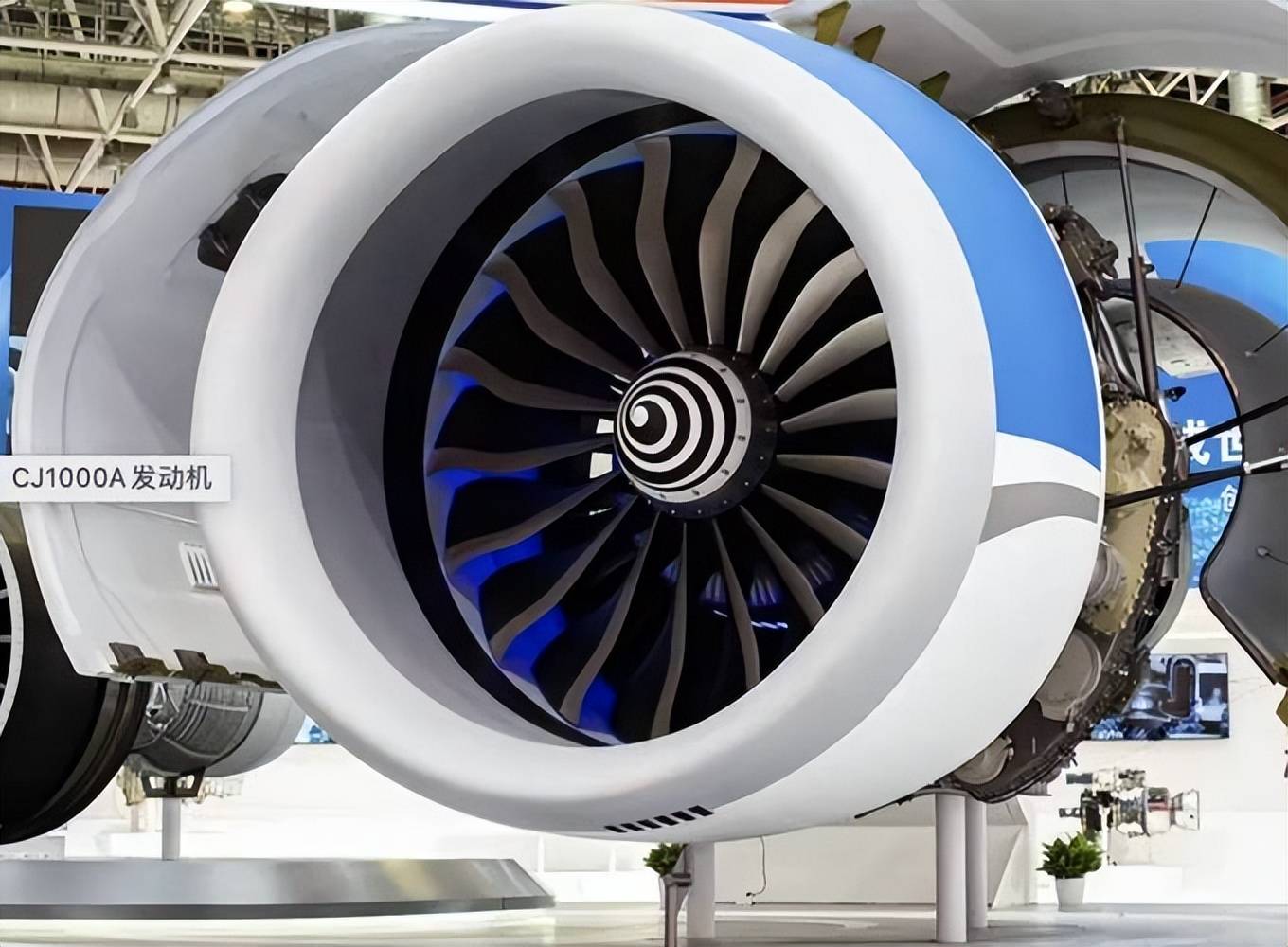
美国刚宣布断供,CJ-1000A发动机就横空出世!
Sou Hu Cai Jing· 2025-06-09 06:15
Core Viewpoint - The recent decision by the U.S. government to suspend the export of large passenger aircraft engines to China is seen as an attempt to hinder China's development of domestic aircraft, but it may inadvertently accelerate China's determination to achieve self-sufficiency in aviation engine technology [1][9]. Group 1: U.S.-China Trade Relations - The U.S. is struggling to respond effectively to China's rare earth export restrictions while simultaneously attempting to cut off engine supplies to China, indicating a lack of effective leverage [3]. - Trump's administration has reinstated high tariffs on Chinese goods, reaching as high as 145%, but China has prepared countermeasures that directly impact U.S. farmers and high-tech industries [5][8]. - The U.S. high-tech sector is facing challenges due to its reliance on Chinese rare earth materials, with production lines for critical military and commercial products being affected [7]. Group 2: China's Aviation Industry Development - China has already tested the CJ-1000A engine, which can replace imported engines, and this engine is expected to significantly reduce costs by approximately 30% compared to imports while enhancing performance [9][11]. - The successful development of military engines like the "Taihang" and "WS-15" signifies a leap in China's military aviation technology, allowing for more competitive offerings in the global market [11]. - China has mastered core technologies for various types of engines, entering a new phase of independence in aviation engine design, which may mitigate short-term impacts from U.S. supply cuts [13]. Group 3: Future Prospects - The C929 project, initially a collaboration with Russia, is now being independently advanced by China, featuring a domestically produced engine with superior thrust compared to competitors [15]. - The maturation of high-thrust engines like the Changjiang-2000 may enable China to develop larger strategic transport aircraft, enhancing its military capabilities [17]. - China's advancements in new power systems, including electric motors and hydrogen fuel engines, position it to lead in future aviation technology, similar to the rapid growth seen in its semiconductor industry following U.S. restrictions [18].