芯片产能

Search documents
马斯克:芯片产能制约特斯拉中期增长,自建TerraFab晶圆厂很有必要
Sou Hu Cai Jing· 2026-01-30 02:54
Group 1 - The core viewpoint is that Elon Musk indicated during Tesla's Q4 2025 earnings call that chip production capacity is likely to become a bottleneck for Tesla's mid-term growth over the next 3 to 4 years, as external supply from companies like TSMC, Samsung, and Micron is insufficient to meet demand [1] - Tesla is considering the construction of its own TerraFab super-sized wafer factory to integrate various semiconductor manufacturing processes, which would help the company mitigate external risks [1] Group 2 - Musk mentioned that AI4 (HW 4.0) has been utilized in Tesla's data centers for AI training workloads, and the gap between AI5 and AI6 chip generations will be less than one year [3]



中芯国际高管:存储器供不应求,涨价非常多
Guan Cha Zhe Wang· 2025-11-14 03:07
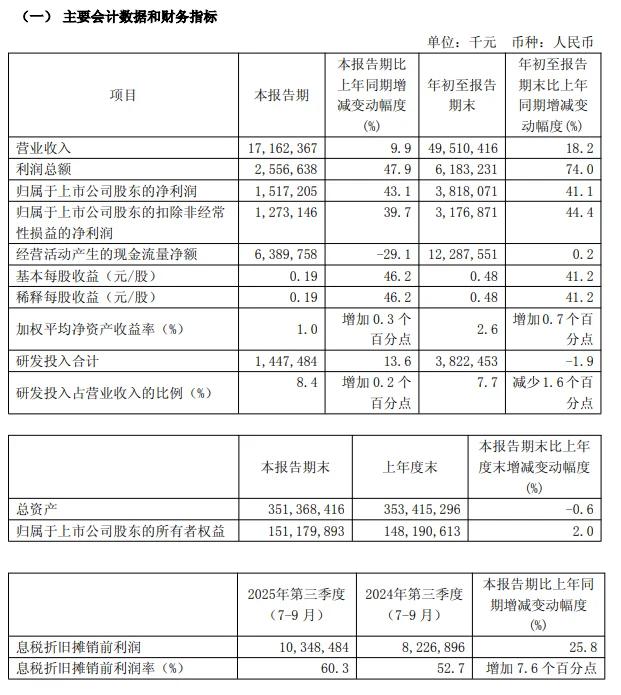
Core Viewpoint - SMIC is on track for a record revenue year, expecting to exceed $9 billion for the first time, driven by strong demand and full-capacity operations [1][2]. Financial Performance - Q3 revenue reached 171.62 billion yuan, a year-on-year increase of 9.9%, with a gross margin of 25.5%, up 4.8 percentage points from the previous quarter [2][3]. - For the first three quarters, total revenue was 495.1 billion yuan, reflecting an 18.2% year-on-year growth [3]. - Q3 net profit attributable to shareholders was 15.17 billion yuan, a 43.1% increase year-on-year, while net profit for the first three quarters was 38.18 billion yuan, up 41.1% [3][4]. Capacity and Market Dynamics - The production capacity utilization rate increased to 95.8%, indicating near-full production [2][3]. - The memory market is experiencing a supply shortage, leading to significant price increases, and the expansion of industry capacity is expected to accelerate in the coming year [2][5]. Q4 Guidance - The company anticipates Q4 revenue to remain flat or grow by 2% quarter-on-quarter, with a gross margin forecast of 18%-20%, indicating a potential decline from Q3's 25.5% [4][5]. - The management attributes the expected slowdown in Q4 performance to the traditional off-season and fluctuations in the mobile market, leading to cautious purchasing behavior in related industries [5].