
芯片集成化

Search documents
激光雷达,是怎么被中国打成白菜价的?
Xin Lang Cai Jing· 2026-02-03 12:53
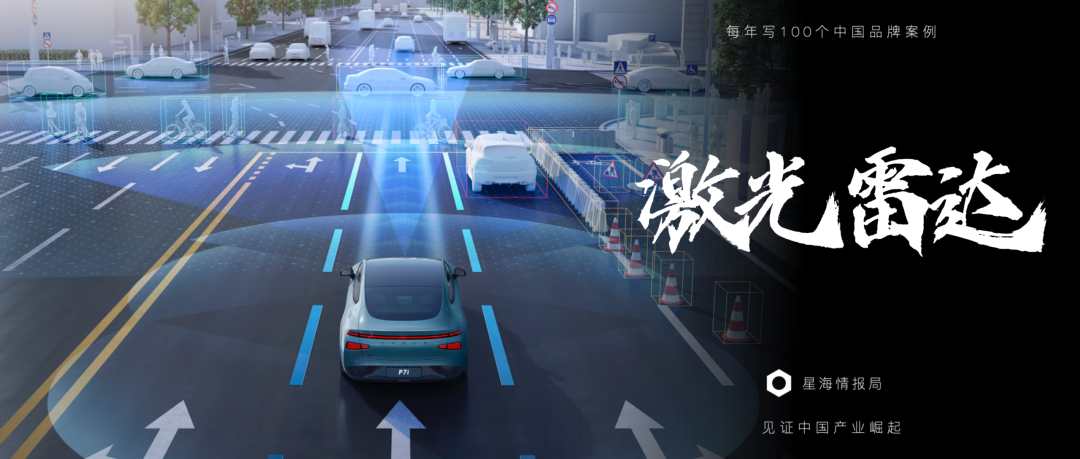
Core Insights - The laser radar industry, once mocked by Elon Musk, is experiencing a resurgence, with Chinese companies capturing 70-80% of the global market share [4][32] - The growth of laser radar is not primarily driven by the automotive sector but by applications in household appliances and robotics, such as sweeping and mowing robots [4][6] - Chinese companies have significantly reduced the cost of laser radar technology, with prices dropping from several thousand dollars to around 200 dollars, enabling mass production [6][34] Industry Developments - Hesai Technology announced plans to double its production capacity from 2 million units in 2025 to 4 million units in 2026 and has been selected as a partner for NVIDIA's DRIVE AGX Hyperion 10 platform [2][30] - The global market for robotic lawn mowers saw a 327% year-on-year increase in sales in the first half of 2025, while the overall smart cleaning robot market grew by 33% [4][32] Competitive Landscape - American laser radar company Luminar has filed for bankruptcy, struggling with high production costs and competition from Chinese manufacturers [6][34][35] - Luminar's technology, which relies on a more complex and expensive 1550nm FMCW solution, could not compete with the simpler and cheaper 940nm VCSEL technology used by Chinese firms [34][35] Technological Advancements - The principle of laser radar is straightforward, but the implementation requires four core components: light source, detector, scanning mechanism, and algorithms [39][41] - Chinese companies have achieved cost reductions through chip integration, combining the functions of emission, reception, and signal processing into a single chip, significantly lowering production costs [42][49] Cost Reduction Strategies - The BOM (Bill of Materials) cost for domestic laser radar has decreased by 52% from 2019 to 2025, transforming the technology from a luxury item to a consumer product [49][56] - The integration of components allows for a reduction in the number of parts needed, leading to lower costs and improved efficiency [42][49] Future Implications - The advancements in laser radar technology are expected to benefit various sectors, including eVTOL (electric vertical takeoff and landing) and smart infrastructure, enhancing safety and operational capabilities [55][56] - The integration technology developed by Chinese firms is set to revolutionize the perception and accessibility of sensing technologies, making them standard in various applications [56]

华安证券:芯片集成化发展 推动材料应用新蓝海
智通财经网· 2026-01-30 02:56
Core Viewpoint - The rapid development in aerospace and electronic technology is driving the miniaturization, multifunctionality, and high power density of chip-level and module-level electronic devices. The heat dissipation issue of high-power chips needs urgent solutions, and diamond materials are expected to be widely applied due to their excellent performance. The diamond heat dissipation market is conservatively estimated to reach 9.7 billion by 2032 [1]. Group 1 - The aerospace and electronic technology sectors are advancing rapidly, leading to the miniaturization and multifunctionality of electronic devices, which in turn increases chip power consumption and heat generation [1]. - As the integration and miniaturization of chips progress, the failure rate of semiconductor components significantly increases with rising operating temperatures, with studies indicating that for every 18°C increase in temperature, the failure rate can double or triple [1]. - AI chip heat dissipation technology aims to optimize device performance and extend lifespan by directly removing heat from the chip or processor surface, with traditional solutions categorized into heat dissipation materials and technologies [1]. Group 2 - Electronic packaging materials must possess good thermal conductivity, mechanical properties, and processability to ensure the stable, reliable, and safe operation of electronic devices [2]. - Common electronic packaging materials include ceramic, plastic, metal, and composite materials, with diamond heat sink materials having a thermal conductivity of 2000-2500 W/(m·K), which is four times that of copper and eight times that of aluminum [2]. - The thermal expansion coefficient of diamond closely matches that of semiconductor core materials like silicon and silicon carbide, ensuring interface stability even after thousands of temperature cycles, thus avoiding delamination issues [2]. Group 3 - The MPCVD method is considered the optimal solution for preparing semiconductor diamond materials [3]. - Diamond materials can be classified into single crystal and polycrystalline types, each exhibiting different performance and application characteristics [3]. - Polycrystalline diamond is used in high thermal conductivity, infrared transparency, and wear resistance applications, while single crystal diamond shows unique advantages in high power, high efficiency, and ultra-high frequency electronic devices [3].

最前线 | 智驾普及下,爱芯元智推出全球产品,黑芝麻2000大算力芯片亮相
3 6 Ke· 2025-04-27 04:56
Core Insights - The chip industry is witnessing two major trends: increased computing power and integration, as demonstrated by new products from Aisin YuanZhi and HezhiMa Intelligent [1] Group 1: Aisin YuanZhi's M57 Series - Aisin YuanZhi launched the M57 series of automotive chips, which boasts a computing power of 10 TOPS and supports mixed precision and BEV algorithms [1] - The M57 chip has a power consumption of no more than 3.5W even at a junction temperature of 125 degrees Celsius, making it suitable for both traditional and energy-efficient electric vehicles [1] - The self-developed image processing technology, Aisin ZhiMou AI-ISP, generates high-definition images under extreme lighting conditions, enhancing decision-making for in-vehicle systems [1] - The integrated MCU with a safety island achieves ASIL-B and ASIL-D level functional safety, ensuring that the advanced driver-assistance systems (ADAS) do not cause accidents due to individual function failures [1] Group 2: HezhiMa's Huashan A2000 Family - HezhiMa's Huashan A2000 family of chips, built on a 7nm automotive-grade process, claims to have computing power up to four times that of current mainstream flagship chips [2] - The Huashan A2000 family includes three products: A2000 Lite for urban assisted driving, A2000 for general assisted driving, and A2000 Pro for high-level general assisted driving [2] - The Huashan A2000 chips feature a self-developed "JiuSha" NPU architecture that supports Transformer hardware acceleration and mixed precision operations (FP8/FP16), enhancing multi-task parallel processing efficiency [3] - The architecture includes a priority preemption mechanism to ensure sufficient computing resources for high-priority tasks, improving safety in complex driving scenarios [3] Group 3: Wudang Series and Safety Technologies - HezhiMa also introduced the Wudang series of chips, which is the industry's first cross-domain integrated computing chip, enhancing vehicle safety by ensuring independent operation of key systems [3] - The Wudang C1296 chip, also showcased, integrates smart cockpit, ADAS, and vehicle body control domains, allowing real-time data communication among them [4] - This solution is already being implemented in multiple new models from Dongfeng and is expected to achieve mass production by 2025 [4]
