
药物可及性

Search documents
进博观察:罕见病用药保障需破局,上千种疾病仍等“药”来
2 1 Shi Ji Jing Ji Bao Dao· 2025-11-08 08:21
Core Insights - The article emphasizes the increasing attention and efforts towards rare disease treatment in China, highlighting the government's initiatives and the role of international pharmaceutical companies in improving drug accessibility for patients [2][4][10]. Government Initiatives - The Chinese government has been enhancing the rare disease prevention and treatment system, with the first batch of 121 rare diseases and treatment guidelines released in 2018 [2]. - By 2025, the new national medical insurance drug list will add 13 rare disease medications, covering over 90 types of rare disease drugs, significantly reducing the financial burden on patients [2][4]. - As of the end of 2023, 165 rare disease drugs have been approved in China, covering 92 types of rare diseases [4]. Pharmaceutical Industry Engagement - Multinational pharmaceutical companies, such as AstraZeneca, are actively participating in events like the China International Import Expo (CIIE) to showcase their rare disease drugs, which have been approved in China [2][3]. - AstraZeneca has established a company in Qingdao specifically for the import of rare disease medications, indicating a commitment to the Chinese market [3]. Challenges in Treatment - The article outlines significant challenges faced by rare disease patients, including difficulties in diagnosis, lack of effective treatment options, and high drug costs [3][4][6]. - Currently, only 5% of known rare diseases have effective treatments, leaving many patients without options [4][9]. Insurance and Financial Support - Approximately 100 rare disease medications are included in the national medical insurance drug list, covering 42 types of rare diseases, but patients still face out-of-pocket expenses [4][6]. - The government is encouraged to further reduce the self-payment ratio for rare disease drugs and explore innovative insurance solutions to alleviate financial burdens on patients [6][7]. Collaborative Efforts - The establishment of a rare disease collaboration network involving 419 hospitals aims to improve diagnosis and treatment through a multidisciplinary approach [5][8]. - AstraZeneca supports the establishment of rare disease centers of excellence in provinces to enhance patient referral and diagnosis processes [8]. Future Directions - The article calls for the establishment of an innovative drug fund to support cutting-edge treatments for rare diseases, independent of the standard insurance system [7]. - Continuous policy updates and market innovations are expected to enhance the accessibility and affordability of rare disease medications in China [10][11].



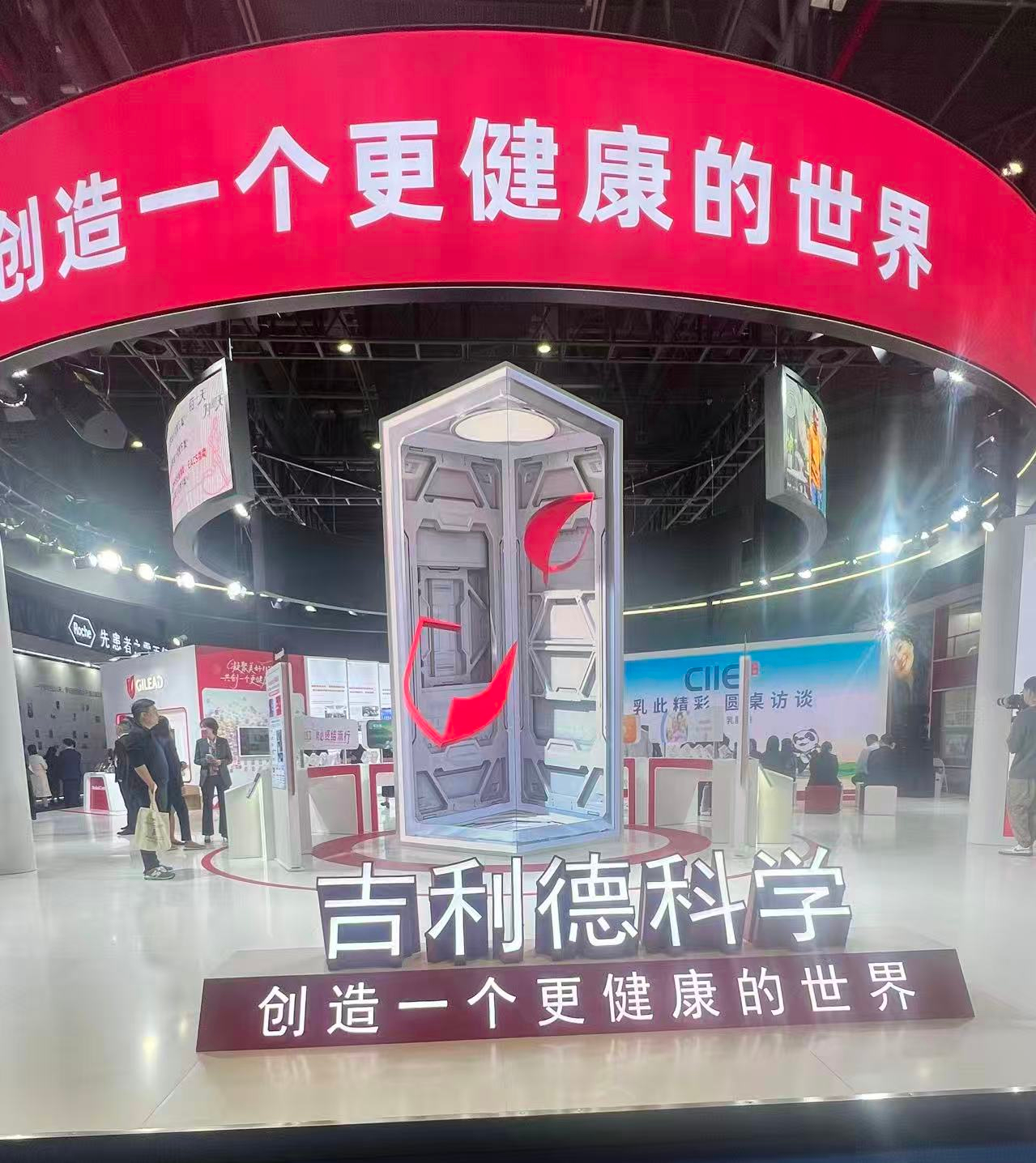
吉利德科学携亚洲首发重磅展品亮相第八届进博会
Guo Ji Jin Rong Bao· 2025-11-08 05:35
Core Insights - Gilead showcased two significant products at the China International Import Expo: the long-acting HIV pre-exposure prophylaxis drug Lenacapavir and the new drug for primary biliary cholangitis (PBC) Seladelpar, emphasizing its commitment to creating a healthier world [1][3] Product Highlights - Lenacapavir is a groundbreaking long-acting HIV capsid inhibitor that requires administration only twice a year, demonstrating over 99.9% efficacy in preventing HIV in global Phase III clinical trials [3][4] - Seladelpar is the first innovative therapy that improves biochemical markers and alleviates itching symptoms for PBC patients, which was included in the National Health Commission's list of rare diseases in 2023 [4] Market Entry and Approval - Lenacapavir received approval for HIV pre-exposure prophylaxis in Hainan Boao Lecheng International Medical Tourism Pilot Zone, almost simultaneously with FDA approval, marking a significant milestone for domestic drug approval processes [4] - Seladelpar was approved in Beijing under the urgent clinical need policy, providing new treatment hope for PBC patients in China [4] R&D Initiatives - Gilead is actively advancing local R&D with 16 ongoing projects in China, including 10 in oncology and 6 in non-oncology, aiming for synchronized global development to benefit Chinese patients [5] Access to Innovative Medicines - Over the past eight years, Gilead has launched 13 global innovative drugs in China, benefiting approximately 1.8 million patients, including notable products for HIV treatment and hepatitis [8] - The company emphasizes collaboration with various sectors to enhance access to innovative medicines and promote health equity [9]

国药控股合作吉利德科学 提高基层市场用药可及性
Zheng Quan Ri Bao Wang· 2025-08-13 23:12
Core Insights - The strategic cooperation agreement between China National Pharmaceutical Group (Sinopharm) and Gilead Sciences aims to enhance the accessibility of innovative antiviral drugs for chronic hepatitis B patients in China [1][2] - Approximately 86 million hepatitis B virus carriers exist in China, accounting for about one-third of the global infected population [1] - The new antiviral drug, Vemlidy (TAF), was launched in China in 2018 and has been included in the national medical insurance directory, making it more affordable for patients [2] Group 1 - The partnership will leverage Sinopharm's extensive network and marketing capabilities to improve the availability of Vemlidy in grassroots markets [1] - Chronic hepatitis B poses significant health risks, including liver cirrhosis and liver cancer, but advancements in antiviral medications have provided safer treatment options with low resistance rates [1] - Gilead Sciences has introduced eight global innovative drugs in China since 2017, focusing on improving drug accessibility through insurance and collaborations [2] Group 2 - Sinopharm's president emphasized the importance of brand, channel, and network advantages in increasing the medical coverage of Vemlidy for more hepatitis B patients [2] - The collaboration marks a new chapter in the ongoing partnership between Sinopharm and Gilead Sciences, which has previously involved a series of import agency collaborations [2]
“中国的创新药故事非常值得一讲!”诺华CEO万思瀚与挪威主权基金掌门人深度对话
聪明投资者· 2025-06-27 06:16
Core Insights - The article discusses the evolving landscape of the pharmaceutical industry, highlighting the increasing recognition of Shanghai as a new innovation hub alongside traditional centers like Boston and San Diego [3][94]. - It emphasizes the strategic focus of Novartis under CEO Vasant Narasimhan, who has transformed the company into a pure-play innovative drug firm, significantly increasing its market valuation [4][14]. - The role of AI in drug discovery is underscored, with Novartis collaborating with Google’s DeepMind to enhance drug development processes [5][55]. Group 1: Company Strategy and Performance - Novartis, valued at approximately $233 billion, has seen its core valuation rise from about $210 billion since Vasant Narasimhan took over in 2018, with a potential total value of around $330 billion if spun-off businesses are included [4][14]. - The company has shifted its focus from a diversified business model to a concentrated strategy on innovative pharmaceuticals, divesting non-core assets like Alcon and Sandoz [12][14]. - This strategic pivot has resulted in a market capitalization increase to $235 billion, demonstrating the value released through this focus [14]. Group 2: AI and Innovation - AI is viewed as a critical tool for identifying new drug targets and optimizing molecular structures, with Novartis actively engaging in partnerships to leverage AI in drug discovery [5][55]. - The company is exploring the potential of AI to significantly reduce the time required for early-stage drug development, potentially saving years in the process [56][57]. - Novartis is also investing in cutting-edge technology platforms, positioning itself as a leader in areas such as radioligand therapy and gene therapy [19][20]. Group 3: Global Market Dynamics - The article highlights the challenges faced by the European pharmaceutical market, which is becoming increasingly constrained due to government policies that limit the commercialization of innovations [64][65]. - In contrast, the U.S. and China are rapidly expanding their pharmaceutical markets, with China emerging as the second-largest market globally, growing at a double-digit rate [67][93]. - The article notes that many new drugs are now launched first in the U.S. and China, with Europe losing its competitive edge in drug approvals and market access [71][72]. Group 4: Future Directions and Challenges - The future of the pharmaceutical industry is expected to be shaped by advancements in early intervention strategies, gene therapy, and RNA therapies, which could revolutionize treatment paradigms [32][33][37]. - The potential fragmentation of global clinical trial data between the U.S. and China poses a significant risk to drug development, emphasizing the need for collaboration in clinical research [95][96]. - The article concludes with a call for European leaders to take decisive action to revitalize the pharmaceutical sector and ensure that innovation is not stifled by restrictive policies [68][70].

百济神州(688235) - 美股公告:年度报告10-K表格
2025-02-27 12:30
目录 美国 证券交易委员会 Washington, D.C. 20549 表格 10-K (选择一项) ☒ 根据 1934 年证券交易法第 13 条或第 15 条(d)节的年度报告 截至 2024 年 12 月 31 日的财政年度 或 ☐ 根据 1934 年证券交易法第 13 条或第 15 条(d)节的过渡报告 百济神州有限公司 (注册人章程载明的确切名称) (注册成立或组建的州或其他司法管辖区) (美国国家税务局雇主身份识别号码) c/o Mourant Governance Services (Cayman) Limited 94 Solaris Avenue, Camana Bay Grand Cayman 开曼群岛 KY1-1108 (主要行政办事处地址,包括邮政编码) +1 (345) 949 4123 过渡期从 至 交易委员会递交编号:001-37686 BEIGENE, LTD. (注册人的电话号码,包括地区编码) 根据本法案第 12(b)条注册的证券: | 各类别名称 | 交易代码 | 各证券交易所名称 | | --- | --- | --- | | 每股美国存托股份相当于 13 股普通股,每 ...