被动元件涨价潮

Search documents
被动元件,涨涨涨
3 6 Ke· 2026-02-09 01:13
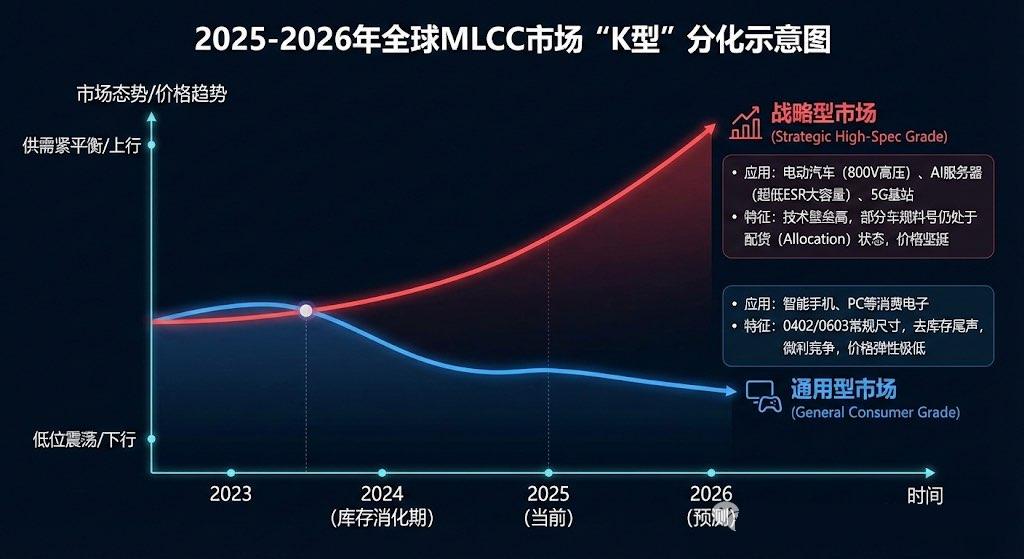
Core Viewpoint - The recent price hikes in passive components, led by major players like Yageo and Walsin, indicate a significant shift in the market driven by supply-demand imbalances and rising raw material costs, particularly in high-end sectors like AI and electric vehicles [1][4][19]. Group 1: Price Adjustments - Yageo announced a price increase of 15%-20% for certain resistor products starting February 1, marking its third price adjustment in a short period [1]. - Walsin and Panasonic also announced price hikes of around 20% and 15%-30% respectively for various passive components, reflecting a broader trend among major manufacturers [1][2]. - Smaller manufacturers in China, such as Fenghua Advanced Technology and Shunluo Electronics, have also followed suit with price adjustments ranging from 5%-30% across multiple product categories [2][3]. Group 2: Supply Chain Dynamics - The passive component market is experiencing supply tightness, with lead times extending and some distributors pausing quotes due to uncertainty in price adjustments [3][4]. - Rising costs of raw materials, particularly precious metals like silver and palladium, have significantly increased production costs for passive components, with estimates suggesting a 20%-30% rise in production costs [5][6]. - Capacity constraints are exacerbated by major manufacturers shifting focus to high-end products, leading to a structural shortage in the mid-range market [7][8]. Group 3: Demand Drivers - The demand for passive components is being driven by the rapid growth of AI and electric vehicles, with AI servers requiring significantly more MLCCs than traditional servers [10][11]. - The automotive sector is also a major growth area, with electric vehicles using up to three times more passive components compared to traditional vehicles, creating a favorable environment for price increases [11][12]. - The overall market for passive components in China is projected to grow from 1237.65 billion yuan in 2023 to 2583.59 billion yuan by 2030, with a compound annual growth rate of 11.09% [13]. Group 4: Market Structure Changes - The current price hikes reflect a structural change in the passive components market, with high-end products experiencing significant demand while traditional consumer electronics face challenges [15][19]. - Domestic manufacturers in China are beginning to capture more market share, particularly in high-end segments, as they improve their technology and production capabilities [19][20]. - The geopolitical landscape and supply chain diversification are providing opportunities for Chinese manufacturers to enter high-end markets, as global players face capacity and delivery challenges [19][24]. Group 5: Future Outlook - The passive components market is expected to continue evolving, with AI and automotive electronics driving demand for high-value products [25][26]. - Companies need to focus on high-capacity, miniaturized, and reliable products to meet the changing market demands and maintain competitiveness [25][26]. - Collaboration across the supply chain will be crucial for manufacturers to overcome technical challenges and align with market needs [25][26].


国巨又双叒涨价了!什么情况?
芯世相· 2026-01-04 06:03
Core Viewpoint - The passive component industry is experiencing a new wave of price increases driven by rising raw material costs, particularly silver, and increased demand from sectors like AI and automotive applications [3][5][12]. Group 1: Price Increase Details - Yageo's brand PULSE announced a price adjustment for certain ferrite bead products effective January 1, 2026, due to high silver prices and the need to maintain product quality and supply stability [3][4]. - The price increase is applicable to ferrite beads of metric size 1608 and above, while confirmed contracts and ongoing projects remain unaffected [4][6]. - Yageo's magnetic components account for approximately 27%-28% of its revenue, making it the largest product category for the company [8]. Group 2: Industry-Wide Price Trends - Multiple passive component manufacturers have issued price increase notices, covering tantalum capacitors, resistors, and inductors, indicating a broader trend in the industry [11][12]. - The reasons for these price increases include rising costs of raw materials such as silver, tin, copper, and cobalt, as well as surging demand driven by AI applications [12][13]. - Companies like Kyocera and Panasonic have also announced price hikes for tantalum capacitors due to increased tantalum costs, with some models seeing increases of 15%-30% [14][15]. Group 3: Market Reactions and Future Outlook - The price adjustments have led to a stabilization of passive component prices after a period of decline, with reports of urgent orders from manufacturers as they prepare for the upcoming year [20]. - The market is closely monitoring supply and demand dynamics for passive components, especially in light of recent price hikes from major players like Windfall and Sunlord [20].